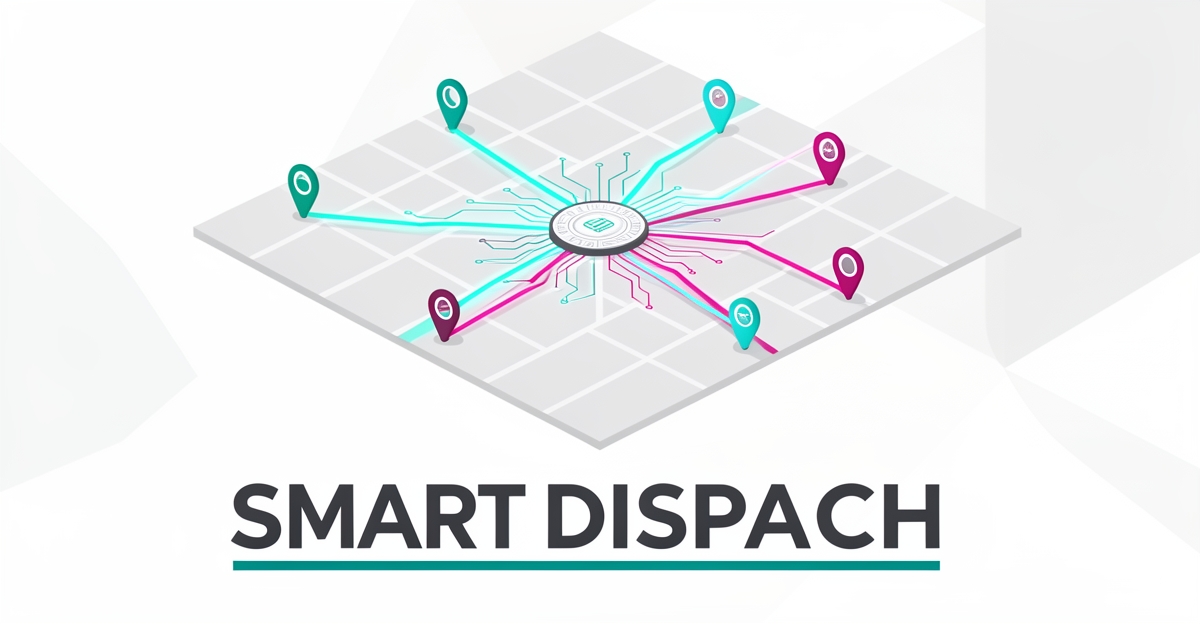
AI for Field Service: How to Build a Smart Dispatch System with AI
Key Facts
- A majority of workers report spending too much time searching for information during their workday, a pattern Microsoft WorkLab research documents
- Industry analyses, including BuildOps, suggest AI-powered dispatch can meaningfully reduce long-term operating costs
- A large share of repetitive data, analytics, and decision workflows can be automated with AI according to Samta.ai research
- Field service research indicates AI dispatch typically reduces travel time and improves technician availability
- AI performs well in structured tasks like routing when trained on quality data according to Samta.ai analysis
- Traditional dispatch scales linearly with headcount, locking businesses into proportional cost growth
- Hybrid AI-human dispatch models balance efficiency with control while reducing operational risk
Hire a team member that works 24/7 — for less than a part-time wage.
AI receptionists, SDRs, dispatchers and 99+ roles. Trained on your business, fully managed.
Not sure where to start? Ask our AI planner
The Cost of Inefficient Dispatch: Why Traditional Systems Fail Field Service Teams
Manual dispatch looks busy, but it’s leaking margin on every job. Dispatchers juggle spreadsheets, phone calls, and gut feel while technicians wait for instructions and customers wait for updates.
The hidden tax starts with information friction. Microsoft WorkLab research finds that a majority of workers spend too much of their workday hunting for information. For field service teams that means lost minutes searching for job history, parts availability, and technician location before a decision can even be made.
Reactive scheduling compounds the waste. Without real-time visibility into traffic, job locations, and technician status, routes are built on yesterday’s assumptions. That creates wasted travel time and technician idle time between jobs, both of which drive up cost without adding value.
Headcount-dependent models lock costs in. Traditional dispatch scales linearly with headcount, so growth requires more dispatchers and more overtime. Industry analyses such as BuildOps suggest AI-powered dispatch can meaningfully reduce long-term operating costs while cutting travel time and improving technician availability.
The work itself is repetitive and data-heavy. Samta.ai research notes that a large share of repetitive data, analytics, and decision workflows can be automated with AI. In dispatch, that is route optimization, ETA updates, and availability matching, tasks that drain dispatcher capacity but are perfect for automation.
Pain points show up daily as:
- Technicians driving extra miles between jobs because routes are planned statically
- Dispatchers manually re-routing around traffic and cancellations with no real-time data
- Idle crews waiting for assignments while urgent jobs sit unassigned
- Customers calling for status updates that require a human to hunt down information
These inefficiencies erode service delivery and profitability. Accuracy drops when decisions rely on individual skill and fragmented systems, and scaling requires hiring rather than optimizing. AI for field service automation can analyze job locations, traffic patterns, and technician availability to create optimized dispatch routes, the kind of workflow we rebuild in AI Workflow Builds.
AIQ Labs designs custom AI systems that integrate with existing tools to deliver faster, more reliable service on the ground, replacing reactive firefighting with proactive, data-driven dispatch.
How AI Optimizes Dispatch: Data-Driven Routing and Real-Time Decision Making
Traditional dispatch relies on human judgment and static schedules, leaving teams reactive to traffic snarls, last-minute cancellations, and technician availability gaps. AI flips that model by continuously ingesting job locations, live traffic feeds, and crew calendars to build routes that adapt in real time. The result is a dispatch function that anticipates problems instead of chasing them.
Field service research, including BuildOps, indicates AI-powered dispatch typically reduces travel time and improves technician availability. Those gains compound across every truck roll, turning what was once a cost center into a measurable efficiency lever. At AIQ Labs, we design custom AI dispatch agents that sit inside your existing scheduling tools, so the intelligence upgrades your workflow without replacing your stack.
- Live traffic and weather data reroute technicians before delays cascade
- Skill-based matching assigns the right specialist to each job automatically
- Dynamic load balancing spreads work evenly across the crew
- Real-time ETAs keep customers informed and reduce no-access visits
The same research notes that AI dispatch platforms can meaningfully cut long-term operating costs while performing well in structured tasks when fed quality data. A hybrid approach, where AI proposes the optimal schedule and a human dispatcher validates exceptions, preserves control while capturing speed. That balance is exactly what our AI Employees deliver: a managed Dispatcher agent that works 24/7, learns your trade rules, and escalates only the calls that need a human touch, at a fraction of the cost of a human hire.
Building Your Smart Dispatch System: Implementation Steps and Hybrid Best Practices
Building a smart dispatch system with AI starts with a foundation of high-quality data and a clear implementation strategy. AIQ Labs emphasizes production-ready systems that integrate seamlessly with existing tools while balancing automation with human judgment. The process begins by gathering comprehensive data on job locations, technician availability, traffic patterns, and historical service times, inputs that AI systems depend on to make accurate decisions. Poor data quality can introduce systematic errors at scale, so establishing strong data governance from the outset is critical to ensure reliability in automated dispatching.
Once data is collected, the next step involves selecting or building AI models capable of analyzing complex variables to optimize routes and assignments. These models perform well in structured tasks like routing when trained on quality data, and they enable dispatch systems to reduce long-term operating costs through smarter resource allocation. However, AI should not operate in isolation, especially for high-stakes decisions like emergency routing or customer prioritization. Implementing human oversight for critical judgments creates a hybrid model that balances efficiency with control, reducing operational risk while maintaining fairness in decision-making.
Finally, continuous monitoring and iterative improvement are essential to sustain performance over time. This includes tracking key metrics like travel time reduction, technician utilization, and customer response times, then refining models based on real-world outcomes. The gains from AI dispatch only persist with ongoing validation and adjustment. By combining AI’s analytical power with human expertise, businesses can build dispatch systems that are not only intelligent but also trustworthy, scalable, and aligned with operational goals. Research on AI versus manual work suggests a large share of repetitive data, analytics, and decision workflows can be automated, making AI a powerful lever for field service transformation when implemented with discipline and care.
Still paying for 10+ subscriptions that don’t talk to each other?
We build custom AI systems you own outright. No vendor lock-in. Full control.
Not sure where to start? Ask our AI planner
Frequently Asked Questions
Will an AI dispatch system actually save us money or just add another software cost?
How much of dispatch work can AI really automate without losing control?
Is our data messy enough that AI dispatch will make mistakes?
What’s the biggest time drain AI dispatch fixes for field teams?
Can AI handle real-time changes like traffic, cancellations, and urgent jobs?
Do we have to replace our existing scheduling tools to use AI dispatch?
From Firefighting to Forecasting: Your Next Move
Manual dispatch isn't just inefficient, it's a ceiling on your growth. As we've covered, traditional scheduling leaks margin through wasted travel, idle technicians, and headcount-dependent scaling, while AI-powered dispatch typically cuts operating costs, reduces travel time, and improves technician availability. The path forward doesn't require replacing your team or your tools, it starts with quality data, a hybrid model where AI proposes and humans validate, and continuous refinement against real-world metrics like utilization and response times. That's exactly how we approach it at AIQ Labs: custom dispatch systems that integrate with your existing stack, built in milestones and owned outright, not rented. If you're ready to see where AI could take the friction out of your dispatch operation, start with the two-minute Fit Check, then book a free 30-minute strategy call. It's a working session with an AI engineer, and if there's no clear win for your business, we'll tell you that too.
Make AI your competitive advantage — not just another tool.
Strategy, implementation and ongoing optimization. One partner, end to end.
Not sure where to start? Ask our AI planner