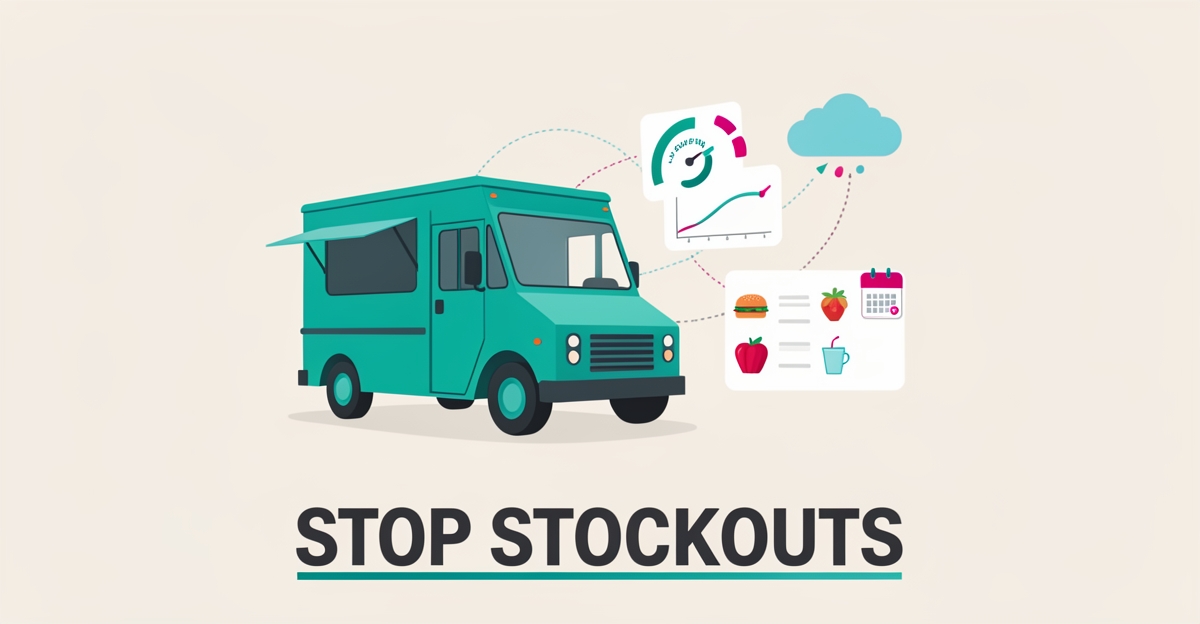
AI for Food Truck Inventory Management: How to Avoid Running Out of Key Items
Key Facts
- A large share of small businesses still don't track inventory or rely on manual systems according to industry research
- Poor inventory management can cost businesses a meaningful share of annual revenue through stockouts and overstocking per industry studies
- Most customers abandon purchases and seek alternatives when faced with an out-of-stock item as indicated by research
- AI-driven demand forecasting typically improves forecast accuracy by roughly 30-35% based on industry data
- Automated inventory systems have been associated with roughly 30% fewer stockouts and operational efficiency gains of up to 50% according to research findings
- Walmart reported a 30% improvement in demand forecast accuracy and a 15% reduction in food waste using AI per supply chain analysis
- AI can handle the bulk of routine replenishment decisions, freeing humans to focus on exceptions as shown in successful implementations
Hire a team member that works 24/7 — for less than a part-time wage.
AI receptionists, SDRs, dispatchers and 99+ roles. Trained on your business, fully managed.
Not sure where to start? Ask our AI planner
The Stockout and Waste Trap Facing Food Trucks
Food trucks operate in a high-pressure environment where space is limited and ingredients spoil quickly. This makes inventory management a constant balancing act, too little stock means turning away hungry customers, while too much leads to waste and lost profit. Manual tracking methods, still common among small businesses, struggle to keep up with the dynamic demands of mobile food service, where foot traffic can shift based on weather, local events, or time of day. Industry research suggests that poor inventory management can cost businesses a meaningful share of annual revenue through stockouts and overstocking, a significant hit for food trucks operating on thin margins.
When a popular item runs out, the impact goes beyond a single lost sale. Studies indicate that most customers will abandon their purchase and seek alternatives when faced with an out-of-stock item. For food trucks, where loyalty is built on consistency and speed, this can mean losing not just the immediate sale but also future business as customers turn to competitors who reliably have what they want. Overstocking, meanwhile, ties up cash in ingredients that may spoil before use, further squeezing profitability in an already cost-sensitive model.
The core issue lies in the limitations of traditional tracking. Relying on clipboard counts or basic spreadsheets means decisions are made reactively, often after a shortage or surplus has already occurred. Without real-time visibility into sales trends, weather impacts, or event-driven demand spikes, food truck operators are forced to guess rather than predict. This gap between intention and outcome is where AI-driven inventory management steps in, not to replace human judgment, but to enhance it with data-backed foresight that aligns stock levels with actual demand patterns before they become critical. AIQ Labs builds systems that integrate with POS data, weather feeds, and local event calendars to enable real-time inventory adjustments, helping food trucks reduce waste, avoid stockouts, and protect revenue. Automated tools have been associated with operational efficiency gains of up to 50%, turning inventory from a liability into a streamlined part of daily operations.
How AI Shifts Inventory From Reactive to Predictive
Food trucks live or die on whether the right ingredients are on board when the line forms. Reactive ordering based on yesterday's sales creates the classic trap of running out of key items during a rush or throwing away perishables the next day.
AI shifts inventory from lagged forecasts to demand-sensing by connecting real-time signals instead of relying on manual counts. Models ingest live Point of Sale data, weather patterns, local events, and sales history to adjust stock positioning before gaps appear. This moves decisions from days to minutes.
The accuracy gains are measurable. Companies utilizing AI for demand forecasting and inventory optimization typically improve forecast accuracy by roughly 30-35% according to industry research. Automated inventory management systems have also been associated with roughly 30% fewer stockouts, while operational efficiency can rise by up to 50%.
Real-world food and retail examples show the same pattern. Walmart reported a 30% improvement in demand forecast accuracy and a 15% reduction in food waste after deploying AI-driven planning, per supply chain analysis. At Unilever's Tinsukia factory, AI-enabled digital planning drove a 35% improvement in forecast accuracy with a 16% reduction in finished goods inventory.
For a mobile kitchen, demand-sensing means the system anticipates rather than reacts. AI can:
- Read live POS sales and flag fast-moving items before the truck leaves the commissary
- Factor weather, local events, and day-of-week patterns into ingredient needs
- Trigger automated reorder suggestions tied to supplier lead times and shelf life
This is the shift from forecasting harder to acting faster. Decision latency drops while waste and stockouts fall together. Poor inventory management can cost businesses a meaningful share of annual revenue, so the compounding effect matters for tight food truck margins.
AIQ Labs builds these systems through AI Workflow Builds, a fixed-price, phased rebuild of the one workflow that costs you the most, which for many food trucks is replenishment. The result is fewer emergency runs, less spoilage, and more consistent service at the window.
Building an AI Inventory System That Works for Mobile Operations
Food trucks live and die by what's in the box that morning. A single stockout on a hot taco day erodes trust, while overbuying perishables ties up cash and creates waste. Building an AI inventory system for mobile operations starts with treating data as the operating system, not an afterthought.
Data readiness is the foundation. AI is only as effective as the data it processes, and fragmented spreadsheets, POS exports, and crew memory create a "fragmented mess" that scales confusion. A single living data layer that reflects the true state of operations in real time is required before any agent can act safely. For food trucks this means unifying sales history, ingredient usage, supplier lead times, truck location, and external signals into one accessible source of truth.
Decision architecture mapping makes the system usable. Before automating, map who owns each decision, what data is trusted for that decision, and what thresholds trigger human escalation. AI handles the bulk of routine replenishment decisions such as daily par levels and reorder triggers, freeing owners to focus on exceptions like menu changes, supplier disruptions, or event surges. This human-in-the-loop design prevents agents from scaling errors on weak data.
Real-time visibility closes the loop. Automated systems provide continuous tracking of stock levels, reducing risk of running low on in-demand items. Companies using automated inventory management systems have reported roughly 30% fewer stockouts and up to 50% gains in operational efficiency. For mobile kitchens, that translates to fewer emergency supply runs and less spoilage.
A practical build for food trucks typically includes:
- Centralized data readiness: POS, inventory, weather, local events, and supplier data integrated into one real-time layer
- Decision mapping: clear ownership for routine vs exception decisions with escalation thresholds
- Human-in-the-loop protocols: AI proposes replenishment, owner approves exceptions and strategic buys
- Continuous learning: forecast accuracy improves as the system ingests more truck-specific demand signals
The cost of getting this wrong is material. Poor inventory management can cost businesses a meaningful share of annual revenue through stockouts and overstocking, and many small businesses still don't track inventory or rely on manual systems. AIQ Labs designs these systems with the same multi-agent orchestration proven across 200+ deployed systems and four live SaaS products the company runs daily.
When the data layer is clean and decisions are mapped, owners stop firefighting and start steering. The system handles routine replenishment, the team handles judgment, and margins improve because the truck is stocked for demand that is already forming.
Implementation Roadmap for Food Truck Owners
For food truck owners, running out of a popular ingredient during peak service isn't just an inconvenience, it's a direct hit to revenue and customer trust. Implementing AI for inventory management transforms this reactive scramble into a proactive system that anticipates demand before shortages occur. The first step is defining clear, measurable goals: reducing stockouts by a target percentage, cutting food waste, or improving cash flow through optimized purchasing. Without specific objectives, it's impossible to gauge success or justify the investment.
Next, assess your data readiness. Many food trucks rely on paper logs or disconnected spreadsheets, creating the fragmented data environment that undermines AI effectiveness. To build a reliable foundation, consolidate historical sales, ingredient usage, and waste records into a single, integrated system. This "digital twin" of your operations, reflecting real-time stock levels and usage patterns, is essential for AI models to generate accurate forecasts. Poor inventory management can cost businesses a meaningful share of annual revenue through stockouts and overstocking, making clean, accessible data a non-negotiable starting point.
Begin with high-impact, low-risk use cases like daily replenishment triggers for core ingredients. Instead of overhauling everything at once, focus on data-rich areas where AI can quickly demonstrate value, such as predicting demand for proteins or produce based on historical sales patterns. Integrate real-time feeds from your POS system, local weather forecasts, and event calendars to enable dynamic adjustments, for example, increasing burger patty orders ahead of a sunny weekend festival. This approach aligns with industry findings that AI-driven systems typically improve forecast accuracy by roughly 30-35% and reduce stockouts by around 30% when fed timely, relevant data.
Finally, establish monitoring protocols to track forecast accuracy, waste reduction, and stockout frequency. AI handles routine decisions, like triggering reorders when inventory dips below a threshold, freeing you to focus on exceptions and strategic tasks such as menu adjustments or supplier negotiations. Continuous iteration ensures the system learns from actual sales and waste data, refining predictions over time. For food truck owners seeking end-to-end support, AIQ Labs offers three entry points: AI Employees for managed AI staff, AI Workflow Builds to rebuild the one workflow that costs the most at a fixed price, and AI Operating Systems for a single connected operating layer you own outright. This structured, phased approach turns inventory from a persistent headache into a competitive advantage.
Still paying for 10+ subscriptions that don’t talk to each other?
We build custom AI systems you own outright. No vendor lock-in. Full control.
Not sure where to start? Ask our AI planner
Frequently Asked Questions
How much revenue do food trucks typically lose due to poor inventory management?
What percentage of customers will leave if their favorite food truck item is out of stock?
Can AI really reduce stockouts for food trucks, and by how much?
Is it true that most small businesses still use manual methods for inventory tracking?
How does AI improve forecast accuracy for food truck ingredient needs?
What's the first step for a food truck owner looking to implement AI for inventory management?
From Guesswork to Growth: Stock Smarter, Serve Better
Food trucks can't afford the stockout and waste trap. Manual tracking leaves you reacting after the rush is gone, while AI shifts inventory from lagged forecasts to demand-sensing that aligns stock with real-time POS sales, weather, local events and supplier lead times. The result is fewer emergency runs, less spoilage, and consistent service at the window when it matters most. Building it right starts with clean, unified data, clear decision ownership for routine versus exception tasks, and human-in-the-loop protocols so AI handles routine replenishment while you focus on judgment calls. Poor inventory management can cost businesses a meaningful share of annual revenue due to stockouts and overstocking, making the move from reactive to predictive a direct margin play. AIQ Labs builds these systems through fixed-price, phased Workflow Builds and broader AI Operating Systems you own outright, helping mobile operators turn data into stocked trucks and steadier cash flow. Take the 2-minute Fit Check at https://aiqlabs.ai/apply, then book a free 30-minute strategy call to map your biggest bottleneck and identify high-ROI automation opportunities.
Make AI your competitive advantage — not just another tool.
Strategy, implementation and ongoing optimization. One partner, end to end.
Not sure where to start? Ask our AI planner