AI for Geotechnical Data Security: How to Protect Sensitive Soil and Site Information
Key Facts
- Only a minority of construction organizations, industry surveys have placed active AI deployment in production workflows at roughly 21%, have moved past the pilot stage.
- The global AI in construction market is projected to grow into the tens of billions of dollars by the early 2030s as adoption accelerates across infrastructure.
- Industry analyses commonly attribute cost reductions in the range of 10–20% to AI and analytics in construction, though results vary by project and rollout quality.
- Construction firms must navigate evolving regulations like the EU AI Act and ISO/IEC 23894:2023 per Microsoft security guidance.
- AI can improve construction safety by detecting potential hazards and preventing accidents, a core use case in civil AI applications.
- Site investigation data underpins everything from excavation plans to environmental remediation in geotechnical drilling practice.
Hire a team member that works 24/7 — for less than a part-time wage.
AI receptionists, SDRs, dispatchers and 99+ roles. Trained on your business, fully managed.
Not sure where to start? Ask our AI planner
The High Stakes of Geotechnical Data Exposure
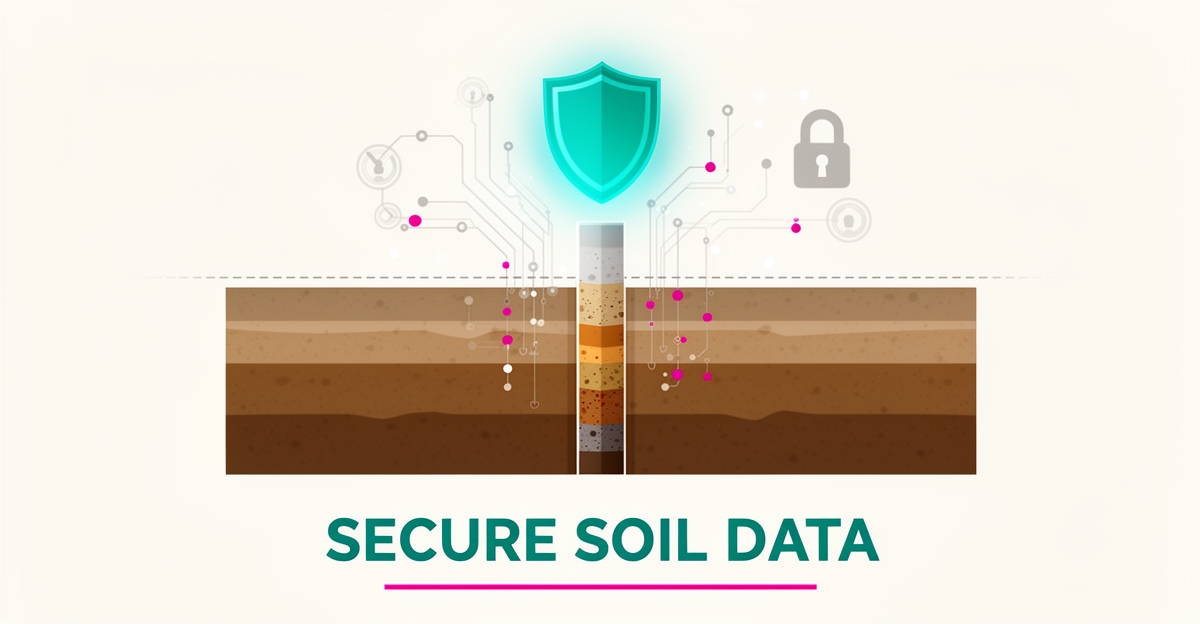
Geotechnical data is a liability the moment it leaves the site. Bore logs, soil profiles, groundwater readings and site-specific risk assessments define foundation design, permitting and long-term liability. When that information is exposed, the risk is not just reputational, it is structural, financial and legal.
The industry is racing toward AI while remaining one of the least digitized sectors. Industry surveys have placed active AI deployment in production workflows at roughly 21% of construction organizations, even as the AI in construction market is projected to grow into the tens of billions of dollars by the early 2030s. That gap creates pressure to adopt quickly without mature data governance.
Sensitive site information is attractive to bad actors and dangerous in the wrong hands. Geotechnical firms handle proprietary soil and site information that must be protected from unauthorized access, and breaches can compromise competitive bids, client confidentiality and public safety decisions. Site investigation data underpins everything from excavation plans to environmental remediation, so exposure can cascade into costly redesigns and regulatory action.
AI amplifies both the value and the exposure. Models need large amounts of data to train and operate, and integration with existing systems and processes can be complex and time-consuming. Without strict controls, data can leak through model prompts, shared repositories or third-party integrations. The construction industry must navigate evolving regulations, such as the EU AI Act and the ISO/IEC 23894:2023 standard, as noted in security guidance for AI governance.
Real-world consequences follow quickly when controls are missing:
- Proprietary borehole and lab data reused by competitors in tendering
- Client site information exposed through unsecured AI chat or RAG retrieval
- Audit failures due to missing access logs for sensitive geotechnical records
- Regulatory penalties for non-compliance with data privacy and AI risk standards
The stakes are higher because AI is expected to deliver measurable gains. AI can improve safety in construction by detecting potential hazards and preventing accidents, and civil AI research highlights hazard detection as a core use case. Cost and schedule benefits are also widely cited, with industry analyses commonly attributing cost reductions in the range of 10–20% to AI and analytics in construction.
That potential is why data security cannot be an afterthought. In the AI Integration & Infrastructure > AI Security & Compliance context, systems must be built with strict access controls and audit trails from the start. Access control for data sources is a foundational requirement, as described in generative AI data source access control documentation.
AIQ Labs ensures all AI tools deployed in geotech environments meet compliance standards and protect proprietary site data, aligning with how firms need to assess data security and compliance needs before scaling AI.
How AI Can Secure Geotechnical Data Without Compromising Utility
Geotechnical data holds immense value, but also significant risk when mishandled. Protecting sensitive soil composition reports, subsurface surveys, and site-specific risk assessments requires more than basic encryption, it demands intelligent systems designed for both security and utility. AIQ Labs builds AI frameworks that embed strict access controls, immutable audit trails, and compliance-first architecture directly into data workflows, ensuring proprietary information remains protected while still enabling automation and analysis.
Geotechnical firms routinely handle sensitive soil and site information that must be shielded from unauthorized access to maintain client trust and regulatory standing. The AIQ Labs approach integrates role-based permissions, real-time monitoring, and encrypted data pipelines so that only authorized personnel, or AI agents operating within defined boundaries, can interact with critical datasets. This prevents exposure while allowing AI to perform tasks like pattern recognition in soil behavior or predictive modeling for foundation stability.
The AI in construction market is projected to grow substantially through the early 2030s, reflecting growing reliance on intelligent systems across infrastructure projects. Yet, as noted by Microsoft, compliance with evolving standards like the EU AI Act and ISO/IEC 23894:2023 is non-negotiable, especially when dealing with geospatial and environmental data. AI systems built without these guardrails risk violating data sovereignty rules or enabling unintended data leakage through model training or inference processes.
To balance security with functionality, AIQ Labs employs a layered defense strategy: data minimization principles limit what AI can access, differential privacy techniques protect individual site characteristics during analysis, and continuous audit logging captures every interaction for regulatory review. These measures are not theoretical, they are implemented in AIQ Labs' own production platforms, which include systems the company runs daily in regulated environments where compliance and traceability are paramount.
- Access controls restrict data visibility based on user role and AI agent function
- Audit trails provide immutable logs of all data access and AI-driven decisions
- Compliance alignment ensures adherence to EU AI Act, ISO/IEC 23894:2023, and industry-specific regulations
- Data minimization and privacy-preserving techniques reduce exposure during analysis
- Continuous monitoring detects anomalous access patterns in real time
By embedding these safeguards into the core of AI architecture, geotechnical firms can unlock the efficiency gains of automation, such as accelerated site analysis or automated report generation, without compromising the confidentiality of their most valuable asset: proprietary geotechnical intelligence. This enables innovation that is both powerful and principled.
Implementing Secure AI in Geotech: A Step-by-Step Framework
Only a minority of construction organizations actively deploy AI in production workflows, industry surveys have placed the figure at roughly 21%, and for geotechnical firms, that hesitation often comes down to one question: can sensitive soil and site data stay protected? The answer is yes, but only with a deliberate, structured rollout. Rushing AI into a firm's data environment without a framework is how proprietary site information ends up exposed.
The good news: a proven, step-by-step path exists. Firms that follow it can capture AI's documented benefits, including cost reductions commonly cited in the 10–20% range, without compromising compliance or client trust. Here's how that framework looks in practice.
Step 1: Assess your data security and compliance needs. Before any AI tool touches a borehole log or lab result, map where your data lives, who can access it, and which regulations apply. The construction sector must navigate evolving requirements such as the EU AI Act and the ISO/IEC 23894:2023 standard, so your assessment should identify compliance obligations alongside technical risks. This baseline determines everything that follows.
Step 2: Deploy AI tools built for compliance from day one. Not all AI platforms treat data with equal care. Geotechnical firms should select systems with strict access controls, role-based permissions, and complete audit trails, so every query against proprietary site data is logged and reviewable. This is the approach AIQ Labs takes with geotech environments: every AI tool deployed must meet compliance standards and protect proprietary site data before it goes live, not after an incident forces the issue.
Step 3: Integrate with existing systems and processes. Integration is where many AI initiatives stall, and it's a recognized challenge across the industry, Microsoft guidance notes that connecting AI with existing systems can be complex and time-consuming. The solution is phased integration: connect the AI system to one critical workflow first (such as data analysis of site investigation results), validate security controls in production, then expand. Deep two-way API integrations ensure data flows securely between your project management, lab, and reporting systems without manual exports that create shadow copies of sensitive files.
Step 4: Establish ongoing monitoring and adaptation. Security is not a one-time setup. AI technology and regulatory expectations change continuously, and firms that thrive treat monitoring as a permanent operational function. That means regular access reviews, audit trail checks, performance monitoring, and retraining of AI models as new site data arrives. Firms that monitor and adapt to changes in AI technology consistently improve safety outcomes while keeping their data posture current.
A few principles tie this framework together:
- Classify data sensitivity before deployment, soil profiles, client site data, and proprietary analysis methods deserve different access tiers.
- Prefer systems with configurable human-in-the-loop controls for critical engineering decisions.
- Demand complete audit trails as a non-negotiable feature, not an add-on.
- Start with one workflow, prove the security model, then scale.
Firms that follow this sequence avoid the pilot-stage stall that traps most of the industry, and they position themselves to capture the cost savings and schedule improvements that industry analyses attribute to AI and analytics in construction, all while keeping their most sensitive asset, their site data, locked down.
Still paying for 10+ subscriptions that don’t talk to each other?
We build custom AI systems you own outright. No vendor lock-in. Full control.
Not sure where to start? Ask our AI planner
Frequently Asked Questions
Is geotechnical data really that sensitive to expose through AI tools?
What regulations do we need to worry about when using AI with soil and site data?
How can AI help geotechnical firms without creating data leaks?
Why are so few construction firms actually using AI in production yet?
What’s the first step to secure AI for our geotechnical data?
Can AI actually improve safety and costs in geotech projects?
Your Next Move: Secure AI That Protects While It Performs
Geotechnical firms face a clear choice: implement AI with security and compliance built in from the start, or risk exposing the sensitive site data that defines their competitive advantage. The framework is straightforward, assess your data landscape, deploy compliance-ready tools, integrate methodically, and monitor continuously. With industry analyses commonly attributing 10–20% cost reductions to AI in construction, the business case is real. The question isn't whether to adopt AI, but whether you'll do it in a way that protects proprietary soil data, maintains client trust, and meets evolving regulatory standards. AIQ Labs builds AI systems for geotech environments with access controls, audit trails, and compliance architecture embedded from day one, so you capture AI's efficiency gains without compromising security. If you're ready to explore what secure AI looks like for your firm, start with the two-minute Fit Check. It's a practical first step to map your biggest bottleneck and identify high-ROI opportunities, no sales pitch, just clarity on whether there's a real win worth pursuing.
Make AI your competitive advantage — not just another tool.
Strategy, implementation and ongoing optimization. One partner, end to end.
Not sure where to start? Ask our AI planner