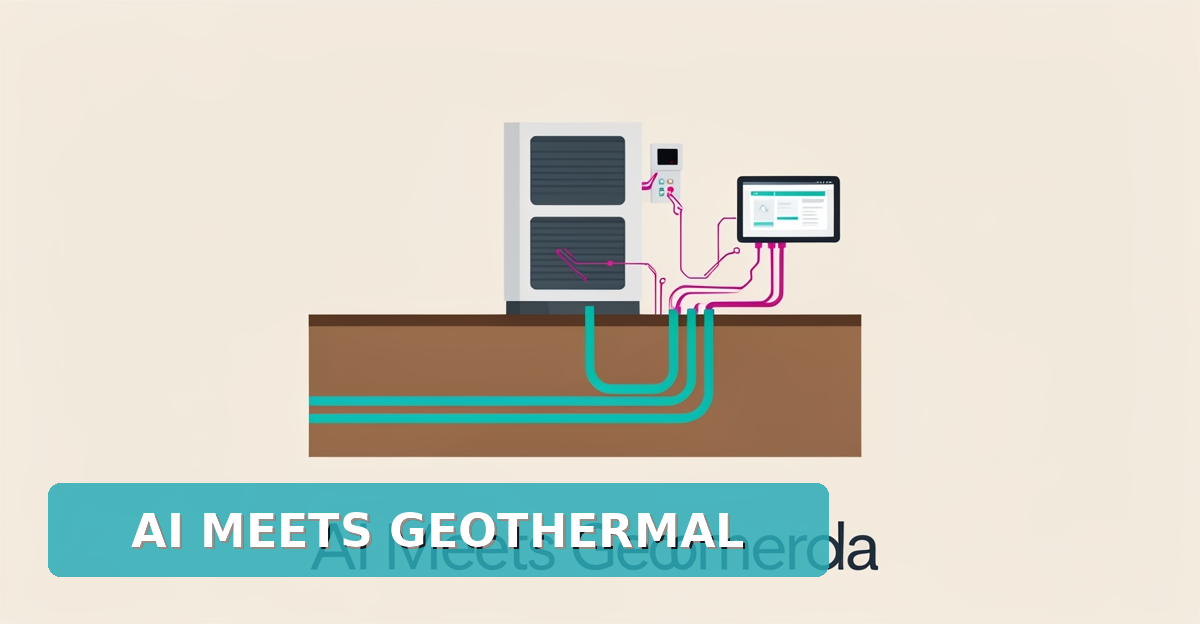
AI for Geothermal HVAC: 5 Key Applications in Field Operations
Key Facts
- Geothermal heat pumps can cut customer energy bills by up to 70% according to industry data
- Ground loops in geothermal systems can last 50 years while indoor components last around 25 years based on system specifications
- Geothermal installations typically take 2-3 weeks and often cost between $12,000 to $45,000 per project per installation estimates
- Condition-based maintenance can typically extend major equipment life by 3-7 years compared to calendar-based servicing per industry analysis
- Control drift in older buildings can waste 8-18% of energy, which AI systems actively prevent per energy efficiency research
- The global AI in energy market has been projected to grow from roughly $11 billion in 2024 toward $50+ billion by 2030 per market analysis
- Facility systems connected with AI have reported gains of around 30% in productivity and similar reductions in energy consumption per industry case studies
Hire a team member that works 24/7 — for less than a part-time wage.
AI receptionists, SDRs, dispatchers and 99+ roles. Trained on your business, fully managed.
Not sure where to start? Ask our AI planner
The Hidden Cost of Manual Processes in Geothermal HVAC Field Work
A geothermal heat pump can cut a customer's energy bills by up to 70% and its ground loop can last 50 years, yet the business installing it may be bleeding margin through clipboards, spreadsheets, and disconnected software. The technology is proven; the operations around it often are not. That gap is where geothermal installers quietly lose money on every job.
The irony is hard to ignore. Geothermal systems leverage the earth's stable underground temperature of around 60 degrees to deliver exceptional year-round efficiency, but the field operations supporting them frequently run on processes a decade old. A typical installation takes 2-3 weeks depending on soil conditions and system complexity, with costs often ranging from $12,000 to $45,000 per project. At that scale, every hour lost to manual data entry, miscounted inventory, or rework compounds quickly.
The core problem is what industry analysts describe as "disconnected kingdoms", systems that generate data but almost none that generate operational truth. In a geothermal installation business, that fragmentation shows up in five predictable places:
- Manual inventory tracking, loop pipe, heat pumps, manifolds, and grout tracked by hand, leading to stockouts that stall multi-week installations mid-project.
- Paper-based job logs, technician notes that never make it back to the office accurately, creating disputes and billing delays.
- Compliance exposure, refrigerant handling, permit, and safety documentation tracked manually, with violations discovered only after the fact.
- Reactive maintenance, calendar-based service schedules that miss early signs of wear, turning manageable degradation into emergency replacements.
- Energy inefficiency, control drift that can waste 8-18% of energy in older buildings, eroding the very efficiency that sells geothermal in the first place.
The maintenance problem deserves particular attention. Condition-based maintenance can typically extend major equipment life by 3-7 years compared with calendar-based servicing, yet most field teams still service on a schedule rather than on actual equipment condition. For systems designed to last 25 years indoors, that difference translates directly into warranty claims, callbacks, and lost service revenue.
Meanwhile, the market is moving. As of late 2026, market analyses project the global AI in energy market growing from roughly $11 billion in 2024 toward $50+ billion by 2030, according to market analysis. Installers who keep running manual operations while competitors adopt intelligent workflows will find the gap widening in real time.
The good news: closing these gaps no longer requires rip-and-replace software projects. AI systems can now operate inside existing field workflows, tracking inventory automatically, capturing job details as technicians work, and flagging compliance issues before they become violations. At AIQ Labs, we build these production-ready systems to work within the tools and processes geothermal installers already use, eliminating manual data entry without disrupting the crews in the field.
Five AI Applications Transforming Geothermal HVAC Field Operations
Geothermal HVAC field operations are shifting from paperwork and reactive fixes to intelligent, data-driven workflows. AI is now embedded in the daily tasks technicians perform, turning sensor data and job history into real-time decisions.
AI-powered equipment inventory tracking eliminates manual counts and lost assets. Systems automatically log locations, maintenance schedules, and performance metrics, giving crews real-time visibility into what is on site and when it needs service. This reduces tracking errors and keeps installations on schedule.
Digital job logs replace clipboards with automated documentation. AI captures job details, technician notes, and completion status as work progresses, improving data accuracy and freeing technicians to focus on installation quality rather than admin.
Compliance documentation becomes continuous rather than end-of-job. Automated tracking ensures regulatory requirements are met and documented, with AI flagging potential issues before they become violations. Condition-based maintenance is also enabled, with AI analyzing performance trends to identify early wear signs.
Predictive maintenance moves teams from calendar schedules to probability-driven action. AI analyzes performance trends to identify early signs of wear, allowing timely maintenance that avoids surprise breakdowns and costly replacements. Industry analysis notes major equipment life can often be extended 3-7 years with condition-based maintenance versus calendar-based maintenance.
Energy optimization runs continuously in the field. AI monitors and adjusts system parameters to maximize efficiency, with geothermal heat pumps able to lower energy bills by up to 70% compared to traditional systems. Control drift alone can waste 8-18% in older buildings, a loss AI systems actively prevent.
The five proven AI use cases transforming field operations are:
- Equipment inventory tracking with automatic location and maintenance updates
- Digital job logs that capture notes and completion status in real time
- Automated compliance documentation with proactive flagging
- Predictive maintenance driven by performance trend analysis
- Real-time energy optimization and parameter adjustment
Market momentum supports adoption. As of late 2026, the global AI in energy market is projected to grow from roughly $11 billion in 2024 toward $50+ billion by 2030, indicating strong demand for AI-driven energy solutions including geothermal HVAC applications. Axis Intelligence
AIQ Labs deploys production-ready AI systems that operate within existing field operations, improving accuracy and reducing manual data entry. Practical implementations have shown measurable gains, such as facility systems connected with AI reporting roughly 30% higher productivity and around 30% lower energy consumption.
How AIQ Labs Deploys Production-Ready AI Systems for Geothermal HVAC Contractors
The five AI applications we've covered, inventory tracking, digital job logs, compliance documentation, predictive maintenance, and energy optimization, only create value when they connect to the systems contractors already use every day. That's where implementation strategy matters as much as the technology itself.
The biggest risk in adopting AI is the "rip-and-replace" trap: discarding tools that work and forcing technicians to learn entirely new platforms mid-season. Industry analysis shows why integration matters, most facilities still operate as "disconnected kingdoms," with systems generating data but almost none generating operational truth. The same problem applies to field operations, where dispatch software, inventory lists, and job paperwork often live in silos.
AIQ Labs approaches this through three entry points. AI Workflow Builds rebuild the one workflow that costs you the most, duplicate data entry, job log chaos, compliance paperwork, at a fixed price, delivered in phases. Rather than replacing a contractor's existing tools, these builds use deep two-way API integrations to connect dispatch boards, calendars, and accounting platforms into a single source of truth. This directly addresses the manual data entry problem at the heart of the equipment tracking and job log challenges.
The second entry point is AI Employees: managed AI staff in specific field service roles. An AI Dispatcher can answer after-hours calls, book appointments, and route jobs without a human on the phone. An AI Work Order Manager can capture technician notes, update job status, and generate compliance documentation automatically, turning the paperwork burden described earlier into a background process. These agents integrate with existing CRMs and scheduling tools, work 24/7, and escalate to human staff when a situation exceeds their authority, typically at around 80% less cost than a comparable human hire.
For contractors ready to go further, AI Operating Systems connect the entire operation into one connected layer, built in phases and owned outright. This is where adoption actually sticks: readiness assessments, phased roadmaps, and role-specific training help contractors move past the pilot stage where most AI initiatives stall.
This layered approach mirrors the guardrail principles that govern successful AI deployments in building operations: human supervisory control, validation before every action, and complete audit trails. For geothermal contractors managing installations that can run two to three weeks and cost between $12,000 and $45,000 per project, that operational discipline isn't optional, it's what keeps complex jobs on schedule and documentation audit-ready.
The result is a field operation where AI handles the data layer while technicians focus on the ground loops, heat pumps, and customers. And because the systems are built to be owned, with payment models that fit how you buy: Start Monthly, Build in Milestones, or Own It Outright, contractors keep control of what's created. No vendor lock-in, no subscription sprawl, just AI capability that scales with the business as the AI in energy market continues its rapid expansion.
Still paying for 10+ subscriptions that don’t talk to each other?
We build custom AI systems you own outright. No vendor lock-in. Full control.
Not sure where to start? Ask our AI planner
Frequently Asked Questions
How much can a geothermal heat pump actually save on energy bills compared to traditional HVAC?
What's the typical timeline and cost range for a geothermal installation?
Will AI replace my field technicians or require them to learn completely new software?
How does predictive maintenance differ from our current calendar-based service schedule?
What's the ROI on AI for a geothermal business, is the market actually adopting this?
How do you handle compliance documentation without adding more paperwork for crews?
From Ground Loops to Grounded Results: AI’s Role in Smarter Geothermal Operations
Geothermal HVAC installers face a clear opportunity: the technology delivers exceptional efficiency and longevity, but field operations still run on manual processes that erode margins and slow projects. AI applications in inventory tracking, digital job logs, compliance, predictive maintenance, and energy optimization are not futuristic concepts, they’re production-ready tools that reduce errors, prevent rework, and keep crews focused on installation quality. By connecting AI to existing workflows instead of replacing them, contractors gain operational truth without disruption. The market momentum is strong, with AI in energy projected to grow toward $50+ billion by 2030, and early adopters are already seeing measurable gains in productivity and energy savings. To see how these solutions fit your specific operations, start with the free two-minute Fit Check, followed by a no-obligation 30-minute strategy call where we’ll map your biggest bottlenecks and identify high-ROI automation opportunities, no pitch, just clarity.
Make AI your competitive advantage — not just another tool.
Strategy, implementation and ongoing optimization. One partner, end to end.
Not sure where to start? Ask our AI planner