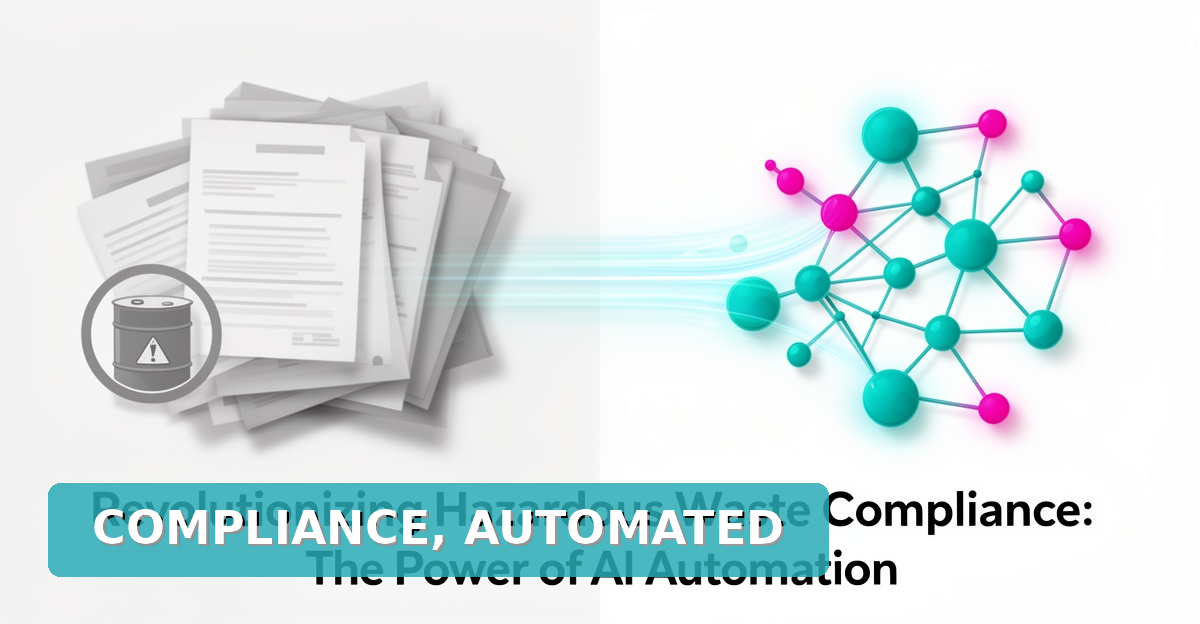
AI for Hazardous Waste Compliance: A Comparison of In-House vs. AI Solutions
Key Facts
- Industry analyses have typically valued the North America hazardous waste handling automation market in the billions of dollars, with steady growth through 2026
- Regulatory enforcement and compliance spending has generally trended upward, increasing oversight pressure on generators
- Full-scale automated handling systems at large facilities have historically required significant capital investment, often millions of dollars per site
- AI-powered solutions can help reduce the risk of human error in hazardous environments, based on industry research findings
- High initial investment costs have typically deterred smaller operators from adopting full automation, but targeted workflow automation changes that math
Hire a team member that works 24/7 — for less than a part-time wage.
AI receptionists, SDRs, dispatchers and 99+ roles. Trained on your business, fully managed.
Not sure where to start? Ask our AI planner
The Hidden Costs and Risks of In-House Hazardous Waste Compliance
Every manifest error, missed deadline, or misclassified waste stream in a manual compliance program carries a price tag, and as of late 2026, regulators are paying closer attention than ever. Enforcement and compliance budgets across environmental agencies have generally trended upward, a clear signal that oversight intensity is rising across the industry.
For hazardous waste generators, the stakes begin with the law itself. Under the Resource Conservation and Recovery Act (RCRA), all generators must determine whether their waste is hazardous and oversee its ultimate fate. That responsibility sits squarely with the generator, which means any gap in a manual tracking, labeling, or documentation process becomes the company's liability, not a vendor's.
Manual, in-house compliance processes carry structural weaknesses that are difficult to engineer away:
- Human error in classification, manifesting, and reporting, errors that AI-powered systems are specifically designed to reduce in hazardous environments.
- Limited scalability, since every new facility, waste stream, or regulation adds manual workload that grows linearly with headcount.
- Regulatory complexity that makes even experienced teams reluctant to change processes without a clear understanding of compliance implications.
- Exposure to financial penalties and remediation costs that can dwarf the savings of avoiding investment in better systems.
The market data reflects how costly the status quo has become. Industry analyses have typically valued the North America hazardous waste handling automation market in the billions of dollars, growing steadily through 2026, with continued investment in advanced waste-handling technologies across the region. Companies are voting with their budgets: the manual approach is no longer the safe default.
Scalability is the quiet killer. A compliance process that works for one site often breaks at three, because manual verification, paper trails, and institutional knowledge do not multiply cleanly. Industry research consistently notes that AI-powered solutions offer accuracy, automated efficiency, and scalability that in-house processes cannot match, a gap that widens as operations expand.
The honest counterargument is cost. High initial investment has historically deterred smaller companies from automating full facility-wide systems, which is exactly why a structured evaluation matters before any commitment. A two-minute Fit Check helps hazardous waste businesses map where manual processes create the most risk and where automation delivers the highest return, before dollars are spent. If the numbers do not support a clear win, a good assessment will say so.
Legacy compliance systems do not fail loudly. They fail one missed signature, one outdated classification, one unlogged shipment at a time, until the cumulative exposure becomes impossible to ignore.
How AI-Powered Automation Reduces Compliance Risk and Operational Costs
Hazardous waste compliance is shifting from manual checklists to automated oversight as regulatory pressure intensifies. Industry analyses typically place the North America hazardous waste handling automation market in the billions of dollars, driven by the need for accuracy, safety, and scalable compliance.
AI-powered solutions reduce exposure and error where human teams face the highest risk. Industry research notes AI can help reduce the risk of human error in hazardous environments, improve operational efficiency, and enhance safety measures. That translates into fewer incidents, faster reporting, and stronger audit readiness under frameworks like RCRA.
Real-time monitoring creates measurable cost and risk reductions. Automated systems continuously track waste streams, manifest data, and storage conditions, flagging anomalies before they become violations. Market analysts have generally projected steady growth for these systems through 2026, reflecting adoption of tools that improve compliance with environmental regulations and increase the scalability of hazardous waste handling operations.
Operational benefits compound across the compliance lifecycle:
- Improved accuracy through automated data capture and validation, reducing human error-prone processes
- Real-time monitoring and control systems that enable immediate corrective action
- Reduced human exposure via robotic handling and remote oversight
- Lower cost of implementation and higher scalability compared with manual in-house processes
Financial context matters for decision makers. Full-scale automated handling systems at large facilities have historically cost millions of dollars per site, while enforcement and compliance spending by agencies like the EPA has generally risen. The integration of advanced technologies remains a significant growth driver, with continued investment across North America through 2026. The practical takeaway: you don't need a multi-million-dollar facility overhaul to capture most of the value. Rebuilding the one workflow that costs you the most, a fixed-price, phased AI Workflow Build, typically delivers the fastest return.
For hazardous waste businesses, the first step is clarity on where automation delivers the highest value. A structured readiness assessment evaluates current systems, data infrastructure, and regulatory workflows to prioritize AI use cases. AIQ Labs helps hazardous waste businesses evaluate their current systems and identify where AI delivers the highest value, aligning technology choices with compliance risk and operational goals.
AI-powered automation shifts compliance from reactive documentation to proactive control, reducing both regulatory exposure and long-term operating costs.
Assessing Readiness: Where AI Delivers the Highest Value in Your Compliance Workflow
Before investing in AI for hazardous waste compliance, the most important question isn't "what can AI do?", it's "where does AI deliver the highest return in my specific operation?" A structured readiness assessment answers that question with evidence rather than guesswork.
Start by mapping your compliance workflow end to end and flagging every point where manual effort creates risk. Under the EPA's RCRA framework, generators bear responsibility for determining whether waste is hazardous and overseeing its ultimate fate, which makes classification, documentation, and tracking the highest-stakes steps in the chain. These are precisely the steps where human error concentrates and where AI-driven accuracy pays off fastest.
Next, score each candidate workflow against three readiness criteria:
- Process bottlenecks: Where do manifests, waste determinations, or reporting tasks pile up and consume the most staff hours?
- Data readiness: Is your compliance data digitized and consistent enough for AI to use, or locked in paper files and spreadsheets?
- Regulatory exposure: Which tasks carry the steepest penalties if an error slips through?
This prioritization matters because the stakes are rising. Enforcement pressure across environmental agencies has generally intensified, and the hazardous waste automation market has grown steadily as companies race to modernize. At the same time, industry research is clear that high initial investment costs have typically deterred smaller operators, which makes sequencing critical: automating the wrong process first can stall your entire transformation.
This is the logic behind AIQ Labs' assessment approach, evaluating your current systems, data infrastructure, and compliance pain points before recommending any build. Rather than committing to a facility-wide overhaul, you identify the single workflow where automation removes the most risk per dollar, prove the value, then scale. For operations that need compliance, dispatch, reporting, and documentation connected in one layer they own outright, an AI Operating System built in phases extends that same logic across the whole business. If you're unsure where your starting point is, the two-minute Fit Check and a free 30-minute strategy call can map your biggest compliance bottleneck and show you exactly where AI delivers the fastest, safest return.
Still paying for 10+ subscriptions that don’t talk to each other?
We build custom AI systems you own outright. No vendor lock-in. Full control.
Not sure where to start? Ask our AI planner
Frequently Asked Questions
How much does it cost to automate hazardous waste compliance compared to doing it in-house?
What are the biggest risks of managing hazardous waste compliance manually?
How does AI actually reduce compliance risk for hazardous waste generators?
Can AI compliance systems scale as my hazardous waste operation grows?
Is hazardous waste automation only realistic for large companies, or can smaller operations benefit too?
How do I know which compliance workflow to automate first?
The Cost of Waiting Is No Longer Theoretical
Manual hazardous waste compliance isn't just slower, it's structurally fragile. Every paper manifest, spreadsheet classification, and human handoff creates a liability that compounds silently until an audit or incident exposes it. With regulatory oversight intensifying as of late 2026, the enforcement environment is shifting from passive oversight to active scrutiny. AI-powered automation doesn't eliminate compliance responsibility, it operationalizes it, turning reactive documentation into continuous, auditable control. The companies pulling ahead aren't waiting for a violation to force their hand; they're mapping their highest-risk workflows, validating data readiness, and deploying automation where the ROI is measurable and immediate. AIQ Labs helps hazardous waste generators take that first step with a structured assessment that identifies exactly where AI reduces the most exposure per dollar spent. If you're unsure where your biggest bottleneck sits, the two-minute Fit Check and a free 30-minute strategy call will map it, no obligation, just clarity on your fastest path to scalable compliance.
Make AI your competitive advantage — not just another tool.
Strategy, implementation and ongoing optimization. One partner, end to end.
Not sure where to start? Ask our AI planner