AI for In-Store Marketing: How Fast-Casual Brands Can Use AI to Deliver Personalized Promotions
Key Facts
- AI is technology that enables computers to simulate human learning, comprehension, problem solving and decision-making according to IBM
- AI systems can learn, reason and perform tasks that used to require human intelligence per Google Cloud
- Future marketing is about being useful in the moment, not just personalized experts say
- AI-powered marketing shifts work from manual effort and guesswork to personalization, automation and data-driven decisions Microsoft explains
- AIQ Labs has deployed 200+ multi-agent systems and runs 4 live SaaS products daily
Hire a team member that works 24/7 — for less than a part-time wage.
AI receptionists, SDRs, dispatchers and 99+ roles. Trained on your business, fully managed.
Not sure where to start? Ask our AI planner
The Personalization Gap: Why Fast-Casual Brands Struggle to Convert In-Store Traffic
Fast-casual restaurants are losing revenue at the door because the promotion a guest sees has nothing to do with why they came in. Generic offers broadcast to everyone create noise, not conversion, and leave average order value stagnant while in-store traffic passes through unconverted.
Traditional mass marketing treats the dining room as one audience. The result is one-size-fits-all signage, app blasts, and staff scripts that miss individual intent. AI-powered marketing tools show a different pattern: personalization, automation, and data-driven decisions instead of manual effort and guesswork.
When promotions are not tailored to behavior and profile, customers disengage. The gap is not traffic, it is relevance in the moment. Guests who feel an offer was made for them pay attention; guests who get the same blast as everyone else tune it out.
Fast-casual teams feel the gap daily. Manual analysis cannot keep pace with the signals that matter at the point of decision. The personalization gap shows up as:
- Uniform offers that ignore visit history, time of day, and basket composition
- Staff recommendations based on memory rather than real-time customer profiles
- App promotions sent in batches instead of triggered by in-store behavior
- Missed upsell moments because the system cannot connect on-site actions to preferences
Without a data layer linking in-store behavior to customer profiles, managers rely on intuition. That approach is slow, inconsistent, and impossible to scale across multiple locations. AI can analyze in-store behavior and customer profiles to deliver targeted promotions via apps, signage, or staff recommendations.
The shift is from broadcasting to being useful in the moment. As industry experts note, the future of marketing is not about being “personalized”; it’s about being useful in the moment, conversational, context-aware, and capable of doing something, not just saying something.
AIQ Labs builds AI-driven marketing engines that apply this principle to in-store environments. By analyzing behavior and profiles, AI can surface the right offer to the right guest at the right time, increasing engagement and average order value. The result is targeted promotions that feel personal rather than promotional.
Closing the gap requires moving from mass marketing to data-driven personalization. When fast-casual brands can recognize intent as it happens, traffic converts, baskets grow, and the in-store experience becomes a revenue driver instead of a cost center.
How AI Analyzes Customer Behavior to Deliver Targeted Promotions
Fast-casual brands win when promotions feel like they were made for the moment a guest is standing in line. AI makes that possible by turning in-store signals into real-time offers that meet customers where they are.
AI systems ingest in-store behavior patterns, purchase history, and customer profiles to build a live picture of intent. Foot traffic dwell time, basket composition, app check-ins, and loyalty data are combined with demographic and preference signals to identify micro-moments for engagement. Context-aware marketing responds in real-time rather than relying on batch campaigns.
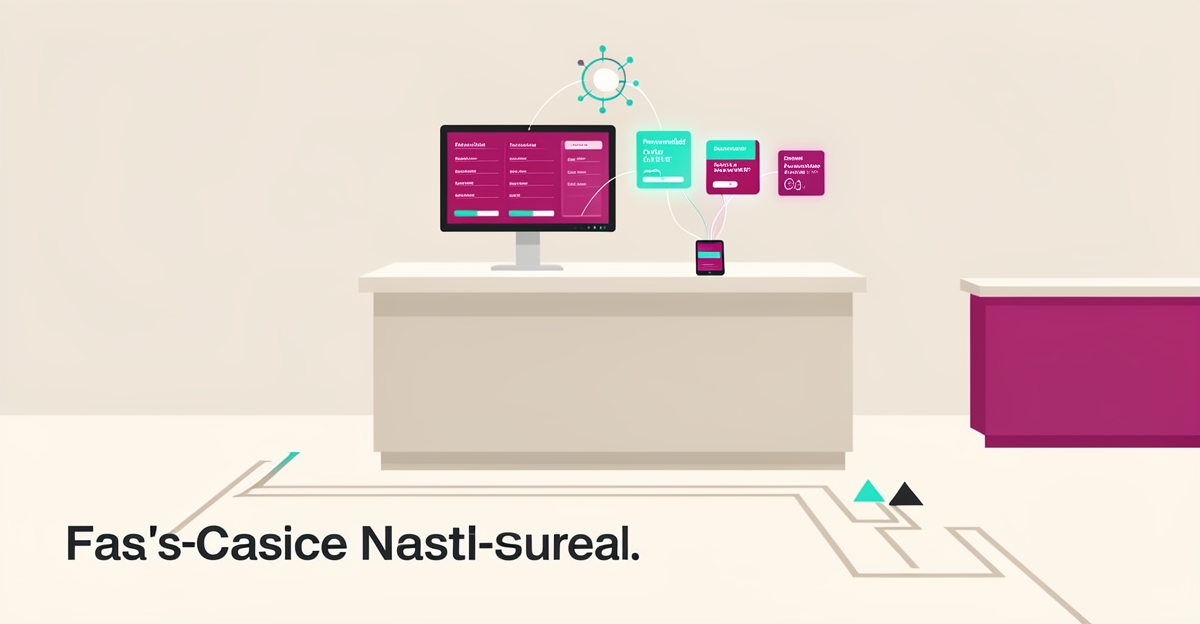
This analysis powers targeted promotions delivered through mobile apps, digital signage, or staff recommendations. An app can push a personalized add-on when a regular orders their usual, signage can surface a relevant combo to nearby shoppers, and staff can receive a prompt to suggest a loyalty offer based on profile history. The result is personalization that is useful in the moment, conversational and capable of doing something, not just saying something.
AI is not just about automation; it's about augmentation. It's about making humans more efficient and effective. Expert commentary emphasizes that the future of marketing is not about being 'personalized' for its own sake, but being useful in the moment and context-aware.
For fast-casual operators, AI-driven personalization supports the core goal of increasing engagement and average order value. AIQ Labs builds AI-driven marketing engines that analyze in-store behavior and customer profiles to deliver targeted promotions via apps, signage, or staff recommendations, whether as a standalone workflow build or as part of a broader connected system.
Typical data inputs that fuel these engines include:
- In-store movement and dwell time from sensors and Wi-Fi analytics
- Purchase history and basket analysis from POS and loyalty systems
- App interactions, preferences, and real-time location signals
- Staff-facing prompts for personalized recommendations at point of service
When these signals are unified, promotions shift from generic discounts to timely suggestions that feel helpful. Brands can test offers by segment, learn from response, and refine targeting without manual segmentation.
The approach also supports broader AI-powered marketing goals to create personalized experiences, automate tasks, and make data-driven decisions. AI-powered marketing tools enhance customer engagement and satisfaction while fostering brand loyalty.
Over time, the system learns what resonates per guest, per location, per time of day, and continuously improves relevance. That continuous learning loop is what turns occasional personalization into sustained lift in engagement and order value.
Implementation Roadmap: Building AI-Driven Marketing Engines for Fast-Casual Brands
Fast-casual brands win in-store when promotions feel useful in the moment, not generic. AI makes that possible by reading behavior and profile signals in real time and turning them into app pushes, dynamic signage, or staff prompts that lift engagement and average order value.
The roadmap starts with data readiness. AI-powered marketing requires high-quality and relevant data to deliver accurate insights and personalized experiences. That means unifying POS transactions, loyalty profiles, app usage, and in-store sensors into a single view. Without clean, connected data, models deliver noise instead of offers.
Next comes integration and modeling. AI analyzes in-store behavior and customer profiles to deliver targeted promotions via apps, signage, or staff recommendations. Multi-agent systems can score intent, predict basket size, and trigger the right message at the right touchpoint. This is where technical expertise becomes critical; implementing AI-powered marketing tools requires technical expertise and resources, and architecture choices determine scalability.
A practical build sequence looks like this:
- Map the customer journey and identify high-impact moments: entry, queue, ordering, and checkout.
- Connect owned data sources and establish governance for privacy, consent, and data quality.
- Deploy a pilot engine for one store or daypart with app and signage outputs, then measure lift.
- Train frontline staff on AI prompts and feedback loops so recommendations feel human, not automated.
Testing and optimization keep the engine honest. Start with holdout stores, track engagement, redemption, and average order value, and refine personalization rules weekly. Change management matters here; adopting AI-powered marketing approaches may require significant changes to existing processes and cultures. Teams need clear owners, simple dashboards, and a feedback channel from staff on the floor.
AIQ Labs builds custom AI marketing engines that increase engagement and average order value through owned, scalable systems. The approach mirrors how AI is transforming marketing by enabling businesses to create personalized experiences, automate tasks, and make data-driven decisions. With true ownership of the code and agents, brands avoid vendor lock-in and can evolve the engine as menus, locations, and customer habits change. If you want to start smaller, an AI employee handling guest messaging or an AI dispatcher coordinating promotions across locations can prove the concept before a full build. For brands ready to connect everything, POS, loyalty, app, signage and staff prompts in one operating layer, an AI operating system built in phases is the end state.
Start the Fit Check at https://aiqlabs.ai/apply for a free 30-minute strategy call to map your biggest bottleneck and identify high-ROI AI automation opportunities.
Still paying for 10+ subscriptions that don’t talk to each other?
We build custom AI systems you own outright. No vendor lock-in. Full control.
Not sure where to start? Ask our AI planner
Frequently Asked Questions
How does AI actually personalize promotions for customers standing in line at a fast-casual restaurant?
What kind of results can we expect from AI-driven in-store personalization?
We don't have clean data across POS, loyalty, and sensors, is AI still worth pursuing?
Will AI recommendations make our staff feel replaced or robotic?
How long does it take to pilot something like this in one location?
What makes AIQ Labs different from buying a marketing automation platform off the shelf?
Turn In-Store Traffic Into Revenue, One Useful Moment at a Time
Fast-casual brands are losing revenue at the door because generic promotions miss the why behind a visit. AI closes that personalization gap by turning in-store signals, dwell time, basket composition, purchase history and loyalty profiles, into real-time offers via apps, signage and staff prompts. The shift is from broadcasting to being useful in the moment, context-aware and capable of doing something, not just saying something. When intent is recognized as it happens, traffic converts, baskets grow and the in-store experience becomes a revenue driver instead of a cost center. AIQ Labs builds AI-driven marketing engines that analyze in-store behavior and customer profiles to deliver targeted promotions that increase engagement and average order value, with true ownership and no vendor lock-in. Start with data readiness, map high-impact moments like entry, queue and checkout, then pilot in one store or daypart and measure lift in redemption and AOV. Ready to map your biggest bottleneck? Start the Fit Check at https://aiqlabs.ai/apply for a free 30-minute strategy call to identify high-ROI AI automation opportunities. If there isn’t a clear win, we’ll tell you that too.
Make AI your competitive advantage — not just another tool.
Strategy, implementation and ongoing optimization. One partner, end to end.
Not sure where to start? Ask our AI planner