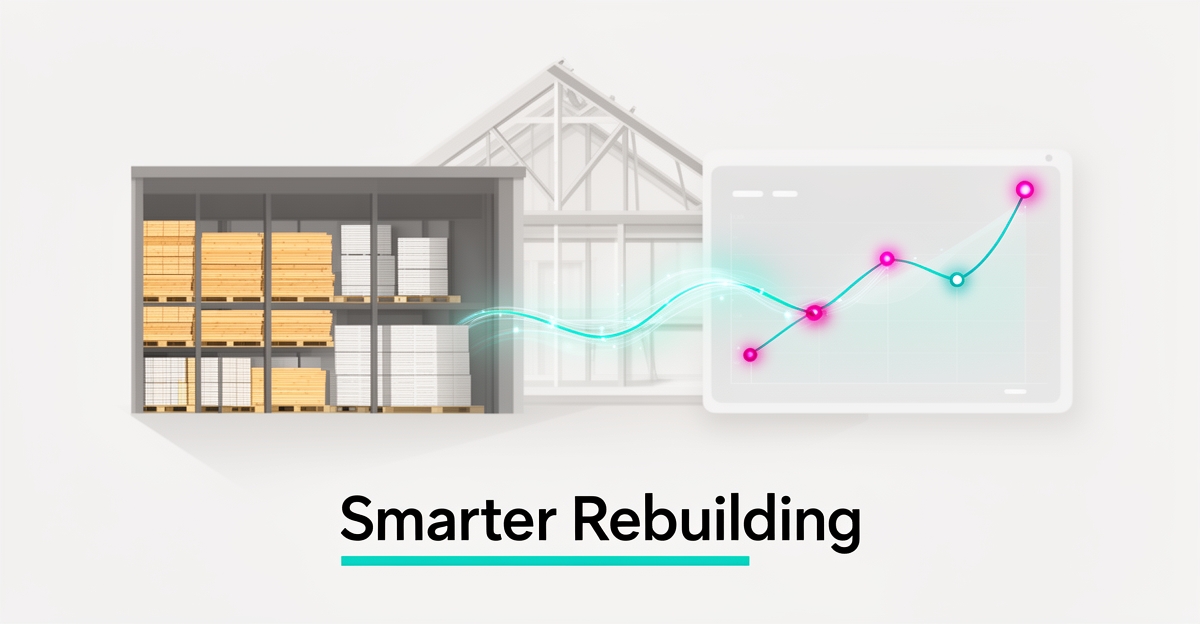
AI for Inventory & Material Forecasting in Disaster Rebuild Operations
Key Facts
- AI forecasting typically achieves 80-90% accuracy compared to 40-60% for manual planning according to comparative research
- Manual inventory planning carries an error rate of roughly 8% to 12% based on industry analysis
- AI-powered forecasting can cut planning errors by 20% to 50% per predictive analytics research
- AI typically lowers inventory holding costs by 20-30% according to forecasting studies
- AI can automate up to 80% of manual tasks in supply chain management per Databricks industry research
- Agentic AI is moving inventory management from static forecasting to continuous, autonomous replenishment as Microsoft's supply chain team describes
Hire a team member that works 24/7 — for less than a part-time wage.
AI receptionists, SDRs, dispatchers and 99+ roles. Trained on your business, fully managed.
Not sure where to start? Ask our AI planner
The Hidden Cost of Guesswork in Disaster Material Planning
When a Category 4 hurricane makes landfall, the difference between a contractor who profits and one who stalls often comes down to a single question: how much lumber, drywall, and roofing material is sitting in the yard right now? For most disaster rebuild operations, that answer still lives in a spreadsheet built on an adjuster's best guess.
Traditional material planning in catastrophe response relies heavily on verbal estimates from insurance adjusters—figures that shift weekly as claims get revised, supplemented, or delayed. Project managers translate these moving targets into purchase orders using manual spreadsheets, a method that carries an error rate of roughly 8% to 12% even under normal conditions. During surge events, when multiple projects compete for the same regional supply, that margin of error becomes a critical failure point.
The financial damage compounds in three directions:
- Stockouts during surge demand halt active job sites, burning crew hours and extending project timelines while competitors secure available inventory
- Excess inventory ties up working capital in materials that sit idle, with inventory holding costs eroding margins already squeezed by insurance payment delays
- Manual planning consumes 20-40 hours monthly of skilled project manager time on repetitive spreadsheet work instead of client communication and quality control
Material cost volatility amplifies these risks. When a contractor orders based on a verbal estimate that gets revised downward two weeks later, they own the surplus. When the estimate gets revised upward after a supplement approval, they face stockouts and rush-order premiums. Industry research indicates businesses using AI-powered forecasting achieve 80-90% accuracy compared to 40-60% for manual methods—a gap that translates directly to cash flow stability when material prices fluctuate weekly.
The operational drag extends beyond the balance sheet. Project managers become data clerks, manually cross-referencing claim statuses, supplier lead times, and crew schedules across disconnected systems. This is precisely the bottleneck AIQ Labs addresses: a Workflow Build rebuilds the one inventory-and-procurement workflow that costs you the most, with forecasting models that pull active claim pipelines and carrier payment histories—replacing guesswork with data-driven ordering guidance. When the system knows which supplements are approved and which carriers are delaying payment, material orders align with verified cash flow rather than hopeful projections.
For disaster rebuild contractors operating on thin margins and tight timelines, the hidden cost of guesswork isn't just inefficiency—it's the difference between scaling during catastrophe response and watching competitors take the work.
How AI Predicts Material Needs with Damage-Specific Precision
When a hurricane makes landfall, most rebuild contractors start guessing—ordering materials based on adjusters' verbal estimates that can change weekly. AI forecasting replaces that guesswork with precision, and the difference is measurable: predictive analytics typically achieves 80-90% forecast accuracy compared to 40-60% for manual planning, according to comparative research on inventory planning methods.
The key is what the model actually analyzes. Rather than relying on gut feel or a single sales trend, AI systems process damage severity, geographic risk factors, and historical rebuild patterns alongside real-time claim pipeline data. Manual planning typically handles only one or two variables, while predictive models process 40 or more—weather patterns, carrier payment histories, seasonal material price curves, and crew capacity all feed into the forecast.
For disaster rebuild operations specifically, this means procurement aligns with verified supplement approvals rather than speculation. Custom forecasting models integrate directly with estimating workflows, so when a supplement gets approved, material line items auto-populate purchase orders—eliminating manual re-entry and reducing ordering errors. Contractors who tie procurement to actual claim workflows commonly report fewer stockouts during surge events and less capital trapped in overstock.
The accuracy gains translate directly into financial protection. Inventory distortion costs retailers over $1.7 trillion annually, with stockouts accounting for the largest share of missed revenue. During a disaster response window, a stockout isn't just lost revenue—it's a lost rebuild contract. AI-driven forecasting also tends to lower inventory holding costs by 20-30%, freeing up working capital that would otherwise sit idle in overstocked yards.
Modern systems go beyond static forecasting through continuous monitoring. AI employees track supplier lead times around the clock and auto-adjust safety stock levels for mitigation equipment as demand patterns shift. This mirrors the broader industry shift toward agentic AI, where replenishment agents adjust purchase orders and supplier-risk agents flag delays before they cascade downstream.
What this looks like in practice:
- Active claim pipelines cross-referenced against carrier payment histories to time material orders precisely
- Dynamic safety stock adjustments triggered by real-time demand signals and supplier lead-time changes
- Automated purchase order generation the moment supplements are verified and approved
- 24/7 monitoring of inbound claims so reorder points shift as conditions change—no spreadsheet scrambling when a CAT event hits
The contrast with traditional methods is stark. Instead of ordering roofing materials based on adjusters' verbal estimates that changed weekly, a well-built model flags delayed supplements from major carriers before they become overstock during hurricane season. That's the difference between reacting to what someone told you last week and ordering based on what the data says today.
From Forecast to Field: Integrating AI into Procurement and Compliance Workflows
Predictive insights only create value when they move from a dashboard to a purchase order, a delivery truck, and an audit trail. In disaster rebuild, that handoff is where delays, overstock, and compliance exposure live.
Integration starts with estimating software. AI models analyze damage severity, geographic location, and historical rebuild patterns to predict material needs, then sync with procurement so material line items auto-populate purchase orders when supplements are approved. That eliminates manual re-entry and reduces ordering errors at the moment claims become actionable.
24/7 supplier monitoring closes the gap between forecast and field. AI employees monitor supplier lead times and auto-adjust safety stock levels for mitigation equipment based on demand patterns. The continuous loop ensures reorder points shift in real time as supplements get approved, rather than waiting for a weekly spreadsheet review. According to industry research, AI can automate up to 80% of manual tasks in supply chain management, freeing teams for strategic decisions.
Compliance is built into the workflow, not bolted on afterward. Built-in tracking maintains audit trails and documentation for FEMA, HUD CDBG-DR, and Davis-Bacon Act requirements. When wage determinations change mid-project, the system flags labor cost variance and recalculates material-to-labor ratios to keep grant thresholds intact. This compliance-first architecture turns predictive insights into audit-ready material delivery.
The operational impact is measurable. Research on predictive analytics points to forecast accuracy of 80-90% compared to 40-60% for manual planning, and industry analysis suggests stockouts can be reduced by 30-50% while overstock falls 20-35%. For contractors running disaster rebuild volume, those margins compound across every active job site.
Practical implementation follows a clear pattern:
- Estimate-to-PO sync: damage data and claim pipeline feed forecasting models that write purchase orders automatically
- AI employee monitoring: 24/7 lead time tracking with dynamic safety stock adjustments for mitigation equipment
- Compliance tracking: automated audit trails for FEMA, HUD, and Davis-Bacon with variance alerts
- Logistics alignment: forecasts tied to active claim pipelines and crew capacity for timely delivery
The shift from static planning to continuous, real-time learning is already underway across the supply chain industry. For rebuild contractors, that means fewer emergency buys, less capital tied in excess inventory, and documentation that stands up under review. When forecasting, procurement, and compliance run as one connected layer—an AI operating system built in phases and owned outright—the whole operation stops depending on whoever last updated the spreadsheet.
Still paying for 10+ subscriptions that don’t talk to each other?
We build custom AI systems you own outright. No vendor lock-in. Full control.
Not sure where to start? Ask our AI planner
Frequently Asked Questions
How does AI actually predict what materials I'll need for a disaster rebuild project?
What's the real cost difference between AI forecasting and our current spreadsheet method?
Can AI integrate with our existing estimating software and procurement workflows?
What kind of results can disaster rebuild contractors expect from AI inventory forecasting?
How does AI handle compliance requirements like FEMA or Davis-Bacon during rebuild projects?
Is AI forecasting worth it for a smaller disaster rebuild operation, or is this just for enterprise contractors?
From Guesswork to Verified Orders: Your Next Move in Disaster Rebuild
Disaster rebuild success hinges on moving from verbal estimates and weekly spreadsheet scrambles to forecasts grounded in damage severity, geography, and live claim pipelines. When AI replaces guesswork, contractors align procurement with verified supplement approvals, cut stockouts during surge events, and free project managers from 20-40 hours of manual planning each month. The result is tighter cash flow, fewer rush-order premiums, and audit-ready compliance for FEMA, HUD CDBG-DR, and Davis-Bacon requirements. AIQ Labs builds forecasting systems that sync with estimating, procurement, and logistics workflows—whether that's a managed AI employee handling 24/7 supplier monitoring, a fixed-price workflow build for your procurement bottleneck, or a full AI operating system you own outright. If your team is still ordering on adjuster calls, start by mapping your active claim pipeline to material demand and testing a damage-specific forecast on one project category. Take the 2-minute Fit Check at https://aiqlabs.ai/apply, then book a free 30-minute strategy call to identify your highest-ROI automation opportunity.
Make AI your competitive advantage — not just another tool.
Strategy, implementation and ongoing optimization. One partner, end to end.
Not sure where to start? Ask our AI planner