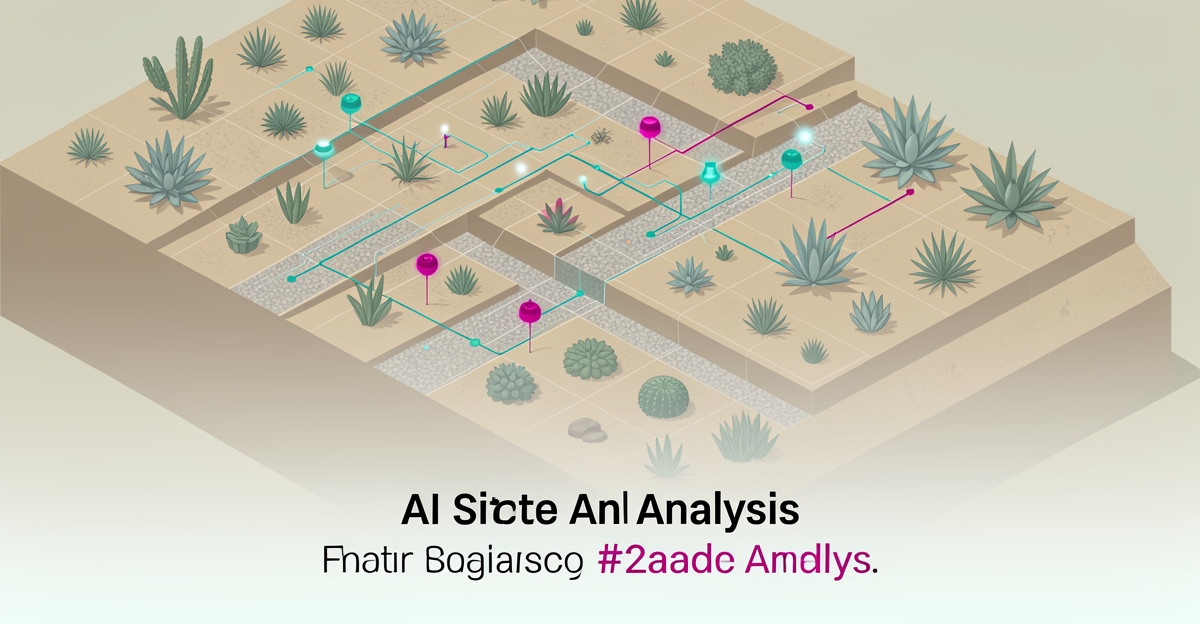
AI for Irrigation Design: How Xeriscaping Firms Can Automate Site Assessments
Key Facts
- AI-powered irrigation analysis can meaningfully reduce water waste through precision soil and weather analysis
- Manual site assessments typically consume 15-20 hours per xeriscaping project, creating a major workflow bottleneck
- AI optimization can improve resource efficiency through environmental control and predictive modeling
- Inconsistent manual assessments lead to data interpretation errors causing over- or under-watering recommendations
- Automating site assessments with AI enables firms to scale client capacity during peak seasons
- AIQ Labs has deployed 200+ multi-agent systems and runs 4 live SaaS products daily
Hire a team member that works 24/7 — for less than a part-time wage.
AI receptionists, SDRs, dispatchers and 99+ roles. Trained on your business, fully managed.
Not sure where to start? Ask our AI planner
The Hidden Cost of Manual Site Assessments in Xeriscaping
Imagine pouring weeks of expertise into a single project only to realize that nearly half of that time was spent just measuring the site. For xeriscaping firms, this isn't a hypothetical scenario; it's the daily reality of manual site assessments. The traditional approach to evaluating properties typically consumes 15 to 20 hours per project, creating an invisible drain on resources that ripples through every aspect of the business.
The process begins with physical site visits, soil sampling, and manual data collection. Each step requires meticulous attention to detail, from recording sun exposure patterns to analyzing drainage characteristics. This labor-intensive workflow doesn't just consume time, it creates a bottleneck that delays project kickoffs and limits how many clients a firm can realistically serve. While designers are out in the field with clipboards and soil probes, potential new business sits waiting.
The real challenge emerges in interpreting the collected data. Soil composition, local climate patterns, and microclimate variations all influence irrigation design, but human analysis of these complex variables is inherently prone to inconsistency. Two assessors might evaluate the same property and arrive at different conclusions about water needs or plant placement. Traditional methods often miss optimization opportunities that data-driven analysis can surface. This inconsistency doesn't just affect design quality, it undermines client trust and can lead to costly revisions down the line.
The hidden costs extend beyond billable hours. Manual assessments introduce several critical vulnerabilities:
- Data interpretation errors that lead to over- or under-watering recommendations
- Inconsistent documentation that makes project replication difficult
- Delayed proposal generation that causes prospects to choose faster competitors
- Limited capacity that forces firms to turn away work during peak seasons
These challenges compound in xeriscaping, where precision is paramount. Unlike conventional landscaping, xeriscaping demands exact calculations of water requirements based on specific soil types and climate conditions. A single miscalculation in soil permeability or evapotranspiration rates can compromise an entire design. AI-powered approaches can dramatically reduce water usage compared to traditional methods, yet manual assessments rarely capture the granular data needed to achieve those efficiencies.
The workflow bottleneck becomes particularly evident during initial design phases. While the assessment data sits in spreadsheets or notebooks, designers cannot proceed with creating tailored irrigation plans. This sequential dependency means that a single delayed assessment holds up multiple projects, and every week it persists is a week competitors are quoting faster.
Forward-thinking firms are discovering that automating these assessments doesn't just save time, it fundamentally improves accuracy. By leveraging AI to analyze property data, soil types, and climate patterns, businesses can generate consistent, data-driven irrigation plans in a fraction of the time. AIQ Labs builds custom AI systems that handle these complex evaluation workflows end-to-end, through AI Workflow Builds, transforming weeks of manual work into automated, precise assessments that scale with business growth.
How AI Analyzes Property Data to Generate Precision Irrigation Plans
Imagine transforming hours of manual site assessments into precise, data-driven irrigation plans in minutes. AI-powered systems are making this a reality for xeriscaping firms by analyzing complex property data with consistent, repeatable accuracy.
AI excels at processing vast datasets, including soil composition, historical weather patterns, and topography, to generate optimized irrigation designs. For instance, AI can analyze soil types to determine water retention capabilities, ensuring that irrigation plans are tailored to specific property needs. That kind of precision typically translates into meaningfully less water waste and healthier plant outcomes through environmental optimization.
Here’s how AI achieves this:
- Soil Analysis: AI evaluates soil composition to determine water retention and drainage capabilities.
- Weather Pattern Integration: Historical and real-time weather data inform irrigation schedules.
- Topography Mapping: AI assesses land slopes and elevations to optimize water distribution.
- Predictive Modeling: AI forecasts water needs based on plant types and environmental conditions.
These capabilities allow xeriscaping firms to create highly efficient irrigation plans that conserve water and enhance plant health. For example, AI can identify areas prone to waterlogging or drought stress, enabling proactive adjustments. This level of precision not only saves time but also reduces operational costs and environmental impact.
At AIQ Labs, we build custom AI systems that handle these complex workflows end-to-end. Our solutions integrate with your existing tools, providing xeriscaping firms with actionable insights and automated design processes. By leveraging AI, firms can focus on delivering sustainable, water-efficient landscapes without the manual overhead.
The result? Faster, more accurate site assessments and irrigation plans that align with modern sustainability goals. As the demand for water-efficient landscaping grows, AI-powered tools are becoming indispensable for firms looking to stay competitive and environmentally responsible.
From Manual Surveys to AI Workflow: Implementation Steps for Xeriscaping Firms
Transitioning from manual surveys to AI-powered site assessments requires a clear, phased approach that aligns with how xeriscaping firms operate and grow. The first step involves gathering and organizing existing property data, such as soil reports, satellite imagery, and historical weather patterns, into a structured format that AI systems can process. This foundational work ensures that downstream analysis is accurate and relevant to local microclimates, which directly influence irrigation needs and plant selection. Once data is prepared, firms can begin training AI models on region-specific conditions, enabling the system to recognize patterns unique to their service area, such as drought-prone zones or soil types that retain moisture differently.
With a trained model in place, the next phase focuses on integrating AI outputs into existing design workflows. This includes connecting the AI’s irrigation recommendations, such as zone layout, emitter placement, and watering schedules, to popular landscape design software through custom APIs or middleware. By automating these calculations, firms reduce the time spent on manual calculations and site revisits, freeing up designers to focus on creative and client-facing tasks. The same optimization principles that improve yield efficiency in agriculture translate directly to xeriscaping through optimized water use and plant health, and dynamic resource adjustment supports both sustainability goals and cost savings.
Throughout this process, firms benefit from a partnership model that supports incremental adoption. With AIQ Labs’ Build in Milestones approach, xeriscaping companies can implement each phase, data prep, model training, and software integration, separately, reviewing and approving results before moving forward, at a fixed price per phase. This reduces risk and allows teams to build confidence in the system while retaining full ownership of what’s developed. As the AI system proves its value in one workflow, like site assessment, firms can scale to adjacent processes, such as client reporting or maintenance scheduling, knowing the foundation is solid and aligned with their operational reality. This step-by-step evolution turns AI from an experimental tool into a dependable part of the design engine.
Still paying for 10+ subscriptions that don’t talk to each other?
We build custom AI systems you own outright. No vendor lock-in. Full control.
Not sure where to start? Ask our AI planner
Frequently Asked Questions
How much time does a manual xeriscaping site assessment actually take?
Can AI actually cut water use in xeriscaping designs?
Will AI be consistent if different assessors look at the same property?
What data does AI need to generate a precision irrigation plan?
Is AI adoption becoming essential for design firms?
Do I have to replace my designers if I automate assessments?
Turning Site Assessments Into Your Competitive Edge
The shift from manual site assessments to AI-powered automation isn’t just about saving time, it’s about reclaiming the expertise of your team and redirecting it toward what truly matters: designing sustainable, water-efficient landscapes that delight clients and grow your business. By automating data collection, soil analysis, and irrigation planning, xeriscaping firms can eliminate bottlenecks, reduce errors, and scale operations without adding headcount. The result is faster project turnarounds, more accurate designs, and the ability to serve more clients during peak seasons, all while aligning with rising demand for eco-conscious landscaping. If you’re ready to see how AI can transform your site assessment workflow from a cost center into a strategic advantage, the next step is simple. Take the 2-minute Fit Check to see if your firm qualifies, then book your free 30-minute strategy call, no sales pitch, just a clear path forward.
Make AI your competitive advantage — not just another tool.
Strategy, implementation and ongoing optimization. One partner, end to end.
Not sure where to start? Ask our AI planner