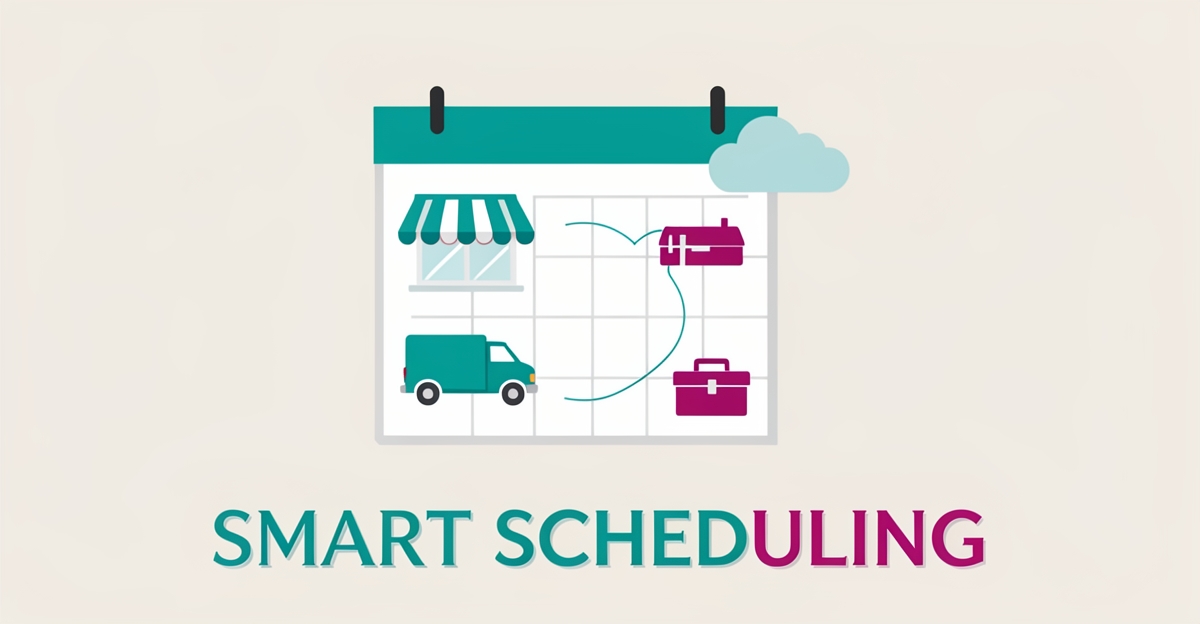
AI for Job Scheduling and Resource Allocation in Awning Installers
Key Facts
- Frontline burnout is widespread across industries, and unpredictable scheduling is a major contributor, per workforce research from UKG.
- Work-related stress typically hurts on-the-job performance, making scheduling a retention issue as much as an operational one.
- Burned-out employees are significantly more likely to look for a new job, per UKG research.
- Many managers still prefer visual boards for resource planning, per ClickUp research, structure is the foundation AI needs.
- AI-driven resource planning optimizes team capacity and improves productivity by learning from historical and live data, per industry research.
Hire a team member that works 24/7 — for less than a part-time wage.
AI receptionists, SDRs, dispatchers and 99+ roles. Trained on your business, fully managed.
Not sure where to start? Ask our AI planner
The Scheduling Crunch Awning Installers Face
A single rainstorm can unravel an entire week of awning installations. When crews are booked back-to-back on whiteboards or spreadsheets, one weather delay cascades into missed appointments, idle technicians, and customers waiting at windows for installers who never arrive.
The problem is structural, not motivational. Manual scheduling assumes conditions stay constant, but awning installation depends on variables no human dispatcher can track in real time: shifting forecasts, variable job complexity, and technician availability across a mobile fleet. The result is a familiar pattern of overbooking on clear days and dead time on uncertain ones.
The human cost is real. UKG research has found that a large majority of frontline employees report feeling burned out, and a substantial share report being "often" or "always" exhausted. For trade businesses running mobile crews, unpredictable schedules compound that strain, technicians absorb the chaos of constant rescheduling while still expected to deliver quality installations.
Burnout also carries a direct business price. The same study on smart scheduling found that most employees say work-related stress negatively impacts their performance, and burned-out workers are far more likely to look for a new job, per the Society for Human Resource Management research cited by UKG. In a tight labor market for skilled installers, losing crew members to schedule-driven stress is a cost most awning businesses never put on the books.
Why does manual scheduling keep failing? It breaks precisely when conditions change:
- Weather shifts force last-minute reshuffles that ripple through every downstream booking
- Overbooked days create rushed installations and quality callbacks
- Idle hours between jobs waste paid technician time with no revenue attached
- Constant firefighting pushes dispatcher and technician stress to unsustainable levels
Traditional scheduling tools offer little help because they follow fixed rules and break when conditions shift. As resource planning research explains, the difference lies in intelligence that learns from historical and live data points and adjusts recommendations dynamically, predicting future demand rather than simply recording the present. That's the distinction between automation that executes predefined steps and AI that actually guides allocation decisions.
This is where AI-driven scheduling changes the equation for awning installers. By analyzing technician availability, weather forecasts, and job complexity together, AI prevents overbooking and idle time before they happen, and real-time updates keep projects on track when conditions change. It's the approach AIQ Labs builds into custom systems for trade businesses, through [AI Workflow Builds](/workflow-builds) that rebuild the one scheduling workflow that costs you the most, or a managed [AI Employee Dispatcher](/ai-employees) that handles calls and calendar. Scheduling isn't just an operational fix; as UKG puts it, it's both "an operational tool and a retention strategy." When crews get predictable, fair schedules, they stay longer, install better, and keep customers coming back.
How AI-Driven Resource Planning Works for Field Crews
Awning installation runs on weather windows, crew skill sets, and tight site access. When scheduling relies on memory and spreadsheets, crews drift into overbooking, idle time, and last-minute scrambles that erode margin and morale.
AI-driven smart scheduling replaces static rules with real-time workforce data and predictive analytics to match staffing levels with actual demand. The system ingests technician availability, certified skill sets, travel time, and job complexity, then layers in weather forecasts and site constraints. Recommendations adjust dynamically as conditions change instead of breaking when the plan shifts.
Traditional automation executes predefined steps. AI-driven resource planning guides planning and allocation decisions, learns from historical and live data points, and predicts future resources and demand. That difference matters for field crews who face daily disruption.
Capacity optimization happens because the model balances load across teams and prevents the double-booking that creates idle travel and overtime. Agility improves when rain forecasts or material delays trigger automatic resequencing before crews are dispatched. Fairness improves because assignments reflect capability and workload history rather than who speaks up first.
Burnout risk drops when scheduling supports sustainable workloads. UKG research finds most frontline employees feel burned out, and a majority say work-related stress negatively impacts work performance. The same body of work notes smart scheduling is both an operational tool and a retention strategy, with burned-out employees significantly more likely to look for a new job.
For awning installers, AI-driven resource planning typically evaluates:
- Technician availability and certifications matched to job complexity and equipment needs
- Weather forecasts and site access windows to protect installation quality
- Travel time and route density to reduce non-billable hours
- Historical completion data to predict realistic durations and avoid overpromising
The result is predictive AI planning rather than reactive firefighting. Managers gain visibility without manual boards, and crews receive predictable, fair assignments that respect skill and capacity. According to industry research on AI for resource planning, AI-driven approaches optimize team capacity and improve productivity while enhancing manager effectiveness and reducing administrative tasks.
AIQ Labs builds this capability into custom systems for trade businesses, analyzing technician availability, weather forecasts, and job complexity to prevent overbooking and idle time. With real-time updates, projects complete on time and teams stay balanced.
From Burnout to Balanced Capacity: What AI Scheduling Delivers
Burnout is costing awning crews more than overtime ever saved. When technicians are overbooked, rushed between sites, or sent out in bad weather, fatigue compounds and on-time completion slips.
AI scheduling changes that pattern by matching real technician availability, job complexity, and live weather forecasts to daily routes. The result is balanced capacity instead of boom-and-bust weeks. AI-driven smart scheduling reduces burnout, improves operational efficiency, and creates a more predictable work experience.
Frontline teams feel the impact first. Research from UKG finds most frontline employees feel burned out, with a large share often or always exhausted. Work-related stress negatively impacts performance for most employees, and burned-out staff are far more likely to look for a new job. Burnout also carries a direct cost in turnover, callbacks, and lost capacity that most trade businesses never fully account for.
For awning installers, that translates into missed installs, callback delays, and higher turnover in a skilled trade that is hard to replace. Smart scheduling acts as both an operational tool and a retention strategy.
AI prevents the classic overbooking-idle loop by learning from historical and live data and adjusting recommendations dynamically. It optimizes team capacity and improves productivity while giving managers back time previously lost to manual rebalancing. AIQ Labs builds this capability into custom systems for trade businesses, analyzing technician availability, weather forecasts, and job complexity to prevent overbooking and idle time.
Teams experience measurable relief when scheduling respects human limits:
- Fewer last-minute dispatches and weather-related rework
- Clearer daily plans that reduce mental load and travel stress
- Fairer distribution of complex installs versus routine service
- Real-time updates that keep crews and customers aligned
Managers gain more time for coaching and quality control instead of firefighting calendars. With automated capacity planning, they can see bottlenecks before they form and reallocate crews with confidence.
Employee wellbeing improves when schedules are predictable and achievable. Smart scheduling supports a sense of fairness and autonomy, a key driver of retention in field services. Projects complete on time because the right technician is assigned to the right job at the right time, with weather and travel factored in.
The shift from reactive dispatch to proactive planning protects margins and morale at the same time.
Building an AI-Ready Scheduling System You Own
Most scheduling systems fail because they’re built on messy data and fragile routines. AI can’t fix chaos, it can only amplify whatever structure you already have.
Before any algorithm assigns a crew to a job site, you need a clean foundation. That starts with building an AI-ready resource inventory: a structured database of your technicians’ skills, certifications, availability windows, and geographic zones. For awning installers, this means tagging who’s qualified for motorized retractable systems versus fixed-frame installs, and who holds the electrical permits for hardwired units.
According to ClickUp’s research on AI resource planning, roughly a third of managers prefer visual boards for resource planning. That preference makes sense, when your inventory is structured and visual, AI can start matching the right installer to the right job without guesswork.
Once your inventory is clean, automate the dispatch tasks that eat your office manager’s day. Routine confirmations, weather-delay notifications, and crew assignment pings don’t need human hands. Automating routine work frees teams to focus on high-value problem-solving, the consultations, custom fits, and quality checks that actually win repeat business.
For an awning business, that means your senior installers spend time on complex custom fits and customer consultations, not driving back to the shop because a job was double-booked. AI-driven scheduling handles the logistics layer so your people handle the craftsmanship layer.
- Catalog every technician’s certifications, skill tags, and service zones in a structured format
- Automate routine dispatch messages, confirmations, and weather-delay alerts
- Build a workflow that flags high-value installs, commercial contracts, multi-unit residential, for priority scheduling
- Review AI recommendations weekly and retrain the system with completed-job feedback
A structured workflow means every job moves through defined stages: quote, site survey, permit check, install, inspection. AI slots each stage into the calendar based on crew capacity and predicted job duration. The UKG research on smart scheduling frames this as both an operational tool and a retention strategy, when schedules are predictable and fair, burnout drops. That matters when most frontline employees report feeling burned out.
Here’s where ownership becomes critical. Off-the-shelf scheduling software locks you into someone else’s roadmap and recurring fees. AIQ Labs builds custom systems that trade businesses own outright, your dispatch logic, your data, your competitive edge. With payment models like Start Monthly, Build in Milestones, or Own It Outright, you choose how the investment fits your cash flow. An [AI Employee Dispatcher](/ai-employees) works inside that system, handling the phones and the calendar while you keep full control of the code and the process.
The goal isn’t to replace your office manager. It’s to give them a system that never double-books a crew, never sends an installer an hour across town for a job they’re not certified to complete, and never leaves a high-value commercial contract waiting because the schedule was a mess.
Still paying for 10+ subscriptions that don’t talk to each other?
We build custom AI systems you own outright. No vendor lock-in. Full control.
Not sure where to start? Ask our AI planner
Frequently Asked Questions
How does AI scheduling help awning installers avoid overbooking and idle time?
What impact does burnout have on awning installation crews and their businesses?
Can AI scheduling really improve technician retention in field service businesses?
What data does AI-driven resource planning use to optimize awning installation schedules?
Is it necessary to have perfect data before implementing AI scheduling for my awning business?
How much time can AI scheduling save managers who currently handle dispatch manually?
From Scheduling Chaos to Sustainable Growth
Awning installers don’t lose time to weather, they lose it to rigid schedules that can’t adapt. As we’ve seen, AI-driven scheduling turns reactive chaos into proactive balance by matching technician skills, weather forecasts, and job complexity in real time. The result isn’t just fewer idle hours or missed appointments, it’s measurable relief for crews facing burnout, clearer capacity for managers, and a scheduling system that doubles as a retention strategy in a tight labor market. When schedules respect human limits, quality improves, callbacks drop, and skilled installers stay longer. The path forward starts with structure: building an AI-ready resource inventory, automating routine dispatch, and letting AI handle the logistics so your team focuses on craftsmanship. If you’re ready to move from whiteboard guesswork to predictable, fair scheduling that protects both margin and morale, AIQ Labs helps trade businesses build systems they own outright, starting with a 2-minute [Fit Check](/apply) and a free 30-minute strategy call to map your biggest bottleneck and identify where AI delivers real, immediate value. Questions first? Reach us at [email protected].
Make AI your competitive advantage — not just another tool.
Strategy, implementation and ongoing optimization. One partner, end to end.
Not sure where to start? Ask our AI planner