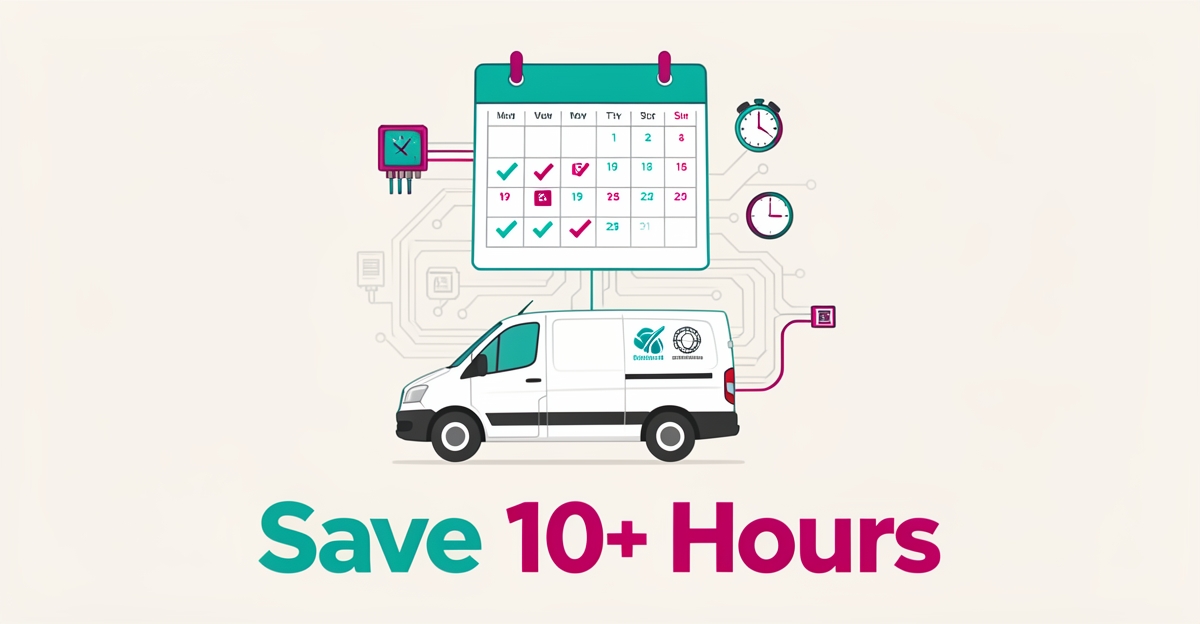
AI for Job Scheduling: How Low Voltage Contractors Can Save 10+ Hours Per Week
Key Facts
- Manual scheduling typically consumes 10+ hours per week for growing low voltage contractors, mostly in reactive rescheduling
- AI scheduling systems can handle the majority of routine scheduling tasks automatically, operating continuously without breaks or absences
- Well-structured instructions and business rules are what separate AI scheduling systems that work from those that create cleanup work
- AI excels at routine scheduling but lacks human judgment for strategic prioritization, final say should stay with the contractor or dispatcher
- AIQ Labs has deployed 200+ multi-agent systems and runs 4 live SaaS products daily
Hire a team member that works 24/7 — for less than a part-time wage.
AI receptionists, SDRs, dispatchers and 99+ roles. Trained on your business, fully managed.
Not sure where to start? Ask our AI planner
The Manual Scheduling Trap: Why Low Voltage Contractors Lose 10+ Hours Weekly
Low voltage contractors often underestimate how much time manual scheduling consumes each week. What begins as a simple spreadsheet quickly evolves into a complex web of technician availability, job site constraints, and past performance data. As crews grow and projects diversify, the cognitive load of balancing these factors manually increases exponentially, turning scheduling into a full-time administrative burden.
Contractors typically spend significant hours weekly just maintaining and updating schedules, with much of this time consumed by reactive adjustments rather than proactive planning. The complexity multiplies when factoring in technician certifications, travel time between sites, and client-specific requirements, variables that are difficult to track consistently in spreadsheets. This administrative overhead directly reduces time available for billable work, customer engagement, and strategic growth initiatives.
AI-powered scheduling systems address this by analyzing historical performance, real-time availability, and job complexity to generate optimized schedules automatically. These systems handle the bulk of routine scheduling tasks without human intervention, operating continuously without breaks or absences. For contractors drowning in manual planning, this shift represents not just time savings, but a fundamental reduction in operational friction that allows teams to focus on higher-value activities.
How AI Scheduling Works: Analyzing Performance, Availability, and Job Complexity
AI scheduling systems transform how low voltage contractors manage their workload by processing multiple data streams simultaneously. These platforms analyze historical performance data to understand each technician's strengths, completion times, and quality metrics across different job types. By examining past performance patterns, the AI identifies which technicians excel at specific tasks, such as fiber optic installations versus security system integrations, allowing for smarter skill-based assignments that reduce rework and improve first-time fix rates.
The system cross-references this performance data with real-time technician availability, factoring in certified qualifications, current workload, location proximity, and scheduled time off. Unlike static spreadsheets that require constant manual updates, AI scheduling operates continuously, adjusting instantly when emergencies arise or jobs finish early. This eliminates the delays caused by waiting on a single dispatcher to notice a change and reshuffle the board.
Job complexity analysis forms the third critical input, where the AI evaluates scope requirements, estimated duration, necessary permits, and potential site challenges. This multi-dimensional analysis enables the system to balance workloads effectively, preventing overbooking of complex jobs while ensuring simpler tasks fill scheduling gaps. The technology creates optimized schedules that respect all operational constraints, from labor regulations to client-specific time windows, while maintaining visibility into resource utilization across the entire team.
Human-AI collaboration remains essential, with contractors retaining strategic oversight for prioritization and urgent decision-making. The AI handles the computational heavy work of schedule generation, but humans provide the contextual judgment needed for emergency triage and long-term planning. This partnership approach ensures contractors maintain control over their operations while gaining back 10+ hours weekly previously lost to manual spreadsheet management and planning overhead. For contractors who want to rebuild the one workflow that costs them the most, [AIQ Labs' AI Workflow Builds](/workflow-builds) deliver a fixed-price, phased build tailored to specific trade requirements.
The Prompt Engineering Foundation: Why Most AI Scheduling Implementations Fail
Most AI scheduling projects don't fail because the model is weak, they fail because the instructions around the model are weak. For low voltage contractors, that gap shows up fast when the system has to juggle technician availability, job complexity, and real-world priorities instead of just dropping tasks onto a calendar.
This is where careful system design becomes the hidden foundation of AI scheduling. When the instructions are vague, the results are invisible until they go wrong, and when they go wrong, you get hallucinated assignments, ignored job dependencies, and schedules that look efficient on paper but break down in the field. The AI may misunderstand what "urgent" means for your operation, or assign work without accounting for certifications and travel time.
Without a solid foundation, even advanced AI systems fail to understand goals, misuse tools, and coordinate poorly. That is exactly the kind of failure contractors cannot afford when the schedule affects crews, customers, and revenue.
Well-built systems, on the other hand, produce measurable gains in task completion, error rates, and speed of deployment. In practical terms, that means the AI is far more likely to interpret scheduling intent correctly, respect constraints, and produce outputs your team can actually use.
That matters because scheduling is not just about filling empty time slots. AI scheduling tools are useful for automating routine scheduling and finding open time blocks, but they still lack the human judgment needed to prioritize based on urgency, capacity, and strategic goals. Strong system design helps bridge that gap by encoding business rules, escalation logic, and scheduling priorities into the system itself.
For contractors, the difference between AI that "just works" and AI that creates more cleanup than value usually comes down to a few fundamentals:
- Clear goal definition so the AI understands what a successful schedule actually looks like
- Constraint handling for technician availability, job complexity, and timing rules
- Coordination logic so tasks, calendars, and approvals stay aligned
- Error prevention that reduces bad assignments, missed handoffs, and rework
This is also why generic tools often disappoint. A scheduling assistant can suggest time blocks, but unless the system has been carefully engineered around your workflow, it will still miss the operational details that matter most. That is the gap AIQ Labs builds for when designing custom automation systems: not just connecting AI to a calendar, but structuring the workflows, rules, and safeguards so the system can support real scheduling decisions reliably.
Integration Without Disruption: Connecting AI Scheduling to Your Existing Workflow
The real challenge for many low voltage contractors isn't finding AI scheduling tools, it's implementing them without disrupting established workflows. Modern solutions are built to complement, not replace, the systems teams already rely on daily. AI scheduling tools typically integrate directly with platforms like Google Calendar, Microsoft Outlook, and task managers such as Notion and Todoist, creating a unified view of work without requiring a complete overhaul. This means contractors can keep using their preferred tools while gaining AI-powered insights.
The integration works through a hybrid model where AI analyzes priorities, deadlines, and job duration to suggest optimal time blocks, but final approval remains with the contractor or dispatcher. AI excels at automating routine scheduling and identifying open time slots, but human judgment is still essential for strategic prioritization based on urgency, capacity, and business goals. This collaborative approach ensures the technology enhances decision-making rather than removing it.
For contractors using systems like QuickBooks for invoicing or HubSpot for customer management, AI scheduling platforms connect via APIs to pull real-time data on technician availability, job complexity, and past performance metrics. These integrations allow the AI to generate schedules that reflect actual operational constraints, such as required certifications for specific low voltage jobs or travel time between sites, while respecting existing business rules. The result is a scheduling assistant that learns from your workflow patterns over time, becoming more accurate with each use.
Key benefits of this integrated approach include:
- Automatic sync with calendar systems to prevent double-booking
- Real-time updates when job priorities shift or emergencies arise
- Preservation of historical scheduling data for continuous improvement
- No need to retrain teams on entirely new platforms
- Ability to override AI suggestions when field conditions change
This seamless connection means contractors typically see value within weeks, not months. A purpose-built AI scheduling employee can be deployed and operational in a phased rollout, handling routine scheduling automatically while you keep final say over priorities. The time saved comes not from replacing human expertise, but from eliminating the manual spreadsheet work and constant rescheduling that consumes so much of a contractor's week.
AIQ Labs specializes in building these kinds of integrated systems, connecting AI scheduling capabilities directly to the tools contractors already use, ensuring the technology serves the workflow rather than demanding the workflow serve the technology. The goal is always augmentation, not automation for automation's sake.
From Manual to Automated: Your Path to AI-Powered Scheduling
The jump from whiteboard-and-spreadsheet scheduling to AI-powered dispatch sounds like a months-long IT project. In practice, it's a structured, phased process with results visible within weeks, not quarters.
The roadmap follows four proven stages:
- Fit Check and strategy call: A short Fit Check followed by a free 30-minute call to map your current processes, pain points, and where AI delivers the most value, which jobs eat the most planning time, which technicians get double-booked, and where jobs slip through the cracks.
- Solution design: You receive a specific implementation plan with a timeline before any build begins, so you know exactly what you're getting and what it should return.
- Pilot operation: The system deploys on a limited basis while your team trains on it and accuracy gets refined against your actual jobs, technicians, and job complexity.
- Full operation: The AI goes live with active support and monitoring, then expands to additional processes as your comfort grows.
That pilot-to-full-operation window matters. Once live, the system handles routine scheduling automatically while you keep final say over priorities. You stay the dispatcher; the AI does the spreadsheet grinding.
The quality of that automation depends heavily on what happens behind the scenes. Structured design, testing, and integration work is what separates a system that "just works" from one that misreads your goals. This is precisely why AIQ Labs builds custom scheduling automation on production-tested multi-agent frameworks, 200+ systems deployed, and 4 live SaaS products the company runs daily, rather than handing contractors a generic tool and a login.
Set expectations correctly going in. AI excels at the busy work, automating routine scheduling and identifying open time blocks, but lacks the human judgment needed to prioritize based on urgency and strategic goals. The best systems suggest schedules based on priority, deadlines, and duration but require your approval before implementation.
On cost and adoption, the concerns are legitimate but manageable. Off-the-shelf scheduling tools typically run on low monthly subscriptions, while custom builds follow flexible models: start monthly, build in milestones where you keep everything shipped, or own it outright, code, data, and all. Training happens during the pilot phase, not after go-live, and human-in-the-loop controls mean nothing schedules without your oversight until you trust it.
The path is short, the risk is front-loaded into a pilot you can evaluate, and the payoff, 10+ hours back every week, starts compounding as soon as the system goes live.
Still paying for 10+ subscriptions that don’t talk to each other?
We build custom AI systems you own outright. No vendor lock-in. Full control.
Not sure where to start? Ask our AI planner
Frequently Asked Questions
How much time can AI scheduling actually save me each week?
Will AI scheduling replace my dispatcher or office manager?
How long does it take to implement an AI scheduling system?
Does AI scheduling work with QuickBooks, Google Calendar, and my other tools?
Why do some AI scheduling implementations fail?
Can AI handle emergency jobs and last-minute schedule changes?
From Spreadsheet Grind to Schedule Advantage
Manual scheduling quietly drains low voltage contractors of 10+ hours every week, turning technician availability, certifications, travel time and job complexity into a constant spreadsheet firefight. AI changes that equation by analyzing historical performance, real-time availability and job complexity to automate routine scheduling tasks, while you keep strategic oversight for priorities and urgent decisions. The difference between a tool that helps and one that creates more cleanup comes down to careful system design, seamless integration with the calendars and systems you already use, and a pilot-first deployment that proves value before full rollout. That's the shift from admin overhead to billable growth. If you want to see where the biggest time leaks are in your current dispatch process, start the 2-minute Fit Check at [aiqlabs.ai/apply](/apply) for a free 30-minute strategy call, or explore [AI Employees](/ai-employees) to see how a managed AI dispatcher can run your scheduling at a fraction of a human hire's cost. Questions first? Reach the team at [email protected].
Make AI your competitive advantage — not just another tool.
Strategy, implementation and ongoing optimization. One partner, end to end.
Not sure where to start? Ask our AI planner