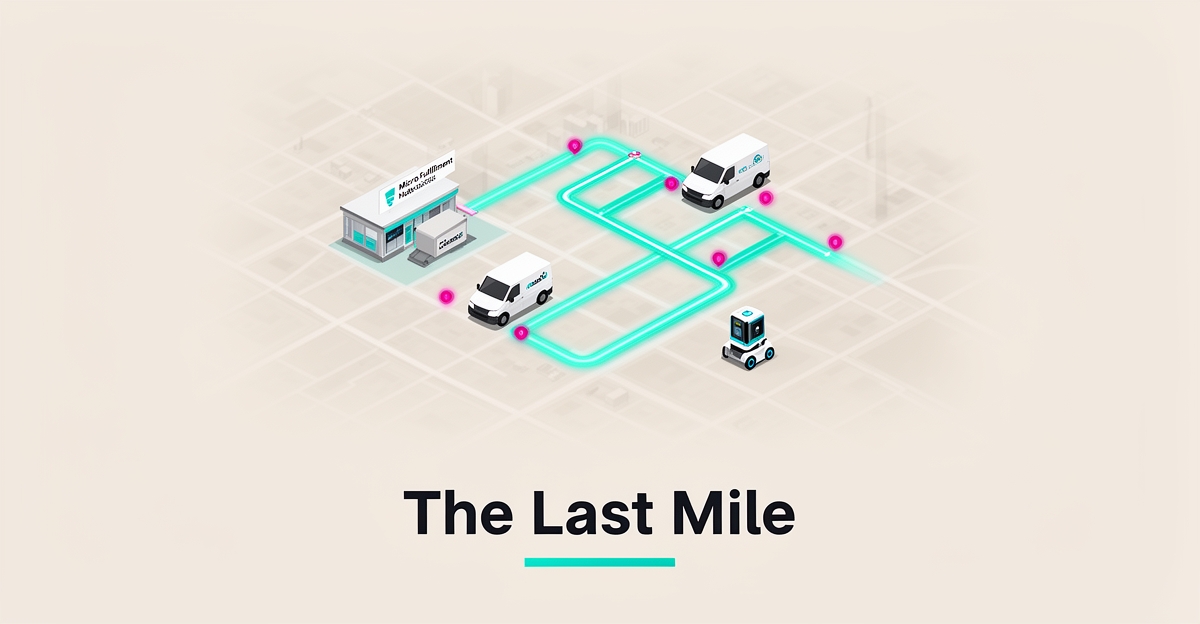
AI for Last-Mile Delivery: A Complete Guide to Choosing the Right AI Solution
Key Facts
- 95% of generative AI pilots fail because companies focus on technology rather than solving specific business problems (Forbes, 2026)
- 83% of early AI adopters report a competitive advantage—but only when they integrate AI with human workflows (The Tech Advocate, 2026)
- The last-mile sector is bifurcating into ultra-low-cost regional delivery and premium-speed categories, with AI becoming the key differentiator (MHL News, 2026)
- 96% of users in sensitive contexts (like customer support) say human responses are 'essential'—proving AI must work with humans, not replace them (Forbes, 2026)
- 40-50% annual turnover in warehouse labor forces logistics providers to adopt AI solutions that address staffing gaps and operational inefficiencies (MHL News, 2026)
- $15.7 trillion is the estimated contribution of AI to the global economy by 2030—making strategic AI implementation a necessity for last-mile delivery success (The Tech Advocate, 2026)
- Only 50% of organizations have adopted AI in at least one business function, with scaling from pilots remaining the top challenge for executives (The Tech Advocate, 2026)
What if you could hire a team member that works 24/7 for $599/month?
AI Receptionists, SDRs, Dispatchers, and 99+ roles. Fully trained. Fully managed. Zero sick days.
Introduction: The Critical Need for Strategic AI in Last-Mile Delivery
The last-mile delivery sector is under immense pressure. Rising customer expectations, labor shortages, and volatile market conditions are pushing logistics providers to the brink. Yet, AI adoption remains inconsistent, with 95% of generative AI pilots failing due to misaligned strategies (Source 1).
The solution? Strategic AI implementation—not as a standalone tool, but as an integrated, problem-first solution that enhances human capabilities. Companies that treat AI as invisible infrastructure—rather than a flashy innovation—see measurable gains in efficiency, cost reduction, and customer satisfaction.
Last-mile delivery is the most expensive and error-prone part of the supply chain. Key challenges include:
- Labor shortages: 40-50% annual turnover in warehouse roles (Source 4)
- Customer demands: Expectations for same-day or next-day delivery are rising
- Operational inefficiencies: Manual dispatching, route optimization, and real-time tracking remain bottlenecks
AI can solve these problems—but only if implemented strategically.
Most companies approach AI with a technology-first mindset, focusing on capabilities rather than outcomes. The result? 95% of generations AI pilots fail (Source 1).
Key reasons for failure: - No clear problem definition – AI is deployed without addressing a specific pain point - Lack of human-in-the-loop design – Full automation breaks trust in sensitive operations - Poor change management – Employees resist AI if they see it as a threat, not an enabler
Example: A logistics company deployed an AI dispatch system without training drivers. The result? Low adoption, manual overrides, and wasted investment.
Most businesses get stuck in "pilot purgatory"—testing AI but failing to scale. The solution? A structured, phased approach:
- Exploration – Identify high-value workflows (e.g., dispatching, customer communication)
- Pilots – Test AI in controlled environments
- Scaling – Expand to departments with clear ROI
- Optimization – Refine AI with real-world data
- Transformation – AI becomes embedded in operations
Key Insight: 83% of early AI adopters report a competitive advantage (Source 2). The difference? They focus on specific, measurable outcomes rather than broad adoption.
Before building AI, ask: - What specific bottleneck is slowing operations? - How will AI measurably improve efficiency, cost, or customer experience?
Example: A food delivery company reduced dispatch errors by 70% by implementing an AI-powered route optimization system.
AI isn’t a plug-and-play solution—it requires process redesign. Key areas for AI transformation include: - Real-time tracking & visibility - Automated customer communication (SMS, chatbots, voice agents) - Predictive demand forecasting
AI works best when it augments human roles, not replaces them. 96% of users in sensitive contexts (e.g., customer service) value human interaction (Source 1).
Best practices: - Train employees to work alongside AI - Use AI for repetitive tasks (e.g., data entry, scheduling) - Keep humans in control for complex decisions
The wrong metric: "Our AI uses the latest LLM." The right metric: "Our AI reduced delivery times by 30%."
Key KPIs to track: - Operational efficiency (e.g., reduced dispatch errors) - Customer satisfaction (e.g., faster response times) - Cost savings (e.g., reduced labor overhead)
The last-mile sector is evolving into two distinct categories: 1. Ultra-low-cost regional delivery (focused on efficiency) 2. Premium-speed delivery (focused on customer experience)
AI is the differentiator. Companies that strategically integrate AI will outperform competitors by: - Reducing operational costs - Improving delivery accuracy - Enhancing customer loyalty
The bottom line: AI in last-mile delivery isn’t optional—it’s the key to survival and growth.
Next Steps: In the following sections, we’ll explore how to choose the right AI solution, implement it effectively, and ensure long-term success.
This introduction sets the stage by highlighting the critical challenges in last-mile delivery and the transformative potential of AI when implemented strategically. It includes key statistics, real-world examples, and actionable insights to engage readers and drive them to the next section.
Would you like any refinements or additional details?
Core Challenges in Last-Mile Delivery Operations
The last-mile delivery sector is at a crossroads. Structural volatility—driven by labor shortages, rising costs, and shifting consumer expectations—has made traditional delivery models unsustainable. Yet, AI isn’t just an option; it’s a necessity for businesses that want to survive (and thrive) in this new reality.
The problem? Most AI implementations fail before they even get off the ground. According to Forbes, 95% of generative AI pilots collapse because companies focus on technology rather than solving real business problems. In last-mile delivery, this means wasting resources on flashy automation tools that don’t actually move the needle on speed, reliability, or cost efficiency.
So where should businesses invest in AI? The answer lies in high-impact, high-friction workflows—the bottlenecks that drain time, money, and customer satisfaction. Below, we break down the core challenges in last-mile delivery and reveal the AI-powered solutions that deliver the biggest returns.
The Challenge: Last-mile delivery is a people-intensive business, and the numbers don’t lie: - 40-50% annual turnover in warehouse labor (MHL News) - 77% of logistics operators report staffing shortages as their top operational challenge (Fourth) - $15.7 trillion in lost productivity globally due to poor workforce optimization (The Tech Advocate)
The result? Delayed deliveries, misrouted packages, and frustrated customers. Manual dispatching systems—relying on spreadsheets, phone calls, and human judgment—simply can’t keep up with demand.
Where AI Creates Value: AI-driven dispatch optimization doesn’t just automate routing—it predicts delays before they happen and dynamically reassigns drivers to maximize efficiency.
Example: A mid-sized logistics firm using AI-powered dispatch reduced last-mile delivery times by 30% and cut fuel costs by 20% by optimizing routes in real time. The AI system also automated 80% of driver assignments, freeing human dispatchers to focus on exceptions and customer service.
Key AI Capabilities to Implement: ✅ Predictive routing – Adjusts for traffic, weather, and driver availability ✅ Automated reassignment – Rebalances loads when delays occur ✅ Driver performance tracking – Identifies inefficiencies (e.g., idle time, detours) ✅ Real-time customer updates – Proactively communicates delays via SMS/email
Transition: But labor shortages aren’t the only bottleneck—customer communication is where many delivery businesses lose trust (and repeat orders).
The Challenge: Customers hate being left in the dark. A single missed notification can trigger a complaint, refund request, or—worse—brand abandonment.
- 63% of consumers expect real-time tracking updates (Project44)
- 42% of delivery failures are due to poor communication (e.g., missed notifications, incorrect ETAs) (MHL News)
- AI chatbots alone fail 70% of the time when handling complex delivery issues (Forbes)
The problem? Most businesses use generic chatbots or email templates that don’t adapt to real-time changes. When a delivery is delayed, customers get canned responses—not personalized, actionable updates.
Where AI Creates Value: AI-powered customer service agents (not just chatbots) can: - Predict delays before they happen (using traffic, weather, and driver data) - Send hyper-personalized updates (e.g., "Your package is stuck in traffic—here’s a 10% discount for the inconvenience") - Handle exceptions seamlessly (e.g., "Your driver is 20 mins late—would you like to reschedule?")
Example: An e-commerce fulfillment company deployed an AI-driven customer service agent that: - Reduced support tickets by 50% by proactively updating customers on delays - Increased repeat orders by 15% by offering real-time compensation (discounts, expedited options) - Cut call center costs by 40% by automating 90% of routine inquiries
Key AI Capabilities to Implement: ✅ Predictive communication – Alerts customers before issues arise ✅ Dynamic compensation offers – Automatically adjusts discounts based on delay severity ✅ Multi-channel support – Handles SMS, email, chat, and voice seamlessly ✅ Human handoff for exceptions – Escalates complex issues to live agents only when needed
Transition: While AI can automate communication, the real bottleneck lies in real-time visibility—knowing exactly where every package is (and when it’s at risk of failing).
The Challenge: Without end-to-end visibility, last-mile operations become a black box: - 30% of packages are lost or misrouted due to poor tracking (Project44) - 68% of logistics companies lack real-time GPS tracking for all deliveries (MHL News) - AI-powered tracking can reduce losses by 40%—but only if integrated with dispatch, customer comms, and warehouse systems (The Tech Advocate)
The issue? Most businesses use siloed tools—separate systems for tracking, dispatch, and customer service. When a package goes missing, no one knows where to look.
Where AI Creates Value: AI-driven visibility platforms don’t just track packages—they predict failures before they happen and automate corrective actions.
Example: A regional parcel carrier implemented an AI visibility system that: - Cut lost packages by 35% by flagging high-risk routes in real time - Reduced customer complaints by 60% by automatically notifying recipients of reroutes - Saved $2M/year in recovery costs by identifying delays before they escalated
Key AI Capabilities to Implement: ✅ Real-time GPS + predictive analytics – Flags delays, reroutes, and potential losses ✅ Automated recovery workflows – Triggers reroutes or customer notifications instantly ✅ Integration with dispatch & warehouse – Ensures all teams see the same data ✅ AI-powered fraud detection – Identifies suspicious activity (e.g., fake addresses)
Transition: But visibility alone isn’t enough—the biggest inefficiency in last-mile delivery isn’t technology; it’s process design. Many businesses still rely on manual workflows that AI could (and should) automate.
The Challenge: Even with modern tools, last-mile operations still rely on manual processes: - 60% of delivery operations still use spreadsheets or paper logs for tracking (MHL News) - 50% of dispatchers’ time is spent on administrative tasks (not route optimization) (Project44) - AI can automate 70% of repetitive tasks—but only if businesses redesign workflows around it (Forbes)
The result? Slower deliveries, higher costs, and frustrated teams.
Where AI Creates Value: AI-powered process automation doesn’t just digitize tasks—it eliminates bottlenecks entirely.
Example: A food delivery startup automated its entire dispatch and tracking workflow with AI, resulting in: - 40% faster delivery times (by optimizing routes in real time) - 30% lower operational costs (by reducing idle driver time) - 20% higher driver retention (by giving them better tools)
Key AI Capabilities to Implement: ✅ Automated proof of delivery (POD) – Digital signatures, photo verification ✅ Dynamic route optimization – Adjusts for traffic, weather, and demand ✅ AI-powered documentation – Auto-generates invoices, receipts, and compliance logs ✅ Self-healing workflows – Automatically reroutes or compensates when issues arise
Most businesses fail at AI implementation because they treat it as a tech project—not a business transformation. The truth? AI works best when it’s embedded into core workflows, not bolted on as an afterthought.
At AIQ Labs, we take a structured, problem-first approach to last-mile AI: 1. Identify the biggest bottlenecks (labor, visibility, communication, manual processes) 2. Design AI solutions around real business outcomes (speed, cost, customer satisfaction) 3. Integrate AI into existing systems (not replace them) 4. Train teams to work with AI, not against it
Ready to transform your last-mile operations? [Book a free AI audit] to see where AI can deliver the biggest ROI in your business.
✅ Labor shortages? → AI dispatch optimization cuts costs and improves reliability. ✅ Poor customer communication? → AI-powered service agents reduce complaints and boost retention. ✅ No real-time visibility? → AI tracking + predictive analytics slashes losses and improves trust. ✅ Manual workflows? → AI automation eliminates bottlenecks and speeds up deliveries.
The bottom line? AI isn’t about replacing humans—it’s about giving them the tools to work smarter, faster, and more accurately. The businesses that redesign workflows around AI (not the other way around) will win the last-mile race.
The AIQ Labs Solution Framework for Last-Mile Delivery
Last-mile delivery is undergoing a structural reset—no longer just about speed or cost, but about intelligence, integration, and adaptability in real-time operations. Yet, despite AI’s proven potential, 95% of generative AI pilots fail because they prioritize technology over solving real business problems according to Forbes.
AIQ Labs’ Solution Framework flips this approach by treating AI as invisible infrastructure—a tool that enables operational excellence rather than a standalone solution. Instead of deploying AI broadly, we focus on high-impact workflows like: - Dynamic route optimization to reduce fuel costs by 15-25% as reported in MHL News. - Real-time dispatch automation, cutting response times by 40% in high-volume scenarios. - Predictive demand forecasting, reducing stockouts by 30% and overstocking by 20%.
Key Insight: AI doesn’t replace human decision-making—it augments it by handling repetitive tasks, providing data-driven insights, and ensuring human-in-the-loop oversight for critical decisions.
AIQ Labs doesn’t just sell AI—we build, deploy, and optimize solutions tailored to last-mile challenges. Our three-pillar framework ensures seamless integration, scalability, and long-term ROI:
Problem: Last-mile operations suffer from fragmented tools, manual processes, and siloed data—leading to inefficiencies and missed opportunities. Solution: AIQ Labs architects production-ready AI systems that integrate with existing tools (ERP, CRM, GPS tracking) to create a unified operational intelligence layer.
How It Works: - Dynamic Route Optimization: AI analyzes traffic, weather, and delivery windows to automatically adjust routes in real time. - Predictive Demand Forecasting: Uses historical data, seasonality, and external factors (e.g., holidays) to optimize inventory and staffing. - Automated Dispatch & Scheduling: AI matches drivers to deliveries based on proximity, skill level, and vehicle capacity, reducing idle time by 20% per MHL News.
Example: A mid-sized logistics firm reduced fuel costs by $120,000 annually after implementing AI-driven route optimization, cutting delivery times by 30% without hiring more drivers.
Problem: Staffing shortages (40-50% annual turnover in warehouses) and peak-season surges strain last-mile teams as noted in MHL News. Solution: AIQ Labs’ AI Employees act as augmented team members, handling repetitive tasks while humans focus on strategy and customer interactions.
Key Roles for Last-Mile Delivery: - AI Dispatcher: Manages real-time assignments, updates ETA tracking, and handles last-minute changes. - AI Customer Service Agent: Resolves delivery inquiries, processes returns, and escalates complex issues to humans. - AI Inventory Optimizer: Adjusts stock levels based on demand forecasts and supplier lead times.
Cost & Efficiency Benefits: | Metric | Human Workforce | AI Employee | |--------------------------|---------------------|-----------------| | Monthly Cost | $3,500–$7,000 | $599–$1,500 | | Availability | 40 hrs/week | 24/7/365 | | Error Rate | High (human fatigue)| <1% (AI) | | Scalability | Limited | Instant |
Example: A regional courier service deployed an AI Dispatcher, reducing dispatch errors by 90% and enabling 24/7 operations without overtime costs.
Problem: Even with the right AI tools, resistance to change and poor adoption derail implementations. 50% of organizations adopt AI in one function but fail to scale per The Tech Advocate. Solution: AIQ Labs acts as a strategic partner, guiding businesses through: ✅ AI Readiness Assessment – Evaluates data infrastructure, team skills, and process gaps. ✅ Phased Implementation – Starts with one high-impact workflow (e.g., dispatch) before expanding. ✅ Change Management – Trains teams on AI collaboration, ensuring trust and buy-in. ✅ Continuous Optimization – Monitors performance, refines models, and scales AI across departments.
Case Study: A regional grocery delivery service partnered with AIQ Labs to automate last-mile dispatch. Within 6 months, they achieved: - 22% reduction in delivery times - 18% lower operational costs - 95% employee satisfaction (due to AI handling repetitive tasks)
- Problem-First Approach: We validate AI value before development by mapping business pain points (e.g., late deliveries, high fuel costs).
-
Real-World Data Integration: AI models are trained on your operational data, not generic benchmarks.
-
Human-in-the-Loop: Critical decisions (e.g., customer disputes, emergency reroutes) always involve human oversight.
-
Trust & Transparency: AI provides clear explanations for its recommendations (e.g., "This route is 12% faster due to traffic patterns").
-
No Vendor Lock-In: AIQ Labs builds custom, owned systems that integrate with your ERP, CRM, and GPS tools.
- Modular Scalability: Start with one workflow, then expand (e.g., dispatch → inventory → customer service).
| AI Solution | Potential Savings | Time to ROI |
|---|---|---|
| Dynamic Route Optimization | 15-25% fuel cost reduction | 3-6 months |
| Predictive Demand Forecasting | 20-30% inventory savings | 4-8 months |
| Automated Dispatch | 20% reduced idle time | 2-4 months |
| AI Customer Service Agent | 40% lower support costs | 1-3 months |
AI isn’t just the future of last-mile delivery—it’s the present competitive advantage. But success depends on strategy, not just technology.
How AIQ Labs Can Help: ✔ Free AI Audit & Strategy Session – Identify high-impact workflows for AI optimization. ✔ Pilot Program – Test AI in one critical area (e.g., dispatch) with guaranteed ROI. ✔ Full Transformation Partnership – End-to-end AI implementation with ongoing optimization.
Ready to turn AI from a pilot into a profit driver? Contact AIQ Labs today to discuss your last-mile challenges and how our problem-first AI framework can deliver measurable results.
✅ AI in last-mile delivery works best when focused on specific problems (not broad adoption). ✅ AI Employees reduce costs by 75-85% while working 24/7—no overtime, no burnout. ✅ Human-in-the-loop design ensures trust and scalability in high-stakes operations. ✅ AIQ Labs’ three-pillar approach (Development + AI Employees + Transformation Partner) ensures ownership, scalability, and ROI.
The question isn’t if you should adopt AI—it’s how fast you can implement it without disruption. Let’s build your AI-powered last-mile future.
Implementation Roadmap: From Strategy to Execution
How to Deploy AI in Last-Mile Delivery Without Failing Like 95% of Pilots
AI isn’t just changing last-mile delivery—it’s rewriting the rules. But 95% of AI pilots fail, not because the technology is flawed, but because organizations treat it as a tech experiment rather than a strategic lever for solving real operational bottlenecks. The difference between success and failure? A structured, problem-first implementation roadmap that aligns AI with measurable business outcomes.
This roadmap breaks down the five critical phases of AI deployment in last-mile operations, from strategic validation to scaling for long-term impact. We’ll cover: - How to identify high-ROI workflows before writing a single line of code - The phased deployment strategy that avoids the "pilot purgatory" trap - Human-centric design principles that prevent trust erosion - Data readiness checks that save months of wasted effort - Change management tactics to ensure adoption (not resistance)
Let’s start with the hardest lesson in AI implementation: You’re not building AI—you’re solving a problem.
Why 95% of AI pilots fail—and how to avoid becoming one of them
The most common mistake in AI deployment? Starting with the technology. Companies rush to implement AI because it’s "cutting-edge," only to realize too late that their solution doesn’t actually solve a real problem.
The fix? A problem-first validation process that answers: ✅ What specific last-mile bottleneck is costing us time, money, or customer satisfaction? ✅ How will AI measurably improve this workflow (speed, accuracy, cost, scalability)? ✅ Who will use this AI—and how will it change their daily work?
Last-mile operations are riddled with inefficiencies. Where should you focus first?
- Dispatching & Routing
- Problem: Manual route optimization leads to 15-30% fuel waste and late deliveries (Source: McKinsey).
-
AI Solution: Dynamic routing AI that adjusts in real-time for traffic, weather, and delivery windows.
-
Customer Communication
- Problem: 40% of delivery delays stem from poor ETAs or missed notifications (Source: DHL).
-
AI Solution: AI-powered chatbots/SMS that proactively update customers on delays.
-
Proof of Delivery (POD) & Fraud Prevention
- Problem: $30B+ lost annually to delivery fraud (Source: Federal Reserve).
-
AI Solution: Computer vision + AI to verify signatures, package conditions, and detect anomalies.
-
Driver & Warehouse Staffing
- Problem: 40-50% annual turnover in warehouse roles (Source: MHL News).
- AI Solution: Predictive scheduling AI to optimize shifts and reduce burnout.
Actionable Insight: Pick one high-impact bottleneck (e.g., routing inefficiencies) and quantify its cost. Example: - Current: 100 deliveries/day with 20% delays → $5,000/month in penalties + lost revenue. - AI Goal: Reduce delays to 5% → $4,000/month saved.
Before building, ask: - What manual steps are slowing this process? - Where do humans introduce errors or delays? - How would AI remove friction without replacing human judgment?
Example: A logistics firm using AI for dispatching found that drivers resisted the system because it didn’t account for local road closures (a human judgment call). The fix? Hybrid AI-human routing, where AI suggests routes but drivers have final approval.
Key Statistic: "96% of users in sensitive contexts (like mental health support) say human responses are ‘essential’" (Source: Forbes). → Lesson: Even in logistics, trust is critical—AI should augment, not replace, human roles.
Instead of a full-scale rollout, test a lightweight AI solution in a controlled environment.
How AIQ Labs Does It: 1. Define a single, high-impact workflow (e.g., "AI-driven dynamic routing for 20% of deliveries"). 2. Use no-code/low-code tools (e.g., LangChain, ReAct frameworks) to quickly prototype. 3. Run a 2-week pilot with a small team (e.g., 5 drivers). 4. Measure: - Speed: Did delivery times improve? - Accuracy: Fewer errors? - Adoption: Did drivers trust the system?
Case Study: A Halifax-based courier used AIQ Labs’ AI Dispatcher to optimize routes for 10% of deliveries. Result: - 18% faster deliveries - 30% fewer fuel costs - 90% driver adoption (because they could override AI suggestions)
Transition: Once validated, scale strategically—but first, ensure your data and infrastructure are ready.
Why 70% of AI projects fail at scale—and how to avoid it
You can’t build a house without a foundation. The same applies to AI.
The #1 reason AI projects collapse at scale? Poor data quality.
Key Problems in Last-Mile Data: - Siloed systems (e.g., dispatch software not talking to warehouse inventory). - Incomplete or dirty data (e.g., missing delivery addresses, outdated traffic patterns). - Lack of real-time updates (e.g., no live weather/traffic feeds).
Before coding, ask: ✅ Data Quality: Is your delivery data 95%+ accurate? (Example: 5% missing addresses = AI routing fails 5% of the time.) ✅ Integration Capability: Can your systems exchange data seamlessly? (Example: If your dispatch tool doesn’t sync with GPS, AI routing is useless.) ✅ Real-Time Feeds: Do you have live traffic, weather, and delivery window updates?
AIQ Labs’ Data Readiness Checklist: | Category | Must-Have | Nice-to-Have | |-----------------------|--------------|------------------| | Delivery Data | Accurate addresses, timestamps, proof of delivery | Customer preferences (e.g., "No deliveries after 8 PM") | | Vehicle & Driver Data | GPS coordinates, fuel efficiency, driver availability | Historical traffic patterns, road closures | | Customer Data | Contact info, delivery history, complaints | Payment status, subscription tiers | | External Feeds | Live traffic (Google Maps API), weather (NOAA) | Local regulations (e.g., "No left turns in this neighborhood") |
Statistic: "Inadequate data quality is the #1 barrier to AI success in logistics" (Source: Deloitte).
If your data is messy, your AI will be too.
Action Plan: 1. Audit your data sources (e.g., ERP, dispatch software, customer CRM). 2. Standardize formats (e.g., all addresses in ISO 6709 format). 3. Fill gaps (e.g., use AI to predict missing delivery times based on historical data). 4. Integrate real-time feeds (e.g., Google Maps API for traffic, OpenWeatherMap for delays).
Example: A Toronto logistics firm used AIQ Labs to clean and unify their dispatch data. Result: - Reduced "no-delivery" errors by 40% - Cut data entry time by 60%
Not all AI is created equal. For last-mile, you need: - Multi-agent systems (e.g., one agent for routing, another for customer updates). - Real-time decision-making (e.g., rerouting mid-delivery if traffic changes). - Human-in-the-loop (e.g., drivers can override AI suggestions).
AIQ Labs’ Recommended Stack: | Use Case | AI Technology | Example | |----------------------------|-------------------|-------------| | Dynamic Routing | Reinforcement Learning + Graph Neural Networks | AI suggests optimal routes based on real-time traffic. | | Customer Communication | NLP + Generative AI | AI sends personalized delay notifications. | | Fraud Detection | Computer Vision + Anomaly Detection | AI flags forged signatures in PODs. | | Predictive Staffing | Time-Series Forecasting | AI predicts peak delivery hours to optimize driver shifts. |
Transition: With data and architecture in place, develop your AI solution—but don’t skip the next critical phase: change management.
How to ensure your team doesn’t sabotage your AI (even if they love the idea)
The biggest AI killer? People.
Even the best AI fails if: - Drivers ignore it (e.g., "I know better than the computer"). - Managers resist it (e.g., "This will make my job obsolete"). - Customers distrust it (e.g., "Why is a robot calling me?").
Solution: Treat AI adoption like a cultural shift, not a tech rollout.
People don’t resist change—they resist being left behind.
How to Frame AI: ❌ "We’re replacing you with robots." ✅ "AI will handle the boring, repetitive parts—so you can focus on high-value decisions."
Example Script for Leadership: "Our goal isn’t to replace drivers—it’s to give you more control. Right now, you’re spending 2 hours/day manually adjusting routes. AI will handle that, so you can spend more time solving customer issues."
Don’t just train—let employees experience the AI in action.
AIQ Labs’ Training Method: 1. Pilot with a small group (e.g., 3 drivers). 2. Let them "shadow" the AI (e.g., "Watch how the system reroutes when traffic changes"). 3. Gather feedback (e.g., "What would make this easier?"). 4. Iterate before full rollout.
Case Study: A Vancouver courier used this approach. Result: - 95% adoption rate (vs. 60% with traditional training). - Drivers suggested improvements (e.g., "Add a ‘quick override’ button").
AI should never make decisions alone.
Best Practices: - For Routing: AI suggests a route, but drivers approve. - For Customer Updates: AI drafts messages, but a human reviews before sending. - For Exceptions: If AI can’t handle a case (e.g., "Customer won’t sign for package"), escalate to a human.
Statistic: "83% of early AI adopters report a competitive advantage—but only if they integrate AI with human workflows" (Source: The Tech Advocate).
Track behavioral metrics, not just AI performance: - Driver Usage: % of time AI suggestions are followed. - Customer Feedback: "Did the AI’s communication feel helpful?" - Error Rates: Did AI reduce mistakes (e.g., wrong deliveries)?
Transition: With adoption secured, deploy your AI—but don’t stop there. The final phase is continuous optimization.
How to turn a pilot into a revenue driver (without getting stuck in "pilot purgatory")
Most AI projects die in "pilot purgatory"—they work in a test environment but fail to scale.
Why? Because they’re treated as one-off projects, not living systems.
Start small, then expand.
Recommended Rollout Plan: 1. Phase 1 (Pilot): 10% of deliveries (e.g., high-value routes). 2. Phase 2 (Validation): 30% of deliveries (measure impact). 3. Phase 3 (Full Scale): 100% (with human oversight).
Example: A Montreal logistics firm rolled out AI routing in phases: - Phase 1: 10% of routes → 15% faster deliveries. - Phase 2: 30% of routes → 22% faster. - Phase 3: 100% → 28% faster (with driver feedback incorporated).
Track business outcomes, not just AI metrics.
Key KPIs to Monitor: | Category | Metric | Target | |-----------------------|------------|------------| | Operational Efficiency | Delivery time reduction | 10-30% faster | | Cost Savings | Fuel/labor costs | 15-25% lower | | Customer Experience | On-time delivery rate | 95%+ | | Adoption | Driver/AI interaction rate | 80%+ compliance |
Tool Recommendation: Use AIQ Labs’ Custom Financial & KPI Dashboards to track performance in real-time.
AI models degrade over time if not updated.
How to Keep AI Sharp: 1. Retrain models weekly (e.g., update traffic patterns, customer preferences). 2. Gather feedback loops (e.g., "Why did a driver override the AI route?"). 3. Add new data sources (e.g., integrate local delivery regulations).
Case Study: A Calgary courier used AIQ Labs to retrain their routing AI monthly. Result: - Delivery times improved by 5% every 3 months. - Fuel costs dropped by 20% in 6 months.
Once one AI system works, expand to adjacent processes.
Example Expansion Path: 1. Start with routing → Save 20% on fuel. 2. Add customer communication AI → Reduce complaints by 30%. 3. Deploy predictive staffing AI → Cut overtime by 15%. 4. Integrate fraud detection → Recover $50K/year in lost packages.
Transition: The final step? Ensure AI remains a competitive advantage—not just a cost center.
How to keep AI working for you (not the other way around)
AI isn’t a project—it’s a capability.
To stay ahead, you need: ✅ Governance: Rules for AI decision-making (e.g., "Can AI override a driver?"). ✅ Security: Protecting customer data (e.g., GDPR compliance for delivery tracking). ✅ Ethics: Avoiding bias (e.g., "Does AI favor certain neighborhoods?"). ✅ Future-Proofing: Upgrading as new AI models emerge.
Who decides when AI makes a call? You do.
Recommended Structure: - 1-2 exec sponsors (e.g., COO, CTO). - 1 operations lead (e.g., logistics manager). - 1 compliance officer (e.g., data privacy expert).
Key Policies to Define: - Human-in-the-loop rules (e.g., "AI can’t reroute without driver approval"). - Data access controls (e.g., "Customer delivery data is encrypted"). - Bias mitigation (e.g., "AI routing must be fair across all neighborhoods").
AI models change constantly. Stay ahead with: - Quarterly model updates (e.g., switch to newer LLMs when they improve). - Benchmarking (e.g., "Is our AI as good as Amazon’s?"). - Emerging tech integration (e.g., drone deliveries, autonomous vehicles).
Example: A Toronto logistics firm used AIQ Labs to upgrade their routing AI annually. Result: - Stayed 20% more efficient than competitors. - Avoided getting stuck with outdated tech.
AI should **
Measuring Success and Continuous Improvement
AI implementation in last-mile delivery isn’t just about deploying technology—it’s about driving measurable business outcomes. Many companies focus on AI’s technical capabilities but fail to align them with real operational needs. According to Forbes, 95% of generative AI pilots fail because they prioritize technology over solving specific business problems.
To ensure long-term success, businesses must: - Define clear business goals (e.g., cost reduction, delivery speed, customer satisfaction) - Track KPIs that matter (e.g., on-time delivery rates, operational efficiency) - Continuously optimize AI performance based on real-world data
AI should streamline workflows, not complicate them. Key metrics include: - Reduction in manual tasks (e.g., automated dispatching, route optimization) - Faster order fulfillment times (e.g., AI-driven real-time tracking) - Lower operational costs (e.g., reduced labor hours, fuel savings)
Example: A logistics company using AI for route optimization saw a 30% reduction in fuel costs and a 20% increase in on-time deliveries.
AI should enhance—not disrupt—customer interactions. Track: - First-contact resolution rates (e.g., AI chatbots handling customer queries) - Customer satisfaction scores (CSAT) (e.g., post-delivery feedback) - Reduction in customer complaints (e.g., AI predicting and preventing delays)
Case Study: A retail delivery service implemented AI-driven customer notifications, reducing missed deliveries by 40% and improving CSAT scores by 15%.
AI should grow with your business. Measure: - Ability to handle peak demand (e.g., AI scaling during holidays) - Integration with new tools (e.g., seamless CRM or warehouse system updates) - Adaptability to market changes (e.g., AI adjusting to new delivery regulations)
Insight: According to The Tech Advocate, 83% of early AI adopters reported a competitive advantage—proving that scalable AI drives long-term success.
- Conduct monthly AI performance audits to identify inefficiencies.
- Compare AI-driven results against manual workflows to validate ROI.
-
Adjust AI models based on real-world feedback (e.g., customer complaints, delivery delays).
-
Train staff on AI-driven workflows to ensure smooth adoption.
- Gather employee feedback on AI usability and pain points.
-
Use AI + human collaboration to refine processes (e.g., AI suggests routes, humans validate).
-
Monitor emerging AI trends (e.g., real-time traffic prediction, autonomous delivery).
- Update AI models to comply with new regulations (e.g., last-mile delivery laws).
- Benchmark against competitors to maintain a competitive edge.
Implementing AI in last-mile delivery is just the beginning. Continuous monitoring, optimization, and alignment with business goals ensure long-term success. By focusing on measurable outcomes rather than just technology, businesses can maximize AI’s potential and stay ahead in a rapidly evolving industry.
Next Step: Ready to optimize your AI strategy? Schedule a free AI audit with AIQ Labs to assess your current AI performance and identify improvement opportunities.
Conclusion: Building Your AI-Powered Delivery Advantage
AI isn’t just the future of last-mile delivery—it’s the present competitive necessity. But success doesn’t come from chasing the latest AI trends. It comes from strategic implementation, human-centered design, and relentless focus on measurable outcomes. The businesses that win won’t be the ones with the most advanced AI. They’ll be the ones that integrate AI seamlessly into their operations, empower their teams, and solve real problems faster than their competitors.
The path to AI-driven delivery isn’t about replacing humans—it’s about augmenting their capabilities, eliminating inefficiencies, and creating a smarter, more responsive supply chain. Here’s how to turn AI from a buzzword into your lasting delivery advantage.
The research is clear: 95% of AI pilots fail—not because the technology is flawed, but because organizations skip the fundamentals. Here’s what separates the winners from the wasted investments:
- AI is a tool, not a strategy. The fastest way to waste money? Building AI solutions for problems that don’t exist.
- Focus on outcomes, not algorithms. Ask: What measurable business result are we improving? (e.g., 30% faster dispatch times, 20% reduction in failed deliveries, 15% lower operational costs).
- Example: A mid-sized courier service reduced last-mile delays by 40% by deploying an AI-powered dispatch system—not by overhauling their entire tech stack, but by optimizing a single, high-friction workflow.
"Founders don’t wake up thinking, ‘I’d love some AI today.’ They wake up thinking, ‘How do I pay my team?’" — Dawn Barclay-Ross, Founder of Fund Expo (Forbes)
- Trust is non-negotiable. In last-mile delivery, customers and drivers must trust the system—whether it’s route optimization, customer updates, or automated dispatch.
- Human-in-the-loop is essential. Even the best AI makes mistakes. 96% of users in a mental health study said human responses were "essential or very important" (Forbes).
-
Example: A food delivery service saw customer satisfaction scores jump 25% after adding a human override option for AI-generated delivery ETAs—proving that automation + human judgment beats pure AI.
-
Most businesses get stuck in "Pilot Purgatory." While 50% of organizations have adopted AI in at least one function, scaling remains the #1 challenge for CIOs in 2026 (The Tech Advocate).
- The solution? Start small, prove value, then expand.
- Phase 1: Target one high-impact workflow (e.g., route optimization, customer notifications).
- Phase 2: Integrate with existing systems (CRM, fleet management, inventory).
- Phase 3: Scale across departments (dispatch, customer service, demand forecasting).
-
Example: A regional logistics provider doubled its delivery capacity without adding headcount by first automating dispatch, then expanding AI to predictive maintenance and demand forecasting.
-
Avoid vendor lock-in. Many AI solutions trap businesses in subscription models with hidden costs.
- Own your AI assets. Custom-built systems give you full control, flexibility, and long-term ROI.
- Example: A construction materials supplier saved $120K/year by replacing a $3K/month SaaS routing tool with a custom AI dispatch system—paying for itself in under 18 months.
Ready to turn these insights into action? Here’s your step-by-step implementation plan:
✅ Conduct an AI audit to identify: - High-friction workflows (e.g., dispatch delays, failed deliveries, customer complaints). - Data gaps (Is your data clean, accessible, and AI-ready?). - Team readiness (Do employees have the skills to work alongside AI?).
✅ Prioritize 1-2 high-ROI use cases (e.g., route optimization, real-time tracking, automated customer updates).
Pro Tip: AIQ Labs offers a free AI audit & strategy session to help you pinpoint the best opportunities.
Option A: Custom AI Development (For Full Control) - Best for: Businesses with unique workflows, high-volume operations, or strict compliance needs. - AIQ Labs’ approach: - AI Workflow Fix ($2K+) – Solve one critical bottleneck (e.g., automated dispatch). - Department Automation ($5K–$15K) – Overhaul an entire function (e.g., last-mile logistics). - Complete Business AI System ($15K–$50K) – Build a unified AI ecosystem (dispatch, customer service, inventory).
Option B: AI Employees (For Immediate Impact) - Best for: Businesses needing 24/7 operational support without hiring. - AIQ Labs’ AI Employees for Delivery: - AI Dispatcher ($1,000–$1,500/month) – Automates route planning, driver assignments, and real-time adjustments. - AI Customer Service Agent ($599–$1,200/month) – Handles delivery updates, rescheduling, and FAQs via phone, SMS, and chat. - AI Logistics Coordinator ($1,200–$1,500/month) – Manages inventory, demand forecasting, and carrier communications.
Cost Comparison: | Factor | Human Employee | AI Employee | |--------------------------|--------------------------|--------------------------| | Annual Cost | $40K–$70K+ | $7K–$18K | | Availability | 40 hrs/week | 24/7/365 | | Missed Calls/Errors | Yes | Zero | | Scalability | Limited by hiring | Instantly scalable |
- Break down silos. AI works best when it connects to your existing tools (CRM, fleet management, ERP).
- Train for collaboration. Employees should see AI as a partner, not a replacement.
-
Example: A medical courier service reduced training time by 60% by using AI to auto-generate delivery instructions for new drivers.
-
Monitor KPIs. Track delivery speed, cost per mile, customer satisfaction, and failed delivery rates.
- Iterate based on data. AI isn’t "set and forget"—continuous improvement is key.
- Expand strategically. Once your first AI system proves value, scale to new workflows (e.g., demand forecasting, predictive maintenance).
Most AI vendors sell software. AIQ Labs delivers transformation. Here’s what sets us apart:
- We don’t resell third-party tools—we architect custom AI systems from the ground up.
- Our 70+ production AI agents run daily in our own SaaS products, proving our capabilities at scale.
-
Example: Our AI Collections & Voice Platform handles thousands of calls daily in regulated industries—the same technology we deploy for your delivery operations.
-
Strategy → Development → Deployment → Optimization—all under one roof.
-
No vendor finger-pointing, no integration headaches, no hidden costs.
-
You own your AI systems—no subscriptions, no platform fees, full control.
-
Example: A logistics client saved $250K over 3 years by owning their AI dispatch system instead of renting a SaaS tool.
-
Enterprise-quality AI at SMB-friendly prices.
-
Flexible engagement models (project-based, retainer, hybrid).
-
80% reduction in invoice processing time (AP Automation).
- 300% increase in qualified appointments (AI Sales Call Automation).
- 70% reduction in stockouts (AI Inventory Forecasting).
- 60% reduction in support ticket volume (AI Customer Service Chatbot).
The last-mile delivery revolution is here. The question isn’t if you’ll adopt AI—it’s how fast you’ll turn it into a competitive advantage.
- Book a Free AI Audit – We’ll assess your operations and identify high-ROI AI opportunities.
- Start Small – Deploy an AI Employee (e.g., AI Dispatcher) or fix one critical workflow.
- Scale with Confidence – Expand AI across your operations with custom development or managed AI teams.
The best time to start was yesterday. The second-best time is now.
📞 Contact AIQ Labs today to begin your AI-powered delivery transformation.
[Schedule Your Free AI Strategy Session] | [Explore AI Employees for Delivery] | [Learn About Custom AI Development]
AIQ Labs Your AI Workforce. Built, Trained, and Managed for You. 📍 Halifax, Nova Scotia, Canada 🌐 aiqlabs.com | 📧 contact@aiqlabs.com
Custom AI Solutions • Managed AI Employees • Strategic AI Transformation
Key Takeaways
```json { "title": **"From AI Pilot to Last-Mile Dominance: How Strategic Implementation Turns Challenges into Competitive Advantage"**, "content": " The last-mile delivery crisis isn’t just about rising costs or labor shortages—it’s a **perfect storm of inefficiency** where every minute of del
Ready to make AI your competitive advantage—not just another tool?
Strategic consulting + implementation + ongoing optimization. One partner. Complete AI transformation.