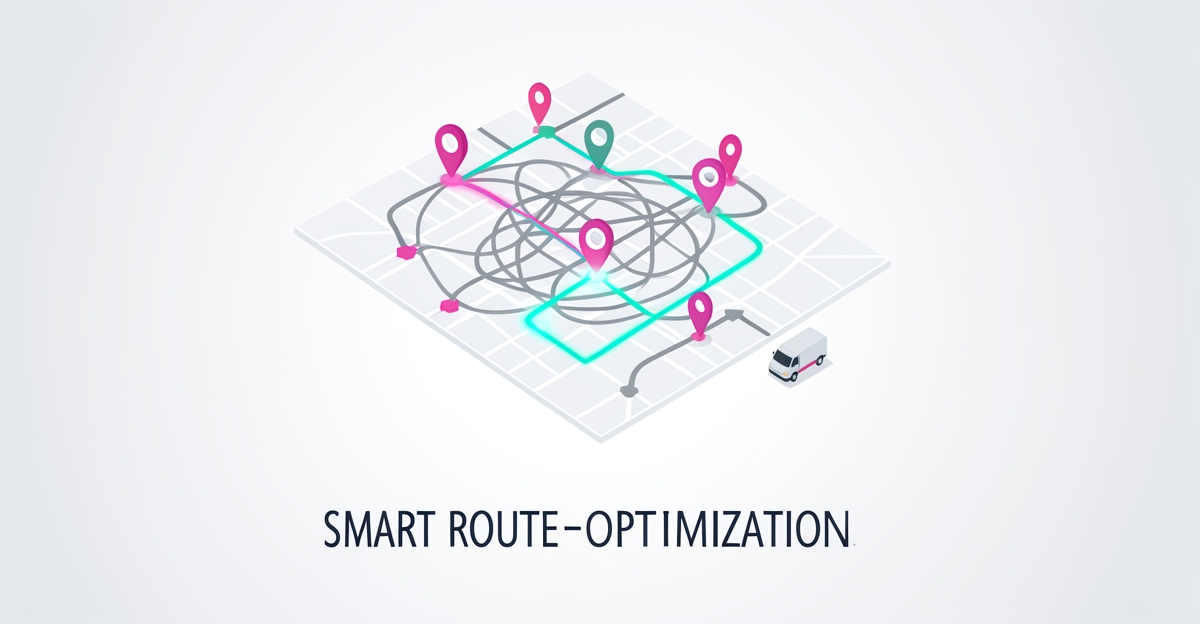
AI for Maid Service Dispatch: How to Optimize Route Planning and Delivery Times
Key Facts
- Fleets using AI-powered dispatch report 20-35% fewer miles driven according to industry research
- AI dispatch reduces daily planning time by 80-95% freeing dispatchers for higher-value work
- Real-time dispatching platforms reduce customer support calls by 30-40% through proactive ETA updates
- AI dispatch handles 5 to 500+ drivers with the same workflow enabling seamless scaling
- AI agents adjust delivery routes based on real-time data cutting costs and improving satisfaction
- AI identifies disruptions before they happen enabling proactive operational adjustments
- Human judgment remains essential for relationship-driven exceptions even in AI-powered dispatch systems according to industry research
Hire a team member that works 24/7 — for less than a part-time wage.
AI receptionists, SDRs, dispatchers and 99+ roles. Trained on your business, fully managed.
Not sure where to start? Ask our AI planner
The Hidden Costs of Manual Maid Service Dispatch
Manual dispatch feels controllable until the mileage reports and dispatcher overtime tell a different story. Crews leave with suboptimal routes, last-minute changes cascade through the day, and growth stalls because planning cannot keep up.
Teams using AI-powered dispatch report 20-35% fewer miles driven compared with manual planning. That reduction comes from geographic clustering and historical pattern analysis, not from driving faster. Fuel, vehicle wear, and paid non-billable time all shrink when routes respect proximity and real traffic.
The human cost is just as visible. Daily planning time drops by 80-95% with AI dispatch, freeing dispatchers from spreadsheet Tetris. The same workflow can scale from 5 to 500+ drivers without adding headcount, which is why manual systems become a hard ceiling on crew size.
Bottlenecks show up in predictable ways:
- Routes built by hand waste miles on backtracking and overlapping service areas.
- Dispatchers spend hours each morning rebalancing jobs after cancellations and traffic.
- Customer calls spike when ETAs slip and crews are out of sequence.
- Scaling requires hiring more dispatchers instead of improving the process.
Real-time conditions make static plans fragile. AI agents adjust delivery routes as conditions change, cutting costs and improving satisfaction. Manual dispatch cannot re-optimize mid-day without pulling a dispatcher off the phones.
The result is a compounding drag on margins. More miles mean higher fuel and maintenance. Longer planning means dispatchers cannot focus on exceptions, retention, or service quality. Real-time dispatching platforms can reduce customer support calls by 30-40%, because fewer ETA misses and proactive updates reduce inbound inquiries.
This is where AI Employees change the economics. AIQ Labs deploys AI agents that dynamically assign and reassign cleaning tasks based on traffic and availability, improving operational efficiency without adding staff. The approach mirrors how AI is transforming logistics by learning, adapting, and making real-time decisions across supply chains.
Manual dispatch is not a failure of people. It is a process built for a smaller fleet. When route complexity grows, the hidden costs become the business model.
How AI Dispatch Analyzes Geography and Demand Patterns
AI dispatch turns messy daily routing into a real-time optimization problem that updates itself as the day unfolds. For maid services, that means fewer missed windows, less dead mileage, and crews that stay productive instead of waiting on instructions.
AI agents ingest live geography and service history to make assignment decisions in seconds. Real-time traffic feeds, road closures, and weather shifts are weighed against historical job durations and client preferences. Crew proximity is calculated continuously, so the nearest available cleaner gets the next logical task rather than the first open slot.
The system learns demand patterns by neighborhood, day of week, and season. AI dispatch research shows fleets using AI-powered dispatch report 20-35% fewer miles driven, which directly cuts fuel costs and vehicle wear. That reduction comes from route consolidation and smarter sequencing, not from rushing crews.
Planning efficiency scales with operation size. Industry comparisons note AI dispatch reduces daily planning time by 80-95%, freeing dispatchers from manual spreadsheets to handle exceptions and customer care. The same workflow can handle 5 to 500+ drivers, making it viable for small local teams and growing regional brands alike.
AIQ Labs deploys AI agents that dynamically assign and reassign cleaning tasks based on traffic and availability, improving operational efficiency across AI Workflow Builds. The agents operate inside existing business tools, so cleaners receive updates where they already work.
AI analyzes three input layers to build and re-build routes:
- Real-time traffic and travel time, with automatic rerouting when conditions change
- Historical service data, including average clean times, repeat-client preferences, and no-show patterns
- Crew proximity and capacity, matching skill sets and equipment needs to specific homes
As conditions change, logistics innovation analysis highlights that AI agents can adjust delivery routes based on real-time data, cutting costs and improving customer satisfaction. For maid services, that translates to on-time arrivals and fewer support calls.
Real-time dispatching platforms also reduce customer support calls by 30-40%, according to dispatch benchmarking, because proactive updates replace reactive inquiries. Clients see ETAs that reflect actual road conditions, not static estimates.
The result is a dispatch system that learns, adapts, and makes real-time decisions instead of relying on yesterday’s assumptions. Human dispatchers remain essential for relationship-driven exceptions, while AI handles the high-volume optimization that drives travel time and fuel cost down.
Real-Time Adaptation: Traffic, Cancellations, and Crew Availability
The unexpected happens, traffic snarls, cleaners call out, appointments cancel. What separates resilient operations from chaotic ones is how quickly they adapt. AI-powered dispatch systems don’t just plan routes in the morning; they continuously re-optimize them throughout the day as conditions shift. When a job cancels or a cleaner becomes unavailable, the system instantly recalculates assignments, minimizing idle time and preventing cascading delays. This dynamic reassignment keeps crews productive and customers informed, even when the day doesn’t go as planned.
Real-time traffic data feeds directly into routing algorithms, allowing AI to detect congestion before it impacts arrival times. By analyzing live speed patterns and incident reports, the system proactively reroutes crews around delays, maintaining on-time performance without manual intervention. According to industry research, AI dispatch reduces daily planning time by 80-95%, freeing dispatchers to focus on exception management rather than constant replanning. This efficiency gain is critical when handling dozens of moving parts across a service area.
When disruptions occur, AI doesn’t just react, it anticipates. By monitoring historical cancellation rates, weather impacts, and crew availability trends, the system forecasts potential gaps and suggests preemptive adjustments. For example, if a cleaner typically calls out on Mondays, the AI might buffer their schedule or pre-assign a backup. This foresight reduces last-minute scrambling and supports smoother operations. As noted in logistics innovation research, AI agents optimize delivery routes as conditions change, cutting costs and improving customer satisfaction through smarter automation.
The result? Fewer frustrated customers calling to ask, “Where is my cleaner?” Proactive ETAs, updated in real time and communicated automatically, set accurate expectations and reduce inbound support volume. Companies using AI-powered dispatch report a 30-40% reduction in customer support calls, as clients receive timely updates instead of needing to chase information. This shift not only improves satisfaction but also lowers operational overhead, letting support teams focus on complex issues rather than routine status checks.
For maid service businesses, this level of adaptability transforms dispatch from a reactive chore into a strategic advantage. AIQ Labs builds custom AI Employees that function as intelligent dispatchers, continuously learning, reassessing, and optimizing routes in real time. These managed agents integrate with scheduling tools, GPS data, and communication platforms to ensure every change is accounted for, every crew is utilized efficiently, and every customer stays informed. By owning the system end-to-end, businesses gain full control over how their dispatch evolves with their needs, no vendor lock-in, just sustained operational resilience.
Hybrid Dispatch: Where AI Handles Optimization, Humans Handle Exceptions
The most successful maid service operations don't choose between AI and human dispatchers, they deploy both where each excels. AI handles the computational heavy lifting: crunching geographic data, historical patterns, and real-time traffic to build optimal routes in seconds. Human dispatchers step in where algorithms fall short: relationship-driven exceptions, customer escalations, and quality control decisions that require context and empathy.
This hybrid model delivers measurable gains. Fleets using AI-powered dispatch report 20-35% fewer miles driven, translating directly to fuel savings and reduced vehicle wear. Daily planning time drops by 80-95%, freeing dispatchers from spreadsheet wrangling to focus on higher-value work. The same planning workflow scales seamlessly from 5 to 500+ drivers without adding administrative overhead.
- AI optimizes routes dynamically as traffic and availability shift
- Dispatchers manage VIP clients, last-minute changes, and crew conflicts
- Quality control checkpoints stay human, cleaning standards, not just completion
- Escalation paths route complex decisions to the right person instantly
AIQ Labs deploys AI agents that dynamically assign and reassign cleaning tasks based on live conditions, while keeping human dispatchers in the loop for judgment calls. The system anticipates disruptions before they materialize and adjusts routes in real time, capabilities that mirror how leading logistics operators describe their own AI transformation. Human judgment remains essential for the exceptions no model can predict: a long-time client's special request, a crew member's emergency, a quality issue that needs a personal touch.
Implementing AI Dispatch: From Assessment to Ongoing Optimization
Implementing AI dispatch starts with a clear audit of current workflows to pinpoint inefficiencies in scheduling, routing, and task assignment. Many maid services still rely on manual processes that consume significant dispatcher time and lead to suboptimal routes. By mapping out each step, from job intake to driver assignment, businesses can identify where automation will deliver the greatest impact. This assessment phase ensures the AI solution aligns with actual operational pain points rather than theoretical improvements. Industry research emphasizes that understanding the problem is the critical first step before selecting any AI approach.
Once workflows are audited, the next phase involves integrating AI dispatch with existing scheduling and CRM tools to create a seamless operational flow. AIQ Labs specializes in building custom integrations that connect AI agents to platforms like Google Calendar, job management software, and customer databases without disrupting current operations. This integration allows the AI to access real-time data on technician availability, location, and service history while pushing optimized schedules back into familiar interfaces. The goal is to augment, not replace, existing systems, enabling a smoother transition for dispatch teams. Proper integration is essential for the AI to function as a true operational extension rather than a siloed tool.
Deployment follows with AI agents working alongside human dispatchers under human-in-the-loop guardrails, ensuring oversight for complex or relationship-driven exceptions. The AI handles routine optimization, such as assigning jobs based on proximity, traffic patterns, and historical duration, while flagging unusual scenarios for human review. This hybrid model leverages the strengths of both: AI’s ability to process vast datasets quickly and human judgment for nuanced decisions. As noted in logistics research, AI dispatch reduces daily planning time by 80-95%, freeing dispatchers to focus on customer service and exception management rather than spreadsheet juggling.
Ongoing optimization measures success through tangible metrics like miles saved and planning hours recovered, directly tying AI performance to business outcomes. Fleets using AI-powered dispatch consistently report 20-35% fewer miles driven, translating to lower fuel costs and reduced vehicle wear. Simultaneously, the 80-95% reduction in daily planning time allows teams to scale operations without adding dispatch headcount. Regular reviews of these metrics ensure the AI continues to adapt to changing demand patterns, traffic conditions, and service zones, maintaining peak efficiency over time. This continuous improvement cycle is what transforms AI from a one-time implementation into a sustainable competitive advantage.
Still paying for 10+ subscriptions that don’t talk to each other?
We build custom AI systems you own outright. No vendor lock-in. Full control.
Not sure where to start? Ask our AI planner
Frequently Asked Questions
How much can AI dispatch reduce the miles driven by maid service crews?
Will implementing AI dispatch eliminate the need for human dispatchers in my maid service business?
How much time can AI dispatch save on daily planning for maid service operations?
Can AI dispatch really reduce customer support calls for maid services, and if so, by how much?
What happens if a cleaner calls out last-minute or traffic suddenly worsens, can AI dispatch adapt in real time?
Is AI dispatch only suitable for large maid service companies, or can small local teams benefit too?
From Spreadsheet Tetris to Real-Time Advantage
Manual dispatch quietly erodes margins through backtracking, overtime planning, and missed ETAs. AI changes the equation by turning geography, traffic, history, and crew capacity into continuously re-optimized routes that learn as the day unfolds. The result is fewer miles, faster planning, and fewer support calls, with dispatchers freed to handle exceptions and relationships instead of spreadsheet rebalancing. For maid services, that means 20-35% fewer miles driven and 80-95% less daily planning time, while the same workflow scales from 5 to 500+ drivers without adding headcount. The hybrid model works best: AI handles dynamic optimization and real-time reassignment, humans own VIP clients, quality, and judgment calls. If you’re ready to see where the hidden costs are in your current dispatch, start with a clear workflow audit, map where cancellations and traffic create the most disruption, and test AI-assisted assignment on one route cluster. AIQ Labs can map those bottlenecks in a working session and show a practical path forward. Start the Fit Check for a free 30-minute strategy call, or contact [email protected].
Make AI your competitive advantage — not just another tool.
Strategy, implementation and ongoing optimization. One partner, end to end.
Not sure where to start? Ask our AI planner