AI for Marina Inventory: How to Track Fuel, Supplies, and Equipment in Real Time
Key Facts
- Manual inventory checks are inherently reactive, data is outdated the moment it's written down, so shortages surface only when a customer is standing at the counter
- AI-powered systems typically reduce stockouts and excess inventory by forecasting demand from usage patterns, weather, and seasonal trends
- AI employees can handle routine monitoring and reordering tasks around the clock, typically at a fraction of the cost of an equivalent human hire
- Proactive alerts transform inventory from a source of stress into a quietly reliable foundation by stopping shortages before they happen
- AI integration with existing operations eliminates manual checks and creates a unified operational view without disruptive overhauls
- Real-time monitoring ensures stock counts are always current, not days old, preventing reactive scrambles during peak demand
Hire a team member that works 24/7 — for less than a part-time wage.
AI receptionists, SDRs, dispatchers and 99+ roles. Trained on your business, fully managed.
Not sure where to start? Ask our AI planner
The Hidden Cost of Manual Inventory Checks at Marinas
It's the Fourth of July weekend, the fuel dock is slammed, and the pump runs dry at 2 p.m. Or a customer's outboard fails, and the one spare part you need is backordered because nobody noticed the shelf was empty. These moments aren't bad luck, they're the predictable result of tracking critical inventory with clipboards and guesswork.
Manual inventory checks at marinas are fundamentally reactive. Staff count fuel levels, spare parts, and cleaning supplies on a schedule, which means the data is outdated the moment it's written down. Between counts, nobody knows what's actually happening, so shortages surface only when a customer is standing in front of the counter asking for something you don't have.
The human cost adds up quickly. Hours that dockhands and office staff spend walking docks, dipping tanks, and tallying shelves are hours not spent serving boaters. And because manual counts are prone to errors and biases, as the comparison between human operators and automated systems consistently shows, marinas end up ordering too much of what they don't need and too little of what they do. The result is tied-up cash, wasted stock, and lost sales during the busiest weeks of the season.
The deeper problem is that manual tracking can't anticipate demand. A clipboard doesn't know that a holiday weekend will triple fuel throughput or that a run of cold mornings will drain the heating-fuel supply. Without forecasting, marina operators are always reacting to problems after they've already cost money.
That gap between how marinas operate and how they could operate explains why AI adoption keeps accelerating across industries. Operators everywhere are recognizing that ambition is outpacing their current operational readiness, and inventory is one of the clearest places that gap shows up. As Bob Bailkoski, CEO of Logicalis, has put it: "AI is not just a tool, it's a way of thinking."
For marinas, that way of thinking looks like this:
- Real-time monitoring of fuel levels, spare parts, and consumables, so stock counts are always current, not days old
- Proactive alerts that warn staff before a shortage or equipment issue becomes a customer-facing failure
- Automated reorder optimization that keeps stock levels aligned with actual seasonal demand
- Integration with existing marina operations, so the system fits the workflow instead of adding another one
This is the model behind AI-powered inventory management systems like those built by AIQ Labs, which sync with a marina's existing operations and alert staff proactively, eliminating the manual checks that create the blind spots in the first place. The technology exists today to know exactly what's in the fuel tank, on the shelf, and in the parts room at any moment. The marinas that close the gap between ambition and readiness will stop losing revenue to shortages their competitors never saw coming.
How AI-Powered Real-Time Monitoring Works for Fuel, Supplies, and Equipment
Marina operators face constant pressure to maintain optimal inventory levels for fuel, spare parts, and cleaning supplies without disrupting daily operations. AI-powered real-time monitoring transforms this challenge by connecting sensors and data feeds directly to intelligent systems that continuously analyze consumption patterns and predict needs before shortages occur. Across industries, operators are increasingly confident in AI's ability to enhance operational resilience, and inventory management is one of its most practical applications.
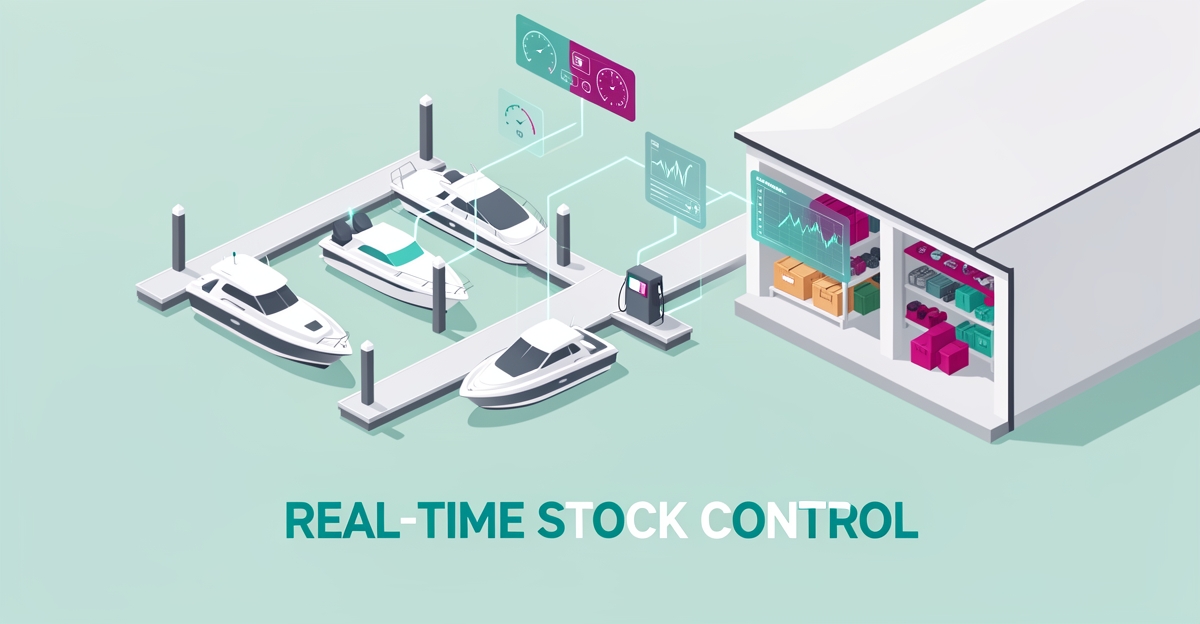
The solution architecture begins with IoT sensors installed on fuel tanks, supply cabinets, and equipment storage areas that stream real-time level and usage data to a central AI platform. This system processes inputs alongside historical consumption, weather patterns, booking schedules, and seasonal trends to forecast demand with high accuracy. When stock levels approach critical thresholds, the AI triggers proactive alerts to staff via preferred channels, eliminating the need for manual checks while ensuring timely reordering. AIQ Labs designs these custom integrations to sync seamlessly with existing marina management software, creating a unified operational view without requiring disruptive system overhauls. For marinas that want a broader connected layer, inventory, scheduling, customer communication, and reporting in one place, an AI Operating System approach ties those pieces together in phases.
Compared to human-only tracking, which offers flexibility but remains prone to errors and bias, AI-powered systems deliver measurable improvements in inventory optimization and shortage prevention. By automating routine monitoring and enabling predictive replenishment, marinas reduce waste, prevent service interruptions, and free staff to focus on higher-value customer interactions. The result is a more resilient inventory operation that adapts dynamically to changing conditions while maintaining optimal stock levels year-round.
Proactive Alerts: Stopping Shortages Before They Happen
AI-powered inventory systems don't just track what's in stock, they anticipate when it's about to run out. By continuously monitoring fuel levels, spare parts, and equipment status, these systems trigger alerts before shortages disrupt operations, turning reactive scrambles into planned interventions.
Marina operators using AI for real-time inventory management typically report a significant shift from firefighting to foresight. Effective alerting hinges on well-defined thresholds, set dynamically based on usage patterns, seasonal demand, and lead times, so staff aren't overwhelmed by false alarms or caught off guard by delayed warnings.
Good alerting doesn't stop at notification; it escalates intelligently. When fuel drops below a critical level, the system might first notify the dockhand, then alert the manager if levels continue to fall, and finally trigger an automated reorder request if no action is taken within a set window. This tiered approach ensures the right person responds at the right time, reducing reliance on constant manual checks.
Training staff to interpret and act on these alerts is just as vital as the technology itself. Teams need to understand what each alert means, who is responsible for responding, and how to log actions taken, closing the loop between detection and resolution. AIQ Labs designs these workflows with clarity in mind, ensuring alerts integrate smoothly into existing roles without adding cognitive burden. When alerts are clear, actionable, and tied to defined responsibilities, marinas shift from managing crises to preventing them, keeping boats fueled, parts stocked, and operations running smoothly.
- Set dynamic thresholds based on historical usage and seasonal trends
- Implement tiered escalation: staff → supervisor → automated action
- Train teams on alert meaning, response protocols, and follow-up logging
- Integrate alerts with existing workflows to avoid disruption
- Review alert effectiveness monthly and adjust thresholds as needed
The result isn't just fewer shortages, it's a more predictable, efficient operation where staff spend less time chasing supplies and more time serving customers. Proactive alerts transform inventory from a source of stress into a quietly reliable foundation.
Implementation Roadmap: Integrating AI with Your Existing Marina Operations
Marina operators often face the challenge of balancing real-time inventory needs with existing operational workflows. Integrating AI doesn't require overhauling current systems, it works best when layered into what's already functioning.
For marinas, this means starting with targeted integration points, like fuel tank sensors or supply storage areas, where AI can enhance monitoring without disrupting daily routines.
A phased approach reduces complexity and builds team confidence. Begin by connecting AI to one critical workflow, such as tracking diesel levels or spare parts usage, using custom APIs that sync with existing dock management or accounting software. This allows staff to see immediate benefits, like automated low-stock alerts, while maintaining familiarity with core processes. If you'd rather rebuild the single workflow that costs you the most first, a fixed-price Workflow Build is a practical entry point.
- Map current inventory touchpoints and data sources
- Deploy AI monitoring in a single zone (e.g., fuel dock)
- Validate data accuracy against manual logs for two weeks
- Expand to supplies and equipment based on initial results
- Refine alert thresholds using real-world usage patterns
Proactive alerts only work when staff understand and trust them. Clear communication and role-specific training ensure that notifications, whether for low fuel or delayed equipment maintenance, are acted upon promptly. Effective implementation hinges on aligning AI outputs with human decision-making, not replacing it.
By owning the custom system from the start, marinas avoid vendor lock-in and retain full control over updates, integrations, and data use. This approach turns AI from a disruptive add-on into a seamless extension of operational excellence, streamlining logistics, reducing waste, and ensuring critical supplies are always where they're needed, when they're needed.
From Stockouts to Savings: The Business Case and Next Steps
For marina operators, the real question is no longer whether AI can manage inventory, it is how quickly you can capture the savings before your competitors do. Every season you run on manual checks is a season of lost sales, rush orders, and staff hours spent counting instead of serving.
The payoff for marinas is concrete. AI-powered tracking optimizes stock levels, prevents shortages, and eliminates manual checks across fuel docks, chandlery shelves, and maintenance bays. When the system flags a low fuel reserve or a dwindling supply of impellers before a busy weekend, your staff acts proactively rather than scrambling reactively.
The business case compounds across four areas:
- Supply chain efficiency, AI streamlines logistics and ordering, cutting the waste that comes from over-ordering seasonal items or emergency restocking at premium prices.
- Reduced waste, Optimized inventory levels mean less capital tied up in slow-moving stock and fewer expired or obsolete parts written off.
- Cost savings, Fewer stockouts, fewer rush orders, and less manual labor spent counting and reconciling inventory.
- Customer satisfaction, Boaters expect fuel, parts, and services on demand; real-time visibility ensures you deliver on that expectation every time.
Adoption, however, comes with honest challenges. Integrating AI with existing operations can be complex and resource-intensive, and proactive alerts only work when staff are trained to act on them. This is precisely where the build matters more than the buy.
AIQ Labs designs custom inventory systems that sync directly with your marina's operations, monitoring fuel, spare parts, and supplies in real time and alerting staff before shortages hit. Because you own the system outright, there is no vendor lock-in and no subscription treadmill; the code, agents, and data belong to you. And if routine monitoring and reordering calls are eating your front-desk time, managed AI Employees can handle those tasks around the clock, typically at a fraction of the cost of an equivalent hire. You can start monthly, build in milestones, or own it outright.
The next step is straightforward. Start with the two-minute Fit Check, then book a free 30-minute strategy call at aiqlabs.ai/book to map your highest-ROI automation opportunity with an AI engineer. It is a working session, not a sales pitch, and if there is no clear win for your marina, we will tell you that too.
Still paying for 10+ subscriptions that don’t talk to each other?
We build custom AI systems you own outright. No vendor lock-in. Full control.
Not sure where to start? Ask our AI planner
Frequently Asked Questions
How does AI-powered real-time inventory tracking actually work for marinas?
What are the main benefits of switching from manual inventory checks to AI-powered systems at a marina?
Is it difficult to integrate AI inventory systems with our existing marina software and workflows?
How do proactive alerts prevent shortages before they happen?
What does it cost to build an AI inventory system for a marina?
What steps should we take to start implementing AI inventory tracking at our marina?
The Fuel Dock Doesn't Have to Run Dry
Manual inventory checks leave marinas vulnerable to the exact moments that matter most, the holiday weekend fuel shortage, the backordered part during peak season, the customer who walks away because you didn't know you were out of stock. AI-powered real-time monitoring changes this equation by tracking fuel levels, spare parts, and supplies continuously, alerting staff proactively before shortages become customer-facing failures, and optimizing reorder timing based on actual usage patterns and seasonal demand. The result is fewer emergency orders, less capital tied up in slow-moving stock, and staff who spend their time serving boaters instead of counting shelves. AIQ Labs builds custom inventory systems that integrate with your existing operations, giving you real-time visibility without vendor lock-in or subscription dependency. Ready to see where AI fits your operation? Start with the two-minute Fit Check, then book a free 30-minute strategy call at aiqlabs.ai/book to map your highest-ROI opportunity with an AI engineer. It's a working session, not a sales pitch, and if there's no clear win, we'll tell you that too.
Make AI your competitive advantage — not just another tool.
Strategy, implementation and ongoing optimization. One partner, end to end.
Not sure where to start? Ask our AI planner