AI for Meat Packaging: How to Automate Labeling, Batch Codes, and Expiry Tracking
Key Facts
- Industry estimates put large food manufacturers' automation-focused capital spending at roughly half of annual budgets as of late 2026, per Mordor Intelligence
- Meat, poultry and seafood plants represent one of the largest segments of food processing automation spending, per Mordor Intelligence data
- Industrial robotics is among the fastest-growing categories in food automation, with high single-digit growth projected through the decade, per Mordor Intelligence
- The global food automation market is projected to grow steadily through 2029, per Mordor Intelligence
- Automated systems limit human food interaction, reducing contamination opportunities, per packaging experts
- AI vision systems verify label accuracy in real time before packages leave the line
- AI-driven batch code generation eliminates manual entry errors by pulling directly from production data
Hire a team member that works 24/7 — for less than a part-time wage.
AI receptionists, SDRs, dispatchers and 99+ roles. Trained on your business, fully managed.
Not sure where to start? Ask our AI planner
The Cost of Packaging Errors in Meat Processing
A single wrong expiry date on a label can trigger a full product recall, a regulatory violation, and thousands of pounds of wasted inventory, yet in most meat processing plants, these dates are still typed, verified, and printed by hand. The stakes are uniquely high in meat, poultry, and seafood, where labeling accuracy directly ties to food safety and traceability requirements.
The financial exposure is significant. Manual packaging processes carry a higher risk of human error, higher labor costs, and less consistent quality compared to automated lines, according to industry analysis of food packaging automation. Every mislabeling incident compounds these costs: products must be pulled, relabeled, or destroyed, while staff hours are consumed investigating what went wrong and proving to inspectors that the batch records are accurate.
The industry is responding decisively. Market research such as Mordor Intelligence's food processing automation report projects steady growth in food automation spending through the end of the decade, and industry reporting suggests that a large share of capital spending by major food manufacturers now flows toward new or upgraded automation projects, a clear signal that processors see manual packaging as a liability worth eliminating.
Meat, poultry, and seafood plants represent a particularly large share of this shift, accounting for billions of dollars of food processing automation investment in recent years, per Mordor Intelligence data. These facilities face the heaviest labeling and tracking burden of any food category, with batch codes, origin information, and expiry dates all required on every package.
The cost of packaging errors in meat processing falls into three categories:
- Compliance risk: mislabeled products can violate labeling regulations and fail audits, exposing the plant to violations and penalties.
- Waste and rework: incorrect batch codes or expiry dates force entire runs to be relabeled or discarded, driving up waste in an industry with thin margins.
- Traceability gaps: inaccurate records make it difficult to trace a problem batch quickly during a recall, extending the scope of affected product.
Contamination and hygiene concerns add another layer. As comparisons of manual and automatic food packaging note, "the installation of automated systems limits human interaction with food and controls the potential opportunities for contamination." Fewer hands on the line means fewer chances for both labeling errors and safety issues.
This is why AI-driven packaging automation has moved from novelty to necessity. The technology behind advanced automated labeling systems now allows plants to verify batch codes, expiry dates, and label content automatically, catching errors before packages leave the line rather than after. The comparison is stark: automated lines run faster, cost less in labor, and deliver more consistent quality than manual processes.
For processors evaluating this shift, the implementation path matters as much as the technology. Systems must integrate with existing packaging lines and equipment rather than replace them, and staff need training to operate and maintain the new automation. AIQ Labs builds custom AI systems that connect to existing packaging lines to prevent mislabeling and regulatory violations, taking a plant's current manual verification workflow and rebuilding it as an automated system the business owns outright.
The direction of the market is unambiguous. With industrial robotics among the fastest-growing categories in food processing automation, per Mordor Intelligence, plants that continue relying on manual labeling are absorbing risks their competitors are systematically engineering out. The cost of packaging errors is not hypothetical, it is measured in recalls, wasted product, and compliance exposure every single day.
How AI Automates Critical Packaging Workflows
Meat packaging lines move fast, and a single mislabel can trigger recalls, fines, and lost trust. AI-powered systems remove that risk by automating the moments where human error is most costly.
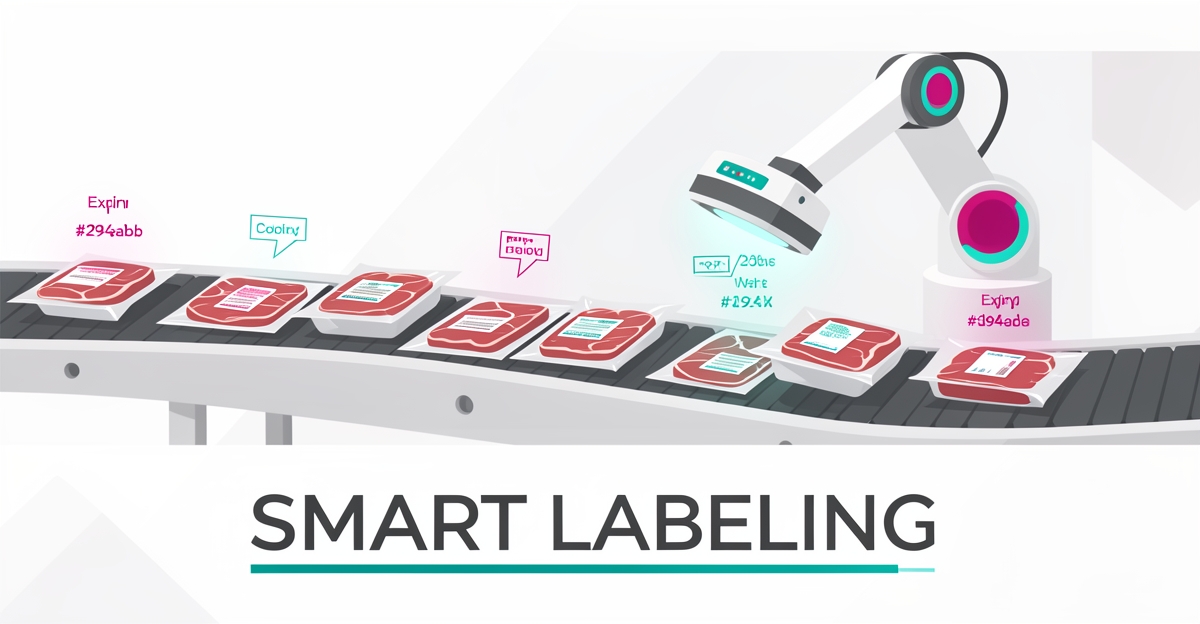
Computer vision inspects each package in real time and verifies label placement, content accuracy, and print quality before the pack leaves the line. Multi-agent workflows coordinate vision, code generation, and expiry logic so labeling, batch coding, and date tracking happen as one synchronized process. This reduces human error and improves consistency across high-speed operations.
The market is shifting quickly toward that automation. Industry research projects continued growth in the global food automation market through the end of the decade, with meat, poultry and seafood plants representing one of the largest segments, showing concentrated investment in protein packaging.
Capital allocation confirms the priority. Market reporting indicates a large share of capital spending by major food manufacturers now flows toward new or upgraded automation projects, and industrial robotics continues to grow at a strong clip, reflecting demand for flexible, precise handling on packaging lines.
AI automates critical workflows through three integrated layers:
- Labeling accuracy: Vision models read and validate human-readable and machine-readable codes against order data, flagging mismatches instantly.
- Batch code generation: Agents pull production data, lot numbers, and traceability requirements to print unique, compliant codes without manual entry.
- Expiry date tracking: Systems calculate shelf life from production timestamps, product type, and storage conditions, then apply and verify dates automatically.
Automation in food packaging improves efficiency, safety, and quality, while minimizing the risk of human error. As packaging experts explain, the installation of automated systems limits human interaction with food and controls the potential opportunities for contamination.
For SMBs, this means packaging lines can run faster with fewer labor costs and tighter quality control. AIQ Labs builds custom AI systems that integrate with existing packaging lines to prevent mislabeling and regulatory violations, using multi-agent orchestration proven across 200+ deployed systems. The result is consistent quality assurance and faster throughput without replacing the whole line.
When labeling, batch tracking, and expiry are automated end-to-end, teams spend less time correcting errors and more time scaling production safely.
Implementing AI Packaging Automation with AIQ Labs
Meat packaging lines face constant pressure from mislabeling, batch errors, and expiry tracking that can trigger recalls and regulatory violations. With food automation investment projected to keep climbing through the decade, automation is no longer optional for processors who want to stay competitive.
A step-by-step deployment keeps risk low and results measurable for SMBs in food processing.
Start with a workflow assessment of the current labeling, batch coding, and expiry process. Map where human touchpoints create error, slow throughput, and compliance exposure. This assessment defines the automation scope and integration points with existing lines.
Choose the right automation technology for packaging accuracy. Advanced automated labeling systems and robotics for flexibility and precision are core technologies driving the automation trend in food packaging. AI adds vision verification and real-time decisioning to those systems.
Integration is where most projects stall. The automation technology must connect with existing equipment and processes, including printers, conveyors, and ERP or traceability databases. AIQ Labs' Workflow Builds are designed for exactly this: rebuild the one workflow that costs the most, labeling, batch coding, or expiry tracking, at a fixed price, in phases, without ripping out your line.
Staff training and change management follow integration. Teams need to operate and maintain the new automation system and understand exception handling when AI flags a mismatch. Monitoring and evaluation then confirm performance gains in speed, accuracy, and compliance.
Deployment follows AIQ Labs' Build in Milestones and Start Monthly payment models, so you commit to one phase at a time. A practical implementation path includes:
- Discovery & architecture of labeling, batch tracking, and expiry workflows
- Custom AI vision and integration build with existing line equipment
- Testing, validation, and staff training for production go-live
- Ongoing monitoring and optimization with pause or adjust flexibility
Meat, poultry and seafood plants represent one of the largest segments of food processing automation spending, reflecting strong investment in this segment. Capital allocation is shifting fast, with a large share of major food manufacturers' capital budgets now flowing toward new or upgraded automation projects.
Automation in food packaging has improved efficiency, safety, and quality, while minimizing the risk of human error. The installation of automated systems limits human interaction with food and controls the potential opportunities for contamination.
With custom AI workflow automation, labeling accuracy improves while labor costs and consistency stay under control. The result is a system the business owns, with true ownership and no vendor lock-in.
Still paying for 10+ subscriptions that don’t talk to each other?
We build custom AI systems you own outright. No vendor lock-in. Full control.
Not sure where to start? Ask our AI planner
Frequently Asked Questions
How much does manual labeling in meat processing actually cost a plant in terms of waste and recalls?
Why are large food manufacturers shifting capital spending toward automation, and why does this matter for meat processors?
Can AI automation be added to existing meat packaging lines without replacing the whole system?
How does AI improve accuracy in labeling, batch coding, and expiry date tracking on meat packaging lines?
Does automating meat packaging with AI reduce contamination risks compared to manual processes?
How much of the food automation market is driven by meat, poultry, and seafood plants?
Turning Packaging Precision into Competitive Advantage
Meat, poultry, and seafood processors are already investing heavily in automation because the cost of manual labeling errors is too high to ignore. AI-driven packaging automation directly tackles compliance risk, waste, and traceability gaps by verifying labels, generating batch codes, and tracking expiry dates in real time, all while reducing labor dependency and human error. For SMBs ready to move beyond manual processes, the path forward starts with understanding where your current workflow creates risk. AIQ Labs helps meat processors assess their labeling, batch tracking, and expiry systems, then builds custom AI solutions that integrate with existing lines, so you own the system, see measurable gains in accuracy and throughput, and eliminate the daily cost of preventable errors. Start with the 2-minute Fit Check, then book a free 30-minute strategy call to map your biggest bottleneck and identify where AI can deliver real, owned value.
Make AI your competitive advantage — not just another tool.
Strategy, implementation and ongoing optimization. One partner, end to end.
Not sure where to start? Ask our AI planner