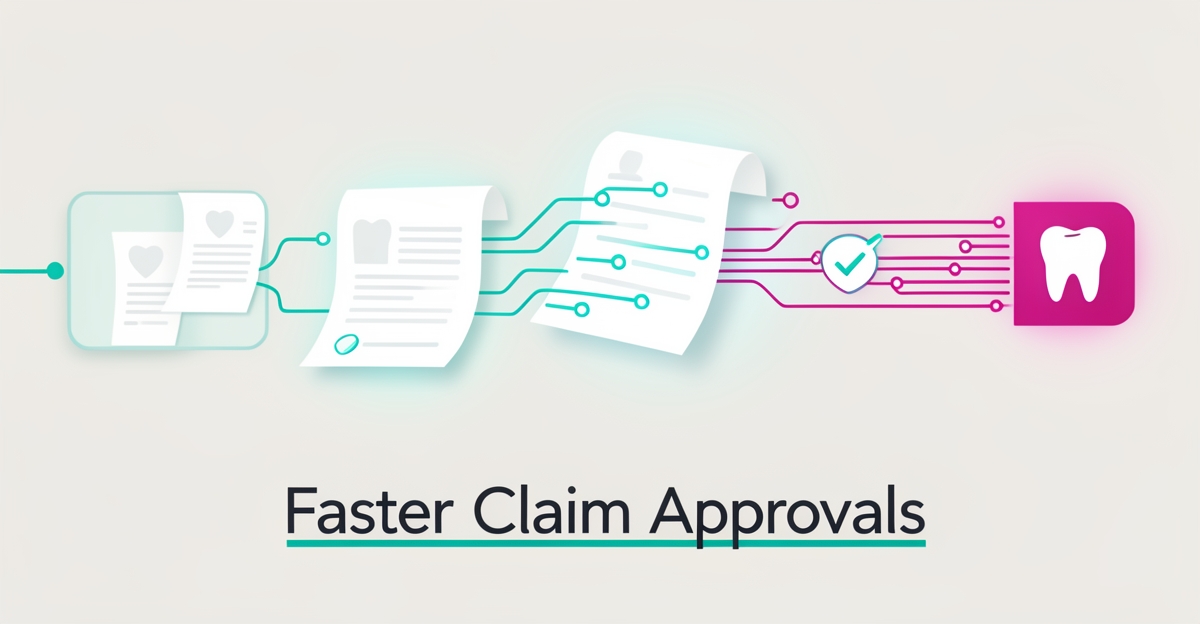
AI for Pediatric Dental Insurance Claims: How to Automate and Speed Up Processing
Key Facts
- Automated validation typically catches eligibility and data errors before submission, one of the most common sources of dental claim rejections
- AI-powered coding assistants improve CDT code accuracy by interpreting clinical notes and payer guidelines
- Intelligent submission workflows ensure timely, trackable claim delivery to payers with real-time status visibility
- AI-driven claims automation cuts processing time and enhances consistency across high-volume pediatric dental operations
- Practices commonly report saving well over a hundred staff hours annually once claims workflows are automated
- Every day a claim sits unprocessed is a day the practice finances the insurer's float
Hire a team member that works 24/7 — for less than a part-time wage.
AI receptionists, SDRs, dispatchers and 99+ roles. Trained on your business, fully managed.
Not sure where to start? Ask our AI planner
The Hidden Cost of Manual Pediatric Dental Claims Processing
Every time a pediatric dental claim sits in a queue awaiting manual review, the practice loses money, time, and patient trust. What looks like routine paperwork on the surface is actually a compounding operational drain that touches every part of the revenue cycle.
The core problem is structural. Claims workflows in pediatric dentistry involve validation, coding, and submission steps that are each prone to human error and delay. Dental insurance is fragmented across payers, plans, and pediatric benefit rules, which means every manual touchpoint in the claims process is another opportunity for something to go wrong.
The administrative burden shows up in predictable, costly ways:
- Billing delays that stretch reimbursement cycles and strain practice cash flow
- Coding errors that trigger denials, resubmissions, and hours of rework
- Manual validation bottlenecks that pull skilled staff away from patient-facing work
- Inconsistent documentation that complicates audits and payer disputes
The downstream effects reach beyond the back office. When claims stall, families face unexpected bills, practices absorb write-offs, and staff burn out on repetitive administrative work instead of supporting clinical care. Families dealing with insurance on their own describe the same friction: submitting documents, awaiting responses, and discovering that not all expenses are recoverable, a frustration manual processes only amplify.
For pediatric dental practices, the stakes are higher because visit volumes are frequent and margins depend on clean, fast claims. Every day a claim sits unprocessed is a day the practice finances the insurer's float. This is precisely the bottleneck that AI-powered claims automation, the kind AIQ Labs builds as custom workflow systems integrated directly into dental billing software, is designed to eliminate, replacing manual validation and coding with intelligent, real-time processing.
How AI Automates Validation, Coding, and Submission in Dental Claims
AI is transforming how pediatric dental practices handle insurance claims by automating validation, coding, and submission workflows. Multi-agent systems and intelligent document processing technologies now enable end-to-end automation that reduces manual effort and minimizes errors. This shift allows dental teams to focus more on patient care while accelerating reimbursement cycles.
Dental AI platforms, some of which hold HITRUST and SOC 2 certifications and are used by both practices and payers, demonstrate how software can streamline every step from insurance verification to diagnosis support. When applied to claims, these systems cross-check procedure codes against patient records and payer rules in real time, flagging discrepancies before submission.
AI-powered validation engines analyze claim data for completeness, eligibility, and compliance with pediatric dental benefit structures. By integrating with practice management systems, these tools automatically verify patient information, procedure details, and coverage limits. This reduces denials caused by missing or incorrect data, among the most common pain points in manual processing. Automated validation typically catches a meaningful share of eligibility-related rejections before they ever reach the payer.
Intelligent coding assistants use natural language processing to interpret clinical notes and assign accurate CDT codes. These systems learn from historical claim patterns and payer-specific guidelines, improving precision over time. In pediatric dentistry, where procedure nuances matter, such as distinguishing between primary and permanent tooth treatments, AI ensures coding aligns with both clinical documentation and insurance requirements. This accuracy directly impacts reimbursement speed and reduces audit risks.
Once validated and coded, AI orchestrates submission through secure electronic data interchange (EDI) or payer portals. Workflow automation ensures claims are sent at optimal times, with built-in retry logic for failed transmissions. Real-time tracking provides visibility into claim status, enabling proactive follow-up. Practices using such systems typically report faster payment cycles and fewer lost claims, improving overall revenue flow.
AI-driven claims automation not only cuts processing time but also enhances consistency across high-volume pediatric dental operations. By reducing reliance on manual entry, practices minimize variability in how claims are prepared and submitted. This standardization is especially valuable in group practices or DSOs where multiple locations must adhere to uniform billing standards.
- Automated validation reduces eligibility-related denials by checking real-time coverage
- AI coding assistants improve CDT code accuracy using clinical note analysis
- Intelligent submission workflows ensure timely, trackable claim delivery to payers
For dental organizations seeking to modernize their billing infrastructure, AIQ Labs builds managed AI Employees and custom workflow systems that integrate intelligent claims automation with existing practice management software. These systems are built for ownership, scalability, and seamless integration, helping pediatric dental providers reduce administrative burden while improving cash flow. As claims volumes grow, adopting AI becomes a practical advantage in pediatric dental revenue cycle management.
Implementing AI in Pediatric Dental Claims: Integration, Compliance, and ROI
Implementing AI in pediatric dental claims requires a structured approach that aligns with clinical workflows and regulatory standards. AIQ Labs builds in phases designed to minimize disruption while maximizing operational gains. The process begins with discovery and architecture, where current billing systems are analyzed to identify integration points with practice management software. During development and integration, custom AI agents are built to handle claim validation, coding, and submission, connecting seamlessly with existing dental billing tools through secure APIs. This phase includes rigorous testing to ensure accuracy in procedure code matching and payer-specific rule adherence, directly addressing common sources of denial.
Compliance is embedded throughout the implementation, particularly regarding HIPAA requirements for protected health information. AI systems are designed with validation layers and guardrails that prevent unauthorized data access, while audit trails maintain full visibility into claim processing activities. These safeguards are critical given the sensitivity of pediatric patient data and the increasing scrutiny on healthcare data protection. The framework also incorporates human-in-the-loop controls for complex cases, ensuring clinical oversight remains intact even as automation handles routine tasks.
Measuring ROI focuses on tangible financial and operational improvements. Practices typically see faster reimbursement cycles as AI reduces the manual errors that trigger payer denials. By automating eligibility checks and procedure code verification, AI minimizes avoidable delays, and many organizations report saving well over a hundred staff hours annually once workflows are streamlined. Additionally, AI-powered analytics help identify patterns in denial reasons, enabling proactive adjustments to billing practices that improve first-pass acceptance rates over time. These improvements collectively strengthen revenue cycle management without requiring additional staffing.
Still paying for 10+ subscriptions that don’t talk to each other?
We build custom AI systems you own outright. No vendor lock-in. Full control.
Not sure where to start? Ask our AI planner
Frequently Asked Questions
How does AI actually reduce billing delays in pediatric dental practices?
Is AI-powered claims processing secure for handling sensitive pediatric patient data?
Can AI really save time on administrative tasks like insurance verification and coding?
What happens if the AI makes a mistake on a complex claim? Is there still human oversight?
How do I know if investing in AI claims automation will actually improve my practice's cash flow?
Do I need to replace my current dental billing software to use AI for claims processing?
Turning Claims Processing from a Cost Center into a Competitive Advantage
Pediatric dental practices lose valuable time and revenue when manual claims processing creates delays, denials, and administrative strain. By automating validation, coding, and submission with AI, practices can reduce errors, accelerate reimbursements, and free staff to focus on patient care instead of paperwork. The complexity of today's insurance landscape makes every manual touchpoint a risk, something AI is well positioned to mitigate. AIQ Labs has deployed 200+ multi-agent systems and runs four live SaaS products daily, and we help pediatric dental providers implement custom AI systems that integrate directly with existing billing software, ensuring ownership, compliance, and measurable ROI without disrupting clinical workflows. To see how this could work for your practice, start with a free two-minute Fit Check to identify your highest-impact automation opportunity, no obligation, just clarity on where AI can make a real difference.
Make AI your competitive advantage — not just another tool.
Strategy, implementation and ongoing optimization. One partner, end to end.
Not sure where to start? Ask our AI planner