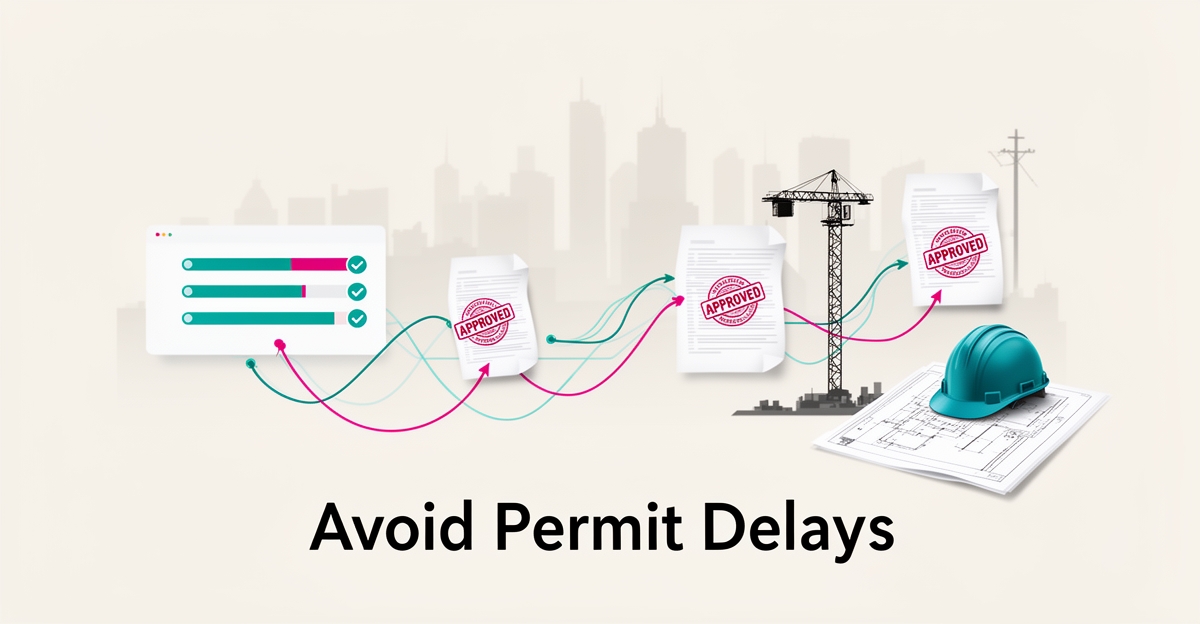
AI for Permit Tracking: How Utility Construction Firms Can Avoid Delays
Key Facts
- Permit delays idle crews while wages, equipment rental, and site overhead keep accruing, costs that compound the longer approvals stall.
- Manual tracking via spreadsheets and email chains lacks real-time visibility and depends on overburdened project managers to catch problems late.
- AI can automate permit monitoring, send milestone-based alerts, and auto-submit forms so applications go in before deadlines slip.
- Compliance failures carry heavy penalties, a single serious safety violation can shut down a project and trigger fines, investigation costs, and litigation.
- With experienced construction staff retiring faster than they're replaced, automating permit workflows helps preserve institutional knowledge.
- AIQ Labs has deployed 200+ multi-agent systems and runs four live SaaS products daily, permit tracking workflows follow the same proven build process.
Hire a team member that works 24/7 — for less than a part-time wage.
AI receptionists, SDRs, dispatchers and 99+ roles. Trained on your business, fully managed.
Not sure where to start? Ask our AI planner
The Costly Reality of Permit Delays in Utility Construction
Permit delays in utility construction trigger a cascade of costly consequences that extend far beyond simple scheduling slips. When approvals stall, crews sit idle while still accruing wages, equipment rental fees, and site overhead, directly inflating project budgets. The construction workforce is also under strain, with experienced staff retiring faster than replacements enter the trades. That shortage means permit-related bottlenecks often persist longer, because fewer experienced people are available to navigate municipal requirements or chase down missing documentation.
Beyond direct expenses, permit delays amplify safety and compliance risks that carry severe financial and reputational penalties. When projects stall due to permitting issues, teams may rush work once approvals arrive, increasing exposure to hazards, and a serious safety failure can shut down a project entirely, compounding delays with investigation costs, fines, and potential litigation. These cascading impacts demonstrate why reactive, manual permit tracking fails utility firms: spreadsheets and email chains lack real-time visibility, cannot predict holdups, and rely on overburdened project managers to manually cross-reference milestones with jurisdictional requirements, a process prone to oversight in high-volume utility work.
AIQ Labs addresses this gap through AI Workflow Builds that synchronize permit data with project schedules, automatically flagging discrepancies and triggering submissions before delays occur. Firms that automate permit status checks typically recover hundreds of staff hours per year by eliminating manual follow-ups and reducing administrative overhead. Without this automation, utility construction remains vulnerable to avoidable overruns that erode profitability and strain client relationships.
How AI Transforms Permit Tracking from Reactive to Proactive
Permit delays silently drain utility project budgets, turning routine approvals into costly bottlenecks. AI-powered tracking transforms this reactive scramble into a proactive workflow by continuously monitoring status, triggering milestone-based alerts, and auto-submitting forms when conditions are met, eliminating guesswork and manual follow-ups.
The efficiency gain stems from AI's ability to parse municipal databases, cross-reference project schedules, and initiate submissions the moment prerequisites are satisfied. For firms juggling dozens of permits across jurisdictions, this shift from periodic checks to real-time orchestration prevents the cascading delays that inflate overhead and strain client relationships. Instead of discovering a stalled permit two weeks late, the system flags it the day it slips.
AIQ Labs designs custom permit tracking systems that sync with city APIs and internal project management tools, ensuring alerts trigger only when genuinely actionable, such as when a design milestone completes or a utility mark-out clears. Rather than overwhelming teams with noise, the system prioritizes critical path items, sending escalation notices only when approvals stall beyond expected windows. This precision reduces administrative burden while maintaining compliance, letting project managers focus on field execution instead of paperwork purgatory.
The technology's value compounds over time: as the AI learns municipal response patterns and common rejection reasons, it refines submission timing and documentation quality, further boosting first-pass approval rates. Utility firms using these workflows also build institutional knowledge that makes future permitting faster and more predictable. In an industry losing experienced workers to retirement, preserving this expertise through automated systems becomes a strategic necessity, not just an efficiency play.
Implementing AI Permit Tracking: From Assessment to Ongoing Optimization
Permit delays remain one of the most persistent cost drivers in utility construction, and compliance failures can halt entire projects. AIQ Labs addresses this through a structured, phased implementation designed to eliminate bottlenecks by aligning AI permit tracking with project milestones and city database systems, built to a fixed price and owned outright when complete.
The process begins with a discovery phase where AIQ Labs assesses current permit workflows, identifies data silos between internal project management tools and municipal systems, and maps out integration points for real-time status monitoring. This assessment includes evaluating technology readiness, data quality, and team capabilities to build a targeted solution that automates permit status checks, triggers alerts for approaching deadlines, and auto-submits required forms when project milestones are met, reducing manual effort and human error.
Next, custom workflow integration connects the AI system directly with city permitting databases via secure API exchanges, enabling bidirectional data flow. The AI continuously pulls permit status updates from municipal portals while pushing project timeline data from internal systems to anticipate submission needs. This integration ensures that permit applications are submitted proactively, not reactively, cutting approval timelines significantly versus manual chasing.
Deployment follows a phased rollout, starting with pilot testing on active projects to validate accuracy and user adoption before full-scale implementation. AIQ Labs provides role-specific training, configures human-in-the-loop controls for complex decisions, and establishes audit trails for compliance. Once live, the system enters continuous optimization, where performance data refines alert thresholds, improves form auto-completion accuracy, and expands coverage to additional permit types or jurisdictions. Firms that want a full connected layer across estimating, scheduling, and permitting can graduate to an AI Operating System over time. To explore how this approach can transform your permit tracking, start the Fit Check → https://aiqlabs.ai/apply and schedule a free 30-minute strategy call → https://aiqlabs.ai/book.
Still paying for 10+ subscriptions that don’t talk to each other?
We build custom AI systems you own outright. No vendor lock-in. Full control.
Not sure where to start? Ask our AI planner
Frequently Asked Questions
How much time can AI-powered permit tracking save utility construction firms annually?
What financial impact do permit delays have on utility construction projects?
How much faster can approvals be with AI-powered permit tracking?
Is AI-powered permit tracking only for large utility firms, or can smaller companies benefit too?
What are the risks of relying on manual permit tracking in utility construction?
How does AI improve permit submission accuracy over time?
Turning Permit Chaos into Competitive Advantage
Permit delays in utility construction aren't just administrative headaches, they're profit leaks that compound through idle labor, safety risks, and strained client relationships. AI-powered tracking transforms reactive scrambling into proactive workflow automation, syncing permit data with project milestones so applications go out on time and stalled approvals get flagged the day they slip. For utility firms facing a shrinking pool of experienced staff, automating permit workflows isn't just about efficiency; it's about preserving institutional knowledge and building resilience. The path forward starts with assessing your current bottlenecks. Take the first step by completing the two-minute Fit Check to uncover your highest-ROI automation opportunity, then schedule a free 30-minute strategy call with AIQ Labs to see how custom AI workflows can align with your permits, schedules, and city systems, no obligation, just clarity.
Make AI your competitive advantage — not just another tool.
Strategy, implementation and ongoing optimization. One partner, end to end.
Not sure where to start? Ask our AI planner