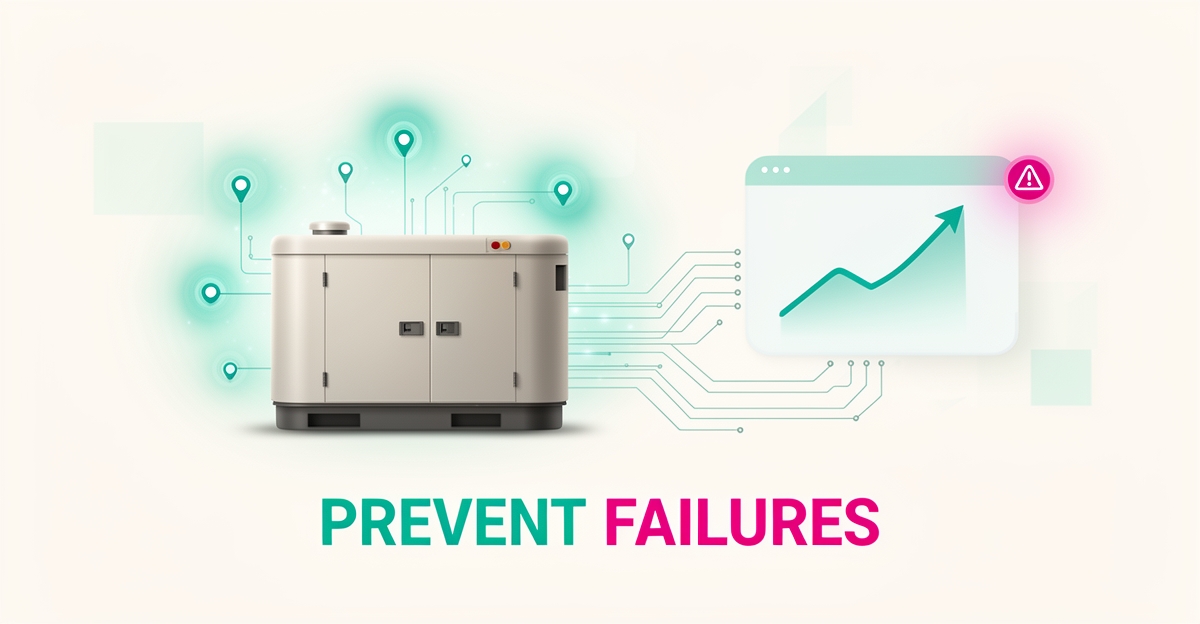
AI for Predictive Maintenance: How Generator Installers Can Prevent Failures Before They Happen
Key Facts
- Industry studies suggest AI predictive maintenance can reduce unplanned downtime dramatically, often by well over half
- Machine learning models can flag developing equipment failures days to weeks before breakdown, depending on the failure mode and sensor coverage
- Industrial AI implementations typically cut maintenance costs meaningfully while extending equipment life
- Prescriptive maintenance goes further than prediction, recommending specific corrective actions and prioritized work orders
- AI-driven triage can substantially reduce the time technicians spend diagnosing and scheduling maintenance tasks
- These systems layer on top of existing monitoring tools, no rip-and-replace required
Hire a team member that works 24/7 — for less than a part-time wage.
AI receptionists, SDRs, dispatchers and 99+ roles. Trained on your business, fully managed.
Not sure where to start? Ask our AI planner
The Cost of Reactive Maintenance: Why Generators Fail When You Need Them Most
When a generator fails during a critical moment, the consequences ripple far beyond a simple repair bill. For businesses relying on backup power, unexpected downtime translates directly into lost revenue, compromised safety, and operational chaos.
The financial impact of reactive maintenance is significant. Industry research on AI-powered predictive maintenance consistently points to major reductions in unplanned downtime, often by more than half in well-instrumented fleets. When generators fail unexpectedly, businesses face emergency repair costs, expedited parts shipping, and the premium rates that come with after-hours service calls.
Beyond the immediate repair expenses, unplanned downtime creates cascading operational challenges. Analyses of industrial AI deployments suggest meaningful gains in equipment reliability compared with traditional reactive approaches. For generator installers and their clients, that reliability gap represents a significant vulnerability.
The hidden costs of reactive maintenance extend across multiple dimensions:
- Emergency service callout fees and premium labor rates
- Expedited parts procurement and shipping costs
- Lost productivity and revenue during extended downtime
- Potential damage to connected equipment and systems
- Compromised safety and compliance risks
Traditional maintenance schedules often rely on calendar-based intervals rather than actual equipment condition. This approach leads to either over-maintenance, wasting resources on unnecessary service, or under-maintenance, missing critical warning signs. Data-driven approaches remove much of the guesswork inherent in reactive strategies, reducing the diagnostic errors that come from servicing equipment blind.
The challenge for generator installers is that failures rarely happen at convenient times. A generator that fails during a power outage, severe weather event, or peak demand period creates maximum disruption. Predictive maintenance powered by AI offers a fundamentally different approach, analyzing usage patterns and environmental factors to forecast potential failures before they occur.
At AIQ Labs, we've seen how custom predictive models can transform maintenance operations. By integrating with existing monitoring tools, these systems provide the early warning capabilities that reactive approaches simply cannot match, often flagging developing failures days or weeks in advance, giving maintenance teams the lead time they need to schedule repairs strategically rather than reactively.
The shift from reactive to predictive maintenance isn't just about avoiding failures, it's about optimizing the entire maintenance lifecycle. When generator installers can predict issues before they escalate, they transform their service model from emergency response to strategic partnership, delivering greater value and reliability to their clients.
How AI Predicts Generator Failures: Turning Sensor Data into Actionable Insights
Traditional maintenance schedules treat every generator the same, replace parts at fixed intervals, whether they need it or not. AI flips that logic by reading the machine's actual condition and predicting failures before they happen, with well-instrumented systems often spotting problems weeks ahead of a breakdown.
At its core, AI-powered predictive maintenance runs on machine learning models trained to recognize the difference between normal operation and early warning signs. Sensors mounted on a generator continuously stream data, vibration, temperature, oil pressure, exhaust emissions, fuel consumption, acoustic signatures, into algorithms that establish a baseline for healthy performance.
Once that baseline exists, anomaly detection takes over. The model flags subtle deviations that human technicians would likely miss: a slight uptick in vibration frequency, a gradual drift in coolant temperature, an unusual acoustic pattern. These micro-changes often precede catastrophic failures by weeks, giving maintenance teams a critical window to act.
The second technique, failure forecasting, goes further than spotting anomalies. By analyzing historical failure patterns alongside real-time sensor data, ML models estimate remaining useful life for specific components, predicting not just that something will fail, but when. Industrial AI research suggests this approach can substantially reduce both downtime and maintenance costs across a fleet.
For generator installers and service teams, the practical workflow looks like this:
- Continuous monitoring: Sensors feed live equipment data into the AI system around the clock
- Pattern recognition: ML models compare current readings against learned baselines and historical failure signatures
- Alert generation: The system flags anomalies and assigns risk scores to specific components
- Actionable output: Technicians receive prioritized maintenance recommendations, not raw data dumps
The most advanced implementations layer in prescriptive analytics, AI that doesn't just predict failures but recommends specific corrective actions. This prescriptive approach turns raw alerts into concrete, prioritized work orders, and can meaningfully cut both maintenance costs and the time technicians spend on maintenance tasks.
What makes this accessible for generator service businesses today is that these models no longer require building from scratch. AIQ Labs builds custom predictive models as part of its AI Workflow Builds, integrating directly with existing monitoring tools and translating raw sensor streams into clear maintenance priorities. The result is a shift from reactive service calls to scheduled, data-driven interventions, keeping generators running and clients confident in the equipment they depend on.
From Prediction to Prevention: Implementing AI-Powered Maintenance Workflows
Knowing a failure is coming only matters if your team acts on it. The real value of AI-powered predictive maintenance lies in turning predictions into structured, repeatable workflows that prevent breakdowns before they disrupt your customers.
The first practical step is data integration. Predictive models depend on high-quality inputs, so installers need to connect telematics, fuel consumption logs, load profiles, temperature readings, and service histories into a single data stream. Without clean, consistent data, even the most sophisticated algorithm produces unreliable predictions.
Once data flows reliably, the next phase is model deployment. Machine learning algorithms analyze patterns across sensor readings and environmental conditions to flag anomalies days or weeks before a failure occurs, giving installers a wide window to schedule repairs during planned downtime rather than scrambling during an emergency.
From there, the workflow shifts from prediction to prescription. Rather than simply alerting a technician that something looks wrong, prescriptive maintenance systems recommend specific actions based on equipment condition and performance trends, turning raw alerts into concrete, prioritized work orders.
For generator installers ready to implement this approach, the core workflow typically follows a clear sequence:
- Connect data sources, integrate telematics, IoT sensors, and service records into a unified monitoring platform.
- Deploy predictive models, train machine learning algorithms on historical failure data to recognize early warning patterns.
- Automate alert triage, route anomalies to the right technician with contextual detail, not just a generic fault code.
- Close the loop, feed repair outcomes back into the model so predictions grow sharper over time.
The financial case for this shift is compelling. Industrial AI deployments for predictive maintenance typically reduce maintenance costs while extending equipment life. For generator installers managing large fleets across multiple sites, those gains compound quickly into fewer emergency callouts, longer equipment lifespans, and stronger service-level agreements.
Implementation does not require ripping out existing infrastructure. AIQ Labs builds custom predictive models that integrate directly with the monitoring tools installers already use, whether as a single AI Workflow Build for your most costly maintenance workflow, or as part of a broader AI Operating System that connects monitoring, dispatch, and service records in one layer you own outright. The result is a system that learns from every service call and turns maintenance from a reactive cost center into a proactive competitive advantage.
Still paying for 10+ subscriptions that don’t talk to each other?
We build custom AI systems you own outright. No vendor lock-in. Full control.
Not sure where to start? Ask our AI planner
Frequently Asked Questions
How far in advance can AI actually predict a generator failure?
What kind of data does AI use to predict generator failures?
Will implementing AI predictive maintenance require replacing our current monitoring systems?
How much can AI really reduce maintenance costs and downtime for generators?
Is AI predictive maintenance accurate enough to trust for critical backup power systems?
What's the difference between predictive and prescriptive maintenance for generators?
From Reactive Repairs to Predictive Partnerships
Shifting from calendar-based servicing to AI-powered predictive maintenance lets generator installers stop chasing failures and start preventing them. By turning continuous sensor data into anomaly detection and failure forecasting, teams can spot the subtle drift in vibration, temperature or oil pressure that precedes a breakdown and act weeks ahead of an outage. That lead time converts emergency callouts into planned work, protects clients during critical events, and transforms your service model from reactive response to strategic reliability partner. The workflow is practical: connect telematics and service history, deploy models trained on real failure patterns, automate alert triage, and close the loop so predictions improve with every repair. AIQ Labs builds custom predictive models that integrate directly with the monitoring tools you already use, giving you owned systems that learn from your fleet. If you're ready to map where predictive maintenance fits your operations, take the 2-minute Fit Check at https://aiqlabs.ai/apply, then book a free 30-minute strategy call to identify high-ROI opportunities specific to your business.
Make AI your competitive advantage — not just another tool.
Strategy, implementation and ongoing optimization. One partner, end to end.
Not sure where to start? Ask our AI planner