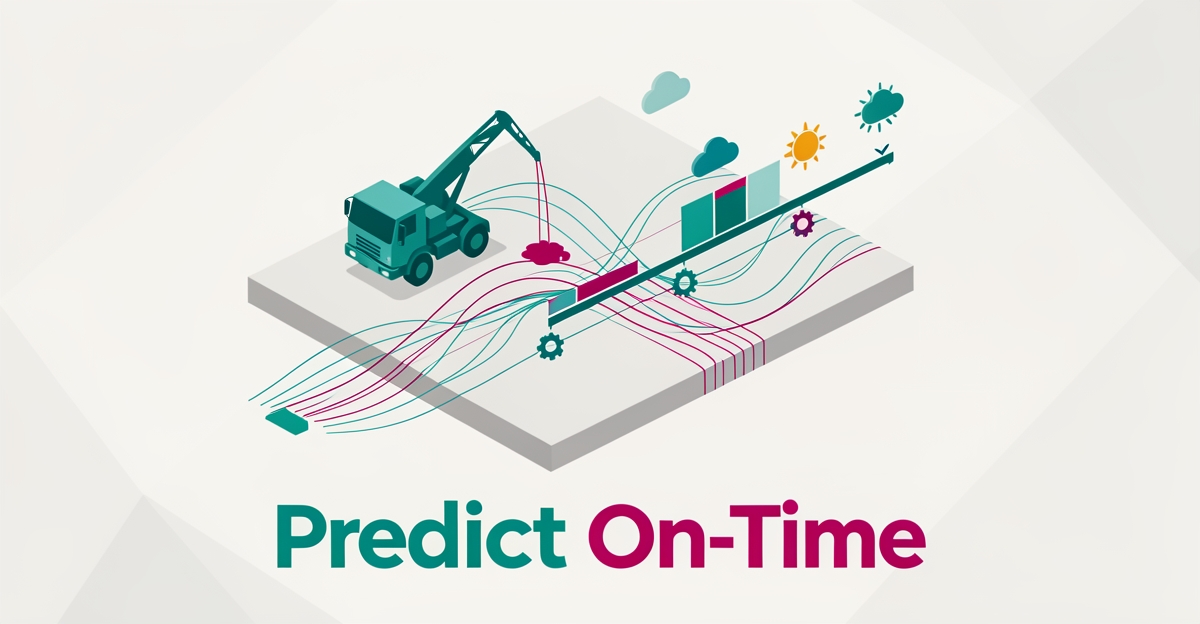
AI for Project Timeline Prediction: How Concrete Contractors Can Improve On-Time Deliveries
Key Facts
- AI-driven timeline prediction reduces surprise delays by analyzing weather, labor, and material data in real time according to Deloitte
- Effective tariff rates for construction goods reached multi-decade highs of roughly 25% to 30% in 2025 per Deloitte
- Project abandonment activity surged 88.2% year-over-year in August 2025 based on Deloitte data
- Nearly half of E&C executives classify their supply chains as 'fragile due to geopolitical tensions' per Deloitte
- Total construction spending declined nearly 3% year-over-year by mid-2025 according to Deloitte
- AI models forecast completion dates with greater precision than experience-based estimates alone per Atlassian
- Real gross output reached roughly US$1.7 trillion in 2025, reflecting a slight year-over-year decline per Deloitte
Hire a team member that works 24/7 — for less than a part-time wage.
AI receptionists, SDRs, dispatchers and 99+ roles. Trained on your business, fully managed.
Not sure where to start? Ask our AI planner
Why Concrete Schedules Keep Slipping in 2026
Concrete contractors heading into late 2026 still face the pressures that have kept project schedules slipping for the past two years. Labor shortages persist as skilled workers remain scarce, directly slowing pour rates and curing timelines. At the same time, effective tariff rates on construction goods climbed to multi-decade highs of roughly 25% to 30% in 2025, sharply increasing material costs and complicating procurement planning. These forces combine to create volatile conditions where even small disruptions cascade into significant delays.
Supply chain fragility further undermines reliability, with nearly half of engineering and construction executives describing their networks as vulnerable to geopolitical tensions. This instability manifests in unpredictable material deliveries, especially for time-sensitive concrete mixes that require precise scheduling. Compounding these issues, project abandonment activity surged 88.2% year-over-year in August 2025, signaling declining confidence in project viability amid rising costs and uncertainty. Static planning methods fail to adapt to this dynamic environment, leading to consistent overruns and missed deadlines.
- Persistent labor shortages reducing daily work capacity
- Tariff-driven material cost increases of roughly 25-30%
- Fragile supply chains due to geopolitical tensions
- 88.2% YoY increase in project abandonment in 2025
When schedules slip repeatedly, budgets inflate and client trust erodes, creating a cycle that threatens long-term business sustainability. AIQ Labs helps contractors break this pattern, whether through a Workflow Build that rebuilds your most expensive scheduling workflow, or a full AI Operating System that connects planning, procurement, and field data in one layer you own.
How AI Turns Weather, Labor and Material Data Into Accurate Timelines
For concrete contractors, a missed pour window or a late ready-mix truck can push a project back by days, and traditional planning methods rarely see these problems coming until they've already happened. That's where AI-driven predictive analytics changes the equation, turning scattered data streams into timelines you can actually trust.
Traditional scheduling relies on experience and intuition. A superintendent estimates curing times based on past jobs, assumes crews will show up, and hopes deliveries arrive on schedule. The problem? Construction has shown little to no improvement in productivity in decades, according to research on lean construction management, and projects frequently run behind schedule as a result.
AI-enhanced planning works differently. Machine learning models process far more variables than any human scheduler can hold in their head, generating predictions grounded in real conditions rather than gut feel. According to Atlassian's guide on AI for project management, these systems analyze historical project data, current status, and external factors to identify patterns and predict outcomes that human project managers might miss.
For concrete work specifically, four data streams matter most:
- Weather impact on curing, AI models process forecasts to predict how rain, temperature swings, and other conditions will affect concrete curing times and the overall schedule.
- Labor availability modeling, By analyzing historical productivity data and current workforce availability, AI predicts how many workers are needed and when, critical in an industry still grappling with persistent labor shortages.
- Material delivery tracking, AI systems monitor orders, shipments, and deliveries to flag potential concrete supply delays before they stall a pour. This matters more than ever, with nearly half of engineering and construction executives classifying their supply chains as "fragile" due to geopolitical tensions.
- Equipment utilization, Machine learning optimizes equipment scheduling based on historical usage patterns and project requirements, keeping expensive assets from sitting idle or creating bottlenecks.
The difference between these two approaches comes down to posture. Traditional project management reacts to problems after they surface; AI-enhanced management identifies risks proactively and recommends optimal allocation of labor, materials, and equipment before delays compound. As modern PMO research puts it, the expectations for 2026 are clear: better prioritization, smarter investment decisions, stronger portfolio visibility, and the ability to guide organizations through AI adoption.
This shift is especially valuable in a tough market. Total construction spending declined nearly 3% year-over-year by mid-2025, and effective tariff rates for construction goods hit multi-decade highs of 25% to 30%, pressures that make accurate scheduling and tight margins non-negotiable.
This is where custom predictive systems earn their keep. Rather than forcing contractors into generic software, AIQ Labs builds AI models trained on a contractor's own historical project data, real-time conditions, and operational metrics, so timeline predictions reflect how that specific crew, those suppliers, and those site conditions actually behave.
The result is a move from reactive schedule firefighting to proactive timeline prediction: fewer surprise delays, more reliable pour schedules, and delivery dates clients can count on.
Building a Predictive Timeline System Contractors Can Actually Use
Predictive timeline systems fail when they are built on guesswork and disconnected spreadsheets. For concrete contractors, the path to reliable forecasts starts with a disciplined audit of scope and historical data, then moves through structured task breakdown, resource allocation, risk buffers, and continuous review. The goal is not just a sophisticated algorithm, but a working system that integrates with your existing project management and accounting tools.
Begin by auditing your historical data for quality and completeness. According to Deloitte's Engineering and Construction Industry Outlook, effective tariff rates for construction goods reached multi-decade highs of 25% to 30% in 2025, while project abandonment activity surged 88.2% year-over-year in August 2025. These volatile conditions mean that static estimating methods quickly become obsolete. Your audit should identify gaps in weather logs, labor productivity records, and material delivery schedules that AI models need to generate accurate predictions.
Next, break projects into granular tasks with clear dependencies. Industry guidance on project estimation emphasizes dividing work into manageable components and noting dependencies that dictate sequence and timing. For concrete work, this means mapping curing times, weather windows, and crew availability as discrete variables rather than rough approximations. This granular structure allows AI to identify patterns that human estimators often miss.
With tasks defined, allocate resources dynamically and embed risk buffers based on data, not intuition. Atlassian's research on AI project management shows that AI systems can process vast amounts of data to identify patterns and predict outcomes, enabling proactive rather than reactive adjustments. Your system should flag when labor shortages or supply chain disruptions, like the fragile supply chains cited by nearly half of E&C executives, threaten specific milestones, and automatically recommend buffer adjustments.
Implementation follows a structured path:
- Audit historical project data for completeness and consistency
- Decompose scopes into weather-dependent and labor-dependent tasks
- Integrate real-time feeds from weather services, suppliers, and field sensors
- Set dynamic risk buffers that adjust to tariff and supply chain volatility
- Establish weekly review cycles to compare predictions against actuals
AIQ Labs builds custom predictive systems in phases, at a fixed price per milestone, integrating directly with existing project management and accounting platforms to avoid subscription chaos. Rather than forcing teams to adopt new software, these systems pull data from your current tools and push predictions back into familiar dashboards. And with the Own It Outright option, the system is yours, so as your historical data grows, your forecasting accuracy improves without vendor lock-in. You can review the full range of payment models at aiqlabs.ai/pricing.
Finally, treat your predictive system as a living asset. Modern PMO research emphasizes that project organizations must evolve from reporting functions into strategic decision-support systems that continuously recalibrate. Schedule monthly reviews to assess model drift and quarterly deep-dives to incorporate new variables like changing tariff rates or labor market shifts. This continuous review cycle separates contractors who consistently hit deadlines from those who repeatedly explain delays.
From Reactive Scheduling to Strategic Delivery Advantage
Concrete contractors are shifting from reactive scheduling to strategic delivery advantage as their project management offices evolve into decision-support platforms. This transformation enables proactive timeline prediction instead of reactive schedule fixes, directly improving on-time delivery rates and client satisfaction. According to modern PMO expectations, these teams now enhance prioritization, improve investment decisions, increase portfolio visibility, and guide AI adoption, turning project oversight into a value-generating function.
AI-driven timeline prediction delivers measurable ROI through reduced rework, better resource allocation, and more accurate client expectations management. By analyzing weather patterns, labor availability, and material delivery data, AI models forecast completion dates with greater precision than experience-based estimates alone. This data-driven approach minimizes costly delays caused by unforeseen site conditions or supply chain disruptions, which nearly half of E&C firm executives classify as fragile due to geopolitical tensions. Contractors using predictive systems typically report fewer change orders and stronger client trust through consistent milestone achievement.
Custom AI ownership further amplifies these benefits by avoiding subscription lock-in while scaling with project volume. Unlike point solutions that create ongoing vendor dependencies, AIQ Labs builds systems contractors own outright, allowing continuous refinement as historical project data grows. This ownership model supports long-term cost efficiency and operational agility, especially critical in an industry where real gross output reached roughly US$1.7 trillion in 2025 despite a slight year-over-year decline. As PMOs transition from administrative hubs to strategic assets, contractors gain a competitive edge in predicting timelines, managing risks, and delivering projects on schedule, turning predictability into profit.
Still paying for 10+ subscriptions that don’t talk to each other?
We build custom AI systems you own outright. No vendor lock-in. Full control.
Not sure where to start? Ask our AI planner
Frequently Asked Questions
Why do concrete project schedules keep slipping?
Can AI actually predict delays from weather and materials for concrete work?
How is AI timeline prediction different from traditional scheduling?
What data do I need to start with an AI timeline system?
Will AI predictions stay accurate as tariffs and labor markets change?
Do I have to switch software to use AI timeline prediction?
From Reactive Scheduling to Predictable Delivery
Concrete contractors are facing a perfect storm of labor shortages, tariff-driven material costs of roughly 25% to 30%, and fragile supply chains that make static schedules obsolete. The shift from reactive firefighting to proactive timeline prediction is no longer optional, it is how reliable delivery is preserved when conditions are volatile. By turning weather forecasts, labor availability, material deliveries and equipment use into data-driven forecasts, AI models give crews and PMOs earlier warning of risk and clearer guidance on where to buffer, reallocate and communicate. That move from gut-feel estimates to owned predictive systems reduces surprise delays, protects margins and rebuilds client trust. If you want to see where predictive planning would fit your current projects, start the two-minute Fit Check at aiqlabs.ai/apply, you'll get a free 30-minute strategy call where AIQ Labs maps your biggest bottleneck and identifies high-ROI opportunities, and if there isn't a clear win, we'll tell you that too. Prefer to start smaller? A Workflow Build can rebuild just the one scheduling workflow that costs you the most, at a fixed price. Questions first? Email [email protected].
Make AI your competitive advantage — not just another tool.
Strategy, implementation and ongoing optimization. One partner, end to end.
Not sure where to start? Ask our AI planner