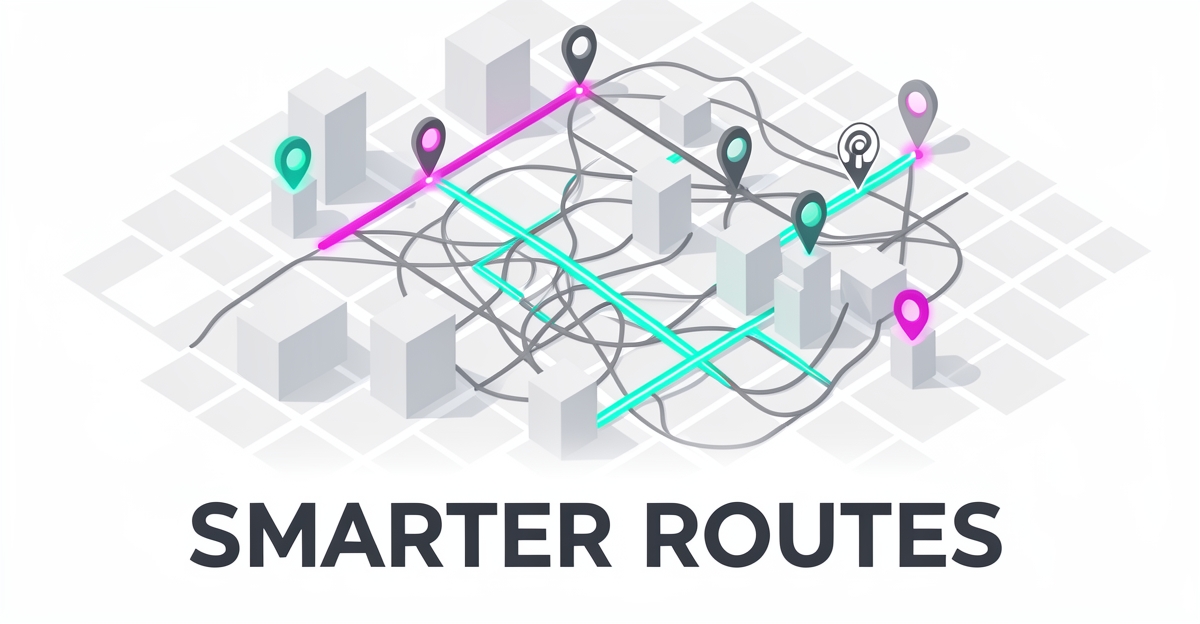
AI for Repair Scheduling: How to Optimize Technician Routes in Urban Repair Services
Key Facts
- AI-powered scheduling reduces fuel costs by avoiding congestion and unnecessary mileage through continuous route re-optimization
- Dynamic routing increases technician utilization by minimizing deadhead miles and maximizing productive on-site time
- Companies adopting field service software typically report meaningful productivity gains after implementation, though exact figures vary by operation and data quality
- Custom AI systems provide full ownership of code, agents, and data with no vendor lock-in
- AI employees typically cost around 80% less than a human hire while working around the clock
- AIQ Labs has deployed 200+ multi-agent systems and runs 4 live SaaS products daily
Hire a team member that works 24/7 — for less than a part-time wage.
AI receptionists, SDRs, dispatchers and 99+ roles. Trained on your business, fully managed.
Not sure where to start? Ask our AI planner
The Urban Repair Scheduling Bottleneck
In dense urban environments, manual repair scheduling creates a cascade of inefficiencies that drain resources and frustrate customers. Technicians spend excessive time navigating traffic without optimized routes, leading to wasted fuel and delayed arrivals. This reactive approach leaves crews underutilized while emergency jobs pile up, forcing dispatchers into constant triage mode rather than proactive planning. The result is a system where operational costs rise and service reliability falls, precisely when urban customers expect swift, dependable repairs.
Companies that move from manual scheduling to software-assisted, data-driven dispatch typically report real productivity gains, though the size of those gains depends heavily on data quality and how well the system matches the operation. The consistent theme is that replacing guesswork with route optimization that accounts for real-time traffic, job density, and technician skill sets breaks the cycle where manual scheduling actively works against both cost control and service quality.
The pain points of manual routing manifest in measurable ways across daily operations. Fuel consumption spikes as technicians backtrack or take suboptimal paths between jobs scattered across the city. Customer satisfaction erodes when arrival windows widen due to unpredictable delays, damaging trust in competitive markets. Technicians face burnout from inefficient routes that increase drive time without adding productive work, while dispatchers lose visibility into true capacity utilization. Together, these factors create a scheduling bottleneck that inhibits scalability and masks opportunities for sustainable growth.
AI-powered scheduling directly addresses these urban challenges by transforming static planning into dynamic optimization. By continuously analyzing repair locations, traffic patterns, and technician availability, AI systems generate routes that minimize deadhead miles and maximize productive time on site. This shift from reactive dispatch to proactive planning enables companies to serve more customers with existing resources while reducing operational waste. The technology doesn't just save fuel, it rebuilds the foundation for reliable, scalable urban repair service.
How AI Optimizes Routes With Real-Time Data
Urban repair teams lose hours every day to static routes that ignore traffic, skill mismatches, and last-minute jobs. AI-powered scheduling replaces guesswork with real-time calculation, continuously re-optimizing the day as conditions change.
AI systems analyze repair locations, live traffic patterns, technician skills and availability to create dynamic daily routes. By leveraging machine learning and real-time data, these tools provide accurate and efficient scheduling decisions, improving the overall effectiveness of field service operations. The logic evaluates numerous variables at once to map the most efficient paths for technicians.
Route optimization directly supports cost and service goals. Reduced fuel costs emerge as the system avoids congestion and unnecessary mileage. Improved customer satisfaction follows from more reliable arrival windows and fewer delays. The point isn't just fuel savings, it's improving the overall efficiency of the operation.
Done well, this translates into higher technician utilization, fewer idle hours, and the ability to serve more jobs with the same crew. That's the practical payoff of a schedule that adapts through the day rather than locking in at 7 a.m.
AI builds daily routes by weighing:
- Repair location clustering to minimize travel distance between jobs
- Live traffic patterns and travel-time predictions for dynamic rerouting
- Technician skills, certifications, and current availability
- Job priority, estimated duration, and customer time windows
For repair businesses, this is workflow automation applied to the road. AIQ Labs builds AI Workflow Builds that adapt to real-time field data, connecting scheduling logic to your existing dispatch, CRM, and telematics tools, rebuilt as one system you own outright.
From Data to Dispatch: Implementation Roadmap
Transitioning from manual scheduling to AI-powered route optimization requires a structured approach to ensure success. Start by auditing your current scheduling practices to identify inefficiencies and data gaps. Many SMBs discover that inconsistent data entry or fragmented systems limit their ability to leverage AI effectively.
Next, clean and organize your field data, focusing on repair locations, historical job durations, technician availability, and traffic patterns. Addressing data quality is critical, as incomplete or inaccurate information directly impacts AI routing accuracy. This step often reveals opportunities to standardize work order formats and improve data capture processes in the field.
Select tools that align with your operational scale and integration needs. Look for solutions that can connect with your existing dispatch software, CRM, and GPS systems through APIs or middleware. AIQ Labs supports this integration phase by building custom AI workflows that unify disconnected tools into one connected system, eliminating manual data transfer and reducing errors, delivered in fixed-price, phased milestones you approve as they ship.
Pilot the AI routing system with a small group of technicians and a defined service area. Monitor key metrics such as fuel consumption, on-time arrival rates, and technician utilization before and after implementation. Results depend heavily on data quality and change management, so treat the pilot as your baseline for honest measurement.
Finally, establish a continuous evaluation loop to refine the system. Gather feedback from technicians, adjust for seasonal traffic patterns, and retrain models with new data. Address challenges like system integration and technician upskilling through targeted training and clear communication about how AI enhances, not replaces, their expertise. This iterative approach ensures the technology evolves with your business needs.
Why Custom AI Beats Off-the-Shelf Scheduling
Off-the-shelf field service software delivers a common playbook, not a system built for your routes, crews, and city. Generic tools can raise baseline productivity, but that lift stalls when the software cannot adapt to real-time field data or your specific job mix.
Custom AI beats templates because it owns the variables that actually move the needle in urban repair. A custom system analyzes repair locations, traffic patterns, and technician availability to create optimal daily routes that reduce fuel costs and ensure timely service. Generic platforms force manual overrides; owned AI learns from your history and improves.
The gap shows up in ownership and adaptability. Off-the-shelf schedulers are subscription-bound, limited to prebuilt workflows, and shared across thousands of businesses. Custom-built AI systems are owned by the business, with no vendor lock-in and full control over customization and future development. That matters when a one-size-fits-all rule adds drive time instead of removing it.
AIQ Labs approaches this through three entry points. AI Employees provide managed AI staff, dispatchers, schedulers, receptionists, and 99+ other roles, at roughly 80% less cost than a human hire. AI Workflow Builds rebuild the one workflow that costs you the most, at a fixed price, in phases. AI Operating Systems connect everything into one operating layer your business owns outright. With 200+ multi-agent systems deployed and 4 live SaaS products run daily, the track record is operational, not theoretical.
Payment models align with repair business realities. Choose Start Monthly to begin with one AI employee, Build in Milestones for a workflow system split into phases you approve and pay as they ship, or Own It Outright for a full system with no ongoing platform dependency. Real numbers are provided in writing, no fake prices.
Why custom wins for urban routes:
- Real-time adaptation to traffic, weather, and technician skill sets instead of static rules
- Deep two-way API integrations with CRM, dispatch, and accounting for a single source of truth
- Full ownership of code, agents, and data with no platform dependencies
- Continuous learning from your jobs to improve utilization and customer satisfaction
Generic software helps you schedule. Custom AI helps you route smarter, reduce costs, and keep technicians productive without adding headcount.
Still paying for 10+ subscriptions that don’t talk to each other?
We build custom AI systems you own outright. No vendor lock-in. Full control.
Not sure where to start? Ask our AI planner
Frequently Asked Questions
How does AI actually optimize technician routes in a busy city?
Is AI scheduling software actually worth the investment for a small repair business?
What are the biggest challenges when moving from manual scheduling to AI?
Will AI scheduling replace my dispatchers and technicians?
Why choose custom AI over off-the-shelf field service software?
How do I get started with AI-powered repair scheduling for my business?
Turn Traffic Jams Into Productive Days
Manual repair scheduling creates a costly bottleneck where technicians burn fuel navigating traffic instead of serving customers. AI-powered route optimization transforms this dynamic by continuously analyzing repair locations, live traffic patterns, and technician availability to create adaptive daily routes. The result is measurable: reduced fuel costs, tighter arrival windows, and the capacity to handle more jobs without expanding headcount. For urban repair services ready to move beyond static scheduling, the path forward starts with auditing current data quality and piloting dynamic routing in a defined service area. AIQ Labs builds custom systems that integrate these capabilities directly into your existing dispatch operations, whether that starts with an AI dispatcher, a rebuilt scheduling workflow, or a full connected operating layer you own outright. Start the Fit Check to map your highest-ROI automation opportunity, or book a free 30-minute strategy call to explore how custom routing intelligence can rebuild your scheduling foundation.
Make AI your competitive advantage — not just another tool.
Strategy, implementation and ongoing optimization. One partner, end to end.
Not sure where to start? Ask our AI planner