AI for Roofing Maintenance Scheduling: How to Predict and Prevent Downtime
Key Facts
- Reactive maintenance leads to catastrophic failures, extensive downtime, and significantly higher repair costs than planned approaches
- AI maintenance scheduling typically improves resource utilization and reduces scheduling conflicts through intelligent, proactive planning
- Predictive approaches cut overtime costs by preventing emergency interventions rather than absorbing them
- AI-driven plan generation is substantially faster than manual scheduling, freeing dispatchers for higher-value work
- Condition-based maintenance aligns crew deployment with actual roof risk instead of calendar averages
Hire a team member that works 24/7 — for less than a part-time wage.
AI receptionists, SDRs, dispatchers and 99+ roles. Trained on your business, fully managed.
Not sure where to start? Ask our AI planner
The Cost of Reactive Roofing Maintenance
Most metal roof failures don't start as emergencies. They start as a loose fastener, a compromised seam, or early-stage corrosion that goes unnoticed for months, until one storm turns a minor repair into a five-figure crisis.
The traditional approach to roofing maintenance falls into two camps, and both carry hidden costs. Reactive maintenance means running a roof until it fails, which leads to catastrophic failures, extensive downtime, and significantly higher repair costs. Preventive maintenance improves on this with fixed inspection schedules, but it operates on averages rather than actual roof conditions, meaning crews either service roofs that don't need it or miss failures developing between visits.
For SMB roofing firms, the financial damage extends far beyond the repair invoice itself. Unplanned failures trigger a cascade of operational costs:
- Emergency callouts that pull crews off scheduled, revenue-generating jobs
- Overtime pay to meet urgent deadlines that better planning could have avoided
- Scheduling conflicts that delay other projects and erode client trust
- Rushed material orders at premium prices instead of planned procurement
Scheduling conflicts alone are a massive drain. Manual coordination can't anticipate weather delays, crew availability, and material lead times at the same time, but intelligent planning can, which is why AI maintenance scheduling is increasingly used to reduce conflicts and improve resource utilization in field-service operations.
The contrast becomes sharper when you consider what predictive approaches deliver. Organizations using AI-driven predictive maintenance commonly report meaningful reductions in unplanned downtime and gains in asset uptime. For a roofing company managing dozens of commercial clients, that difference translates directly into retained contracts and protected margins.
The core problem is that reactive maintenance treats every roof identically until it fails. A coastal metal roof enduring salt spray degrades differently than one in a dry inland climate, yet calendar-based schedules ignore these variables entirely. This is precisely where predictive analytics changes the equation, and where firms like AIQ Labs are helping roofing businesses build custom forecasting models that factor in weather exposure, roof age, and usage patterns to flag problems before they escalate.
The question isn't whether a metal roof will need maintenance. It's whether you'll address it on your schedule or on the emergency's schedule, at emergency prices.
How Predictive Analytics Forecasts Roof Maintenance Needs
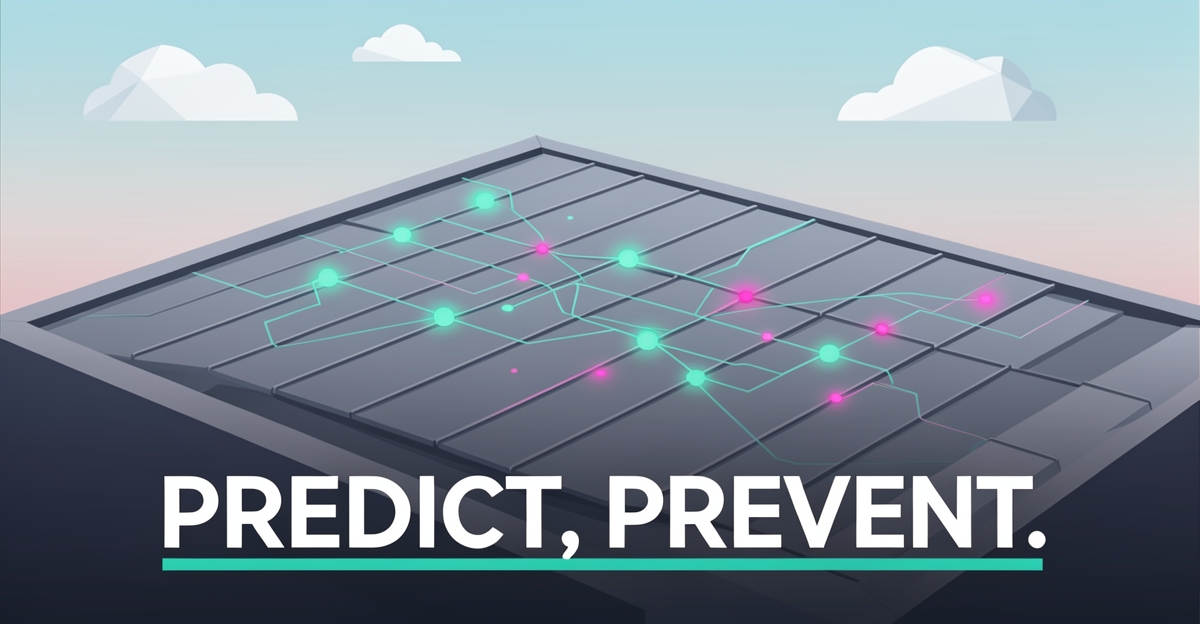
Predictive analytics turns roofing maintenance from a calendar guess into a data-driven decision. By combining live roof conditions with historical patterns, AI can flag risk before a leak becomes an emergency and schedule work when it matters most.
Metal roofing requires regular maintenance, and AI can predict when a roof is due for inspection or repair based on weather, age, and usage. The system ingests machine telemetry from IoT sensors, weather feeds, and operational records, then builds a degradation model unique to each asset.
Core components work together to make the forecast actionable. The typical stack combines machine telemetry, data flow, historical context, edge preprocessing, pattern detection, and early-warning-plus-action workflows. Sensors capture vibration, temperature, pressure and performance signals, while historical maintenance logs teach the model what failure looks like.
Pattern detection is where AI adds value beyond thresholds. Machine learning identifies subtle changes humans would miss across multiple data streams, flagging small deviations before they become downtime. That early warning is what lets a roofing operation schedule a repair next week instead of scrambling tonight.
The forecasting loop for roofing typically includes:
- Machine telemetry from IoT sensors monitoring temperature, moisture and structural stress
- Historical context from maintenance logs, failure records and roof age data
- Weather pattern integration to anticipate wind, hail and thermal cycling impact
- Pattern detection that correlates usage data with degradation signals
- Action workflows that auto-generate inspection work orders and service scheduling
Predictive maintenance is not a dashboard feature. It is a data discipline. That means connecting physical signals, historical context and response workflows into a cohesive system.
For roofing teams, this translates to inspections scheduled by risk rather than routine. AI maintenance planning typically improves resource utilization, cuts scheduling conflicts, and generates plans far faster than manual methods, gains that come from balancing workload and anticipating disruptions rather than reacting to them.
AIQ Labs implements these capabilities through custom forecasting models built as part of its AI Workflow Builds, helping SMBs move from reactive repairs to planned prevention. The result is fewer emergencies, extended roof life and service planning that aligns crews with real need instead of guesswork.
From Forecast to Field: AI Scheduling That Prevents Downtime
AI maintenance scheduling transforms reactive roofing operations into proactive systems by intelligently planning inspections and repairs before issues emerge. Modern scheduling platforms analyze equipment status, upcoming work commitments, and resource availability to automatically generate optimal maintenance schedules. This intelligent planning reduces scheduling conflicts and improves resource utilization, ensuring technicians are deployed where they're needed most.
Skill-based technician pairing ensures the right expert handles each roofing task, matching certifications and experience to specific repair requirements. When unexpected weather or supply delays arise, dynamic rescheduling adjusts plans without manual intervention, maintaining workflow continuity. The system also proactively identifies and resolves scheduling conflicts before they impact operations, cutting overtime costs through better planning and fewer emergency interventions, while generating plans substantially faster than manual methods.
For roofing contractors, this means fewer missed appointments, reduced travel time between jobs, and more predictable crew availability. AIQ Labs integrates these scheduling capabilities into custom forecasting models that consider roof age, material wear, and local climate patterns to predict maintenance needs with precision. By connecting predictive insights directly to field operations, businesses shift from guessing when a roof needs attention to knowing exactly when to act, preventing downtime before it starts.
Building a Predictive Roofing System with AIQ Labs
Building a predictive roofing maintenance system starts with connecting the right data streams to AI models that learn from real-world conditions. AIQ Labs implements this through custom forecasting models trained on historical roof performance, weather exposure, and maintenance records to anticipate when inspections or repairs are needed before issues escalate. By integrating IoT sensors that monitor temperature fluctuations, moisture levels, and structural stress, the system captures the telemetry needed for accurate failure prediction, turning reactive fixes into planned, cost-effective interventions.
The implementation follows a structured workflow: sensors feed data into edge preprocessing units that filter noise and reduce bandwidth, ensuring only relevant signals reach the AI models. Historical maintenance logs and failure patterns provide the context needed for the AI to distinguish normal wear from early-stage degradation. Edge computing also supports faster response times by enabling local analysis before data is sent to central systems.
Once trained, the AI model generates actionable insights that trigger automated workflows, such as creating work orders, notifying technicians, or updating maintenance schedules, based on predicted risk levels. These workflows are designed to integrate with existing dispatch and invoicing tools, ensuring predictions lead to timely action without disrupting operations. AIQ Labs supports this through its AI Employees, where managed agents handle routine follow-ups and scheduling tasks, freeing human teams to focus on complex repairs and client engagement. The system continuously learns from new data, improving prediction accuracy over time and adapting to seasonal changes or aging roof characteristics.
Organizations can adopt this system through three engagement models that match their readiness and scale. With Start Monthly, businesses begin with a single AI employee focused on maintenance coordination, including setup, training, and ongoing optimization. Build in Milestones allows phased deployment, such as first implementing sensor integration, then workflow automation, with payment per completed phase. Own It Outright delivers full ownership of the forecasting model, data pipelines, and automation logic, ideal for companies seeking long-term control over their AI infrastructure. For firms that want predictive maintenance woven through their entire operation, scheduling, dispatch, invoicing, client communication, an AI Operating System connects it all in one layer, built in phases and owned outright. Each path includes continuous monitoring and model refinement to ensure the system remains accurate as roof conditions evolve. By grounding maintenance decisions in data rather than schedules, roofing companies shift from costly emergencies to planned, efficient service delivery, extending roof lifespan while reducing operational strain.
Still paying for 10+ subscriptions that don’t talk to each other?
We build custom AI systems you own outright. No vendor lock-in. Full control.
Not sure where to start? Ask our AI planner
Frequently Asked Questions
How does AI-powered predictive maintenance reduce unplanned downtime for roofing systems?
Can AI maintenance scheduling really cut overtime costs for roofing crews?
What data does AI use to predict when a metal roof needs maintenance?
Is predictive maintenance only for large roofing companies, or can small businesses benefit too?
How much faster can AI generate maintenance schedules compared to manual planning?
What's the difference between preventive and predictive maintenance for roofing?
Turn Roofing Guesswork into Predictive Precision
This article has shown how reactive and preventive roofing maintenance strategies fall short, leading to emergency repairs, scheduling chaos, and avoidable costs, while AI-powered predictive maintenance offers a data-driven alternative. By analyzing real-time sensor data, weather patterns, roof age, and maintenance history, AI models can forecast issues before they escalate, cutting unplanned downtime and improving resource utilization. For roofing contractors, this means fewer missed appointments, lower overtime expenses, and service teams deployed where they're needed most, turning maintenance from a cost center into a predictable, value-driven operation. If you're ready to move beyond guesswork and build a system that anticipates roofing needs before they become crises, AIQ Labs helps SMBs implement custom forecasting models and intelligent scheduling tailored to your roofs, your climate, and your business. Start with the 2-minute Fit Check, then take a free 30-minute strategy call to see how predictive maintenance can protect your margins and keep your crews ahead of the storm, book your session today.
Make AI your competitive advantage — not just another tool.
Strategy, implementation and ongoing optimization. One partner, end to end.
Not sure where to start? Ask our AI planner