AI for RV Rental Inventory Management: How to Prevent Overbooking and Empty Units
Key Facts
- Rental businesses using integrated inventory management software report significantly higher in-stock rates than those relying on spreadsheets.
- Modern rental platforms can reduce storage and holding costs by turning idle RVs into revenue generators.
- Booqable, a widely used rental platform, holds a strong user rating across over 1,000 reviews, with operators crediting it with preventing overbooking.
- AI-driven inventory forecasting is widely used to reduce stockouts while keeping excess inventory lean—industry reporting suggests precision directly drives rental profitability.
- Overbooked RVs trigger refunds and negative reviews, while empty units represent missed income every day they sit unused.
- AIQ Labs has deployed 200+ multi-agent systems and runs four live SaaS products daily—operational experience that carries directly into rental inventory work.
- Rental software platforms like UpKeep and EZRentOut consistently rank among the top-rated options for inventory-heavy rental businesses.
Hire a team member that works 24/7 — for less than a part-time wage.
AI receptionists, SDRs, dispatchers and 99+ roles. Trained on your business, fully managed.
Not sure where to start? Ask our AI planner
The Costly Reality of RV Inventory Mismanagement
RV rental businesses face a costly reality when inventory management relies on outdated or manual systems. Operational complexity rises as customer expectations grow, and the inability to accurately track availability leads to preventable revenue loss. Modern inventory tools—described by many rental operators as a life-saver—eliminate the guesswork that causes overbooking and empty units, yet many businesses still operate without them. The result is a direct hit to profitability: overbooked units trigger refunds, negative reviews, and damaged reputation, while idle RVs represent missed income opportunities every day they sit unused.
Manual processes amplify these risks through human error and delayed updates. When availability isn't synchronized in real time across booking channels, double bookings become inevitable, especially during peak seasons. Businesses using integrated rental management software report in-stock rates far beyond what spreadsheets can achieve, because automated availability updates remove the constant calendar reconciliation that breeds oversights and frustrates customers. The frustration of guessing what's reserved and available is a daily struggle for teams clinging to legacy methods.
The financial impact extends beyond lost bookings. Empty units during high-demand periods mean revenue leakage that compounds over time, while overbooking incurs operational costs from last-minute substitutions, customer compensation, and emergency reallocations. Cloud-based platforms mitigate this by offering real-time inventory tracking and automated syncing with booking sites, reducing the chance of human error. Businesses adopting such tools also report meaningful reductions in storage and holding costs through better utilization insights—turning idle assets into revenue generators. For RV rental operators still relying on manual logs or basic calendars, the cost of inaction isn't just inefficiency—it's avoidable revenue loss in a competitive market where precision drives profitability.
How AI Solves RV Inventory Challenges with Predictive Precision
Imagine an RV rental business where every unit is booked precisely when it's available, and no customer is ever turned away due to double bookings. This isn't a distant dream—it's what AI-powered inventory management is built to deliver. By leveraging predictive analytics and real-time tracking, rental businesses can eliminate overbooking and underutilization, turning inventory chaos into a streamlined, revenue-generating operation.
AI-driven demand forecasting is the cornerstone of this transformation. By analyzing historical booking data, seasonal trends, and even external factors like weather or local events, AI anticipates demand fluctuations with a level of accuracy manual planning can't match. Industry reporting consistently shows that businesses using integrated inventory systems keep units available when customers need them most, minimizing empty slots and maximizing revenue potential.
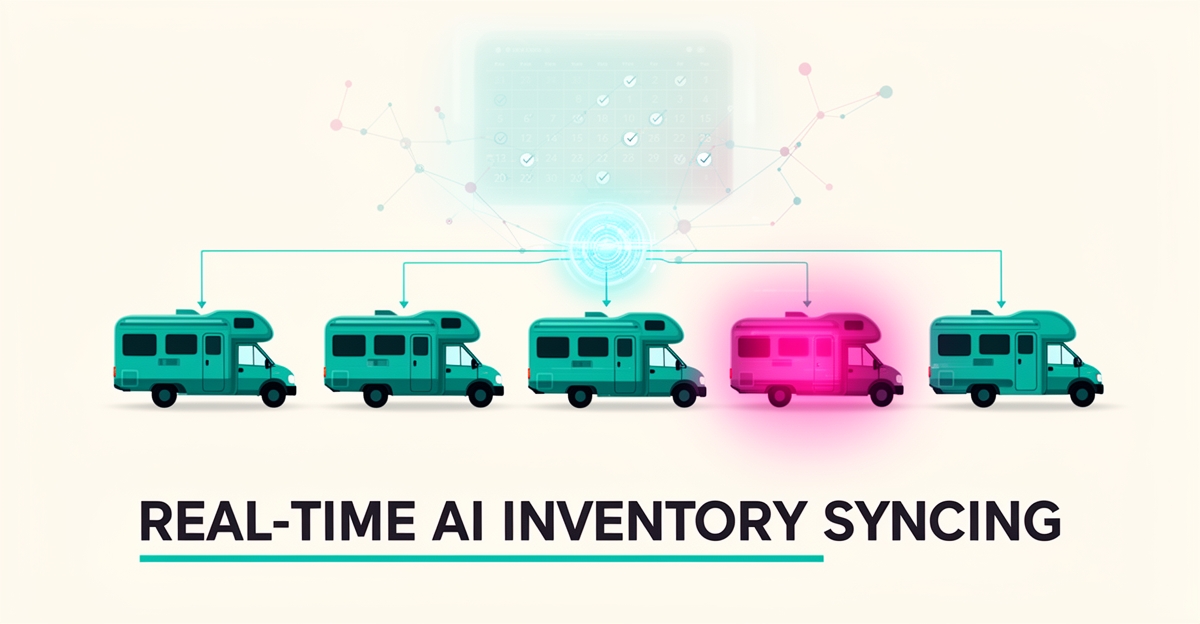
Real-time tracking takes this a step further by providing instant visibility into inventory levels. When a booking is made, the system updates availability across all platforms immediately, preventing double bookings. For example, Booqable users report lower storage costs by optimizing inventory use. This level of automation not only saves time but also enhances customer satisfaction by ensuring accurate availability information.
Automated availability updates are another critical piece. Instead of manually adjusting calendars or risking human error, AI systems sync with booking platforms to reflect real-time changes. This seamless integration is essential for businesses managing multiple units or locations. As one industry voice puts it, inventory shouldn't be a guessing game. With AI, it no longer is.
Here's how AI transforms RV rental inventory management:
- Predictive demand forecasting to anticipate booking trends and adjust inventory proactively.
- Real-time tracking to monitor occupancy rates and flag overbooked or underutilized units instantly.
- Automated availability updates to sync with booking platforms and eliminate double bookings.
- Data-driven insights to optimize pricing and reduce empty units during off-peak periods.
For RV rental businesses, the stakes are high. Overbooking leads to frustrated customers and lost revenue, while underutilization means missed opportunities. AI bridges this gap by providing the tools to balance supply and demand with precision. AIQ Labs specializes in deploying these systems—through AI Workflow Builds that rebuild the one workflow costing you the most, or AI Operating Systems that connect your whole rental operation—integrating with existing reservation platforms to deliver measurable results.
The shift to AI-powered inventory management isn't just a trend—it's a necessity for businesses looking to thrive in a competitive market. By embracing these technologies, RV rental companies can turn inventory challenges into opportunities for growth, ensuring every unit is working as hard as they are.
Implementing AI Inventory Systems That Integrate and Scale
Deploying an AI inventory system for RV rentals begins with seamless integration into existing reservation platforms to eliminate double bookings and manual tracking errors. AIQ Labs builds custom systems that sync in real time with booking engines, ensuring inventory levels update instantly across all channels—critical for maintaining the high in-stock rates achieved by businesses using advanced rental management tools. This integration layer connects directly to CRM, payment processors, and scheduling software through secure APIs, creating a unified operational workflow without disrupting current processes.
Data preparation forms the foundation for accurate AI forecasting, requiring clean historical inputs on rental patterns, seasonal demand, and unit-specific utilization. The system analyzes this data to anticipate demand fluctuations, enabling proactive inventory adjustments that reduce stockouts and keep excess inventory lean. Businesses can set availability rules, manage booking restrictions, and automate confirmation workflows—capabilities proven effective in platforms like Booqable, which holds a strong rating across over 1,000 reviews. These features turn raw data into actionable insights that prevent both overbooking and costly empty units.
Ongoing optimization ensures the AI system evolves with business growth, continuously refining predictions based on real-time occupancy rates and market shifts. AIQ Labs implements monitoring dashboards that track key performance indicators, flag underutilized units, and recommend dynamic pricing adjustments to maximize revenue. Regular model retraining incorporates new booking data, while human-in-the-loop controls allow staff to validate AI recommendations before execution. This iterative approach is built in phases—discovery, build, deployment, and scale—so you see working software early and pay in milestones rather than one large upfront bet. For RV rental operators seeking to move beyond manual spreadsheets, this structured deployment path turns inventory management from a reactive task into a strategic advantage. Industry reporting shows that businesses leveraging integrated technologies see meaningful improvements in inventory accuracy and customer satisfaction, directly addressing the core challenges of overbooking and underutilization in competitive rental markets. To explore how AIQ Labs can architect a custom inventory system tailored to your RV fleet, start with the 2-minute Fit Check to assess your specific automation opportunities.
Still paying for 10+ subscriptions that don’t talk to each other?
We build custom AI systems you own outright. No vendor lock-in. Full control.
Not sure where to start? Ask our AI planner
Frequently Asked Questions
How can I prevent double bookings when running my RV rental business?
What's the best way to forecast RV rental demand during peak seasons?
How do I reduce empty RV units during off-peak times?
Can AI help me manage multiple RV rental locations more efficiently?
Is AI inventory management difficult to integrate with my existing booking platform?
What are the financial benefits of switching to AI-powered RV inventory management?
Turning Inventory Chaos into Predictable Profit
RV rental businesses no longer need to choose between overbooking and empty units—AI-powered inventory management delivers the precision to avoid both. By forecasting demand with historical and external data, syncing availability in real time across booking channels, and automating updates to eliminate human error, operators gain clearer visibility, fewer revenue leaks, and customers who trust your availability. For operators ready to move beyond spreadsheets and guesswork, the path forward starts with understanding where AI can create the most immediate impact. AIQ Labs helps RV rental companies assess their specific automation opportunities through a free 2-minute Fit Check—no obligation, just clarity on where to start. Book your free 30-minute strategy call to explore how a custom AI inventory system can protect your revenue and scale with your fleet.
Make AI your competitive advantage — not just another tool.
Strategy, implementation and ongoing optimization. One partner, end to end.
Not sure where to start? Ask our AI planner