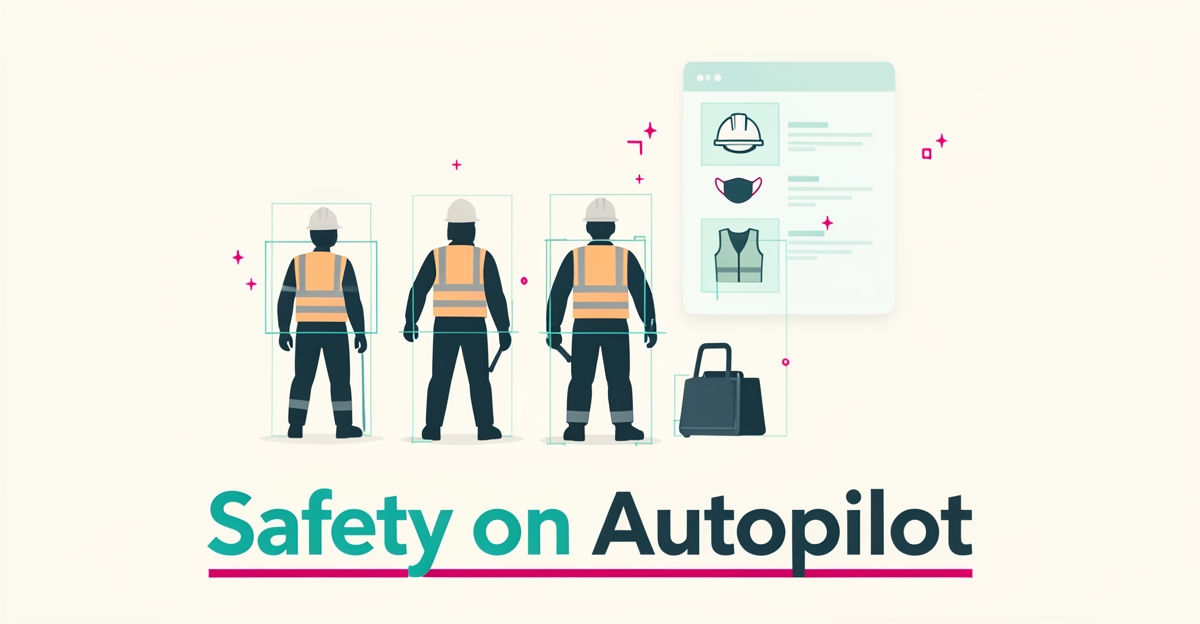
AI for Safety Compliance: How Cleanup Companies Can Automatically Track PPE Usage and Logs
Key Facts
- U.S. workplaces record millions of work-related injuries each year, and high-risk sectors like cleanup and restoration consistently rank among the most hazardous.
- Head injuries have historically accounted for roughly 6 percent of non-fatal occupational injuries causing missed work, according to Bureau of Labor Statistics data.
- Industry analyses of AI compliance automation consistently point to significant cost reductions, commonly cited in the range of half or more of manual compliance overhead, along with fewer manual errors.
- Computer vision automatically detects missing hard hats, safety vests, and masks in real time from existing video feeds.
- Predictive analytics forecasts incident likelihood using temperature, equipment usage, and crew behavior data.
- AI systems auto-populate forms, validate required fields, and flag missing PPE use in real time for audit-ready documentation.
Hire a team member that works 24/7 — for less than a part-time wage.
AI receptionists, SDRs, dispatchers and 99+ roles. Trained on your business, fully managed.
Not sure where to start? Ask our AI planner
Why Manual PPE Logs and Safety Checks Are Failing Cleanup Teams
Despite increasing safety protocols and paperwork, workplace injuries in high-risk industries remain stubbornly common, with U.S. workplaces recording millions of work-related injuries annually in recent years. For cleanup crews operating in hazardous environments, this trend is especially concerning, as manual PPE logs and clipboard inspections are proving inadequate to prevent incidents before they occur. These methods rely on sporadic human observation, which is inherently prone to error, fatigue, and inconsistency, leaving critical safety gaps that only become apparent after an injury has already happened.
The reactive nature of traditional safety checks creates a dangerous cycle where compliance is treated as a paperwork exercise rather than a real-time safeguard. Paper logs are often incomplete, delayed, or filled in under pressure at the end of a shift, while manual observations miss subtle but critical lapses, such as a momentarily removed glove or improperly fitted mask, that can lead to exposure or injury. When audits arrive, teams scramble to reconstruct records from fragmented notes, increasing the risk of penalties and eroding trust in safety programs. The core insight of modern AI safety tooling is that it doesn't just tell you what went wrong; it reveals what's about to go wrong, allowing you to intervene before an accident happens.
This gap between intention and execution is where manual systems fail most dramatically. Without continuous monitoring, near-misses go unrecorded, hazard patterns remain invisible, and corrective actions are delayed or misdirected. The result is a safety culture that appears compliant on paper but remains vulnerable in practice. For cleanup companies managing biohazards, chemical spills, or debris removal, this isn't just inefficient, it's a preventable risk to worker health and operational continuity. Shifting from reactive scrambling to proactive vigilance isn't optional; it's essential for protecting teams and meeting evolving compliance demands.
How AI Computer Vision and Predictive Analytics Automate PPE Monitoring
Cleanup crews can't afford a missed hard hat when a single slip turns a shift into a workers' compensation claim. Head injuries have historically accounted for roughly 6 percent of non-fatal occupational injuries causing missed work, according to Bureau of Labor Statistics data. That risk is why safety is moving from clipboards to computer vision.
Computer vision forms the real-time eyes of the system. Cameras or mobile devices process site video to automatically detect unsafe behavior, such as missing hard hats, safety vests, or masks. Field monitoring with AI frees management time and supports adherence to OSHA requirements without constant manual observation.
Predictive analytics shifts the posture from reactive to proactive. Historical data from incident logs, near-misses, sensor readings, and crew behavior is analyzed to forecast where risks are likely to emerge. AI models can forecast when and where incidents are likely to occur based on inputs like temperature and equipment usage, allowing intervention before an accident happens.
Machine learning and natural language processing handle the paperwork that usually creates gaps. ML algorithms identify patterns across large datasets to predict risks, while NLP interprets human language in safety logs and regulatory documents to spot trends and ensure compliance. Robotic process automation then closes the loop by auto-populating forms, validating required fields, and generating audit-ready reports.
The stack works together as:
- Computer vision for real-time hard hat/vest/mask detection from video
- Predictive analytics for hazard forecasting from logs, sensors, and behavior
- ML/NLP for log analysis, trend spotting, and compliance validation
- RPA for automated report generation and audit-ready documentation
Together these capabilities create proactive control instead of reactive cost. AI-driven systems ensure records are complete, standardized, and up to date, reducing human error and increasing audit-readiness. Industry analyses of AI compliance automation consistently point to major cost reductions, commonly cited in the range of half or more of manual compliance overhead, alongside fewer manual errors.
For cleanup companies, that means 24/7 vigilance on PPE use, inspection checks, and safety protocols with logs that integrate with existing field systems. AIQ Labs builds these kinds of systems through AI Workflow Builds, rebuilding the one workflow that costs you the most, at a fixed price and in phases, so safety management shifts from a cost center to a control center.
From Field Logs to Audit-Ready Reports in Real Time
Field logs stop being a bottleneck when AI reads them the moment they're created. Cleanup crews keep working with the same forms and devices they already use, while AI quietly validates, standardizes, and turns those entries into audit-ready documentation in real time.
AI integrates directly with existing field logs and mobile checklists to auto-populate inspection records for PPE use, site conditions, and safety protocols. Natural language processing interprets handwritten or typed notes, while robotic process automation fills required fields and flags missing data before submission. This reduces human error and ensures regulatory adherence without adding steps for crews.
The system validates every entry against compliance rules as it arrives. Inconsistencies are flagged instantly, such as a missing hard hat sign-off or mismatched timestamps, so supervisors can correct them while the crew is still on site. Validation replaces end-of-day scrubbing and the scramble for documents during an audit.
Standardization happens automatically across teams and locations. AI converts varied log formats into a single, consistent record structure that maps to OSHA and industry requirements. Reports are generated continuously, not pulled together manually, keeping documentation complete, standardized, and up to date at all times.
For cleanup companies, this shift moves safety from reactive paperwork to proactive control. AI doesn't just tell you what went wrong; it reveals what's about to go wrong, allowing you to intervene before an accident happens. Real-time visibility also supports predictive risk scoring based on crew behavior, equipment use, and near-miss patterns.
The cost impact is measurable. Industry analyses of AI compliance automation consistently report significant reductions in manual compliance overhead and error rates. The value compounds when audits no longer require dedicated staff to chase paper logs.
Implementation follows a practical flow that fits field operations:
- Auto-ingest logs from forms, apps, and photos and map them to inspection templates
- Validate required PPE fields and flag incomplete or contradictory entries in real time
- Standardize records into audit-ready formats with full traceability
- Push live dashboards and exportable reports for regulators and internal review
The context matters for high-risk work. U.S. workplaces record millions of work-related injuries annually, and head injuries have historically accounted for roughly 6 percent of non-fatal occupational injuries causing missed work, underscoring why PPE tracking cannot rely on memory or manual checks.
AIQ Labs builds custom systems that integrate with existing field logs and generate audit-ready reports automatically, whether as a single workflow rebuild or as part of a broader AI Operating System that connects safety data with the rest of your operation. The approach amplifies safety managers rather than replacing them, turning daily logs into continuous compliance and lower cost exposure.
Implementation Roadmap for Cleanup Companies
Implementing AI for safety compliance requires a structured approach that aligns with your existing operations while building toward long-term automation. For cleanup companies, this means moving beyond manual PPE checks and paper logs to a system that provides real-time visibility and audit-ready documentation. AIQ Labs supports this transition through fixed-price workflow builds, managed AI employees, and phased AI operating systems designed to integrate with field operations.
Begin by evaluating current processes to identify gaps in PPE usage tracking, inspection logging, and compliance reporting. Many cleanup companies still rely on sporadic manual observations and paper-based systems, which are prone to human error and delays. Pinpointing where these inefficiencies occur helps prioritize where AI can deliver the greatest impact, such as automating hard hat or safety vest detection via computer vision.
Next, select AI tools that are scalable, secure, and capable of integrating with existing field devices and software. Prioritize solutions that support real-time video analytics for PPE monitoring and can connect to your current data sources without requiring a full system overhaul. Integration complexity is a known challenge, but a well-planned approach minimizes disruption by mapping data flows, standardizing formats, and configuring secure APIs, ensuring the AI system works as an extension of your current workflow rather than a replacement.
Once selected, configure the AI models using your own operational data to improve accuracy and relevance. This step involves training computer vision models to recognize your specific PPE requirements and site conditions, while setting up natural language processing to interpret safety logs and flag inconsistencies. Tailoring the models to your cleanup environments, whether handling hazardous waste, biohazards, or industrial debris, ensures the system adapts to real-world variables like lighting, movement, and equipment variation.
Finally, establish continuous monitoring and reporting mechanisms to track performance and generate compliance-ready documentation. AI-driven systems can auto-populate forms, validate required fields, and flag missing PPE use in real time, reducing manual errors and increasing audit readiness. With industry analyses consistently pointing to major cost reductions from AI compliance automation, this step transforms safety management from a reactive burden into a proactive, data-driven function that supports both worker protection and regulatory adherence. To explore how this could work for your operations, start with the two-minute Fit Check, then book a free 30-minute strategy call to identify your highest-ROI opportunity.
Still paying for 10+ subscriptions that don’t talk to each other?
We build custom AI systems you own outright. No vendor lock-in. Full control.
Not sure where to start? Ask our AI planner
Frequently Asked Questions
How is AI better than manual PPE logs for cleanup crews?
Can AI actually predict safety incidents before they happen?
Will AI replace our safety managers?
How much can AI reduce compliance costs and errors?
Is PPE tracking really a big problem in cleanup work?
Can AI work with the field logs and apps we already use?
From Reactive Logs to Real-Time Protection: The Future of Safety Is Here
AI-powered safety compliance isn't just about avoiding fines, it's about protecting your team before an incident occurs. By replacing manual PPE logs and reactive checks with computer vision, predictive analytics, and automated reporting, cleanup companies gain 24/7 vigilance, reduce human error, and turn safety from a cost center into a proactive control. The result? Fewer injuries, audit-ready documentation at all times, and a meaningful reduction in compliance overhead. For teams managing biohazards, chemical spills, or debris removal, this shift means fewer near-misses go unnoticed and corrective actions happen in real time, not after the fact. Ready to see how AI can strengthen your safety posture without disrupting your workflow? Start with the two-minute Fit Check, then book a free 30-minute strategy call to explore your highest-ROI opportunities.
Make AI your competitive advantage — not just another tool.
Strategy, implementation and ongoing optimization. One partner, end to end.
Not sure where to start? Ask our AI planner