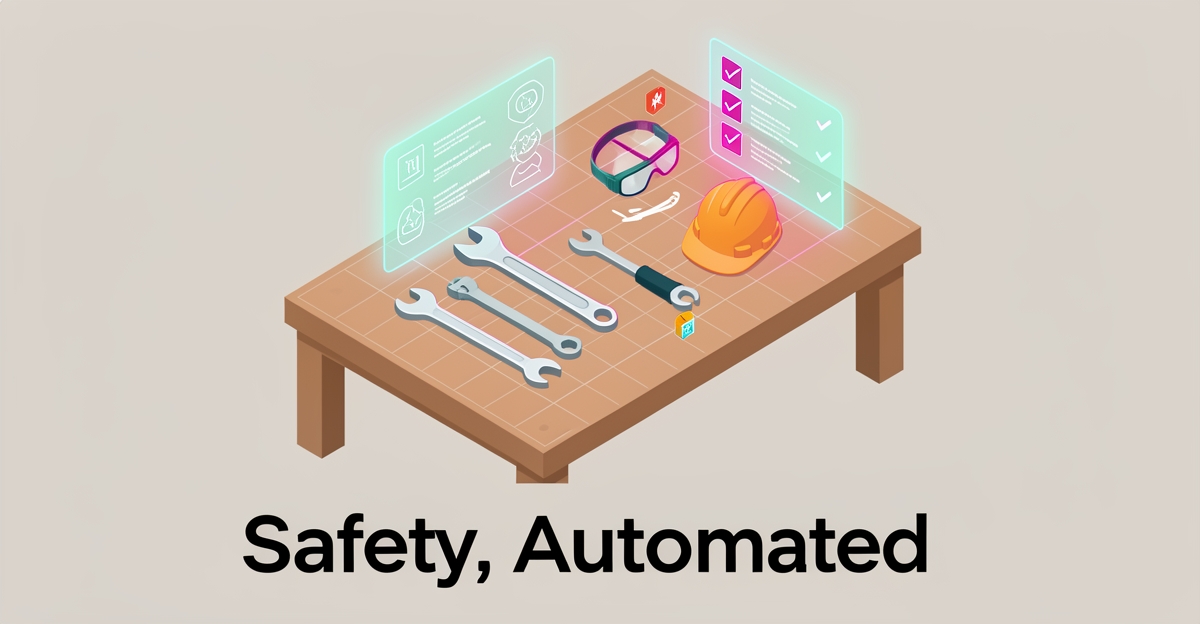
AI for Safety Compliance in Trade Schools: Monitoring Hazard Logs and Maintenance
Key Facts
- Manual hazard logs, clipboard inspections, and after-the-fact incident reports leave gaps between when a risk emerges and when a human notices it.
- AI monitoring treats safety data as a continuous stream rather than a periodic snapshot, surfacing patterns before they become injuries.
- AIQ Labs deploys managed AI employees to monitor hazardous materials, tool usage, and incident logs continuously, typically at around 80% less cost than a human hire.
- A structured process safety audit identifies hidden risks and creates the baseline needed before automating safety workflows.
- Compliance-by-design, building compliance into operations from the ground up, reduces future exposure and accelerates decisions versus bolted-on compliance.
Hire a team member that works 24/7 — for less than a part-time wage.
AI receptionists, SDRs, dispatchers and 99+ roles. Trained on your business, fully managed.
Not sure where to start? Ask our AI planner
The Growing Safety Compliance Challenge in Trade Schools
Trade school instructors and administrators are facing a compliance environment that grows more demanding every year. Welding bays, automotive shops, and HVAC labs contain the same categories of hazards found in industrial workplaces, flammable materials, high-voltage equipment, pressurized systems, and regulators increasingly expect trade schools to document and manage them with the same rigor.
The problem is that most institutions still rely on manual monitoring. Paper hazard logs, clipboard-based tool inspections, and incident reports filed after the fact leave dangerous gaps between when a risk emerges and when a human notices it. A comprehensive process safety audit enables organizations to identify hidden risks and strengthen safety systems, but periodic audits alone can't catch what happens between walkthroughs.
The regulatory landscape is shifting quickly, too. Frameworks like the EU's AI Act, NIS2, and DORA are shaping expectations across sectors, raising the bar for how institutions of every kind document and demonstrate compliance. Organizations that embrace compliance-by-design, building compliance into operations from the ground up rather than retrofitting it, reduce future exposure, accelerate decisions, and avoid the friction of checkbox-style, bolted-on approaches.
Manual monitoring falls short in predictable ways:
- Hazard logs are updated hours or days after conditions change, leaving windows where risks go undocumented.
- Tool and equipment usage records depend on instructor memory and vary widely between shop sessions.
- Incident reports capture what already happened, offering no early warning of patterns that precede an injury.
- Compliance documentation is scattered across binders and spreadsheets, making audit preparation slow and error-prone.
AI-driven monitoring closes these gaps by treating safety data as a continuous stream rather than a periodic snapshot. The same discipline that transformed compliance monitoring in regulated industries like healthcare applies directly to trade school environments, where AI can track hazardous material inventories, flag unusual tool usage, and surface incident log patterns before they become injuries. Analysts across regulated sectors generally expect AI-driven compliance automation to shorten approval cycles and move institutions toward real-time oversight.
This is where purpose-built AI systems earn their place. AIQ Labs deploys AI employees that monitor hazardous materials, tool usage, and incident logs continuously, flagging potential safety risks automatically instead of waiting for the next scheduled inspection. The approach mirrors healthcare protocols, where patient coordination and compliance tracking depend on constant, structured oversight rather than occasional review.
The stakes justify the investment. Done right, compliance doesn't limit institutional choice or burden staff, it supports safer operations where it matters: in real workshops, at scale, under scrutiny. For trade schools, that trust translates directly into safer shops, cleaner audits, and programs that can grow without safety falling behind.
How AI Employees Enable Real-Time Safety Monitoring and Risk Flagging
AI-powered monitoring is transforming how trade schools manage safety compliance by continuously analyzing data streams for early risk detection. Drawing parallels to healthcare compliance protocols, AI systems can process hazardous material logs, equipment maintenance records, and incident reports in real time to identify deviations before they escalate. This proactive approach mirrors the efficiency gains seen in regulated industries, where AI-driven automation is widely expected to shorten approval cycles and enable real-time oversight. Such systems reduce manual oversight while strengthening adherence to evolving safety standards.
AIQ Labs' managed AI employees operate as continuous safety sentinels, integrating with existing trade school systems to monitor structured and unstructured data sources. These AI agents are trained to recognize patterns indicating potential non-compliance, such as overdue maintenance on ventilation systems, improper chemical storage logs, or recurring near-miss incidents in workshops. By flagging these risks instantly, they enable timely interventions that align with Process Safety Management principles, which emphasize identifying hidden risks through systematic audits to prevent major incidents. Structured risk assessment and continuous improvement are critical for sustaining safe operations in technical training environments.
The AI monitoring framework supports compliance-by-design, embedding regulatory alignment into daily operations rather than treating it as a retrospective checklist. This approach reduces internal workload, accelerates decision-making, and minimizes exposure to liability, contrasting sharply with bolted-on compliance methods that create friction and regulatory drag. Compliance innovation is unlocked when AI handles routine surveillance, allowing human safety officers to focus on training, culture-building, and complex hazard analysis. In this way, AI employees not only enhance operational safety but also reinforce a proactive safety culture essential for trade schools preparing students for high-risk industries.
Implementing AI for Safety: From Audit to Automated Compliance Workflow
Adopting AI for safety compliance begins with understanding where current processes break down. A structured process safety audit reveals hidden risks in equipment conditions, operating practices, and hazard documentation that manual reviews often miss. This five-step approach, from kickoff meetings through corrective action tracking, creates the baseline needed for any automation investment.
- Kick-off meeting with management, supervisors, and key personnel to align scope
- Site inspection and interviews observing equipment conditions and housekeeping standards
- Risk assessment reviewing Process Hazard Analyses, HAZOP studies, and LOPA
- Documented findings with risk rankings and recommended corrective actions
- Structured action plan assigning responsibilities, deadlines, and completion tracking
Once the audit maps current gaps, AI employees can be deployed into existing workflows to monitor hazardous materials, tool usage, and incident logs continuously. Regulated industries are already moving toward AI systems that track large volumes of regulatory and operational data in parallel, and the same pattern applies to trade school safety workflows. This mirrors how AIQ Labs deploys managed AI employees to handle safety monitoring as a dedicated role, integrating with maintenance ticketing systems, inventory databases, and communication channels without replacing human oversight. If your institution would rather fix one broken workflow first, AIQ Labs' AI Workflow Builds rebuild the single workflow that costs you the most, at a fixed price and in phases.
Governance transforms this from a pilot into a sustainable capability. Enterprise risk analysts warn that AI agent skills deployed without version control and security oversight can become supply chain vulnerabilities. A compliance-by-design framework, rather than bolted-on controls, establishes audit trails, human-in-the-loop escalation paths, and transparent decision logging from day one. Done right, compliance doesn't limit innovation; it makes scaled deployment possible under scrutiny. The result is a safety system that learns from every near-miss, adapts to regulatory changes, and gives instructors confidence that no hazard log entry goes unreviewed.
Still paying for 10+ subscriptions that don’t talk to each other?
We build custom AI systems you own outright. No vendor lock-in. Full control.
Not sure where to start? Ask our AI planner
Frequently Asked Questions
How does AI improve safety monitoring in trade schools compared to manual methods?
What specific safety risks can AI employees detect in trade school environments?
Is using AI for safety compliance in trade schools expensive or complex to implement?
What evidence shows AI improves compliance speed and effectiveness in regulated environments?
How does AI support a proactive safety culture instead of just checking compliance boxes?
What role does a process safety audit play before implementing AI for safety monitoring?
From Paper Logs to Proactive Protection
Trade schools can no longer afford the gaps created by paper hazard logs, memory-dependent tool checks, and incident reports that only tell you what already went wrong. AI-driven monitoring treats safety data as a continuous stream, flagging overdue maintenance, improper chemical storage, and recurring near-miss patterns before they become injuries, and embedding compliance-by-design into daily shop operations rather than retrofitting it for audits. That shift mirrors how regulated industries are moving toward real-time oversight. The next step is to audit where your current process breaks down, map those workflows, and test continuous monitoring on one high-risk area, such as welding bays or HVAC labs. AIQ Labs can help you assess fit and design a managed AI employee approach tailored to your shops, 200+ multi-agent systems deployed and four live SaaS products run daily back that experience. Start the 2-minute Fit Check, then book a free 30-minute strategy call to map your first deployment.
Make AI your competitive advantage — not just another tool.
Strategy, implementation and ongoing optimization. One partner, end to end.
Not sure where to start? Ask our AI planner