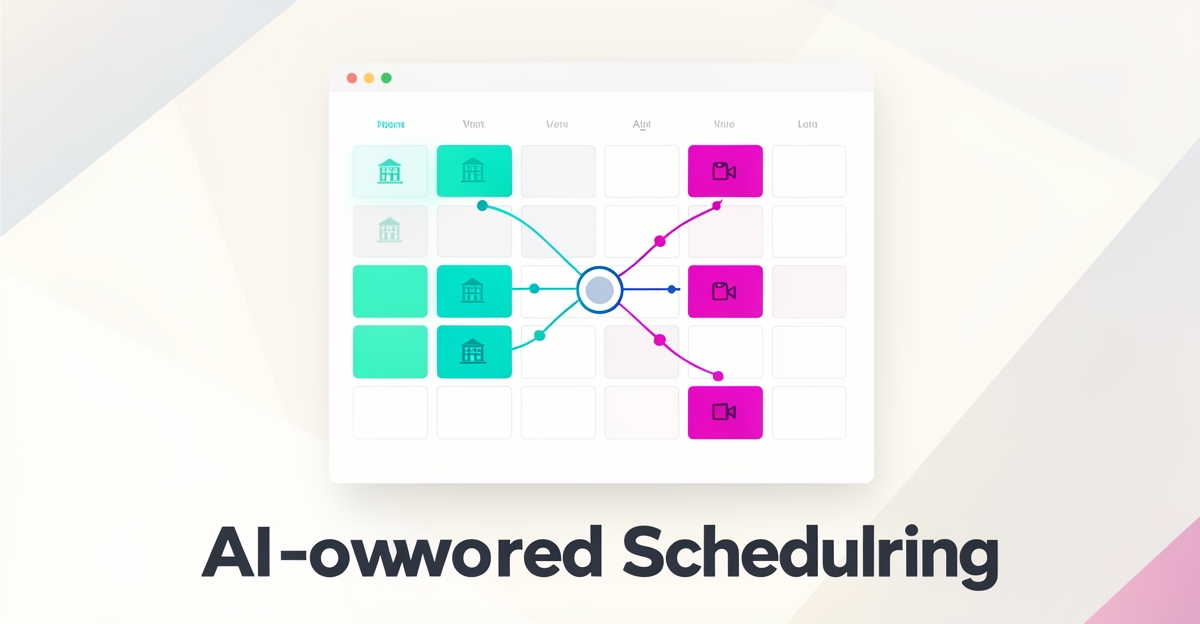
AI for Scheduling In-Person vs. Virtual Consultations
Key Facts
- Professionals typically spend several hours per week on scheduling tasks, time that could be redirected to patient care or revenue-generating activities
- AI scheduling assistants can meaningfully reduce no-show rates through automated reminders and better-matched appointment types, directly improving practice revenue and patient access
- Every recovered no-show represents not just saved income but reclaimed clinical capacity and provider time
- 24/7 AI scheduling captures after-hours bookings that would otherwise be lost to traditional business-hour constraints
- Human schedulers typically cost $15-50 per hour, making round-the-clock coverage prohibitively expensive compared to AI solutions
- AI booking workflows typically complete appointments in minutes, compared to the day or more often required for manual scheduling
Hire a team member that works 24/7 — for less than a part-time wage.
AI receptionists, SDRs, dispatchers and 99+ roles. Trained on your business, fully managed.
Not sure where to start? Ask our AI planner
The Hidden Cost of Manual Scheduling in Healthcare and Professional Services
Behind the scenes of every healthcare practice and professional service firm, a silent drain on resources persists: manual scheduling. Professionals commonly spend several hours per week on scheduling-related tasks, time that could otherwise be devoted to patient care, client consultations, or revenue-generating activities. This recurring administrative burden translates directly into labor costs, often running to thousands of dollars annually per employee once salary, benefits, and overhead are accounted for.
The financial impact extends beyond labor inefficiencies. Manual scheduling processes contribute to substantial revenue leakage through preventable no-shows. Every missed appointment represents lost income, wasted clinical capacity, and provider time that cannot be recovered. These losses accumulate quietly but steadily, eroding profitability without triggering immediate operational alarms.
- Staff dedicate hours each week to coordinating appointments manually
- No-show rates in healthcare and professional services remain stubbornly high without automated reminder systems
- Each missed appointment represents not just lost income but wasted clinical capacity and provider time
- Manual scheduling creates bottlenecks that limit after-hours booking potential
- Human schedulers typically cost $15-50 per hour, making 24/7 coverage prohibitively expensive
For organizations deploying AI Employees in patient coordination roles, this hidden cost becomes a critical target for automation. By intelligently routing patients to in-person or virtual consultations based on real-time availability, location, and clinical needs, AI systems eliminate the manual triage that consumes staff hours. The result is not just time reclaimed, but recoverable revenue captured, turning a persistent operational weakness into a streamlined, patient-centric process.
How AI Intelligently Routes Patients to the Right Consultation Type
AI transforms scheduling from a reactive chore into a proactive, intelligent system that matches each patient with the optimal consultation format. By analyzing real-time data points, geographic location, provider availability, clinical requirements, and historical engagement patterns, AI algorithms determine whether an in-person or virtual visit best serves the patient's needs while maximizing practice efficiency. This dynamic routing eliminates guesswork and ensures resources are allocated where they deliver the highest clinical and operational value.
The impact of this intelligence is measurable. Practices using AI-powered routing typically see no-show rates fall as patients receive appointments that align with their circumstances and preferences, reinforced by automated reminders and easy rescheduling. Simultaneously, 24/7 intelligent scheduling captures after-hours bookings that would otherwise be lost to traditional business-hour constraints. These gains translate directly to recovered revenue and improved access without expanding staff hours.
- Location intelligence: Prioritizes virtual consults for patients outside service radius or with mobility constraints
- Clinical suitability: Routes complex diagnostics or procedures requiring physical examination to in-person slots
- Provider optimization: Matches appointment type to clinician specialty availability and room utilization
- Patient history: Learns preferences from past visits to reduce friction and increase adherence
- Real-time adjustments: Dynamically re-routes based on last-minute cancellations or emergency openings
For healthcare providers leveraging AI Employees in patient coordination roles, this intelligent routing operates continuously, qualifying needs, checking eligibility, and securing the right consultation type without human intervention. The system learns from each interaction, refining its decisions to further reduce administrative burden while improving patient satisfaction. As practices scale, this capability ensures consistent, data-driven scheduling that adapts to fluctuating demand while maintaining optimal resource allocation across both virtual and in-person channels.
Implementing AI Scheduling with AIQ Labs: From Pilot to Full Ownership
Businesses looking to modernize their consultation scheduling can follow a clear path from initial assessment to full system ownership with AIQ Labs. The process begins with a 2-minute Fit Check, followed by a free 30-minute strategy call to evaluate current workflows and identify high-impact automation opportunities, such as intelligently routing patients to in-person or virtual visits based on availability, location, and treatment needs. This foundational step ensures any AI solution aligns with specific operational goals and compliance requirements.
Next, companies can pilot an AI Employee, like a Patient Coordinator, to test the technology in a real-world setting with minimal risk. During this phase, the AI agent handles end-to-end tasks such as booking appointments, syncing with calendars and CRMs, and sending reminders, all while operating 24/7. AI booking workflows typically complete appointments in minutes rather than the day or more often required for manual scheduling, directly improving patient access and reclaiming staff time. If scheduling is just one of several broken processes, a fixed-price Workflow Build can rebuild the single workflow that costs the most, delivered in phases.
Once validated, the system scales into a fully owned AI platform that integrates deeply with existing tools like Google Calendar, HubSpot, or telehealth platforms. AIQ Labs supports this transition through custom development, enterprise-grade integration, and ongoing optimization, with flexible payment models: Start Monthly, Build in Milestones, or Own It Outright. By owning the AI system outright, organizations avoid vendor lock-in and gain complete control over customization, data, and future enhancements, turning scheduling from a cost center into a strategic advantage. For practices ready to connect scheduling into one connected operating layer, an AI Operating System ties it together. Schedule your free 30-minute strategy call to begin.
Still paying for 10+ subscriptions that don’t talk to each other?
We build custom AI systems you own outright. No vendor lock-in. Full control.
Not sure where to start? Ask our AI planner
Frequently Asked Questions
How does AI decide whether a patient should have an in-person or virtual consultation?
How much time can AI scheduling save compared to manual booking?
Can AI scheduling help reduce patient no-shows?
Does AI scheduling work outside regular business hours?
Is AI scheduling more cost-effective than hiring staff?
How do I implement AI scheduling for in-person and virtual consultations?
Turn Scheduling from a Cost Center into a Competitive Edge
Manual scheduling silently drains healthcare and professional services firms, consuming hours per week per employee in avoidable labor costs, while no-shows erode recoverable revenue year after year. AI transforms this burden into a strategic advantage by intelligently routing patients to the right consultation type, whether in-person or virtual, based on real-time availability, location, and clinical needs, cutting no-shows and capturing after-hours bookings. The result is reclaimed staff time, improved patient access, and direct revenue recovery without expanding headcount. To see how this applies to your practice, start with a free strategy call to evaluate your current workflow and identify high-impact automation opportunities. Schedule your free 30-minute strategy call and take the first step toward owning a scheduling system that works as hard as you do.
Make AI your competitive advantage — not just another tool.
Strategy, implementation and ongoing optimization. One partner, end to end.
Not sure where to start? Ask our AI planner