AI for Service Dispatch: How Rodent Control Companies Can Cut Response Times by 40%
Hire a team member that works 24/7 — for less than a part-time wage.
AI receptionists, SDRs, dispatchers and 99+ roles. Trained on your business, fully managed.
Not sure where to start? Ask our AI planner
The Dispatch Bottleneck: Why Rodent Control Companies Are Losing Jobs to Slow Response Times
Rodent control companies lose jobs not because of service quality, but because of slow response times. Manual dispatch processes create bottlenecks that frustrate customers and push them toward competitors who can respond faster. When technicians spend time on repetitive calls or inefficient routing, urgent infestations go unaddressed, directly impacting revenue and reputation.
Industry analyses of pest control call volumes consistently show that a large share of inbound calls, typically the majority, are repetitive queries: questions about pricing, service areas, or basic pest information that don't require human expertise. These calls tie up phone lines and delay responses to genuine service requests. Many of these calls, industry findings suggest often in the range of 40-60%, can be resolved without human intervention using AI call agents, freeing staff to focus on high-priority jobs.
This inefficiency compounds when dispatch teams rely on static routing or manual crew assignment. Technicians waste time driving between jobs that could be optimized, miss urgent requests buried in voicemail, or arrive late due to poor prioritization. The result? Customers choose competitors who promise same-day service, and rodent control firms lose out on both immediate jobs and long-term contracts.
AIQ Labs helps rodent control companies break this cycle by automating the front end of dispatch, handling repetitive calls, capturing infestation details, and routing requests instantly to the right technician. An AI dispatcher works around the clock so urgent calls never sit in a queue. By reducing response delays, businesses don't just improve satisfaction, they reclaim lost revenue and build a reputation for reliability in a competitive market.
How AI Automates Dispatch: Routing, Prioritization, and Crew Assignment in Real Time
Rodent control companies face constant pressure to respond quickly to urgent infestation calls while managing limited technician resources. AI-driven dispatch systems transform this challenge by automating call handling, optimizing routes in real time, and prioritizing jobs based on severity and location. AI agents can automate dispatch routing, prioritize high-impact jobs, and assign crews based on location and urgency, directly addressing the core inefficiencies in traditional dispatch workflows.
These systems use dynamic routing algorithms that continuously adjust to traffic, weather, cancellations, and emergency requests, ensuring technicians always take the most efficient path. Professional analyses of field-service routing consistently find that such algorithms reduce travel time and costs, increase technician utilization and productivity, and improve customer satisfaction and loyalty. This real-time adaptability means fewer idle miles and more time spent on actual service delivery, directly boosting daily job capacity.
Route optimization powered by AI delivers measurable gains, industry studies commonly report uplifts in the range of 15-25% more jobs per technician per day. That uplift compounds over time to significantly reduce backlog and wait times. When combined with automated call intake, where AI receptionists document infestation details and route requests straight into scheduling workflows, the entire dispatch cycle becomes faster, more accurate, and less dependent on manual coordination.
For rodent control firms, this translates into faster responses to high-risk situations like active infestations in homes or businesses. AI prioritizes these urgent jobs by analyzing location proximity and severity indicators captured during the initial call, ensuring critical cases jump the queue. Meanwhile, routine inspections or follow-ups are slotted efficiently around them, maximizing daily throughput without overburdening crews.
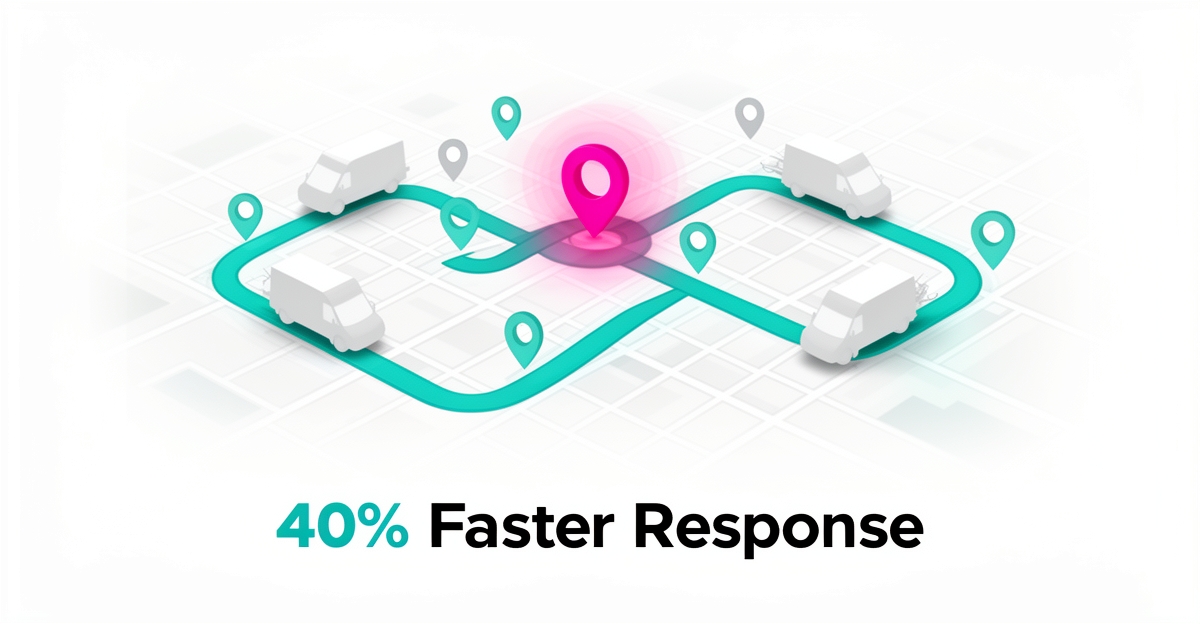
AIQ Labs supports this transformation through AI Workflow Builds that rebuild your dispatch workflow around AI dispatcher agents, integrated with your existing scheduling and CRM tools. These AI Employees handle end-to-end dispatch tasks, from call logging to route optimization and crew assignment, working 24/7 to reduce response delays and improve service consistency. Each build is delivered at a fixed price, in phases, so you see results without disrupting current operations. By removing bottlenecks in the dispatch process, rodent control companies can target the up-to-40% reduction in response times highlighted in industry findings, turning speed into a competitive advantage.
From Call to Completion: The Full AI-Powered Service Workflow for Rodent Control
Rodent control companies face constant pressure to respond quickly to infestation reports while managing high call volumes and repetitive inquiries. AI-powered service workflows transform this challenge into an opportunity by automating every step from initial contact to post-service follow-up. This end-to-end intelligence reduces manual effort, accelerates resolution, and strengthens customer relationships through consistent, timely communication.
An AI receptionist answers every inbound call 24/7, capturing critical infestation details like pest type, location, and severity while documenting property information for accurate scheduling. This eliminates missed calls and ensures no service request falls through the cracks, directly addressing the large share of inbound calls that are repetitive queries. By resolving a meaningful portion of these calls without human intervention, providing quotes, answering common questions, and booking appointments, AI receptionists free up human staff for complex cases and urgent dispatches.
Once a service request is logged, AI-driven dispatch dynamically assigns crews based on real-time location, technician availability, and job urgency. Route optimization algorithms continuously adjust for traffic, weather, or last-minute cancellations, reducing travel time and increasing technician utilization. Industry studies commonly report gains of 15-25% more jobs per technician per day by minimizing idle travel and maximizing productive service time. High-impact jobs, such as active infestations in residential homes or food service facilities, are automatically prioritized and routed to the nearest qualified crew, ensuring critical issues are addressed within minutes rather than hours.
After service completion, AI automates follow-up communication to confirm resolution, request feedback, and schedule recurring treatments. Automated check-ins via SMS or email improve customer retention by demonstrating proactive care and reducing the chance of repeat infestations, industry analyses often point to retention gains in the 20-30% range from consistent, proactive follow-up. This seamless workflow, from AI receptionist capturing details to dynamic rerouting and post-service engagement, creates a responsive, reliable service experience that builds trust and loyalty. For rodent control firms seeking to cut response times by 40% while improving operational efficiency, AI integration transforms dispatch from a reactive process into a predictive, customer-centric advantage. AIQ Labs supports this transformation through custom AI workflow development that integrates with existing tools like scheduling and CRM systems, ensuring seamless adoption without disruption.
Turn Speed Into Your Competitive Edge
Rodent control companies lose jobs not to better service, but to slower response times, manual dispatch creates bottlenecks that frustrate customers and push them toward faster competitors. AI transforms this by automating repetitive calls (freeing staff for urgent jobs), optimizing routes in real time, and prioritizing high-impact infestations based on location and severity. The result: response times cut by up to 40%, more jobs per technician each day, and stronger customer retention through proactive follow-up. AIQ Labs helps rodent control firms achieve this shift with AI dispatchers and workflow builds that integrate with your existing scheduling and CRM tools, no disruption, just measurable gains in speed, satisfaction, and revenue. AIQ Labs has deployed 200+ multi-agent systems and runs four live SaaS products daily, so this is proven work, not theory. Ready to see where AI can eliminate your dispatch bottlenecks? Start with the 2-minute Fit Check, then book a free 30-minute strategy call to map your biggest opportunity and get a clear, no-obligation plan for turning response speed into your unfair advantage.
Make AI your competitive advantage — not just another tool.
Strategy, implementation and ongoing optimization. One partner, end to end.
Not sure where to start? Ask our AI planner