AI for Site Documentation: How to Capture and Store Job Photos and Reports Automatically
Key Facts
- The construction sector continues to face a widely reported skilled-labor shortage, with industry groups projecting millions of unfilled roles by 2030.
- Construction productivity has improved only modestly over the past two decades despite mounting labor pressures, according to long-running industry analyses.
- AI document management tools scan and categorize job site photos, generate progress reports, and store data in searchable formats automatically.
- AI site documentation systems can retrieve specific conditions instantly, such as all photos showing missing scaffolding guardrails.
- Automated documentation eliminates end-of-day logging by creating a single, searchable source of truth for stakeholders.
- AIQ Labs has deployed 200+ multi-agent systems and runs 4 live SaaS products daily, documentation automation is a proven category, not a science project.
Hire a team member that works 24/7 — for less than a part-time wage.
AI receptionists, SDRs, dispatchers and 99+ roles. Trained on your business, fully managed.
Not sure where to start? Ask our AI planner
The Administrative Bottleneck: Why Manual Site Documentation Is Costing You Projects
Construction site documentation has become a critical bottleneck in an industry already struggling to keep pace with demand. With skilled-labor shortages projected to deepen through 2030 and productivity gains staying modest over the past two decades, the gap between labor needs and operational efficiency keeps widening. Teams spend excessive hours on manual photo capture, report writing, and document storage, tasks that divert skilled labor from value-adding activities like building, problem-solving, and quality control. This administrative drag not only inflates project timelines but also increases the risk of human error in compliance tracking and progress reporting. When critical site data remains siloed in disparate folders or paper logs, project visibility suffers, making it harder to detect delays, safety hazards, or permitting issues before they escalate. The result is a cycle of rework, missed deadlines, and avoidable costs, all stemming from documentation practices that fail to leverage modern automation. For firms aiming to scale without proportionally increasing headcount, breaking free from this cycle is no longer optional, it's essential to staying competitive in a tightening labor market. AI-powered site documentation tools capture and store key data in searchable formats, reducing paperwork and improving project transparency, capabilities that directly address the administrative inefficiencies draining skilled labor hours today.
- Manual photo organization and labeling consume valuable time that could be spent on-site supervision or trade coordination.
- Inconsistent report formats create gaps in audit trails, complicating compliance verification during inspections.
- Disorganized document storage slows down stakeholder communication, leading to misaligned expectations and change order disputes.
- Repetitive data entry across multiple systems increases the likelihood of transcription errors in budgets, schedules, and safety logs.
- Lack of real-time visibility into site conditions prevents proactive issue resolution, turning minor delays into major setbacks.
How AI Transforms Raw Site Data into Organized, Searchable Intelligence
Construction sites generate vast amounts of visual and textual data daily, photos, inspection reports, safety logs, and permit documents, yet much of it remains scattered, unstructured, and difficult to act on. AI-powered computer vision and document intelligence systems transform this raw data into organized, searchable intelligence by automatically scanning, categorizing, and tagging job site images while extracting key details into structured formats. These tools don't just store files; they interpret content. They generate progress reports without manual entry and can flag compliance issues that a tired human reviewer might miss at the end of a long shift. This capability turns passive documentation into proactive project oversight, enabling teams to identify compliance gaps early and avoid costly rework.
AI-driven site documentation tools go beyond basic image storage by analyzing visual cues, such as structural elements, safety gear usage, or material placement, and cross-referencing them with project timelines and regulatory standards. By converting unstructured photos and reports into queryable data, these systems allow stakeholders to search for specific conditions (e.g., "show all photos where scaffolding is missing guardrails") and instantly retrieve relevant evidence. This shift reduces administrative overhead significantly, with teams saving hours previously spent on manual sorting and reporting, while improving transparency across contractors, owners, and inspectors who can access real-time, verified site intelligence.
- Automatically tags and categorizes thousands of site photos by trade, location, and date
- Extracts text from reports, labels, and signs using optical character recognition
- Flags deviations from plans or safety protocols for immediate review
- Generates standardized progress summaries for client and regulator review
- Stores all data in a centralized, searchable repository accessible via role-based permissions
For organizations like AIQ Labs, which builds custom AI knowledge capture systems, this technology represents a practical application of intelligent documentation, where visual data isn't just archived but actively leveraged to improve decision-making, reduce delays, and maintain audit-ready records. By grounding site intelligence in AI-powered analysis, construction teams move from reactive fixes to predictive management, ensuring projects stay on schedule, within budget, and compliant with evolving standards. The result is a living project record that evolves with the build, turning every photo and report into actionable insight.
Implementing Automated Documentation: A Practical Roadmap for Construction Teams
Construction teams are drowning in photos, forms, and field notes while the sector faces a deepening skilled-labor shortage. Automated documentation turns that scattered data into searchable knowledge, reducing paperwork and improving project transparency.
A practical roadmap starts with planning intelligence and scales to company-wide capture. Teams first deploy AI-powered planning tools to analyze historical project data, labor productivity rates, and external factors to create better schedules and budgets. This baseline reveals where manual reporting creates the most delay and risk.
The second step is early compliance control. AI-driven plan review tools can catch code issues early, speed up permitting, and reduce project resubmittals. Early detection shortens approval cycles and protects margins.
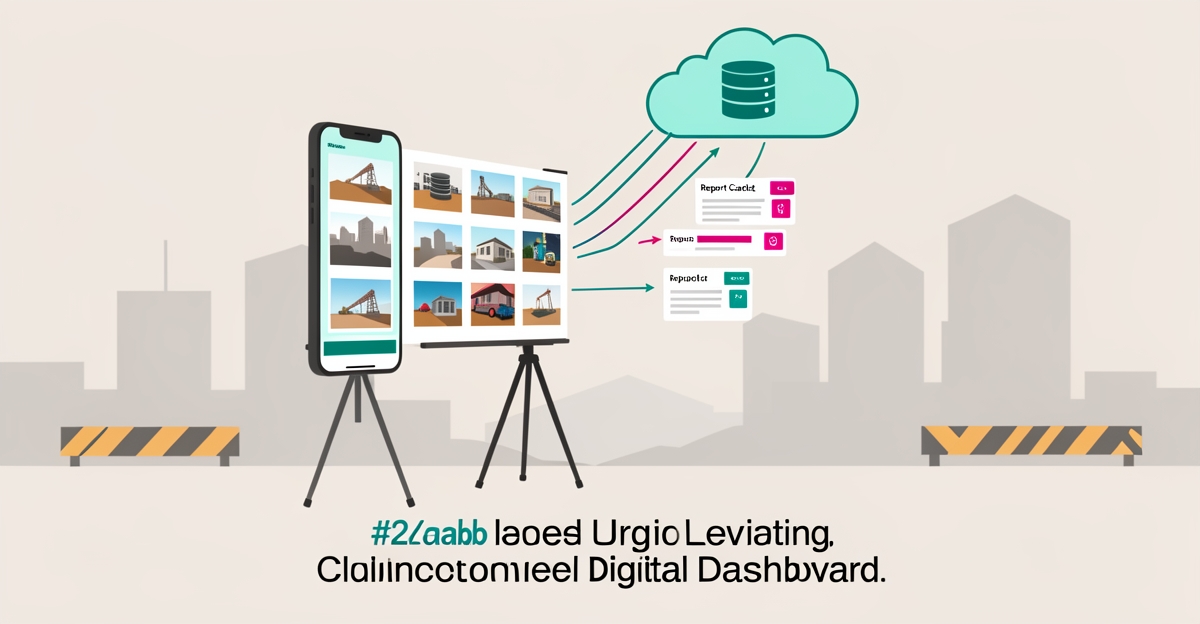
Next, site data capture becomes continuous. Field crews use mobile capture that automatically categorizes job site photos, tags location and timestamp, and stores key data in searchable formats. AI-powered document management tools can scan and categorize job site photos, generate progress reports, and store key data in searchable formats. This eliminates end-of-day logging and creates a single source of truth.
The final step is searchable reporting. AI-driven tools generate progress reports, track permits, and organize site photos, saving hours on administrative work and preventing costly delays. Reports are auto-linked to plans, RFIs, and compliance records so stakeholders see the same current view.
Implementation succeeds when it respects existing workflows. Integration with construction management systems avoids duplicate entry, while phased adoption reduces training friction. Automated documentation grows from a single workflow to company-wide systems as teams gain confidence.
A scalable rollout typically follows this sequence:
- Deploy AI-powered planning tools to analyze past project data and create better schedules and budgets
- Use AI-driven plan review to catch code issues early and accelerate permitting
- Capture site data through automated photo categorization and searchable storage
- Generate searchable progress reports that improve project transparency
Teams with limited training benefit from solutions that learn in place and integrate via APIs rather than requiring new platforms. AIQ Labs approaches this in two ways: an AI Workflow Build rebuilds the one documentation workflow that costs you the most at a fixed price, in phases; and an AI Operating System connects documentation into one operating layer you own outright. Firms that need extra administrative capacity without a new hire can also consider AI Employees, managed AI staff at roughly 80% less cost than a human hire.
Construction remains under sustained pressure on both labor and accountability. Scalable documentation systems reduce rework, improve accountability, and create auditable records that support both safety and sustainability goals.
Still paying for 10+ subscriptions that don’t talk to each other?
We build custom AI systems you own outright. No vendor lock-in. Full control.
Not sure where to start? Ask our AI planner
Frequently Asked Questions
How does AI actually save time on site documentation?
Can AI really catch compliance issues humans miss?
What's the biggest bottleneck AI solves in construction documentation?
Will AI documentation integrate with the systems we already use?
Is automated site data secure and audit-ready?
Where do we start if we want to automate documentation?
Turn Site Chaos into Strategic Clarity
Manual site documentation is draining skilled labor, inflating costs, and increasing risk in an industry already short on workers. AI-powered tools now capture and organize job photos, reports, and safety data automatically, turning scattered files into searchable intelligence that flags compliance issues before they become rework. This isn't just about saving hours; it's about reclaiming your team's focus for building, not paperwork. For construction firms ready to scale without adding headcount, the path forward starts with identifying where documentation bottlenecks are stealing value. AIQ Labs builds these systems to integrate with your existing workflows, fixed-price, phased, and owned outright, with 200+ multi-agent systems deployed to date. To see how this applies to your projects, take the 2-minute Fit Check and book a free 30-minute strategy call, we'll show you where AI can deliver real impact, or tell you if it's not the right fit.
Make AI your competitive advantage — not just another tool.
Strategy, implementation and ongoing optimization. One partner, end to end.
Not sure where to start? Ask our AI planner