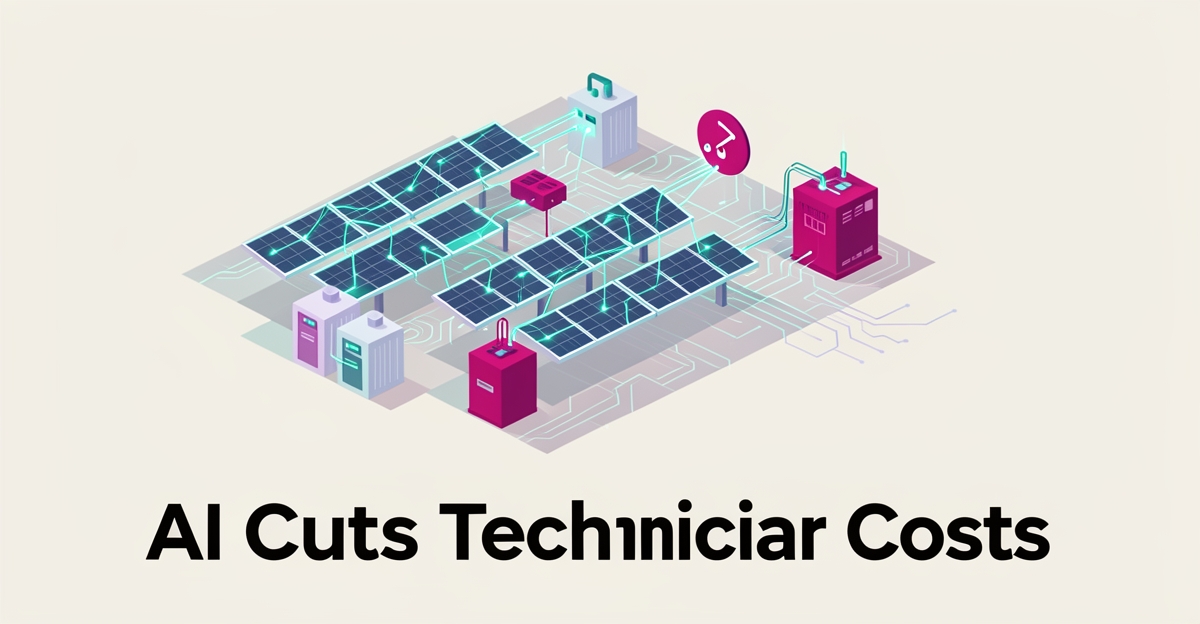
AI for Solar Battery Storage: A Cost-Effective Alternative to Hiring More Field Technicians
Key Facts
- Solar battery costs have fallen sharply in recent years, driving faster adoption and more systems requiring ongoing support
- AI-powered grid management uses predictive analytics and intelligent load balancing to prevent energy waste before it requires manual correction
- Predictive maintenance and smart scheduling can meaningfully reduce unnecessary site visits and manual dispatch work
- AI Employees operate 24/7/365 at a fraction of human labor cost with zero missed calls or downtime
- AIQ Labs has deployed 200+ multi-agent systems and runs 4 live SaaS products daily, proving enterprise-grade capability
Hire a team member that works 24/7 — for less than a part-time wage.
AI receptionists, SDRs, dispatchers and 99+ roles. Trained on your business, fully managed.
Not sure where to start? Ask our AI planner
The Growing Cost Pressure on Solar Field Operations
Solar installation companies are facing mounting pressure as they scale to meet rising demand for battery storage systems. The labor-intensive nature of field operations, ranging from system diagnostics to maintenance dispatch, creates bottlenecks that slow response times and inflate costs. As projects multiply, the need for more technicians exposes gaps in availability, scheduling inefficiencies, and rising overhead from recruitment, training, and retention.
These challenges are compounded by the technical complexity of modern solar battery installations, which require specialized knowledge to manage safely and effectively. Field teams often struggle to keep pace with service requests, leading to delayed resolutions and customer dissatisfaction. As battery prices have fallen in recent years, adoption has accelerated, and every new installation is a system that needs ongoing support. This surge amplifies strain on existing field teams, who are expected to do more with the same or fewer resources.
Without intervention, operational inefficiencies erode profitability and limit scalability. Technicians spend excessive time on routine tasks like status checks and work order coordination, diverting attention from high-value activities such as system optimization and customer engagement. Home and commercial battery systems represent a significant financial investment for customers, and an expectation of reliable, timely service to protect it. When field teams are overstretched, that trust risks erosion.
AIQ Labs addresses this pressure by deploying AI Employees as dispatchers and site coordinators that handle routine field logistics, freeing human technicians to focus on complex technical work. These AI agents operate 24/7, manage scheduling conflicts, and reduce dependency on after-hours staffing. By integrating directly with scheduling and CRM platforms, they ensure consistent coverage without the overhead of hiring, training, or managing additional personnel. This approach allows solar businesses to scale service capacity predictably, maintaining response quality even as project volumes grow.
How AI-Powered Grid Management Cuts Field Labor Needs
AI-powered grid management systems are transforming how solar battery storage operations run by minimizing the need for constant field technician visits. Utilities and grid operators using intelligent load balancing and predictive analytics have demonstrated meaningful reductions in energy curtailment, preventing waste before it requires manual correction. This shift allows solar companies to reallocate human resources from routine monitoring to higher-value tasks like system upgrades or customer engagement.
By using machine learning to forecast energy demand and detect anomalies in real time, AI-driven grid platforms enable predictive maintenance that addresses potential issues before they escalate. Instead of dispatching technicians for scheduled checks or reactive repairs, companies can rely on AI to identify only those sites needing intervention, cutting unnecessary site visits, often substantially. This not only reduces labor costs but also improves response efficiency when human expertise is truly required.
- AI optimizes energy distribution to prevent overloading and underutilization of storage systems
- Predictive alerts reduce emergency dispatches by identifying degradation trends early
- Continuous learning improves forecast accuracy, further lowering the need for manual oversight
For solar installation businesses looking to scale without proportionally increasing field staff, integrating AI grid management offers a sustainable path forward. AIQ Labs supports this transition by providing AI employees, such as intelligent dispatchers and site coordinators, that work alongside human teams to manage workflows, monitor system health, and trigger actions only when needed. This approach ensures consistent coverage while reducing overhead tied to 24/7 manual monitoring.
Replacing Manual Dispatch with AI Employees: A Scalable Alternative to Hiring
Solar battery storage adoption is accelerating, but scaling operations often means hiring more field technicians, a costly and slow solution. As battery costs fall and installation volumes climb, installers face pressure to do more with less while maintaining service quality.
AIQ Labs' AI Employees, such as the AI Dispatcher and Service Coordinator, offer a scalable alternative by automating core field coordination tasks. These AI agents integrate directly with solar operations tools, like CRM platforms, scheduling software, and dispatch systems, to route work orders, assign technicians based on location and skill, and resolve scheduling conflicts in real time. Unlike human coordinators limited to 40-hour weeks, AI Employees operate 24/7/365, ensuring urgent issues are addressed immediately, even outside business hours.
This automation reduces reliance on manual dispatch, cutting overhead while improving response consistency. For growing solar businesses, this means handling increased installation and maintenance volume without proportional labor costs. AI Employees learn from historical data to optimize routing and prioritize urgent battery storage issues, such as system faults or grid interconnection delays, minimizing downtime and enhancing customer trust.
By replacing repetitive coordination work with AI, field teams spend less time waiting for assignments and more time on high-value tasks like system diagnostics and client education. The result is a leaner, more agile operation that scales with demand, without the recurring expense of hiring, training, and managing additional staff. As solar battery storage becomes more accessible, AI-driven coordination ensures businesses can capitalize on growth opportunities efficiently and reliably.
Ready to replace manual dispatch with AI Employees? Start with a free strategy call to see how AIQ Labs can automate your field operations at a fraction of the cost of another hire.
Schedule your free 30-minute strategy call to explore AI Employee roles like Dispatcher and Service Coordinator tailored to your solar business.
Begin with the two-minute Fit Check to identify your highest-impact automation opportunity today.
Still paying for 10+ subscriptions that don’t talk to each other?
We build custom AI systems you own outright. No vendor lock-in. Full control.
Not sure where to start? Ask our AI planner
Frequently Asked Questions
Can AI really reduce the need for field technicians in solar battery operations?
How much are solar battery costs changing, and why does that matter for service teams?
What does an AI dispatcher actually do for a solar installer?
Is AI a cost-effective alternative to hiring more technicians?
What do customers pay for solar batteries, and why is timely service important?
How do I know if AI dispatch is right for my solar business?
The Field Team You Can Scale Without Hiring
Solar battery adoption is accelerating, but the operational model hasn't kept pace. Field teams are stretched thin by rising service volumes, after-hours demands, and the hidden costs of manual dispatch, scheduling conflicts, missed follow-ups, and technician burnout. AI-powered grid management has already proven that predictive coordination prevents problems before they need manual fixes. The same logic applies to field operations: when AI Employees handle dispatch, scheduling, and site coordination 24/7, human technicians stay focused on the complex, high-value work only they can do. AIQ Labs has deployed 200+ multi-agent systems and builds AI Employees, Dispatchers, Service Coordinators, and more, integrating them directly into your CRM, scheduling tools, and communication channels so they function as real team members from day one. No hiring cycles. No overtime budgets. No coverage gaps. If you're ready to scale field capacity without scaling headcount, start with the two-minute Fit Check at aiqlabs.ai/apply to identify your highest-impact automation opportunity, then book a free 30-minute strategy call to map the rollout.
Make AI your competitive advantage — not just another tool.
Strategy, implementation and ongoing optimization. One partner, end to end.
Not sure where to start? Ask our AI planner