AI for Sustainable Sourcing: How Farm-to-Table Restaurants Can Track Supplier Performance
Key Facts
- As of late 2026, diner preference for fresh, locally sourced ingredients continues to shape restaurant sourcing decisions, raising the stakes on supplier reliability.
- AI monitoring typically draws on data you already generate: POS sales history, delivery logs, receiving records, and temperature or humidity sensors.
- Agentic AI adoption has generally outpaced governance in many organizations, so audit trails and escalation paths matter for food operations too.
- AIQ Labs has deployed 200+ multi-agent systems and runs 4 live SaaS products daily, this is operational experience, not theory.
Hire a team member that works 24/7 — for less than a part-time wage.
AI receptionists, SDRs, dispatchers and 99+ roles. Trained on your business, fully managed.
Not sure where to start? Ask our AI planner
Why Farm-to-Table Supply Chains Break Down: The Supplier Visibility Problem
Farm-to-table restaurants thrive on the promise of fresh, locally sourced ingredients, but their supply chains often unravel before the first bite reaches the plate. The core issue isn't just sourcing from nearby farms, it's the lack of visibility into how those ingredients actually move from field to kitchen. Without real-time insight into supplier performance, even the most committed restaurateurs operate in the dark, reacting to problems after they've already impacted menu consistency, customer satisfaction, and food waste.
Short ingredient shelf lives create constant pressure, herbs wilt in hours, berries mold in days, and fish lose quality rapidly if not handled precisely. Meanwhile, demand fluctuates unpredictably based on weather, local events, or seasonal cravings, making it nearly impossible to align orders with actual needs. Delivery timing failures compound these issues: a late shipment of greens means spoiled inventory by lunch service, while early arrivals force rushed storage that compromises texture and flavor. Across dozens of small farms and artisanal producers, quality inconsistencies become inevitable, one week's heirloom tomatoes are vibrant and firm, the next week's arrive mealy or bruised, with no clear pattern to explain why.
Manual tracking of supplier performance simply cannot keep up. Relying on paper logs, email chains, or periodic check-ins means critical data arrives too late to prevent waste or disappointment. A chef might notice wilted basil only after it's already been chopped, or a manager might discover a recurring delivery delay only after three missed Fridays in a row. As the number of suppliers grows, common in farm-to-table models seeking hyper-local diversity, this reactive approach collapses under its own weight. Without automated, continuous monitoring of delivery times, freshness indicators, and reliability metrics, restaurants lack the foundation to make proactive sourcing decisions that protect both quality and sustainability. Timing issues, demand volatility, and transportation troubles are typically the primary pain points in farm-to-table supply chains, directly threatening the freshness and consistency that define the model. This visibility gap isn't just an operational headache, it undermines the very promise of farm-to-table dining. AIQ Labs addresses this challenge by deploying AI dashboards that track supplier KPIs in real time, alerting managers to disruptions before they impact service.
How AI Turns Supplier Data into Real-Time Sustainability Intelligence
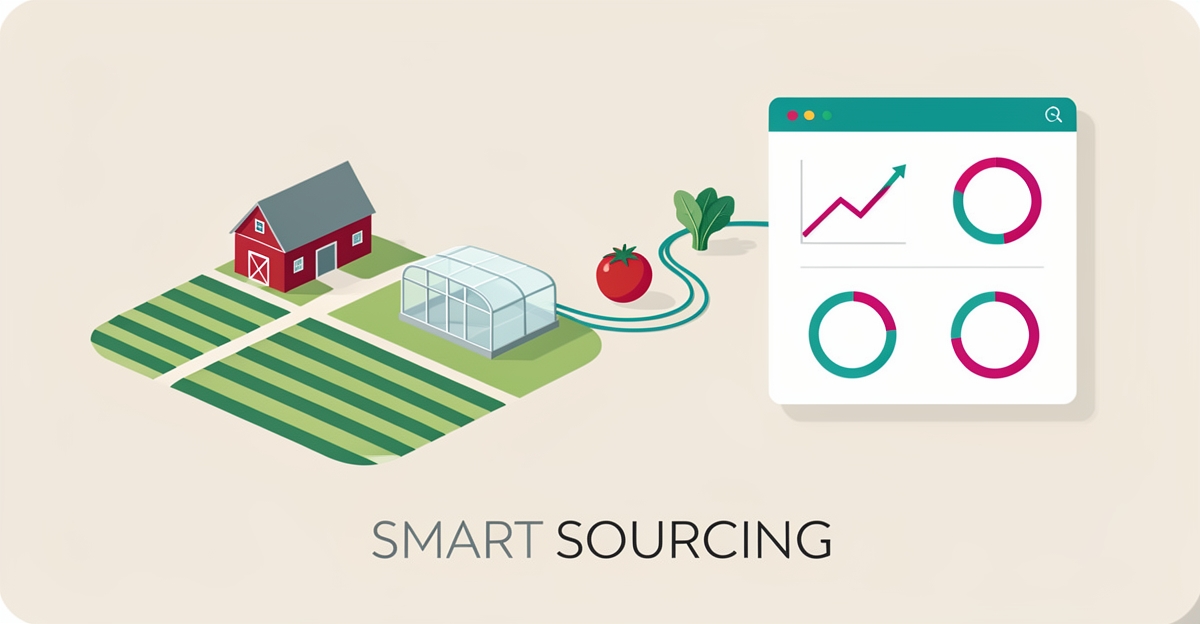
AI systems now continuously monitor delivery times, ingredient quality, and supplier reliability to support sustainable sourcing in farm-to-table restaurants. AI dashboards track supplier Key Performance Indicators (KPIs) and alert managers to disruptions before they affect service, providing real-time visibility into supply chain performance. These systems integrate data from multiple sources to create a unified view of supplier behavior, enabling proactive interventions when inconsistencies arise.
Predictive demand modeling helps restaurants order closer to the right amount of ingredients, reducing both waste from over-ordering and shortages from under-ordering. AI systems analyze historical sales data and market trends to forecast needs with greater accuracy than manual forecasting methods. This capability is particularly valuable for perishable items where timing is critical to maintaining freshness and minimizing spoilage.
Real-time freshness monitoring through temperature and humidity tracking helps keep food at optimal quality from farm to restaurant. AI platforms can monitor storage conditions throughout the supply chain, including during transportation and storage, triggering alerts when environmental conditions deviate from safe ranges. Route optimization can further improve efficiency by identifying faster, more reliable delivery paths that preserve ingredient integrity while reducing fuel consumption and emissions.
AIQ Labs deploys custom AI dashboards that consolidate these monitoring capabilities into actionable intelligence for restaurant managers. These systems provide continuous visibility into supplier performance metrics, enabling data-driven decisions about sourcing relationships. The technology transforms raw supply chain data into sustainability intelligence that supports both environmental goals and operational efficiency. For restaurants that want the monitoring handled end to end, AIQ Labs also offers managed AI Employees that can chase delivery confirmations, log receiving data, and flag anomalies without adding headcount.
What to Measure: Building Your Supplier KPI Dashboard
A supplier KPI dashboard is only as good as the metrics behind it, and in farm-to-table operations, a handful of numbers determine whether your sustainability claims hold up under scrutiny.
The core metrics fall into four categories. On-time delivery rate matters because fresh ingredients have short shelf lives, and timing issues are among the most common problems in the farm-to-table supply chain. A delivery that arrives late isn't just an inconvenience, it can compromise ingredient quality before it ever reaches your kitchen.
Rejection and quality scores come next. When shipments arrive with wilted greens or bruised produce, tracking rejection rates by supplier over time reveals patterns that individual incidents hide. A supplier whose rejection rate creeps upward over three months is telling you something before a major failure occurs.
Environmental condition compliance is the third pillar. AI can monitor storage conditions such as temperature and humidity throughout the supply chain, helping keep food fresh from farm to restaurant, including during transportation. This means connecting sensors in delivery vehicles and storage areas directly to your dashboard, so a temperature excursion during transit becomes an alert, not a mystery discovered at prep time.
Finally, consistency trends tie everything together. The goal is moving from human judgment alone to mathematical optimization using integrated data. Manual supplier evaluation depends on a chef's memory and gut feel; a dashboard captures every delivery, every rejection, every deviation.
Connecting the data sources is where many restaurants hesitate. In practice, the integration typically draws on:
- POS systems (such as Toast) for historical sales and demand data
- Temperature and humidity sensors in storage and transport
- Delivery logs and receiving records from suppliers
- Historical ordering data imported from existing systems
Automated alerts are what turn this raw data into daily decisions. Rather than reviewing a monthly report after problems have compounded, managers get notified the moment a supplier misses a delivery window, a rejection score spikes, or a cold chain breaks. AIQ Labs deploys AI dashboards that track supplier KPIs and alert managers to disruptions or inconsistencies in supply chains, giving restaurants real-time visibility instead of retrospective reporting.
One caution applies here. The rapid adoption of agentic AI in many organizations has outpaced governance infrastructure, and audit trails should document decision rationale in ways that satisfy auditors and regulators. Your dashboard should log not just what happened, but why the system flagged it, and your team should know when to trust the alert, when to push back, and when to escalate.
Start with these four metric categories, connect the data you already generate, and let automated alerts do the daily monitoring your team cannot. If one workflow, say, receiving and supplier follow-up, costs you the most time, a focused AI Workflow Build can rebuild just that process at a fixed price.
Implementing AI Supplier Monitoring Without Disrupting Your Kitchen
Implementing AI for supplier monitoring doesn't require overhauling your kitchen workflows. Start by assessing current supply chain pain points, such as inconsistent delivery times or ingredient quality issues, using your existing POS and inventory data. AIQ Labs helps map these challenges to specific KPIs like on-time delivery rates or spoilage percentages, creating a baseline for improvement. Next, integrate the AI monitoring system with your current tools, such as Toast or QuickBooks, to pull real-time supplier performance data without disrupting daily operations. This seamless connection ensures AI works in the background, flagging anomalies like late shipments or temperature deviations during transit.
Pilot the AI's recommendations against your experienced staff's judgment on a small scale, for example, comparing AI-flagged supplier risks with your head chef's quality assessments. This builds trust and highlights where AI adds value, such as predicting delays before they impact service. Train your team to interpret AI outputs, focusing on when to act on alerts and when to escalate concerns. Finally, establish clear governance with defined escalation paths and audit trails, addressing the adoption-vs-governance gap that leaves organizations vulnerable when AI deployment outpaces oversight structures. Without this foundation, even accurate AI insights can create accountability risks and compliance gaps. Proactive governance keeps AI decisions traceable and aligned with sustainability goals.
- Assess current supply chain pain points using existing data
- Integrate AI with current systems like POS or accounting tools
- Pilot AI recommendations against staff judgment
- Train teams to evaluate and act on AI output
- Establish governance with clear escalation paths and audit trails
From Tracking to Trust: Making Sustainable Sourcing a Competitive Advantage
Sustainability claims are only as strong as the data behind them. When a diner asks whether your ingredients are truly local and responsibly sourced, the answer carries more weight if you can back it with continuous supplier performance records rather than a story on the menu.
This is where the shift from tracking to trust happens. AI systems can monitor the metrics that define a supplier relationship, delivery times, ingredient quality, and overall reliability, giving restaurant managers real-time visibility instead of relying on memory and spot checks. AIQ Labs deploys custom AI dashboards that track supplier KPIs and alert managers the moment disruptions or inconsistencies appear in the supply chain, turning sustainability from a marketing claim into an operational fact.
The payoff shows up in three places:
- Credibility with customers. Documented performance data lets you substantiate freshness and sourcing claims, which matters as diner preference for fresh, locally sourced ingredients remains strong heading into 2027.
- Less waste, lower costs. AI-driven demand prediction helps you order closer to the right amount of ingredients, reducing both over-ordering waste and under-ordering shortages.
- Stronger supplier relationships. Objective, consistent feedback replaces subjective complaints, making conversations with farmers and distributors about quality and timing more productive.
That last point deserves emphasis. When suppliers receive data-driven feedback, on-time delivery percentages, quality scores, consistency trends, performance conversations become collaborative rather than adversarial. Suppliers know exactly where they stand, and reliable performers can be rewarded with more volume.
Implementation does require care. Industry reporting has warned that agentic AI adoption can outpace governance, and the same principle applies here: AI effectiveness depends on high-quality, integrated data and clear human oversight. Comparisons of AI systems versus manual processes consistently find that manual approaches excel at incorporating local knowledge, so the goal is augmentation, letting AI handle continuous monitoring while your team applies judgment and context.
Ownership matters too. Restaurants that build their tracking on rented platforms face vendor lock-in and rising subscription costs. AIQ Labs takes a different approach: custom systems the business owns outright, with flexible payment models, Start Monthly, Build in Milestones, or Own It Outright, so your supplier data remains your asset. For restaurants ready to connect sourcing, inventory, and front-of-house data into one layer, an AI Operating System built in phases can tie it all together. Current options are on the pricing page.
The path forward starts with a single question: which supplier metric, if tracked reliably, would save you the most money first? Booking a free strategy call maps your highest-ROI opportunity before any build begins, and if there isn't a clear win, you'll hear that too.
Still paying for 10+ subscriptions that don’t talk to each other?
We build custom AI systems you own outright. No vendor lock-in. Full control.
Not sure where to start? Ask our AI planner
Frequently Asked Questions
How does AI actually help farm-to-table restaurants track supplier performance?
What KPIs should I monitor for sustainable sourcing?
Can AI reduce food waste from over-ordering or spoilage?
Do I need to replace my POS or kitchen systems to use AI monitoring?
Is AI decision-making reliable enough for food operations?
How is AI supplier tracking different from manual chef judgment?
Turning Supplier Data into Kitchen Confidence
Farm-to-table restaurants no longer need to choose between sustainability promises and operational reality. By tracking on-time delivery rates, quality scores, and environmental conditions through AI dashboards, kitchens gain the visibility needed to prevent waste before it happens and substantiate sourcing claims with hard data. The transition from manual logs to automated monitoring, augmented by human judgment rather than replaced by it, transforms supplier relationships from reactive damage control into collaborative partnerships. When every delivery is measured and every deviation flagged in real time, sustainability becomes a verifiable operational standard rather than a marketing aspiration. AIQ Labs builds custom supplier dashboards that integrate with your existing POS and inventory systems, giving you ownership of the data and the insights. Ready to identify which supplier metric would save your kitchen the most money first? Start the Fit Check for a free 30-minute strategy call, if there isn't a clear win, you'll hear that too.
Make AI your competitive advantage — not just another tool.
Strategy, implementation and ongoing optimization. One partner, end to end.
Not sure where to start? Ask our AI planner