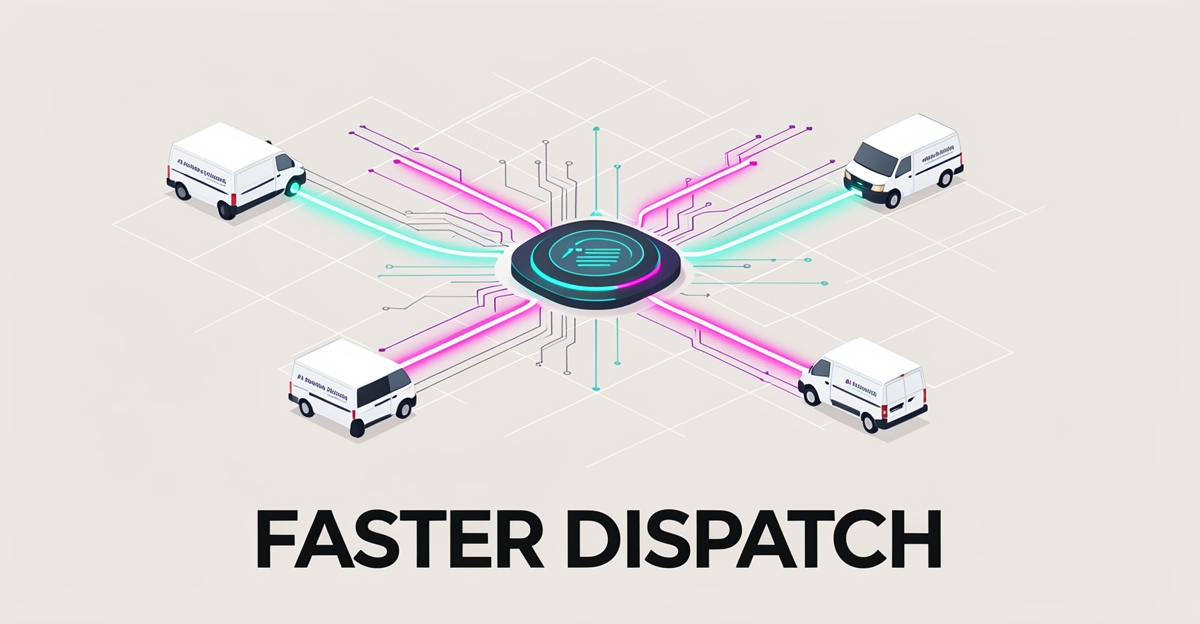
AI for Technician Dispatch: How Repair Shops Can Reduce Response Time by 30%
Key Facts
- AI-powered dispatch systems can reduce response times by up to 30% when built around real operational data
- AI systems can process multiple data points simultaneously for smarter technician assignments
- AI-powered dispatch enables 24/7 dynamic job assignment based on real-time conditions
- AIQ Labs has deployed 200+ multi-agent systems and runs 4 live SaaS products daily
- Managed AI dispatchers typically cost around 80% less than a comparable human hire
Hire a team member that works 24/7 — for less than a part-time wage.
AI receptionists, SDRs, dispatchers and 99+ roles. Trained on your business, fully managed.
Not sure where to start? Ask our AI planner
The Hidden Cost of Manual Dispatch in Repair Shops
Manual technician dispatch in repair shops remains a significant operational bottleneck, often relying on spreadsheets, phone calls, and gut instinct rather than data-driven decision-making. This traditional approach leads to delayed responses as dispatchers struggle to match the right technician with the right job in real time, especially during peak hours or emergency calls. Without automated scheduling, shops frequently assign technicians based on availability alone, ignoring critical factors like proximity, vehicle readiness, or skill specialization, resulting in inefficient routing and wasted labor hours. These inefficiencies directly impact revenue, as slower response times frustrate customers and increase the likelihood of them turning to competitors who can arrive faster.
The hidden costs of manual dispatch extend beyond delayed service to include poor resource allocation and increased operational friction. Technicians may be sent across town for minor repairs while urgent jobs nearby go unattended, or they may arrive at a site only to discover they lack the necessary parts or vehicle access, requiring return trips that compound delays and fuel costs. Such scenarios not only raise expenses but also erode customer trust, particularly when repair shops fail to provide accurate ETAs or proactive updates. Over time, these repeated inefficiencies accumulate, contributing to lower first-time fix rates and diminished customer satisfaction scores, key metrics that influence repeat business and online reviews in highly competitive local markets.
AI-powered dispatch systems can reduce response times by up to 30% by dynamically assigning technicians based on real-time location, vehicle availability, and job urgency, transforming a reactive process into a proactive, optimized workflow. By eliminating manual guesswork, these systems ensure that the most appropriate technician is dispatched the first time, minimizing travel time and maximizing productive labor hours. For repair shops still dependent on legacy dispatch methods, the shift toward intelligent automation isn't just about keeping up with technology, it's about closing a costly efficiency gap that directly affects profitability and customer retention. An AI Employee dispatcher can run this process around the clock at a fraction of the cost of a full-time hire.
How AI-Powered Dispatch Systems Cut Response Time by 30%
Repair shops often lose valuable time when technicians are assigned based on guesswork rather than real-time conditions, leading to longer wait times and frustrated customers. AI-powered dispatch systems solve this by continuously analyzing location, vehicle availability, and job urgency to make smarter, faster assignments. This dynamic approach can reduce response time by up to 30%, allowing shops to serve more jobs without adding staff. The system works 24/7, adapting instantly to traffic delays, emergency calls, or last-minute cancellations, something manual scheduling simply can't match. By removing human error and bias from the dispatch process, AI ensures the right technician is always on the way, improving both speed and reliability.
These gains come from AI's ability to process multiple data points simultaneously, far beyond what a human dispatcher can track in real time. For example, the system can prioritize an urgent brake repair over a routine oil change, even if the latter is geographically closer, based on predefined urgency rules. It also checks which service vehicles are fueled, equipped, and within optimal range before making a recommendation. Small improvements in timing compound into significant service gains, and shops using AI dispatch typically report not only faster response times but also higher first-time fix rates due to better-matched technician skills.
- Real-time location tracking of all technicians and service vehicles
- Dynamic job urgency scoring based on customer-reported symptoms
- Vehicle readiness checks (fuel, tools, parts availability)
- Traffic and weather condition integration for accurate ETAs
- Skill-based matching to ensure technical competence per job type
AIQ Labs builds custom dispatch systems that integrate directly with existing shop management tools, ensuring a smooth transition without disrupting current workflows. Unlike generic automation platforms, these systems are tailored to the specific rhythms and constraints of repair operations, learning from historical data to improve accuracy over time. The result is a dispatch function that operates continuously, scales with demand, and consistently delivers faster response times. For shops looking to move beyond reactive scheduling, AI-powered dispatch offers a measurable path to greater efficiency and customer trust, starting with a meaningful reduction in the time it takes to get help on the way.
Implementing AI Dispatch: From Assessment to Ongoing Optimization
Repair shops looking to cut response times can follow a structured path to AI dispatch adoption, starting with a clear assessment of current workflows. AIQ Labs' phased implementation process begins with Discovery & Architecture, where technicians' schedules, job types, and existing tool integrations are analyzed to identify bottlenecks in dispatch logic. This foundational step ensures the AI system is built around real operational pain points rather than generic assumptions. With thousands of automation tools on the market, a tailored assessment is critical to selecting the right approach.
The second phase, Development & Integration, focuses on building the AI dispatch system and connecting it to existing shop management software using protocols like the Model Context Protocol (MCP). This enables seamless data flow between calendars, CRM systems, and parts inventory tools without requiring disruptive overhauls. During this phase, AI agents are trained on historical dispatch patterns, learning to weigh factors like technician location, vehicle readiness, and job urgency in real time.
Deployment & Training follows, where the system goes live and staff receive role-specific guidance on interacting with the AI dispatcher. Technicians learn to trust automated assignments through transparent logic, such as why a nearby technician with the right parts was selected over a more senior colleague farther away. Clear communication about the AI's role as a decision-support tool, not a replacement, drives adoption and reduces resistance. Finally, in the Optimization & Scale phase, performance data is continuously monitored to refine assignment algorithms, adjust for seasonal demand shifts, and scale the system as the shop grows. Ongoing optimization is essential to maintain competitive advantage in technician dispatch.
If dispatch is the single workflow costing your shop the most, a fixed-price Workflow Build may be the right entry point. If you want dispatch connected to intake, scheduling, and customer follow-up in one layer, an AI Operating System built in phases, and owned outright, may fit better.
Still paying for 10+ subscriptions that don’t talk to each other?
We build custom AI systems you own outright. No vendor lock-in. Full control.
Not sure where to start? Ask our AI planner
Frequently Asked Questions
Can AI really cut my repair shop's response time, or is that just marketing?
How is AI dispatch different from just using spreadsheets and phone calls?
Will an AI dispatcher work with the shop management software I already use?
What data points does an AI dispatcher actually use to pick the right tech?
Is AI dispatch mature enough for field service, or is it still experimental?
How do I choose the right AI dispatch solution with so many automation tools out there?
Turn Faster Dispatch Into Lasting Competitive Advantage
Manual dispatch is costing repair shops more than time, it's eroding trust, wasting labor hours, and letting competitors win on speed. AI-powered dispatch changes the equation by matching the right technician to the right job in real time, using location, vehicle readiness, skill fit, traffic and urgency instead of guesswork. The result is faster response times, higher first-time fix rates, and a workflow that scales without adding headcount. AIQ Labs builds custom dispatch systems that integrate with the shop management tools you already use, so the transition is smooth and the system learns from your historical patterns over time. If you're ready to close the efficiency gap, start with a clear assessment of your current bottlenecks, then map a phased path from discovery to deployment and ongoing optimization. Start the 2-minute Fit Check at https://aiqlabs.ai/apply to book a free 30-minute strategy call, no pitch, just clarity on what's possible. Or reach the team directly at [email protected].
Make AI your competitive advantage — not just another tool.
Strategy, implementation and ongoing optimization. One partner, end to end.
Not sure where to start? Ask our AI planner