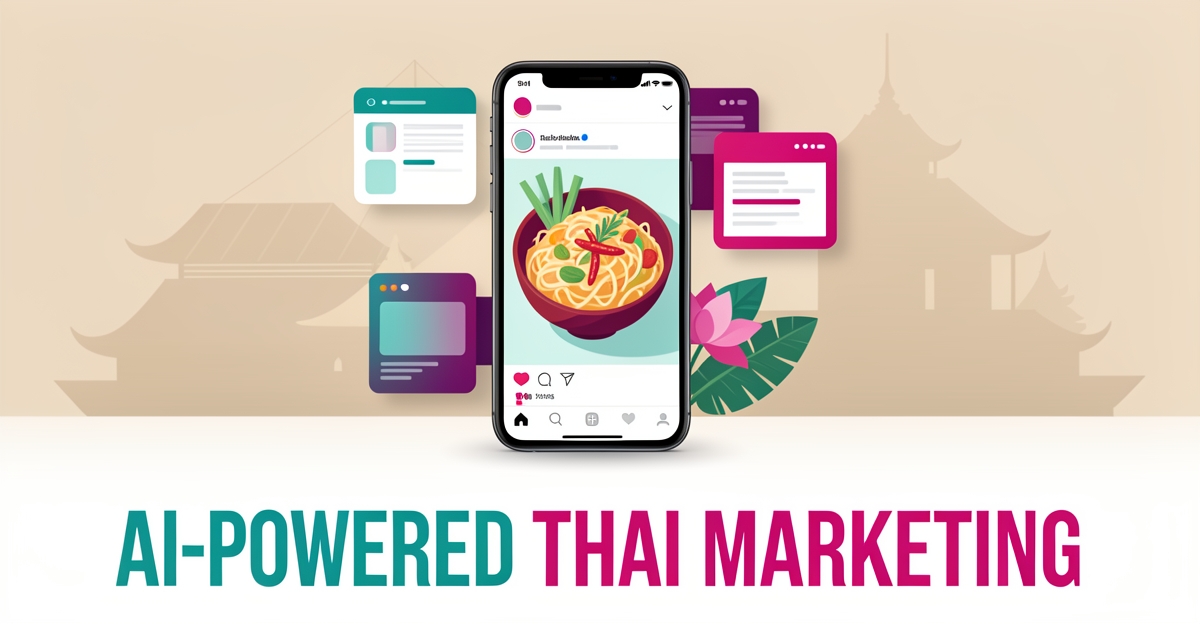
AI for Thai Restaurant Marketing: How to Generate Local, Culturally Relevant Content in Minutes
Key Facts
- AI is technology that enables computers to simulate human learning, comprehension, problem solving, decision-making, creativity and autonomy according to IBM
- Modern AI assistants like ChatGPT can answer questions, write, create images, and complete work in one place
- Google Gemini helps with writing, planning, brainstorming, and other generative AI tasks
- Marketing tasks that once took hours, drafting captions, flyers, and menu copy, now typically take minutes with AI assistance
- Prompt quality determines output quality: specific, culturally detailed prompts produce usable first drafts; vague prompts produce generic content
Hire a team member that works 24/7 — for less than a part-time wage.
AI receptionists, SDRs, dispatchers and 99+ roles. Trained on your business, fully managed.
Not sure where to start? Ask our AI planner
The Marketing Bottleneck: Why Thai Restaurant Owners Struggle with Content Creation
For Thai restaurant owners, the daily grind of running a kitchen often leaves little time or energy for creating marketing content that truly resonates. This challenge is amplified by the need to convey not just menu items, but the rich cultural stories, regional flavors, and authentic dining experiences that define Thai cuisine, elements that are difficult to capture in a rushed social media post or generic flyer. Many small restaurant operators find themselves wearing multiple hats, attempting to juggle food preparation, staff management, customer service, and marketing simultaneously, which inevitably leads to inconsistent or low-priority content efforts.
The reality is that traditional marketing content creation is notoriously time-intensive, pulling owners away from core operations. Tasks that used to take hours, writing captions, designing flyers, updating menu descriptions, are now expected to be completed rapidly to keep pace with digital trends, yet achieving this speed without sacrificing quality remains a significant hurdle for small businesses. This efficiency gain is not just desirable but increasingly essential for survival in a competitive local market where visibility depends on a consistent, engaging online presence.
Beyond time constraints, Thai restaurant owners face a unique cultural authenticity barrier that generic marketing tools often fail to address. Crafting content that accurately reflects the nuances of Thai culinary traditions, from the balance of sweet, sour, salty, and spicy in a dish to the significance of regional specialties like Isaan sausages or Southern curries, requires deep cultural knowledge that AI systems may lack without proper guidance. As IBM explains, AI simulates human learning and creativity, but it still needs the right inputs to produce work that honors a specific cuisine. For a Thai restaurant, this means that while AI can generate content quickly, ensuring it aligns with cultural accuracy, brand voice, and local relevance still requires thoughtful human oversight, a step that can feel burdensome when resources are already stretched thin.
- Limited time for strategic marketing amid operational demands
- Difficulty conveying cultural authenticity in content
- Lack of in-house copywriting or design expertise
- Risk of generic or inaccurate AI-generated outputs
- Challenges in maintaining consistent brand voice across platforms
These interconnected pressures create a significant bottleneck: the need for frequent, high-quality, culturally nuanced marketing content clashes with the practical limitations of time, expertise, and resources available to most Thai restaurant owners. Addressing this gap requires solutions that not only accelerate content creation but also embed cultural awareness and local relevance into the process from the start, turning a persistent pain point into a streamlined, sustainable advantage. AIQ Labs understands this specific struggle and designs AI systems that respect these nuances while delivering tangible marketing efficiency.
AI-Powered Content Creation: From Hours to Minutes
Resource-constrained Thai restaurant owners are trading hours of manual copywriting for minutes of AI-assisted creation. The shift is not theoretical; it is already reshaping how local, culturally relevant marketing gets produced.
AI tools compress the full content cycle for social media posts, event flyers, menu highlights and visual assets. Modern assistants like ChatGPT and Google Gemini handle writing, planning, brainstorming, and even image generation in one place. That speed matters when a single owner is also chef, server and marketer.
Conversational AI assistants handle the copy layer. Practical uses include drafting value propositions, writing brand copy, and creating marketing drip campaigns. For a Thai restaurant, that translates to quick, on-brand Instagram captions for Pad Thai, Facebook posts promoting a new Khao Soi, and menu highlight blurbs that call out authentic Northern Thai flavors without hiring a copywriter.
The same tools increasingly handle the visual layer too, generating images and design concepts from text prompts. Most major platforms offer free tiers or trial usage, making initial testing low cost for small operators.
The workflow for a Thai restaurant typically looks like this:
- Social media posts drafted with AI assistants, then refined for local voice and cultural accuracy
- Event flyers built from a brief like “Loy Krathong dinner social post” and polished with light edits
- Menu highlights generated and translated for bilingual neighborhoods
- Visual content created with prompts such as “mango sticky rice with coconut cream, Thai style”
Prompt quality determines relevance. Vague prompts produce generic results; specific prompts referencing dish names, broth notes and target diners produce usable first drafts. Human review remains essential for brand voice, accuracy and cultural authenticity.
AIQ Labs applies this same content generation approach through its AI Workflow Builds, rebuilding the one marketing workflow that costs you the most at a fixed price, in phases. The result is faster publishing cycles and consistent local presence, even with limited staff.
The Prompting Advantage: Getting Culturally Accurate Results
Generic prompts like "write about our Thai food" often miss the mark, producing content that feels flat or inauthentic. The quality of AI output hinges entirely on prompt specificity, with vague instructions leading to generic results that fail to resonate with local audiences. Mastering prompting technique is critical for marketing success, directly linking prompt precision to culturally accurate and engaging content.
For Thai restaurant owners, this means moving beyond broad requests to include regional details, customer preferences, and cultural context. Instead of asking for a generic menu highlight, a strong prompt might specify: "Write an Instagram caption for our Northern Thai Khao Soi, highlighting the coconut curry broth and crispy noodles, targeting Halifax foodies seeking authentic Lanna cuisine." This level of detail guides the AI to generate content that reflects true regional authenticity rather than a homogenized Thai stereotype.
Effective prompting also involves anticipating what local customers value. A prompt like "Create a Facebook post promoting our vegetarian Pad See Ew, using locally sourced broccoli and tofu, appealing to health-conscious diners in Halifax’s North End" incorporates geographic specificity, ingredient sourcing, and audience targeting, elements that transform AI output from generic to genuinely relevant. The same principle applies to text and visual generation alike: make instructions as clear and specific as possible for best results.
To avoid inaccuracies, restaurant owners should explicitly define cultural nuances in their prompts. For example, specifying "avoid using chopsticks in imagery; Thais typically eat with a spoon and fork" prevents AI from generating culturally inappropriate visuals. Similarly, prompting for "a Loy Krathong festival promotion featuring banana leaf floats and jasmine-scented water, not paper lanterns" ensures alignment with authentic Thai traditions. These precise guardrails help AI produce content that feels respectful, accurate, and deeply connected to both Thai culture and the local community. When paired with human review, this approach turns AI into a reliable tool for creating marketing that truly resonates.
Smart Guardrails: Maintaining Authenticity While Scaling Content
For Thai restaurant owners embracing AI to scale their marketing, the promise of rapid content generation comes with real risks that demand proactive oversight. Algorithmic bias and cultural insensitivity are not theoretical concerns; they can damage brand reputation and alienate local communities if left unchecked. As AI systems take on more autonomous work, the gap between deployment and control is why human judgment remains essential, even as AI handles the heavy lifting of content creation.
To maintain authenticity while scaling, Thai restaurants need a practical review framework that integrates seamlessly into their workflow. Start by establishing clear brand voice guidelines that define tone, key phrases, and cultural touchpoints specific to your restaurant’s identity, whether that’s emphasizing Northern Thai specialties or highlighting family-run hospitality. Next, implement a mandatory human review step for all AI-generated content before publication, focusing on three critical checks: accuracy of dish descriptions and ingredients, sensitivity to cultural nuances (such as avoiding stereotypical imagery or misrepresenting traditions), and alignment with local community values. Finally, use AI not as a replacement for creativity but as a collaborator, prompt it with detailed, context-rich instructions (like specifying “authentic Khao Soi for Halifax foodies”) and treat its output as a first draft requiring refinement. This approach ensures efficiency doesn’t come at the cost of trust, allowing restaurants to harness AI’s speed while preserving the genuine connection that defines their brand. AIQ Labs supports this balance by building AI systems designed for transparency and human oversight, enabling businesses to scale responsibly.
Still paying for 10+ subscriptions that don’t talk to each other?
We build custom AI systems you own outright. No vendor lock-in. Full control.
Not sure where to start? Ask our AI planner
Frequently Asked Questions
How can AI help my Thai restaurant create marketing content faster?
Won't AI-generated content sound generic or culturally inaccurate about Thai food?
Do I still need to review AI content before posting it?
What free AI tools can I try for restaurant marketing without a big budget?
How do I make sure AI images and posts respect Thai culture?
Is AI marketing worth it for a small restaurant with no marketing staff?
From Kitchen Hustle to Consistent Local Presence
Thai restaurant owners can now turn the marketing bottleneck into a competitive edge by pairing AI speed with cultural precision. Specific prompting, human review, and guardrails transform generic outputs into authentic, locally relevant posts, flyers, and menu highlights that honor regional flavors from Isaan to Lanna. AI compresses hours of copywriting into minutes, but relevance comes from detail-rich prompts and a simple review framework for accuracy, sensitivity, and brand voice. That balance is what makes AI sustainable for small teams juggling kitchen, service, and marketing. AIQ Labs builds on this approach, helping restaurants produce culturally accurate, region-specific promotional content without a full-time copywriter, whether through a single workflow rebuild or a fuller AI operating system for your business. Start with one workflow, define your voice guidelines, and test prompts for a single dish or event. Ready to map your biggest bottleneck to a fast, responsible AI workflow? Take the two-minute Fit Check at https://aiqlabs.ai/apply, then book a free 30-minute strategy call. Human oversight remains essential throughout, AI drafts, you decide.
Make AI your competitive advantage — not just another tool.
Strategy, implementation and ongoing optimization. One partner, end to end.
Not sure where to start? Ask our AI planner