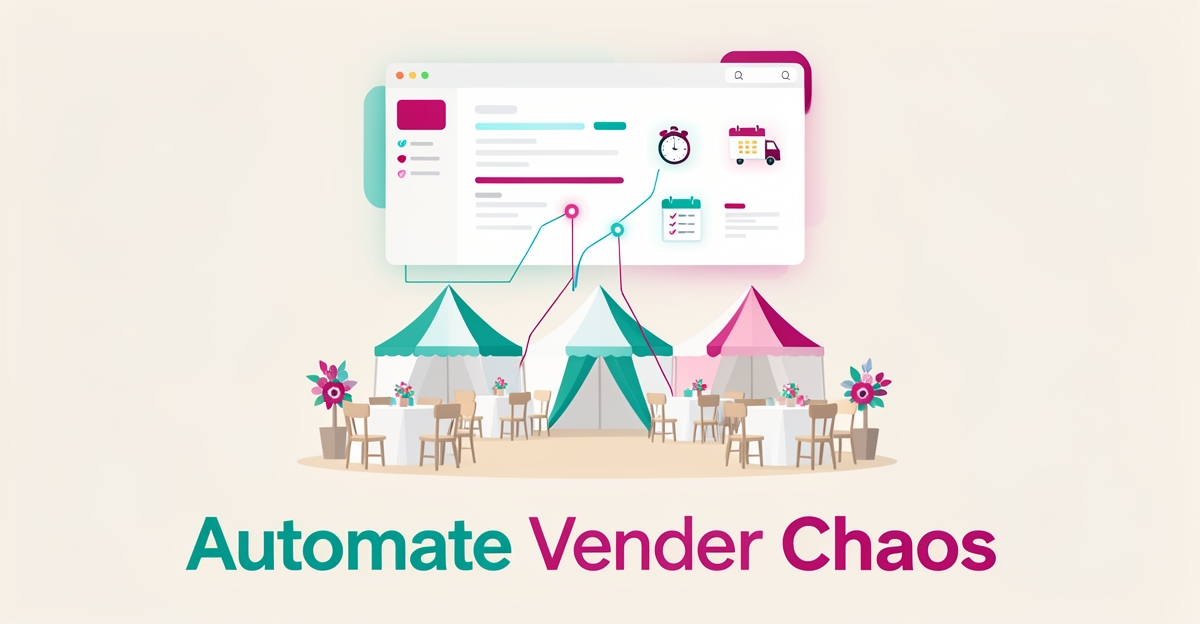
AI for Vendor Management: How Event Planners Can Automate Communication with Suppliers
Key Facts
- A large share of vendor communication is repetitive, delivery times, setup requirements, and invoice status checks consume planner time without adding strategic value
- Most routine vendor inquiries follow predictable patterns and can be handled automatically with AI, reducing manual follow-up work
- AI-powered systems routinely resolve a majority of routine support-style inquiries without human intervention, a pattern that carries over to vendor communication
- Automating routine vendor confirmations and reminders frees planners to focus on creative event design and client engagement
- AI integration with vendor portals and internal calendars ensures real-time visibility and reduces miscommunication
Hire a team member that works 24/7 — for less than a part-time wage.
AI receptionists, SDRs, dispatchers and 99+ roles. Trained on your business, fully managed.
Not sure where to start? Ask our AI planner
The Cost of Manual Vendor Coordination in Event Planning
Event planning hinges on seamless vendor coordination, yet manual processes often introduce avoidable friction. Missed reminders, delayed deliveries, and miscommunication can derail timelines and inflate costs, turning meticulously planned events into logistical headaches. These pain points are not just inconvenient, they directly impact attendee experience and vendor relationships.
In most service operations, a large share of routine inquiries are repetitive, and in vendor management, this translates to frequent questions about delivery times, setup requirements, or invoice status that consume planner time without adding strategic value. When teams spend hours chasing updates or re-sending information, they lose bandwidth for creative problem-solving and client engagement.
Because most of these routine vendor communications, such as sending delivery reminders, confirming setup windows, or flagging potential delays, follow predictable patterns, they are prime candidates for automation. Without such systems, planners rely on scattered emails, spreadsheets, and memory, increasing the risk of oversight, especially during high-pressure event weeks.
- Missed delivery confirmations leading to last-minute scrambles
- Inconsistent follow-ups causing vendor frustration
- Manual tracking errors resulting in budget overruns
- Delayed responses slowing down approval chains
- Lack of real-time visibility into supplier timelines
These inefficiencies compound when managing multiple vendors across catering, AV, décor, and logistics, each with their own communication preferences and response patterns. AIQ Labs helps event planners replace this fragmentation with intelligent automation that integrates vendor portals, internal calendars, and task tracking into a unified workflow. If vendor coordination is the workflow costing you the most hours, an AI Workflow Build rebuilds it end to end at a fixed price. By automating routine touchpoints, planners gain back time to focus on experience design and client satisfaction, while ensuring suppliers stay informed and accountable. The result is fewer surprises, smoother execution, and events that run on schedule, not despite the planning process, but because of it.
How AI Automates Supplier Communication and Workflow Tracking
Every event planner knows the panic of a vendor who "never got the email" three days before the big day. AI removes that panic by turning supplier communication from a manual juggling act into an automated, self-monitoring system.
The core workflow breaks down into four automated functions: outreach, reminders, delivery tracking, and delay flagging. AI agents send vendor confirmations, schedule follow-up reminders based on event timelines, monitor delivery statuses, and alert planners the moment something slips. In comparable service-automation settings, AI-powered systems routinely resolve a majority of routine inquiries without human intervention, and most routine vendor communication fits that profile.
For event planners, that translates directly to vendor management. Instead of chasing florists, caterers, and AV teams by phone, an AI system:
- Sends automated vendor outreach and confirmations tied to each event's timeline
- Schedules and dispatches reminders for contracts, deposits, and delivery windows
- Tracks delivery confirmations and updates status in real time
- Flags delays automatically so planners can act before they become crises
This works because AI improves information flow and decision-making across supply chains, and vendor management for events is fundamentally a supply chain problem. When supplier data flows into a single system, miscommunication drops and every stakeholder sees the same picture.
Implementation matters as much as the technology. AIQ Labs builds production-ready systems that integrate directly with vendor portals and internal calendars, so reminders, confirmations, and delay alerts appear where planners already work, no new dashboard to babysit. The approach mirrors a broader principle of AI transformation: the hard part is mapping how people actually work and integrating the system into existing workflows, not picking a model.
The payoff is reclaimed time. Most follow-ups, confirmations, and status checks in vendor communication are routine and pattern-based. Automating them frees planners to focus on the creative and relationship-driven work that actually makes events succeed, while the system quietly keeps every supplier on schedule.
Implementing AI Vendor Management: From Discovery to Deployment
Most AI projects fail not because the technology doesn't work, but because teams skip the unglamorous groundwork that makes automation stick. In practice, only a small fraction of the work of making a process AI-native involves AI itself, the rest is the harder, more human work of preparation.
For event planners, that preparation starts with identifying the right bottleneck. Look for the manual process consuming the most hours: chasing caterers for confirmations, re-sending load-in schedules, or fielding the same vendor questions repeatedly. This matters because most routine vendor communication follows patterns an AI agent can learn.
Once you've pinpointed the problem, map how your team actually works today. Document every touchpoint: which vendors get contacted, through which channels, at what stage of the event timeline. Collect real samples, past email threads, delivery schedules, and the edge cases that trip up coordinators, because this data becomes the training ground for your AI system.
From there, the path to deployment follows a disciplined sequence:
- Build a prototype that handles one workflow, like automated reminder sequences for a single vendor category
- Test and iterate internally before expanding from "single player" to full multi-vendor deployment
- Integrate with existing systems, vendor portals, internal calendars, and communication platforms, so the AI works where your team already does
- Train your team with hands-on sessions and clear performance goals to build confidence in the new workflow
Integration is where most DIY attempts stall. An AI agent that can't sync with your calendar or flag a delayed shipment inside your project management tool creates more work, not less. This is why AIQ Labs structures implementations in phases, a discovery and architecture stage, followed by development, testing, and deployment, so each integration is validated before the system goes live. You can start monthly, build in milestones, or own the system outright, whichever fits how you want to invest. The payoff is substantial: most routine vendor inquiries can be handled automatically, freeing your coordinators for the judgment calls that actually require them.
The goal isn't to remove humans from vendor relationships, it's to let AI absorb the repetitive coordination so your team can focus on negotiation, problem-solving, and the creative work that makes events memorable. Start with one workflow, prove the value, then scale from there. If you're ready to see whether your vendor coordination is a fit, the two-minute Fit Check is the fastest starting point.
Still paying for 10+ subscriptions that don’t talk to each other?
We build custom AI systems you own outright. No vendor lock-in. Full control.
Not sure where to start? Ask our AI planner
Frequently Asked Questions
How much of our vendor communication can actually be automated with AI?
Will AI replace the personal relationships we have with our vendors?
What kind of results can we expect from AI-powered vendor management?
How long does it take to implement an AI vendor management system?
What if the AI system doesn't work with our existing vendor portals and calendars?
How do we know which vendor processes to automate first?
Make AI your competitive advantage — not just another tool.
Strategy, implementation and ongoing optimization. One partner, end to end.
Not sure where to start? Ask our AI planner