AI for Waste Classification: How Debris Removal Can Automatically Sort Materials
Key Facts
- AI deep learning models like CNNs and Vision Transformers can match or exceed human accuracy in identifying and classifying waste materials, according to published industry research.
- Logistics and warehouse automation adoption has accelerated sharply since 2019, with robot sales growing several-fold over that period.
- Modern sorting robots typically deliver payback periods under 24 months in warehouse automation deployments.
- Only a small share of facilities currently use advanced automation technologies, most operations still rely on manual sorting.
- A meaningful share of manufacturing, transportation and logistics leaders plan fuller automation by 2028, raising the competitive bar.
Hire a team member that works 24/7 — for less than a part-time wage.
AI receptionists, SDRs, dispatchers and 99+ roles. Trained on your business, fully managed.
Not sure where to start? Ask our AI planner
The Hidden Costs of Manual Waste Sorting
Debris removal businesses face mounting pressure as waste volumes surge, yet many still rely on manual sorting methods that struggle to keep pace. This traditional approach creates bottlenecks, increases error rates, and strains operational budgets at a time when efficiency is critical.
Labor shortages are compounding these challenges, with fewer workers available for the physically demanding and repetitive task of waste classification. As logistics and warehouse automation adoption has accelerated sharply since 2019, debris removal companies that fail to automate risk falling behind competitors adopting advanced sorting technologies. Manual processes also suffer from inconsistent accuracy, where human fatigue and distraction lead to misclassification, contaminating recyclable streams and reducing resource recovery rates.
These inefficiencies translate directly into higher costs: labor expenses rise as companies pay premiums to attract scarce workers, while processing delays increase overhead and limit throughput. Without intervention, the hidden costs of manual sorting will continue to erode profitability, especially as global waste management demands grow. AIQ Labs helps debris removal businesses address these pressures by building custom AI systems that analyze waste streams from photos or operational logs, enabling accurate, automated classification that reduces reliance on manual labor and supports compliance with environmental regulations. As automation adoption accelerates across logistics and materials handling, debris removal operations that embrace AI-driven sorting position themselves to scale efficiently amid rising waste volumes.
How AI-Powered Classification Actually Works
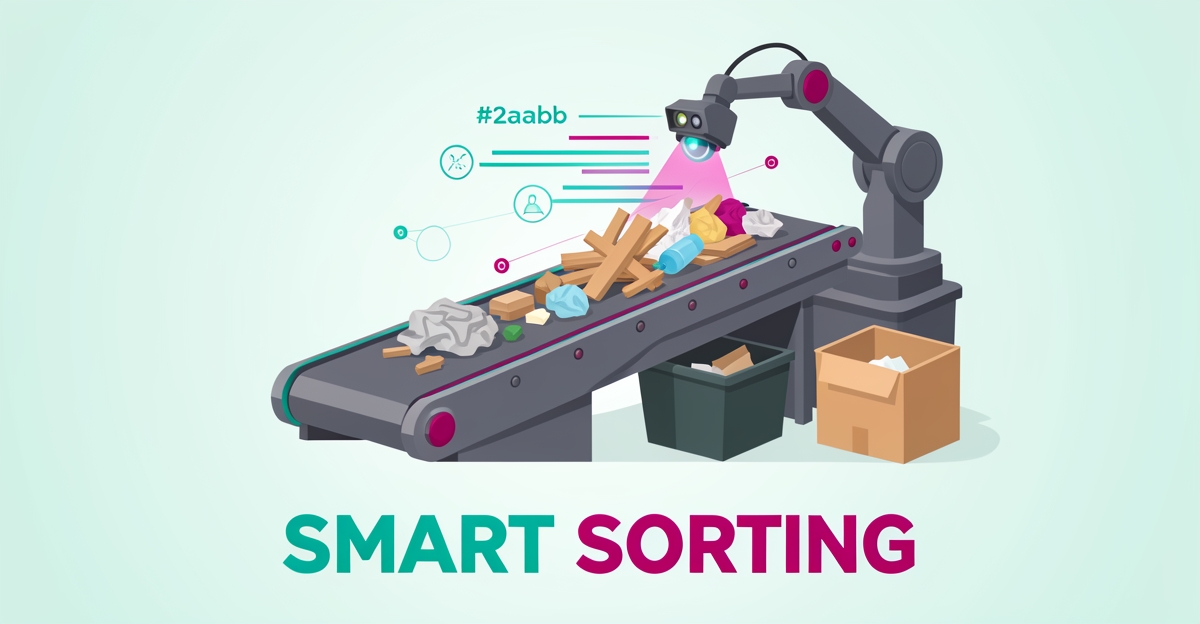
AI-powered waste classification transforms debris removal by combining computer vision with robotic precision to sort materials automatically. At the core of this technology are deep learning models like Convolutional Neural Networks (CNNs) and Vision Transformers (ViT), which analyze images of waste streams to identify materials such as plastics, metals, and organics with high accuracy. These systems process visual data in real time, enabling rapid decision-making that surpasses the consistency and speed of manual sorting. Published industry research indicates that AI algorithms can match or exceed human capabilities in identifying and classifying various waste materials, directly improving resource recovery rates.
Autonomous Mobile Robots (AMRs) bring this intelligence into physical action, navigating facility floors to pick and place sorted items into correct bins or conveyors. Equipped with AI-driven navigation and object manipulation, AMRs operate continuously without fatigue, significantly increasing throughput while reducing reliance on manual labor. Warehouse automation data suggests modern AMRs typically achieve payback periods under 24 months, making them economically viable for debris removal operations seeking to scale efficiency. Their ability to adapt to changing layouts and workflows supports seamless integration into existing facilities.
Together, these technologies create a closed-loop system where vision guides action and action refines vision through continuous learning. AI models are retrained on new waste stream data, improving adaptability to materials like contaminated packaging or mixed construction debris. The multi-year surge in logistics robot sales reflects growing confidence in automated solutions across industries. For businesses exploring AI-driven process automation, this same foundation of vision, reasoning, and action applies beyond waste, enabling smarter handling of documents, inventory, and operational workflows where precision and speed are critical. AIQ Labs applies this integrated approach to build custom systems that turn complex sorting challenges into streamlined, owned AI capabilities.
The Business Case: ROI and Market Momentum
The financial case for automated waste classification has moved from pilot curiosity to board-level priority. Debris removal operators are facing rising labor pressure and stricter compliance while material recovery value climbs.
The market momentum is clear. AI-driven waste classification and broader AI waste management solutions have grown rapidly as of late 2026, driven by e-commerce packaging volumes and sustainability mandates. Analyst forecasts consistently project strong double-digit annual growth for AI applications across the waste and recycling sector through the end of the decade.
Automation economics reinforce the decision. Modern autonomous mobile robots typically deliver payback periods under 24 months in warehouse automation deployments. Those returns come from faster throughput, higher sorting accuracy, and reduced reliance on manual labor.
Competitive pressure is accelerating adoption. A meaningful share of manufacturing, transportation and logistics leaders plan fuller automation by 2028. Operators that delay face higher unit costs and missed recovery revenue as competitors lock in efficiency gains.
For debris removal, the business case stacks up across operations:
- Labor cost relief from AI-powered classification that reduces manual sorting hours
- Higher material recovery rates through consistent, repeatable identification of recyclables and hazardous streams
- Scalable throughput without proportional headcount increases as volume fluctuates
- Compliance defensibility via auditable logs of material types and disposal pathways
AIQ Labs builds custom AI systems that analyze waste types from photos or logs and automatically classify materials for proper disposal or recycling, supporting environmental compliance and reducing sorting labor costs. For operations that want one workflow rebuilt end to end at a fixed price, our AI Workflow Builds are a practical entry point; companies wanting a connected layer across the whole operation can explore AI Operating Systems.
Companies that move now capture both cost and revenue upside. Faster sorting unlocks more tons processed per shift, while improved accuracy increases resale value of recovered materials and reduces contamination penalties.
Implementation Pathways for Debris Removal Operations
Debris removal operations face growing pressure to sort materials efficiently while managing labor shortages and rising disposal costs. AI-powered classification systems offer a practical path forward by automating identification of waste types from images or sensor data, enabling faster, more accurate sorting without disrupting existing workflows. Companies can start small, deploying AI to analyze photos from current operations, and scale toward full robotic sorting as needs evolve.
Implementation pathways vary based on operational maturity and budget constraints. Robotics-as-a-Service models eliminate upfront capital expenses by providing AI-equipped sorting robots on a subscription basis, shifting maintenance and upgrade responsibilities to the provider. For organizations preferring gradual adoption, phased integration begins with AI-assisted manual sorting, using computer vision to flag materials on existing conveyor belts, before introducing autonomous mobile robots for physical separation. This phased approach mirrors how AIQ Labs structures engagements: build in milestones, prove value at each phase, and own the system outright.
Successful deployment hinges on three core elements: quality training data, seamless system integration, and compliance alignment. AI models require large, labeled datasets of local debris types to achieve high classification accuracy, particularly for heterogeneous construction and demolition waste. Integration with weigh scales, GPS tracking, and disposal logistics platforms ensures sorted materials trigger correct downstream actions, such as routing concrete to recycling facilities or hazardous waste to licensed handlers. Custom AI solutions can be tailored to meet specific regulatory requirements, like LEED certification tracking or landfill diversion reporting, by embedding compliance rules directly into classification logic. With only a small share of facilities currently using advanced automation technologies, debris removal operations that implement AI classification now position themselves to capture efficiency gains while reducing reliance on manual sorting labor. To explore how AIQ Labs can design a custom waste classification system aligned with your operational workflows and compliance needs, start with the 2-minute Fit Check and then book a free 30-minute strategy call to assess your readiness and identify high-impact automation opportunities.
Still paying for 10+ subscriptions that don’t talk to each other?
We build custom AI systems you own outright. No vendor lock-in. Full control.
Not sure where to start? Ask our AI planner
Frequently Asked Questions
How accurate is AI at sorting waste compared to manual sorting?
What’s the ROI for automating waste classification with robots?
Is the AI waste classification market actually growing?
Do I need to buy robots upfront to get started?
How fast is logistics automation adoption in waste-related operations?
What data does AI need to classify debris accurately?
Turning Waste Sorting into a Strategic Advantage
Debris removal operations face mounting pressure from labor shortages, rising waste volumes, and stricter compliance demands, challenges that manual sorting can no longer sustain. AI-powered classification offers a practical path forward, combining computer vision and robotic automation to deliver faster, more accurate sorting with typical payback periods under 24 months. By reducing reliance on manual labor, improving material recovery rates, and enabling scalable throughput, businesses can turn a costly bottleneck into a source of operational resilience and revenue potential. The market is moving fast, and early adopters gain a clear edge in efficiency and compliance. To explore how AIQ Labs can design a custom waste classification system tailored to your workflows and compliance needs, start with the 2-minute Fit Check and book a free 30-minute strategy call. Questions first? Reach us at [email protected].
Make AI your competitive advantage — not just another tool.
Strategy, implementation and ongoing optimization. One partner, end to end.
Not sure where to start? Ask our AI planner