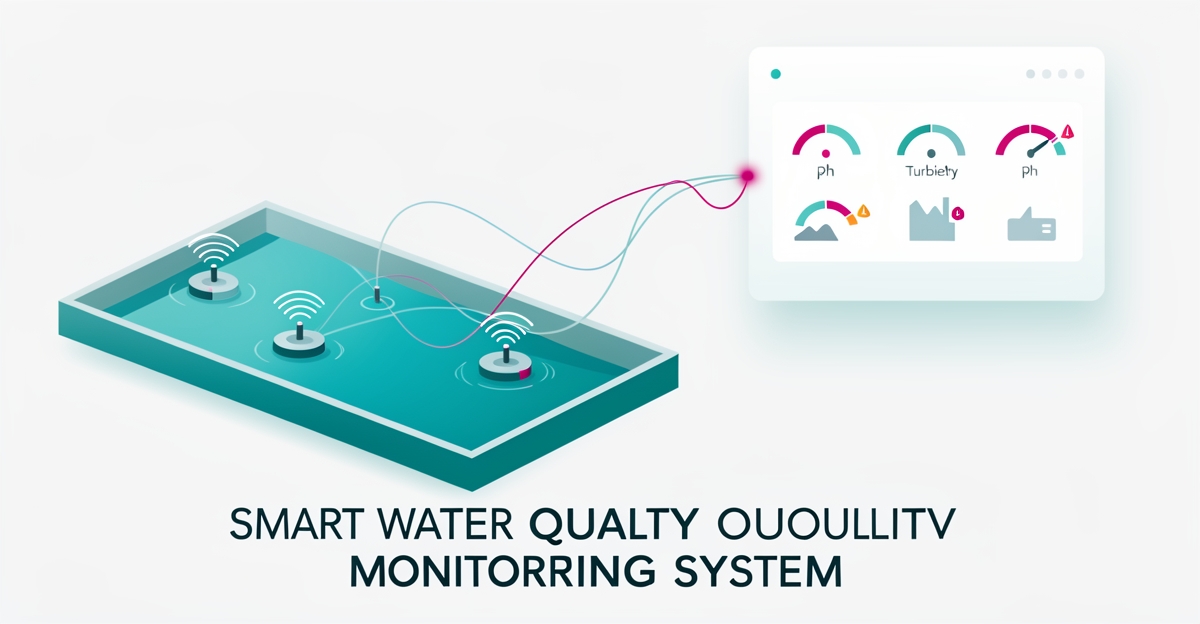
AI for Water Quality Monitoring: Real-Time Alerts and Automated Alerts
Key Facts
- AI-powered monitoring detects subtle deviations in pH, turbidity, and flow rates before they escalate into crises.
- Real-time AI alerts can reduce mean time to response from hours to minutes, helping prevent contamination events.
- AI assurance requires continuous monitoring of data quality, model performance, and compliance to maintain trust.
- Envirosuite uses AI-driven environmental modeling to predict water quality risks from sensor, flow, and weather data.
- Hach WIMS pairs robust sensor hardware with analytics and reporting tools to meet stringent discharge and drinking water standards.
- Google Earth Engine leverages satellite imagery to map turbidity, algae blooms, and land-runoff risk across watersheds.
- Xylem delivers integrated sensor stations with cloud connectivity, enabling continuous monitoring of pH and dissolved oxygen.
Hire a team member that works 24/7 — for less than a part-time wage.
AI receptionists, SDRs, dispatchers and 99+ roles. Trained on your business, fully managed.
Not sure where to start? Ask our AI planner
The High Cost of Manual Water Quality Management
Manual water quality management creates significant operational and regulatory risks for treatment facilities. Relying on periodic sampling and reactive monitoring means deviations in critical parameters like pH, turbidity, or flow rates often go undetected until they escalate into system failures or public health incidents. This delay in detection increases the likelihood of non-compliance with environmental regulations, which can result in costly fines and reputational damage.
The hidden costs of manual processes extend beyond immediate response failures. Facilities incur labor-intensive sampling schedules, transportation delays for lab analysis, and human error in data recording, all of which compromise data integrity. Without continuous visibility, operators cannot identify subtle trends that precede contamination events, such as gradual turbidity spikes or pH drifts that indicate upstream pollution or treatment inefficiencies. These undetected deviations can accumulate over time, leading to premature equipment wear, chemical overdose, or inadequate disinfection.
AIQ Labs recognizes that real-time monitoring transforms this reactive posture into proactive risk management. By integrating AI with IoT sensor networks, facilities gain instant visibility into water quality parameters, enabling immediate alerts when values exceed safe thresholds. This capability reduces dependence on manual interventions and supports faster, more informed decision-making during critical events. Continuous monitoring also strengthens compliance posture by generating auditable data streams that demonstrate consistent adherence to regulatory standards. For water treatment operations seeking to minimize risk and improve operational resilience, shifting from manual sampling to AI-driven real-time alerts is no longer optional, it is essential.
How AI Detects Deviations and Triggers Instant Alerts
AIQ Labs designs real-time AI monitoring systems that continuously analyze sensor data streams to detect subtle deviations in water quality parameters before they escalate into operational crises. By establishing dynamic baseline patterns for pH, turbidity, and flow rates, machine learning models identify anomalies in real time and trigger instant alerts to operators, enabling rapid intervention and preventing minor issues from becoming costly emergencies. These systems leverage multi-agent architectures to process high-frequency sensor inputs, distinguishing between normal fluctuations and genuine threats through adaptive learning from historical and contextual data.
AI-powered monitoring goes beyond simple threshold-based alerts by recognizing complex patterns that precede contamination events or equipment failure. For instance, gradual turbidity increases combined with unexpected flow disruptions may indicate sediment intrusion or biofilm buildup, conditions that traditional monitoring might overlook until regulatory limits are exceeded. AI systems detect these precursors early, allowing maintenance teams to address root causes during scheduled downtime rather than responding to unplanned outages. This predictive capability is especially valuable in regulated environments where compliance depends on consistent water quality, and where delayed responses can trigger fines or process shutdowns.
The technical foundation of these alert systems relies on continuous model validation and drift detection to maintain accuracy amid changing environmental conditions. AIQ Labs implements assurance practices that monitor data quality, model performance, and compliance adherence, ensuring alerts remain trustworthy over time. By documenting model choices and maintaining transparency in decision logic, operators gain confidence in automated recommendations, reducing alert fatigue and improving response reliability. This approach aligns with industry best practices for AI assurance, where ongoing checks for performance drift and data integrity are essential for real-world deployment.
Real-time anomaly detection transforms water quality management from reactive to preventive, shifting focus from incident recovery to continuous operational integrity. When AI systems flag deviations in pH levels outside established norms, such as sudden acidification from chemical leaks or alkaline spikes from cleaning agent overflow, operators receive immediate, contextual alerts with recommended actions. Similarly, unexpected flow rate drops can signal pump failures or pipe blockages, while sustained turbidity rises may point to source water contamination or filtration inefficiencies. Early detection enables targeted interventions that protect both public health and infrastructure longevity.
Automated alert triggering ensures that critical information reaches the right personnel at the right time, eliminating delays caused by manual data review or shift handover gaps. Alerts are routed through integrated communication channels, SMS, email, or platform notifications, based on severity and operational protocols, with escalation paths built in for unresponsive scenarios. This seamless flow of information can reduce mean time to response (MTTR) significantly, turning what could be an hours-long diagnostic process into a minutes-long corrective action. For water treatment facilities, this speed directly translates into avoided contamination events, reduced chemical waste, and sustained compliance with discharge standards.
By embedding AI assurance into the monitoring lifecycle, validating data inputs, auditing model outputs, and refining alert thresholds based on operational feedback, AIQ Labs ensures that automated systems remain accurate, fair, and secure. This disciplined approach supports long-term trust in AI-driven decisions, allowing facilities to scale monitoring capabilities without sacrificing reliability. As water quality challenges grow more complex due to climate variability and aging infrastructure, AI-powered anomaly detection provides the vigilance and speed needed to protect resources and maintain service continuity.
Six Leading AI Tools for Water Quality Monitoring
Choosing the right AI tool for water quality monitoring depends on your specific operational needs and data sources. Envirosuite excels at operational forecasting by using AI-driven environmental modeling to predict water quality risks from sensor, flow, and weather data, making it ideal for industrial facilities seeking proactive alerts. Hach WIMS is purpose-built for regulatory compliance, pairing robust sensor hardware with analytics and reporting tools to help utilities and agencies meet stringent discharge and drinking water standards through trend analysis and audit-ready documentation. For large-area monitoring, Google Earth Engine leverages satellite imagery to map turbidity, algae blooms, and land-runoff risk across watersheds, offering powerful change detection capabilities for remote sensing teams and environmental agencies. Aquatic Informatics focuses on data integrity, providing robust time-series management and QA/QC workflows that ensure high-quality lab and field data for utilities and regulators relying on accurate historical trends. Xylem delivers integrated sensor stations with cloud connectivity, enabling continuous monitoring of parameters like pH and dissolved oxygen while supporting add-on analytics and machine learning stacks for scalable deployments. Campbell Scientific specializes in custom, rugged telemetry systems designed for harsh environments, offering flexible sensor integration that works with external ML platforms for tailored monitoring solutions in remote or extreme conditions. Each platform addresses a distinct facet of water quality intelligence, from prediction and compliance to mapping and data management, allowing organizations to select tools aligned with their monitoring goals, data types, and operational context. AIQ Labs supports these efforts by building custom AI systems that integrate with such platforms to deliver real-time visibility and automated response capabilities for water treatment operations. To explore how AI-driven monitoring can fit your specific workflow, start the Fit Check at https://aiqlabs.ai/apply, then schedule a free 30-minute strategy call at https://aiqlabs.ai/book to identify high-ROI automation opportunities.
Building Accountable AI Systems: Assurance and Compliance
Building accountable AI systems for water quality monitoring requires robust assurance practices to ensure safety, reliability, and public trust. As AI tools like Envirosuite and Hach WIMS increasingly support real-time detection of deviations in pH, turbidity, or flow rates, governance must evolve alongside technical capability. Across the industry, as of late 2026, there is growing emphasis on applying AI assurance in real-world projects, particularly where decisions impact environmental and public health outcomes.
Ownership and accountability must be clearly defined from the outset, with specific roles assigned for model oversight, data stewardship, and incident response. Continuous monitoring of data quality and performance drift is essential, as sensor degradation or changing environmental conditions can silently erode model accuracy over time. Documenting model decisions, assumptions, and limitations supports auditability and enables teams to trace how alerts are generated, especially when automated triggers initiate operational responses.
Transparency and explainability are not optional; stakeholders including regulators, plant operators, and communities need to understand why an AI system flagged a potential issue. This includes making model logic interpretable and ensuring that alerts are accompanied by contextual data such as sensor confidence levels and historical baselines. Compliance with regional water quality standards and reporting requirements must be embedded into the AI lifecycle, with regular validation against lab-verified measurements and regulatory benchmarks.
For organizations deploying AI in water treatment, establishing these assurance practices transforms advanced analytics into a trusted operational asset. AIQ Labs supports this through governance-focused AI transformation consulting, helping clients build systems where innovation is balanced with rigor, accountability, and long-term reliability. By aligning technical deployment with assurance frameworks, utilities and industrial operators can confidently rely on AI to protect water resources while meeting evolving compliance demands.
From Sensors to Action: Implementing Real-Time Monitoring
Deploying AI-powered water quality monitoring starts with assessing your existing IoT sensor infrastructure to ensure compatibility and data readiness. Many facilities already collect pH, turbidity, and flow rate data through systems like Hach WIMS or Campbell Scientific deployments, which can be integrated with AI analytics layers to enable predictive insights and automated responses. Platforms pairing robust sensor hardware with analytics, such as Xylem's continuous monitoring stations, typically deliver the strongest operational impact when enhanced with AI-driven alerting.
Establishing clear alert thresholds and escalation protocols is critical for turning data into action. AI systems analyze historical baselines and real-time trends to detect subtle deviations, like a sudden pH shift or turbidity spike, before they violate regulatory limits, triggering tiered notifications to operators, supervisors, or automated control systems. This approach aligns with AI assurance principles, requiring continuous monitoring of data quality and model performance to maintain reliability and compliance over time. Sound assurance frameworks emphasize documenting decision logic and validating outcomes to ensure transparency in automated responses.
Connecting monitoring outputs to operational workflows means linking alert systems to SCADA, maintenance ticketing, or chemical dosing controls so that responses happen instantly, whether that's adjusting pump speeds, isolating affected zones, or dispatching maintenance teams. AIQ Labs builds custom AI systems that integrate directly with IoT sensors and existing plant infrastructure, providing instant visibility and automated response capabilities without requiring a full rip-and-replace of current technology. For water treatment operations evaluating options, the choice between custom-built solutions and commercial platforms depends on specific needs: custom systems offer tailored workflow integration and full ownership, while commercial tools like Envirosuite or Aquatic Informatics provide ready-made analytics but may limit flexibility in alert logic or data handling. Rugged telemetry and cloud connectivity, features offered by vendors like Campbell Scientific and Xylem, form a reliable foundation for AI enhancement regardless of the chosen path. If your facility has one monitoring workflow that causes the most cost and risk, a targeted AI Workflow Build can rebuild it in phases at a fixed price; for operations ready to connect sensors, alerts, and compliance reporting into one layer they own outright, an AI Operating System is the longer-term path.
Still paying for 10+ subscriptions that don’t talk to each other?
We build custom AI systems you own outright. No vendor lock-in. Full control.
Not sure where to start? Ask our AI planner
Frequently Asked Questions
How does AI improve water quality monitoring compared to manual sampling?
What are the risks of relying on manual water quality management?
How does AI detect early signs of water quality issues before they become critical?
What is AI assurance and why is it important in water quality monitoring?
Which AI tools are best for regulatory compliance in water treatment?
How do AI-powered alert systems reduce response time in water treatment facilities?
From Alerts to Action: Building Water Resilience with AI
AI-powered real-time water quality monitoring transforms reactive maintenance into proactive risk management by detecting subtle deviations in pH, turbidity, and flow rates before they escalate into compliance failures or infrastructure damage. By integrating AI assurance practices with IoT sensor networks, facilities gain trusted, automated alerts that reduce mean time to response, prevent chemical waste, and ensure continuous regulatory adherence, turning data into decisive action. For water treatment operations ready to move beyond manual sampling, the path forward begins with assessing your current monitoring gaps and identifying where AI-driven alerting delivers the highest return. Start the Fit Check at https://aiqlabs.ai/apply to explore your automation opportunities, then schedule a free 30-minute strategy call at https://aiqlabs.ai/book to map a clear, no-obligation implementation plan tailored to your facility's needs.
Make AI your competitive advantage — not just another tool.
Strategy, implementation and ongoing optimization. One partner, end to end.
Not sure where to start? Ask our AI planner