AI-Powered Batch Labeling: How to Cut Labeling Errors in Food Co-Packing
Key Facts
- Labeling errors are a leading trigger of food recalls, and a single incident can cost far more than the labeling itself, recall logistics, regulatory penalties, rework and lost retailer trust all add up.
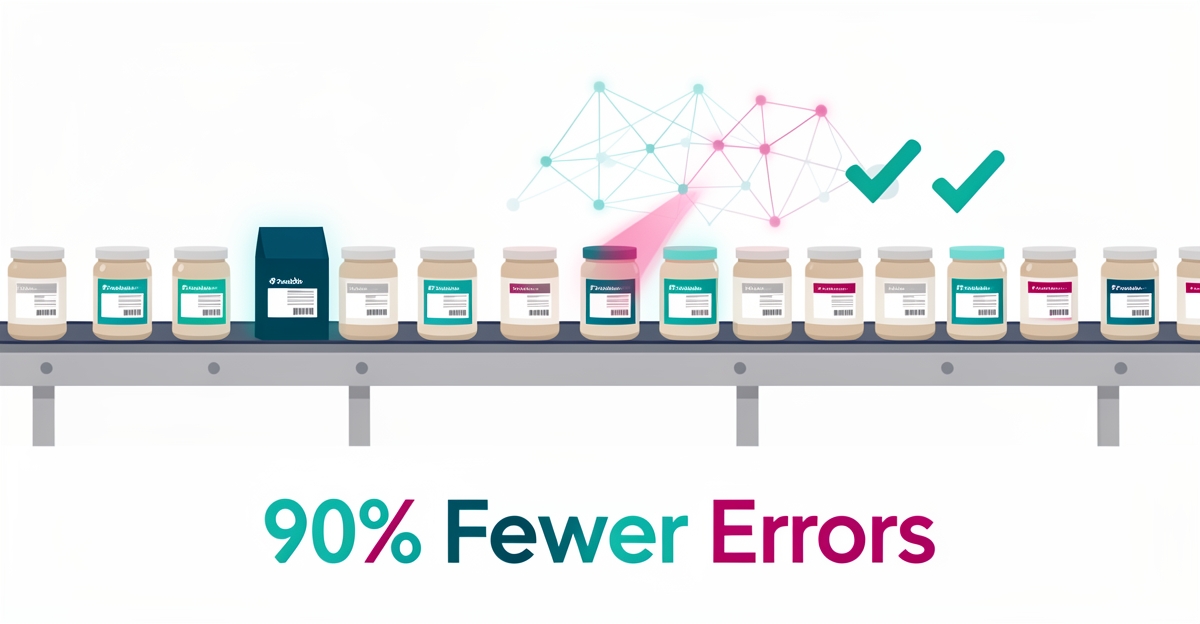
- AI-powered labeling automation is widely reported to cut labeling errors dramatically, often by as much as 90%, by removing manual transcription from the process.
- Automating label data capture and validation also reduces labeling costs, with some providers reporting savings of up to 50%.
- AI adoption in manufacturing and industrial operations has grown steadily, with a substantial share of industrial companies now using AI somewhere in their operations as of the mid-2020s.
- AIQ Labs builds labeling automation that integrates with ERP and MES systems for real-time batch validation, delivered through fixed-price AI Workflow Builds or a full AI Operating System.
- AI Employees for labeling and compliance work run around the clock at roughly 80% less cost than a human hire, with no fatigue-related errors.
Hire a team member that works 24/7 — for less than a part-time wage.
AI receptionists, SDRs, dispatchers and 99+ roles. Trained on your business, fully managed.
Not sure where to start? Ask our AI planner
The Hidden Cost of Labeling Errors in Food Co-Packing
A single mislabeled product can trigger a cascade of costly consequences in food co-packing operations. Beyond immediate waste, labeling errors risk consumer safety, brand reputation, and significant financial penalties. Industry analyses typically put the full cost of a labeling incident in the food industry at roughly $10,000 or more once recall logistics, regulatory fines, and lost sales are counted, and severe cases run far higher. These figures underscore why precision in labeling isn't just a quality control issue, it's a critical business safeguard.
Manual labeling processes remain a primary vulnerability in many co-packing facilities. Human fatigue, high-volume pressures, and inconsistent training contribute to mistakes that slip through visual checks. When errors reach distribution, they can initiate voluntary recalls or mandatory regulatory actions, amplifying costs and eroding trust. The financial impact extends beyond direct expenses to include long-term damage to retailer relationships and consumer confidence.
AI-powered batch labeling systems directly address these risks by automating data capture and label generation for ingredients, allergens, expiry dates, and batch numbers. By eliminating manual transcription and standardizing validation rules, these solutions are reported to reduce labeling errors by as much as 90%. That improvement not only lowers the frequency of costly incidents but also strengthens compliance with food safety regulations, creating a more resilient and trustworthy production workflow. AIQ Labs builds labeling and document automation for food safety compliance, typically as a fixed-price AI Workflow Build, helping co-packers turn labeling from a liability into a controlled, auditable process.
How AI-Powered Labeling Reduces Errors
In food co-packing, a single labeling error can trigger costly recalls and erode consumer trust. AI-powered batch labeling systems are changing that reality by automating the extraction and application of critical data like ingredients, expiry dates, and batch numbers with exceptional precision. Providers of these solutions report error reductions of up to 90% on high-speed production lines, largely by removing manual data entry from the equation.
By minimizing manual data entry and cross-referencing production inputs in real time, AI ensures that every label reflects the correct formulation and compliance details. This level of automation not only prevents mislabeling but also supports traceability, a key requirement in food safety regulations. AIQ Labs builds labeling automation that integrates directly with existing production workflows, enabling food co-packers to maintain compliance without slowing operations. You can start monthly, build in milestones, or own the system outright, see pricing for how the payment models work.
The financial impact of labeling errors is significant, with a typical incident costing around $10,000 in waste, rework, and potential regulatory penalties. AI-driven labeling helps mitigate these risks by delivering consistent, audit-ready output. Automation vendors also report labeling cost reductions of up to 50%, offering both safety and economic benefits.
- Automated extraction of ingredient lists, expiry dates, and batch codes
- Real-time validation against production batch records
- Reduced reliance on manual label application and verification
- Seamless integration with existing ERP and MES systems
- Continuous learning to adapt to new product formulations
For food co-packers aiming to scale safely and efficiently, AI-powered labeling represents a strategic upgrade, not just in error reduction, but in operational resilience. By embedding intelligence into the labeling process, businesses can protect their brand, meet regulatory demands, and optimize throughput with confidence.
Implementing AI Labeling: From Assessment to Ongoing Optimization
Implementing AI labeling in food co-packing requires a structured approach to ensure seamless integration and sustained performance. Begin by assessing your current labeling workflow to identify pain points such as manual data entry delays or recurring inaccuracies in batch numbers and expiry dates. This evaluation helps pinpoint where AI can deliver the greatest impact.
Next, choose an approach that aligns with your operational needs and compliance requirements. AIQ Labs offers three entry points: AI Employees for managed labeling and compliance staff, AI Workflow Builds to rebuild the one labeling workflow that costs you the most at a fixed price, and AI Operating Systems if you want labeling connected to a single operating layer across the business. Systems are built in phases and owned outright, with deep integration into existing tools like inventory or ERP platforms. Once selected, deploy the system with targeted staff training, focusing on how automated workflows handle real-time batch scanning, label generation, and exception handling, so teams can confidently oversee and validate outputs.
Finally, establish ongoing monitoring to track performance metrics such as error reduction rates and processing speed. Continuous optimization ensures gains are sustained. Regular reviews allow for adjustments to data inputs, model retraining, or workflow tweaks, maintaining accuracy and supporting long-term food safety compliance.
- Assess current labeling workflows for inefficiencies
- Choose a build approach with full ownership
- Deploy with staff training and real-world testing
- Monitor performance and optimize continuously
Still paying for 10+ subscriptions that don’t talk to each other?
We build custom AI systems you own outright. No vendor lock-in. Full control.
Not sure where to start? Ask our AI planner
Frequently Asked Questions
How much can AI-powered batch labeling actually reduce labeling errors in food co-packing?
What does a labeling mistake cost a co-packer if it gets to distribution?
Can AI labeling help with compliance and traceability, not just accuracy?
Will implementing AI labeling slow down our production line?
Is AI labeling cost-effective for smaller co-packers?
What are the first steps to move from manual labeling to AI-powered batch labeling?
Turning Labeling Precision into Competitive Advantage
AI-powered batch labeling transforms a high-risk, error-prone process into a streamlined, compliant operation, with reported error reductions of up to 90% and labeling cost savings of as much as 50%. By automating data capture and validation for ingredients, allergens, expiry dates, and batch numbers, co-packers not only protect consumers and brand reputation but also build resilience into their production workflows. The shift from manual checks to intelligent automation means fewer recalls, stronger regulatory adherence, and measurable savings that directly impact the bottom line. For food co-packers ready to move beyond reactive fixes, the path forward begins with assessing current workflows and exploring how custom AI labeling can integrate with your existing systems. Start with the free two-minute Fit Check, it leads to a no-obligation 30-minute strategy call. Smarter labeling isn't just about avoiding mistakes; it's about building trust at scale.
Make AI your competitive advantage — not just another tool.
Strategy, implementation and ongoing optimization. One partner, end to end.
Not sure where to start? Ask our AI planner