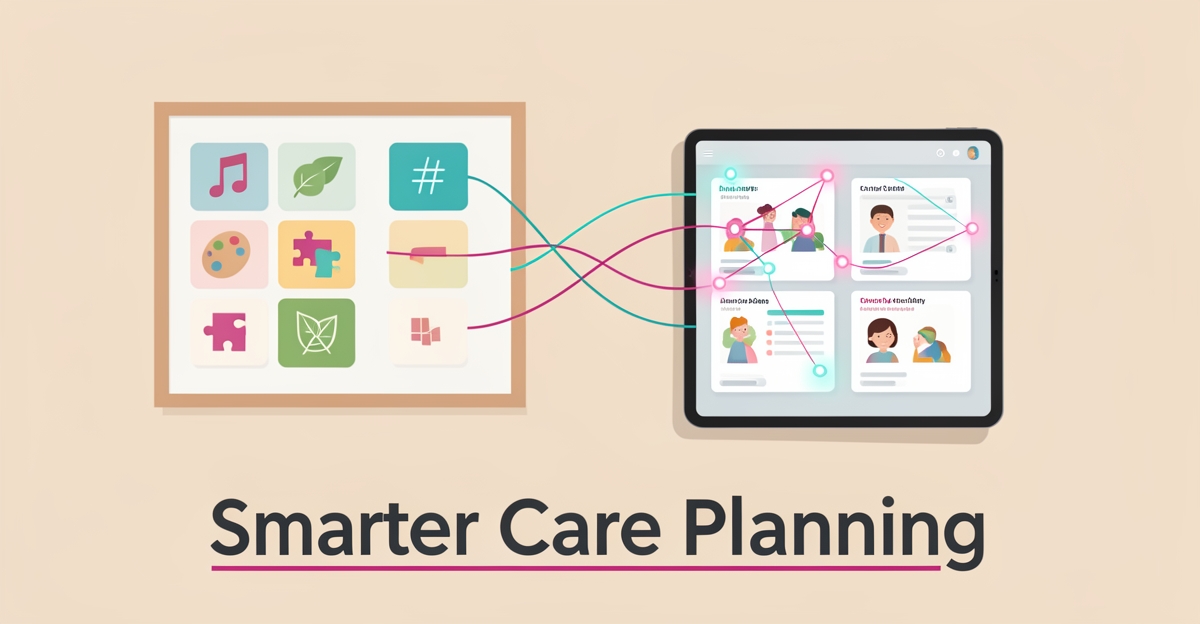
AI-Powered Care Planning: How Day Care Centers Can Personalize Daily Programs
Key Facts
- Industry analyses of childcare operations typically estimate AI systems can reduce administrative labor by 60-75%
- A typical 60-child center commonly spends 15-20 hours weekly on manual administrative tasks, based on operational analyses
- AI-powered systems free staff time for direct child engagement by automating enrollment, reporting, and billing workflows
- Workforce productivity and service quality remain the most commonly cited AI goals across organizations in recent industry surveys
- Comprehensive childcare AI platforms are typically priced per child monthly plus a setup fee; AIQ Labs offers Start Monthly, Build in Milestones, and Own It Outright models
- AI systems improve documentation consistency and enable personalized daily programs by analyzing child engagement patterns over time
Hire a team member that works 24/7 — for less than a part-time wage.
AI receptionists, SDRs, dispatchers and 99+ roles. Trained on your business, fully managed.
Not sure where to start? Ask our AI planner
The Administrative Burden Limiting Personalized Care in Daycare Centers
Ask any daycare director where their day disappears, and the answer is rarely the children, it's the paperwork. In a typical 60-child center, manual administrative processes commonly consume 15-20 hours every week, which adds up to tens of thousands of dollars annually in labor costs for routine tasks alone, according to childcare operations analyses.
That time comes at a direct cost to care quality. Every hour a teacher spends processing enrollment documents, writing daily reports, or reconciling billing is an hour not spent observing a child's developmental patterns or adapting activities to individual needs. Personalization requires attention, and attention requires time.
The burden compounds across several routine workflows:
- Manual enrollment processing that requires staff to extract and re-enter information from paper documents
- Daily report writing for each child, often completed after hours or rushed during nap periods
- Billing and payment reconciliation handled by hand, introducing human error risks that multiply with scale
- Compliance documentation assembled inconsistently, creating gaps that surface during licensing reviews
The consequences extend beyond tired staff. When documentation is inconsistent and observation data lives in paper binders, no one can spot trends, whether a child is disengaging from group activities, regressing in a developmental area, or responding poorly to certain parts of the daily schedule. Manual processes simply cannot identify these patterns at scale, which is precisely what personalized care planning demands.
This is the gap AI-powered systems are designed to close. Industry comparisons of childcare operations typically estimate that modern platforms can reduce administrative labor by 60-75%, freeing staff to redirect that time toward direct child engagement. Beyond automation, these systems actively learn from data over time, predicting staffing needs, identifying children who may benefit from additional developmental support, and flagging potential compliance issues before they become problems.
The broader shift is well underway. Across recent industry surveys, workforce productivity and service quality consistently rank among the top goals organizations pursue with AI, and most respondents report AI is already deployed and delivering value in daily operations, a marked shift from the experimentation phase of just a couple of years ago.
For daycare centers, the opportunity is twofold: reclaim the hours lost to administration and use the resulting data to personalize daily programs around each child's preferences, medical history, and engagement patterns. AIQ Labs builds intelligent systems that support exactly this kind of staff-led personalization, tailoring daily activities, improving satisfaction, and reducing behavioral challenges. The administrative burden, in other words, is not a fixed cost of running a quality center. It is a solvable problem.
How AI Systems Analyze Child Data to Enable Truly Personalized Daily Programming
Every child in a day care center arrives with a unique profile, preferences, sensitivities, medical needs, and developmental patterns that no spreadsheet can fully capture. AI-powered care planning systems change that by analyzing this data continuously to help staff build daily programs that genuinely fit each child.
These systems work by unifying information that typically lives in separate places. Analyses of childcare AI platforms show that AI operating systems integrate enrollment, communication, scheduling, safety protocols, and compliance monitoring into unified platforms, using machine learning to automate routine tasks and surface actionable insights. For care planning specifically, that means pulling together a child's medical history, observed engagement patterns, and family preferences into a single, evolving profile.
The result is a care plan that adapts rather than sits static in a binder. Key capabilities include:
- Intelligent daily reports generated from child observation data, giving parents personalized updates rather than generic summaries
- Predictive scheduling that analyzes historical enrollment patterns and regulatory requirements to match staffing to actual needs
- Automated compliance monitoring that tracks licensing requirements and flags potential issues before they become violations
- Identification of children who may need additional developmental support, based on engagement trends the system detects over time
What separates AI systems from basic childcare software is their ability to learn. Unlike static tools, these platforms actively learn from data to improve accuracy over time, so the more a center uses the system, the better its activity recommendations and staffing predictions become. This matters because a child who consistently disengages during morning group activities but thrives in hands-on sensory play represents a pattern that manual observation logs often miss.
The efficiency gains are substantial. Industry analyses typically find that AI systems can reduce administrative labor by 60-75%, freeing educators from the 15-20 hours a typical 60-child center spends weekly on manual enrollment processing, daily reports, and billing tasks. That recovered time flows directly back into child interaction, which is the entire point of personalization. It also mirrors broader enterprise trends, where productivity and service quality remain the leading reasons organizations invest in AI.
Implementation does require planning. Centers should expect integration complexity that varies with existing tools, staff training of roughly 2-4 weeks, and attention to data quality, the foundation on which these systems depend. But for centers ready to move beyond paper logs, systems like those AIQ Labs builds can support staff in tailoring daily activities to each child, improving satisfaction while reducing the behavioral challenges that come from one-size-fits-all programming.
Implementing AI Care Planning: From Assessment to Sustainable Personalization
A successful AI care planning rollout is less about the technology and more about the sequence. Centers that treat implementation as a structured journey, from assessment to ongoing optimization, see sustainable adoption, while those that rush deployment often stall after the initial excitement fades.
The first step is an honest infrastructure assessment. Evaluate your current data architecture and integration complexity: centers already using digital childcare tools typically have easier migration paths than those relying entirely on paper records. This matters because data quality remains one of the greatest challenges to moving AI projects into production, and storage and data management are among the most commonly cited infrastructure hurdles in industry surveys.
Next comes data migration planning. Child profiles, medical history, engagement observations, and enrollment records must be structured so the AI system can learn from them, unlike basic childcare software, AI operating systems actively learn from data to improve accuracy over time, predicting staffing needs and identifying children who need additional developmental support.
Staff training deserves a realistic timeline. Budget 2-4 weeks of intensive training plus ongoing learning as systems evolve, and plan extra support for educators who may resist the shift from traditional methods. Pairing tech-comfortable staff with hesitant colleagues during the first weeks accelerates buy-in across the whole team.
Parent engagement is equally critical. While AI platforms deliver instant daily reports, photos, and milestone tracking, some families prefer more personal communication, so onboard parents gradually and keep human touchpoints alongside digital ones.
Finally, establish maintenance protocols before go-live:
- Schedule regular software updates and data backups
- Define troubleshooting procedures and escalation paths
- Verify the system's compliance interpretation matches your state's licensing requirements
- Review audit trails periodically to confirm documentation consistency
Budget expectations should be grounded in reality. Comprehensive platforms are typically priced per child monthly plus a setup fee, and with administrative labor reductions commonly estimated at 60-75%, many centers find the investment pays for itself within 12-18 months through efficiency gains. A typical 60-child center currently spends tens of thousands annually on routine administrative tasks, so the ROI math is compelling for most operations. AIQ Labs offers flexible payment models, Start Monthly, Build in Milestones, or Own It Outright, so you can match the investment structure to your center's budget. See AIQ Labs pricing for the current options.
This phased approach mirrors how AIQ Labs works with childcare operators: readiness assessment, custom system development, team training, and continuous optimization. Depending on your starting point, that might mean a single AI Workflow Build to rebuild the one workflow that costs you the most, managed AI Employees to handle enrollment calls and parent communication, or a full AI Operating System that connects everything in one layer you own outright. The goal isn't just installing software, it's building a capability that grows with your center and keeps personalization improving as the system learns from every child's engagement patterns.
Still paying for 10+ subscriptions that don’t talk to each other?
We build custom AI systems you own outright. No vendor lock-in. Full control.
Not sure where to start? Ask our AI planner
Frequently Asked Questions
How much time can AI really save my daycare on paperwork?
What does AI-powered care planning actually do day-to-day?
Is AI care planning expensive for a small center?
Will my teachers need months to learn a new system?
What's the biggest risk when switching from paper logs to AI?
Can AI really personalize programs instead of just automating forms?
From Paper Logs to Personalized Care: The Path Forward
The pattern is consistent: daycare centers lose 15-20 hours weekly to manual administrative tasks, time that could be spent observing, engaging, and personalizing care for each child. AI-powered care planning systems address this by unifying data, automating routine work, and learning from patterns to support staff-led personalization, reduce behavioral challenges, and improve parent satisfaction through intelligent daily reports and predictive scheduling. Implementation requires thoughtful planning, assessing infrastructure, migrating data, training staff over 2-4 weeks, and establishing maintenance protocols, but with administrative labor commonly reduced by 60-75%, the ROI is compelling for most centers. For those ready to move beyond paper logs and build a capability that grows with their needs, the next step is a clear, no-pressure conversation. Start the Fit Check, a two-minute assessment leading to a free 30-minute strategy call with an AI engineer to map your biggest bottleneck and identify high-ROI opportunities. Questions first? Reach the team at [email protected].
Make AI your competitive advantage — not just another tool.
Strategy, implementation and ongoing optimization. One partner, end to end.
Not sure where to start? Ask our AI planner