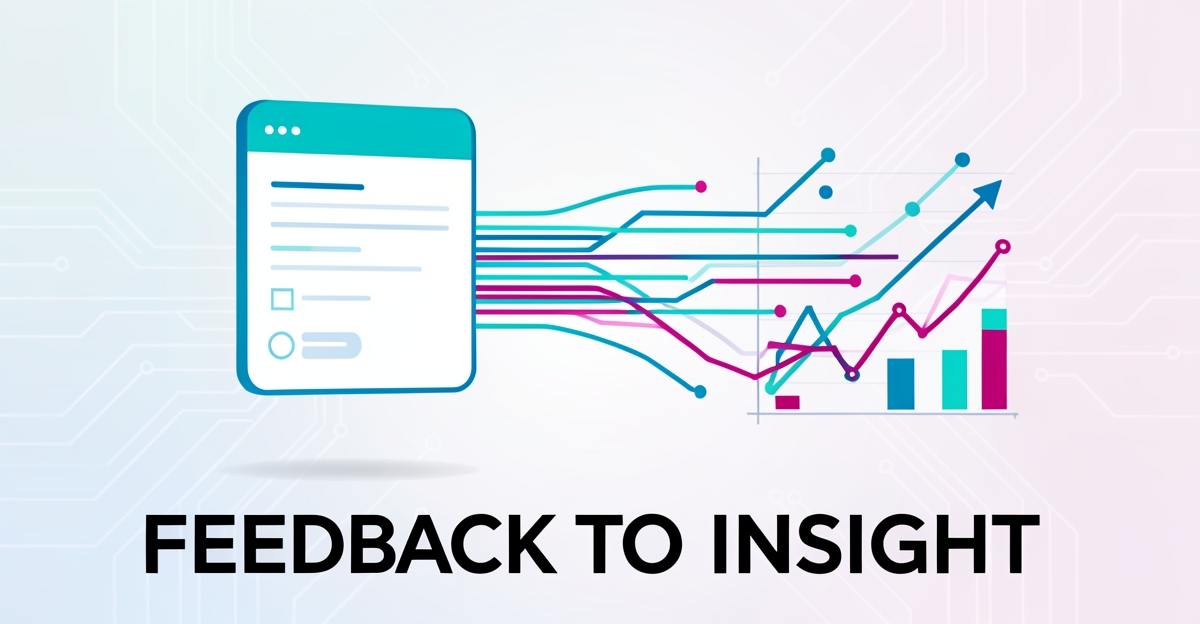
AI-Powered Client Feedback Analysis: Turn Post-Project Surveys into Actionable Insights
Key Facts
- Industry research suggests most CX teams still rely heavily on manual methods to analyze customer feedback according to industry research.
- AI processing is typically many times faster than manual feedback analysis according to research.
- AI classification consistency is often reported above 85% accuracy, versus roughly 70-80% human inter-rater agreement from Zonka Feedback.
- A large share of CX leaders struggle to demonstrate their feedback program's ROI per Zonka Feedback.
- AI-powered feedback analytics ranks as a top priority for many CX leaders heading into the next 12 months in recent data.
- Only a small fraction of organizations have reached AI-driven analytics with predictive triggers according to Zonka Feedback.
- Most CX leaders report struggling with fragmented feedback across tools and touchpoints in recent data.
Hire a team member that works 24/7 — for less than a part-time wage.
AI receptionists, SDRs, dispatchers and 99+ roles. Trained on your business, fully managed.
Not sure where to start? Ask our AI planner
Why Post-Project Surveys Stall Interior Design Growth
The final walkthrough is done, the invoice is paid, and your client is thrilled with their new space. But the post-project survey you sent sits unread in a crowded inbox, and the valuable insights it holds are already losing relevance. For many interior design firms, this is where the growth process stalls.
The core issue is that manual feedback analysis creates significant bottlenecks. Industry research suggests the large majority of CX teams still rely on manual methods to understand customer feedback. This approach is slow, inconsistent, and fails to capture the complete picture of the client experience.
This manual process creates several critical problems for a growing design firm:
- Fragmented Data: Valuable feedback is scattered across post-project surveys, Google reviews, social media comments, and email threads. Without a unified view, you can't connect a comment about lighting placement on Houzz to a survey response about project communication.
- Stale Insights: Manually reviewing feedback takes weeks. By the time you identify a recurring issue—like clients feeling overwhelmed by material choices—the opportunity to fix it for the next project has already passed.
- Inconsistent Analysis: Different team members interpret feedback differently. One designer might tag a comment about "budget concerns" as a pricing issue, while another sees it as a communication failure, making trend analysis unreliable.
- Inability to Prove ROI: A significant challenge is linking feedback to business outcomes. Many CX leaders cannot demonstrate their feedback program's ROI, a signal from Zonka Feedback that highlights how difficult it is to justify process improvements without clear data.
These challenges mean that firms are often reacting to old problems instead of proactively shaping better client experiences. The operational drag is real; a recent analysis suggests a small team can take two weeks to process just 2,000 open-text survey responses. For a design firm, that delay means missing crucial patterns in client expectations around timelines, budget transparency, or communication frequency.
Ultimately, manual analysis prevents you from systematically learning from every project. It keeps you stuck in a reactive loop, unable to scale your operations or refine your design process based on what clients are truly telling you. At AIQ Labs, we see this as a data problem, not a people problem—a bottleneck that prevents human judgment from being applied where it matters most: strategy and client relationships.
How AI Turns Unstructured Feedback Into Actionable Design Intelligence
AI is changing how interior design firms transform raw client feedback into strategic design intelligence by processing open-text responses at speeds far beyond manual analysis. Research suggests AI achieves classification consistency often exceeding 85% accuracy—higher than the roughly 70-80% inter-rater agreement typical of human reviewers—ensuring reliable theme extraction from survey comments, online reviews, and social media mentions. This speed and precision allow firms to identify recurring pain points like material preferences or timeline concerns within minutes rather than weeks, eliminating the lag that renders traditional feedback stale before action can be taken.
Through NLP-driven sentiment and topic modeling, AI decodes unstructured feedback into structured signals by automatically detecting nuanced emotions such as frustration with layout functionality or delight in color palette choices, moving beyond simple positive/negative scores to reveal the emotional drivers behind client satisfaction. Industry examples demonstrate how this deeper analysis can surface specific service frustrations that, once fixed, measurably improve satisfaction—a directly applicable lesson for design firms seeking to refine specific service elements. Continuous monitoring further enables predictive triggers, alerting teams to emerging dissatisfaction patterns—such as repeated mentions of "poor communication during revisions"—before they escalate into project risks or client churn.
AIQ Labs supports this transformation by building custom AI systems that integrate feedback analysis directly into design workflows, enabling firms to correlate thematic insights with project outcomes like repeat business or referral rates. By automating the extraction of intent—whether feedback signals a feature request for virtual staging tools or a complaint about vendor coordination—these systems route insights to the appropriate team members for immediate action. This shift from reactive damage control to predictive design refinement ensures firms don't just hear what clients said last quarter but anticipate what they'll need next project, turning every survey into a living roadmap for service evolution.
- Instant processing of thousands of feedback items across surveys, reviews, and social media
- NLP-driven extraction of themes, sentiment, intent, and entities without manual tagging
- Continuous monitoring with predictive triggers for proactive issue resolution
- Predictive analytics linking feedback themes to future behaviors like churn or upsell potential
With human oversight validating AI-generated insights to interpret sarcasm or complex context, designers gain both the scale of machine analysis and the nuance of expert judgment—creating a feedback loop that continuously elevates client experience while sharply reducing the manual analysis burden. This isn't just faster reporting; it's a fundamental shift toward design intelligence that evolves with client expectations.
From Themes to Tailored Services: A Human-in-the-Loop Workflow
Interior design firms can transform raw client feedback into a strategic advantage by following a clear maturity path that blends AI efficiency with human insight. The journey begins with thematic analysis, where AI automatically categorizes open-ended survey responses into recurring topics like material quality, timeline adherence, or communication clarity, replacing weeks of manual tagging in minutes (Zonka Feedback).
Next, multi-signal sentiment analysis moves beyond basic positive/negative scores to detect nuanced emotions such as frustration with delayed deliveries or delight in personalized consultations, offering a deeper emotional pulse of client experiences. Entity-level accountability then pinpoints specific designers, vendors, or project phases mentioned in feedback, turning anonymous trends into actionable ownership—for example, identifying that mentions of "custom millwork" correlate with higher satisfaction when handled by a particular team member.
Intent-based routing ensures feedback is directed to the right internal team: feature requests go to design leads, complaints to client managers, and praise to marketing for testimonial use. As the system matures, full-volume processing eliminates blind spots by analyzing 100% of feedback across surveys, social media, and review platforms, not just sampled responses. Finally, contextual intelligence integrates CRM and sales data to correlate themes like "budget transparency" with client retention rates or project profitability, enabling predictive insights—such as flagging clients who mention "unexpected costs" in early surveys as being less likely to return for future projects (Glean).
Throughout this evolution, human oversight remains essential. AI excels at speed and consistency—processing thousands of comments with high classification accuracy—but struggles with sarcasm, cultural context, and the "why" behind sentiment (Zonka Feedback; Glean). Human reviewers validate AI-generated themes, interpret subtle cues like irony in phrases such as "great, another delay," and make strategic decisions about service adjustments, pricing, or designer training. This human-in-the-loop approach ensures insights are not only accurate but also actionable, allowing firms to refine their offerings based on genuine client expectations rather than algorithmic assumptions alone.
Build vs Buy: Custom AI Feedback Systems for SMB Design Studios
Design studios can't afford to wait two weeks for a three-person team to read 2,000 open-text responses while insights go stale. Post-project surveys, reviews, and social mentions pile up across tools, and most CX leaders report struggling with fragmented feedback across touchpoints.
A custom-owned feedback analysis system changes the bottleneck. Instead of subscribing to another dashboard, SMB studios build an AI that ingests survey replies, review sites, and social comments, then surfaces recurring themes, sentiment shifts, and intent in minutes—far faster than manual approaches, and with classification consistency that typically exceeds human inter-rater agreement.
That speed only matters if the system is truly yours. AIQ Labs offers three entry points so studios can architect ownership from day one.
AI Employees can be trained as a Feedback Analyst that works around the clock. The AI Employee monitors incoming surveys and reviews, flags emerging themes, and routes intent-based alerts to the right designer or account manager. It's built, trained, and managed for you under the Start Monthly model, typically costing around 80% less than a human hire, with the ability to pause or adjust anytime.
AI Workflow Builds rebuild the one workflow that costs you the most—feedback collection and analysis included—at a fixed price, in phases. The build integrates with existing project management, CRM, and scheduling tools so feedback flows directly into design process improvements without manual copy-paste.
AI Operating Systems connect feedback analysis into one operating layer across the whole studio, built in phases and owned outright. Only a small fraction of organizations have reached AI-driven analytics with predictive triggers, while many CX leaders rank AI-powered feedback analytics as a top priority for the next 12 months. Guidance covers readiness, phased roadmap design, and human-in-the-loop validation so nuance and context aren't lost.
For interior design firms, this translates to actionable ownership:
- Unified ingestion from surveys, reviews, and social media into one owned data layer
- Theme and sentiment extraction with entity-level accountability to projects, designers, or service lines
- Predictive alerts for churn risk or repeat dissatisfaction signals before they escalate
- Direct integration with existing studio tools for seamless workflow automation
Build in Milestones or Own It Outright payment models let studios ship a workflow or full operating system phase by phase, approve and pay per phase, and keep everything built so far. The result is owned feedback intelligence that compounds over time, not a subscription that rents insights.
Start the Fit Check for a free 30-minute strategy call to map your biggest feedback bottleneck and identify high-ROI automation opportunities.
Still paying for 10+ subscriptions that don’t talk to each other?
We build custom AI systems you own outright. No vendor lock-in. Full control.
Not sure where to start? Ask our AI planner
Frequently Asked Questions
Why is manual post-project feedback analysis holding my interior design firm back?
How fast can AI process client feedback compared to doing it by hand?
Will AI miss sarcasm or nuance in client comments?
Can AI actually link feedback to business outcomes like repeat business?
Is AI feedback analysis affordable for a small design studio?
What's the first step to turn surveys into actionable design intelligence?
From Feedback to Forward Motion: Your Next Design Evolution
As we've seen, manual feedback analysis stalls growth by burying insights in delayed, inconsistent, and fragmented data—turning post-project surveys into missed opportunities rather than strategic fuel. AI transforms this bottleneck into a continuous feedback loop, processing thousands of responses in minutes with high classification consistency, uncovering nuanced sentiment and intent, and enabling predictive alerts that prevent churn before it starts. With human oversight validating context and nuance, designers gain both machine-scale efficiency and expert judgment to refine services, improve client retention, and prove ROI through linked outcomes like repeat business and referrals. For interior design firms ready to stop reacting and start anticipating client needs, the path forward begins with understanding your specific feedback bottleneck. Start the Fit Check for a free 30-minute strategy call to map your biggest challenge and identify high-ROI automation opportunities—no obligation, just clarity on how owned feedback intelligence can compound over time to elevate your design practice.
Make AI your competitive advantage — not just another tool.
Strategy, implementation and ongoing optimization. One partner, end to end.
Not sure where to start? Ask our AI planner