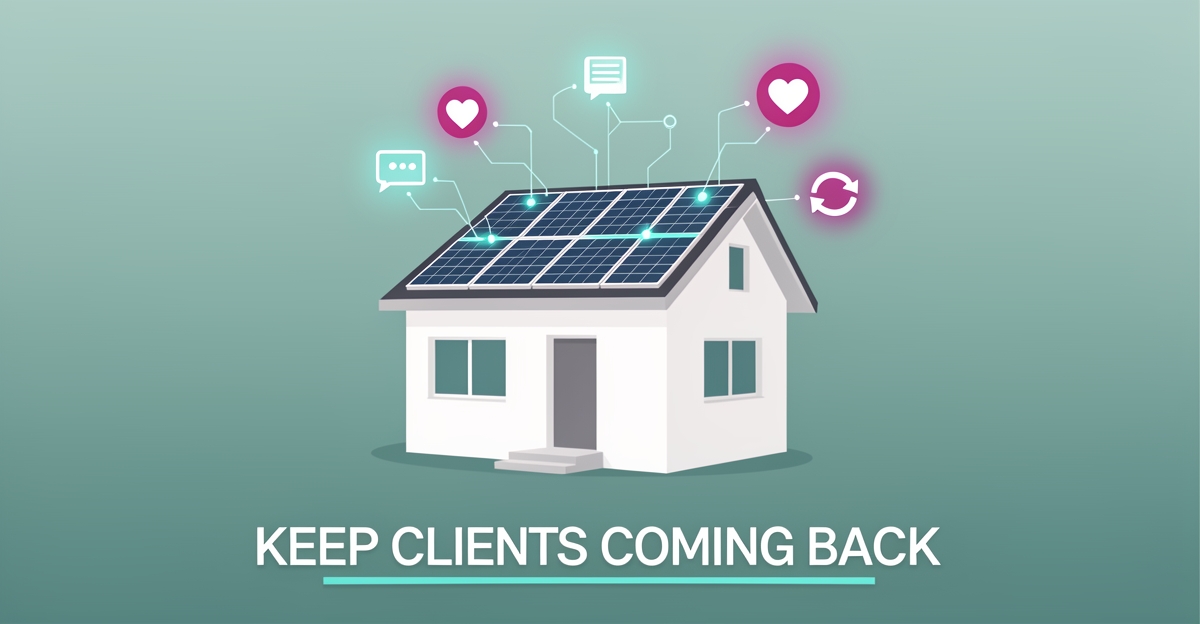
AI-Powered Customer Retention: How Solar Roofing Installers Can Keep Clients Coming Back
Key Facts
- Industry analyses consistently point to underperformance and post-install neglect as a multi-billion-dollar leak in the solar value chain
- Homeowners typically save over a thousand dollars per year on energy costs with solar, depending on system size, rates, and location
- Adding battery storage typically adds roughly $10,000 to a solar project's total cost, creating a natural deferred upgrade conversation
- The global solar fleet has grown past 1,800 GW of installed capacity as of late 2026, making lifetime customer value more important than one-time installs
- AI monitoring platforms now inspect hundreds of gigawatts of solar capacity across dozens of countries, catching performance issues before customers notice
- AI tools trigger personalized upgrade offers based on system age, usage patterns, and service history
Hire a team member that works 24/7 — for less than a part-time wage.
AI receptionists, SDRs, dispatchers and 99+ roles. Trained on your business, fully managed.
Not sure where to start? Ask our AI planner
The Hidden Cost of Poor Post-Installation Engagement in Solar Roofing
Solar roofing installers invest heavily in acquisition, but often overlook the revenue slipping through poor post-installation engagement. Industry analyses consistently point to underperformance and post-install neglect as a multi-billion-dollar leak across the solar value chain. When follow-up is inconsistent or absent, customers disengage, forgoing upgrades, referrals, and repeat service that could otherwise strengthen long-term profitability.
This gap isn't just about satisfaction, it's a structural leak in the customer lifecycle. Without systematic check-ins, installers fail to capture feedback that could reveal dissatisfaction before it turns into churn. They also overlook natural touchpoints for recommending complementary products, like battery storage, which typically adds roughly $10,000 to a solar project's total cost. These missed interactions compound over time, turning satisfied one-time clients into lost advocates.
AI-driven retention systems close this gap by automating satisfaction tracking, triggering timely follow-ups, and identifying upgrade opportunities based on usage patterns and home energy needs. For example, AI can analyze post-installation energy savings data, homeowners typically save over a thousand dollars annually, to personalize recommendations that feel relevant, not pushy. By integrating with CRM and monitoring tools, these systems ensure no customer falls through the cracks after the final invoice is paid.
- Automated satisfaction surveys sent at 30, 90, and 180 days post-installation
- Behavioral triggers for battery or panel upgrade recommendations
- Referral prompts tied to milestone achievements like energy savings goals
- Predictive alerts for maintenance needs before performance drops
- Customized communication schedules based on customer engagement history
AIQ Labs supports solar installers in building these capabilities through AI Workflow Builds that unify installation data, service history, and communication channels into a single retention engine. Rather than relying on manual outreach or generic email blasts, businesses deploy AI Employees that handle post-installation engagement with consistency and context, freeing human teams to focus on complex consultations while ensuring every customer receives timely, relevant follow-up. The result is a proactive retention strategy that turns installation completion into the start of a longer, more profitable relationship.
How AI Transforms Customer Retention in Solar Roofing Businesses
Solar roofing installers are sitting on a retention opportunity most competitors miss. With the global solar fleet having grown past 1,800 GW of installed capacity as of late 2026, repeat business and lifetime value matter more than one-time installs.
AI changes retention from reactive service calls to proactive relationship building. Installers can track satisfaction signals after commissioning, warranty work, and seasonal performance checks, then trigger automated follow-ups before issues become churn. This approach aligns with the industry's broader shift toward customer-centric messaging, personalized marketing, and responsive customer support.
The financial case is clear. Homeowners typically save over a thousand dollars per year on energy costs with solar, and payback periods often land around a decade depending on interest rates and bill savings. When customers understand ongoing value, they are more receptive to upgrades such as battery storage, which typically adds roughly $10,000 to a project.
AI-powered customer support is already proving the model. A growing number of solar software and messaging platforms now offer AI-powered support to improve customer relationships and drive revenue growth. These systems personalize outreach, resolve queries 24/7, and surface upgrade opportunities at the right moment in the customer journey.
Performance monitoring is a retention lever. AI-powered inspection and monitoring platforms now analyze hundreds of gigawatts of solar capacity across dozens of countries, catching underperformance before customers notice it. For installers, similar monitoring can trigger satisfaction checks and service offers before degradation impacts trust.
A practical AI retention stack for solar roofing typically includes:
- Satisfaction tracking after install, inspection, and service with automated sentiment scoring
- Personalized follow-ups timed to production data, weather events, or billing cycles
- Upgrade recommendations for batteries, optimizers, or expansion based on usage patterns
- Lifecycle communication from installation to post-service engagement
The pattern across the industry is consistent: every winning solar AI player turns raw data into automated decisions humans can't make fast enough. AIQ Labs builds AI systems that manage customer journeys from installation to post-service engagement, helping solar businesses track satisfaction, automate follow-ups, and recommend upgrades without adding headcount.
The messaging hierarchy matters too. Meet customers where they're at, and speak back to them in their language. When retention is automated and personalized, repeat business and customer lifetime value rise while churn falls.
Implementing AI Retention Systems: A Practical Guide for Solar Installers
Much of the industry's post-install revenue loss hides in plain sight, unhappy customers who were never asked how things went, and owners who never heard about a battery or upgrade opportunity until a competitor knocked on the door. The good news: building an AI retention system is a practical, phased project, not a moonshot.
Step 1: Connect AI to your existing CRM. Retention starts with clean data. Your AI system needs to pull from the customer records you already have, installation dates, system size, service history, and contact details. Modern integrations connect directly to CRMs like HubSpot, Salesforce, and Pipedrive, syncing data automatically so no manual entry is required. This single source of truth is what makes every downstream step possible.
Step 2: Automate satisfaction tracking and follow-ups. Once your data is connected, set up automated satisfaction surveys triggered at key milestones: the week after installation, after the first utility bill arrives, and at seasonal check-ins. AI can then route responses intelligently, flagging unhappy customers for immediate human follow-up while prompting satisfied ones for reviews or referrals. The principle is simple: meet customers where they're at and speak back to them in their language, and AI makes that level of personalization practical at scale.
Step 3: Trigger upgrade recommendations automatically. This is where retention becomes revenue. A solar battery typically adds roughly $10,000 to the total cost of going solar, which means many customers install without storage first, creating a natural upgrade conversation later. AI can identify these windows by monitoring system age, energy usage patterns, and service history, then deliver a timely, personalized offer. Solar software and messaging platforms are already using AI-powered customer support in this way to improve relationships and drive repeat business.
A sensible build sequence looks like this:
- Integrate AI with your CRM to unify customer and installation data
- Deploy automated satisfaction surveys at post-install milestones
- Route at-risk customers to human follow-up within 24 hours
- Trigger personalized upgrade offers based on system data
- Review performance monthly and refine messaging
The biggest obstacle most installers face is cost and complexity, which is why phased implementation matters. AIQ Labs structures builds around three payment models: Start Monthly (a flat monthly plan covering build, training, integrations, and monitoring), Build in Milestones (pay per phase, keep everything built), or Own It Outright (full ownership of the code, agents, and data). Because clients own their systems outright, there's no vendor lock-in, your retention engine grows with your business.
The winning solar companies are the ones that turn raw data into automated decisions humans can't make fast enough. With a global solar fleet now past 1,800 GW, the installers who systematize retention today will own the customer relationships everyone else will be chasing tomorrow. Ready to find your biggest retention leak? Take the two-minute Fit Check to see where automation would pay off first.
Still paying for 10+ subscriptions that don’t talk to each other?
We build custom AI systems you own outright. No vendor lock-in. Full control.
Not sure where to start? Ask our AI planner
Frequently Asked Questions
How much revenue does the solar industry lose each year due to poor post-installation engagement?
Can AI really help solar installers increase revenue from existing customers?
What kind of follow-ups can AI automate for solar customers after installation?
Do homeowners actually save money with solar, and can that be used to encourage upgrades?
Do I need to replace my current CRM to use an AI retention system?
What's the first step in building an AI retention system for my solar business?
Turning Solar Installations into Lasting Relationships
Solar roofing installers are leaving significant revenue on the table by overlooking the post-installation phase, a gap industry analyses tie to billions in lost value each year. AI-powered retention systems close this gap by automating satisfaction tracking, triggering timely follow-ups, and identifying upgrade opportunities like battery storage, which typically adds roughly $10,000 to a project's value. By integrating with existing CRMs and using data from energy savings and system performance, AI enables personalized, proactive engagement that turns one-time clients into long-term advocates. AIQ Labs helps solar businesses build these capabilities through AI Workflow Builds and managed AI Employees that unify installation data, service history, and communication channels into a single retention engine, without adding headcount. To see how this approach can work for your business, take the two-minute Fit Check at aiqlabs.ai/apply, then book a free 30-minute strategy call to map your biggest bottleneck and identify high-ROI automation opportunities.
Make AI your competitive advantage — not just another tool.
Strategy, implementation and ongoing optimization. One partner, end to end.
Not sure where to start? Ask our AI planner