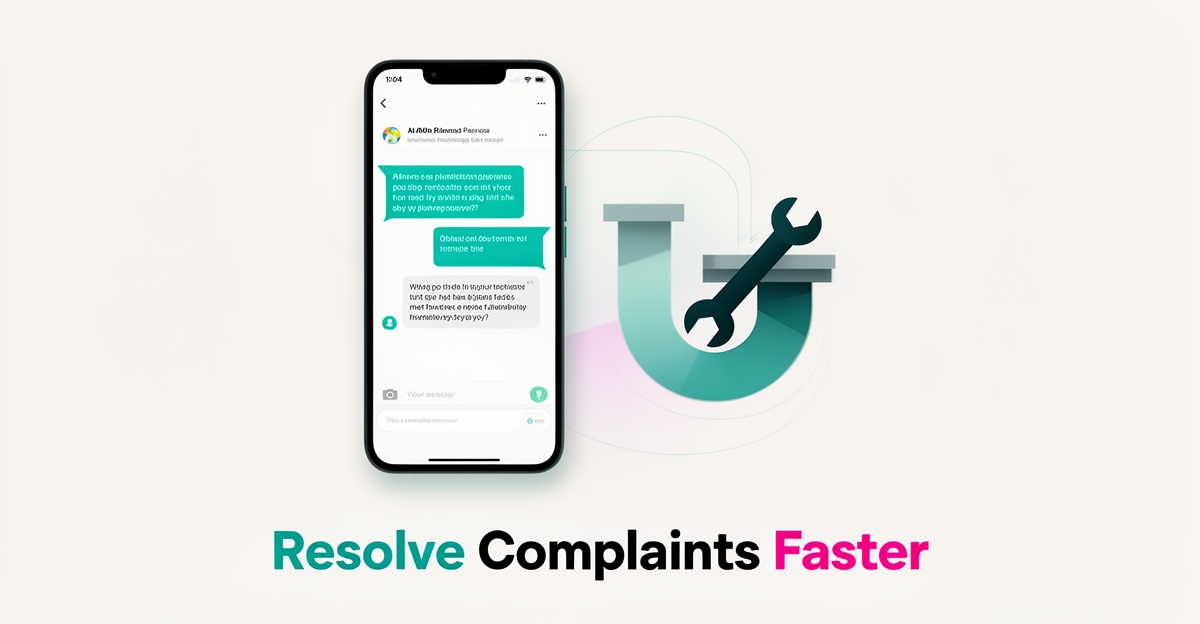
AI-Powered Customer Service: How Drain Cleaning Companies Can Handle Complaints Faster
Key Facts
- Industry research consistently shows customers abandon brands when issues aren't resolved during the first interaction
- A majority of routine customer inquiries can typically be resolved by AI tools without human intervention, according to vendor research published as of late 2026
- Most executives report reevaluating customer experience strategies due to recent technological progress
- Surveys show many customers still prefer speaking with a human for complex or emotional issues, which is why escalation design matters
- AIQ Labs typically sees drain cleaning companies achieve measurable improvements within 4-6 weeks of AI deployment
- AI employees cost roughly 80% less than a human hire in an equivalent role while working 24/7/365
Hire a team member that works 24/7 — for less than a part-time wage.
AI receptionists, SDRs, dispatchers and 99+ roles. Trained on your business, fully managed.
Not sure where to start? Ask our AI planner
The Complaint Crisis: Why Slow Responses Drain Your Business
The drain cleaning industry faces a silent revenue drain: unresolved customer complaints. When homeowners experience slow drains or incomplete service, they expect prompt acknowledgment and resolution, yet many companies struggle to deliver. This delay doesn't just frustrate customers; it actively pushes them toward competitors.
Customer experience research, including widely cited industry surveys as of late 2026, consistently shows that customers abandon brands when issues aren't resolved during the first interaction. For drain cleaning businesses, where emergency calls are common, slow response times turn urgent situations into lasting dissatisfaction. A single unresolved complaint can trigger negative reviews, lost referrals, and immediate revenue impact as customers switch to more responsive providers.
The cost extends beyond one lost job. Poor first-contact resolution creates a cycle where customers feel unheard, reducing lifetime value and increasing acquisition costs to replace them. In an industry where trust and reliability are paramount, slow complaint handling erodes the very foundation of customer loyalty. Every hour of delay increases the chance that a dissatisfied customer shares their experience online, amplifying damage through social proof and search visibility.
Meanwhile, vendor research on AI customer service suggests a majority of routine inquiries can typically be resolved by AI tools without human intervention, highlighting a major opportunity for drain cleaning companies. Implementing AI-powered support allows immediate acknowledgment of complaints, automated troubleshooting for common issues like recurring clogs, and intelligent escalation for complex cases, all while maintaining a human touch when needed. This approach doesn't replace technicians; it ensures they're freed from repetitive inquiries to focus on skilled work, directly addressing the complaint crisis at its source.
AI-Powered Solutions: Instant Responses and Proactive Resolution
Slow service and incomplete work drive drain cleaning customers away, and speed of response is now a retention lever. AI-powered support gives plumbers instant, consistent replies while freeing technicians for on-site work.
AI chatbots deliver quick answers to common questions 24/7, allowing staff members to deal with more important or complicated issues. Implementation guidance across the industry is consistent: define your FAQs and integrate with your CRM so the system can personalize responses and escalate when needed. This reduces first-contact friction at a time when most executives report reevaluating their customer experience strategies in light of recent technological progress.
Sentiment analysis adds an emotional layer to those instant replies. AI-powered sentiment analysis can gauge the emotional tone of customer interactions, helping staff understand the customer's mood and urgency level. When frustration spikes after a missed appointment or a repeat clog, the system flags the conversation for proactive outreach before the complaint escalates.
Data analytics turns history into prevention. AI-driven analytics can help businesses analyze large volumes of customer data to identify trends, preferences, and potential pain points. For drain cleaning companies, patterns like recurring blockages on specific streets or service gaps after hours become visible, enabling targeted follow-ups and smarter scheduling.
The workload impact is measurable. Current vendor research on AI customer service indicates that a majority of routine inquiries can typically be resolved without human intervention. That shift cuts ticket volume and supports instant responses and proactive resolution.
In practice, AI support for plumbing complaints works as:
- 24/7 chatbot triage for pricing, ETA, and service area questions
- Real-time sentiment scoring to prioritize angry or repeat callers
- Analytics-driven alerts for potential issues before customers call
- Seamless human handoff for complex or escalation cases
AIQ Labs deploys AI Employees, managed AI support agents trained specifically for plumbing service complaints and follow-ups. The result is faster answers, fewer escalations, and improved retention without adding headcount, at roughly 80% less cost than an equivalent human hire.
Implementation Blueprint: 5 Steps to Deploy AI Complaint Handling
Implementation doesn't have to feel like a massive IT overhaul. When a majority of routine inquiries can typically be resolved by AI without human intervention, the real question shifts from whether to adopt AI to how quickly you can deploy it effectively.
The companies seeing the fastest results follow a structured approach that prioritizes customer needs over technical features. They start small, measure constantly, and scale based on actual customer interactions rather than assumptions.
Define your complaint categories first. Document the 10-15 most frequent issues your team handles, slow response times, incomplete drain clearing, pricing questions, scheduling conflicts. This becomes your AI's knowledge foundation. AI chatbots excel at providing quick answers to common questions 24/7, freeing your staff for complex problem-solving.
Next, integrate with your existing CRM system. Your AI needs access to customer history, previous service calls, and billing information to provide contextual responses. This connection transforms generic replies into personalized solutions that reference past interactions and specific service details.
Set escalation triggers early. Industry research consistently shows customers leave brands when issues aren't resolved in the first interaction. Your AI must recognize when a complaint exceeds its capabilities, flooding damage, recurring blockages, or billing disputes, and transfer seamlessly to human agents with full context.
Train the system on your historical data before going live. Feed it past customer emails, service tickets, and phone transcripts so it learns your industry's specific language patterns. Companies implementing AI report that modern tools can typically resolve the majority of routine inquiries without human intervention.
The final step involves monitoring and refinement:
- Track resolution rates weekly and identify conversation patterns that still require human intervention
- Update responses based on seasonal issues like frozen pipes or storm-related backups
- Set up proactive alerts when sentiment analysis detects frustrated customers
- Review escalated cases monthly to expand AI capabilities
AIQ Labs typically sees drain cleaning companies achieve measurable improvements within 4-6 weeks of deployment. For companies that want a single workflow rebuilt first, a fixed-price AI Workflow Build is often the fastest entry point. The key lies in treating implementation as an iterative process rather than a one-time setup, continuously refining responses based on real customer interactions and feedback patterns.
Overcoming Challenges: Balancing AI and Human Touch
Drain cleaning complaints escalate fast when customers feel unheard, and AI alone can't carry every conversation. Balancing automation with human empathy is how service teams keep retention high while still moving faster.
AI chatbots handle the repetitive volume that drains staff time. Current vendor research indicates a majority of routine customer inquiries can typically be resolved by AI tools without human intervention, freeing technicians for on-site work. That speed matters when a clogged line is causing stress at home.
The limitation is clear with complex or emotional issues. Surveys show many customers still prefer speaking with a human for serious problems, and most executives are reevaluating their customer experience strategies in light of recent technological progress. AI-powered chatbots provide quick answers to common questions 24/7, allowing staff members to deal with more important or complicated issues.
A practical blend uses AI for triage and humans for resolution. Sentiment analysis can gauge the emotional tone of customer interactions, helping staff understand the customer's mood and urgency level. When frustration spikes or a request repeats, the system flags the case for a real agent before the customer churns.
Seamless escalation protects trust and keeps first-contact resolution high. Design the bot to recognize when a query needs a human touch and seamlessly hand it off to an available agent. Good handoffs include full context from the chat, customer history from CRM, and a clear reason for escalation so the agent can pick up without repetition.
Drain cleaning companies can implement this balance with a few focused controls:
- Define escalation triggers for slow service, incomplete work, repeat visits, or angry language
- Integrate the chatbot with your CRM so it can access customer history and personalize responses
- Set up alerts for support teams when AI detects a potential issue, enabling proactive outreach
- Train AI on historical complaints and resolutions to improve routing accuracy over time
This approach mirrors how AIQ Labs deploys trained AI support agents specifically for plumbing service complaints and follow-ups, combining instant response with human empathy for optimal results. The goal is not to replace people, but to let AI handle the routine so humans can handle the relationship.
When customers feel heard quickly and escalated smoothly, complaints become retention opportunities rather than lost business.
Still paying for 10+ subscriptions that don’t talk to each other?
We build custom AI systems you own outright. No vendor lock-in. Full control.
Not sure where to start? Ask our AI planner
Frequently Asked Questions
Will AI chatbots make my customers feel like they're talking to a robot instead of a real plumber?
How many drain cleaning inquiries can AI actually handle without a person?
What kind of complaints should I start by automating?
Do I need to replace my CRM to use AI for complaints?
Is the market actually moving toward AI customer service?
How soon can a drain cleaning company see results after deploying AI?
Turning Complaints into Loyalty: Your AI-Powered Service Upgrade
AI-powered customer service isn't just about faster replies, it's about protecting your reputation and revenue when it matters most. By automating routine inquiries, drain cleaning companies can ensure every customer feels heard instantly, freeing technicians to focus on skilled work while reducing escalations and negative reviews. Industry research consistently shows that resolving issues during the first interaction keeps customers from abandoning your brand, and AI tools can typically handle the majority of routine complaints without human intervention. This means happier customers, lower acquisition costs, and more time for your team to do what they do best. If you're ready to see how AI can transform your complaint handling without replacing your human touch, start with a free, no-obligation strategy call to map your biggest service bottleneck and identify high-ROI automation opportunities, because the best time to fix a slow response is before the next call comes in.
Make AI your competitive advantage — not just another tool.
Strategy, implementation and ongoing optimization. One partner, end to end.
Not sure where to start? Ask our AI planner