AI-Powered Delivery Coordination: How Cafes Can Manage Orders Efficiently
Key Facts
- Industry analysis of food delivery suggests early adopters of logistics automation typically see meaningful gains in service efficiency and cost reduction.
- AI-powered route optimization is widely reported to deliver substantially faster delivery times than static, manual planning.
- Businesses implementing AI-powered route optimization have reported significant increases in positive customer ratings after rollout.
- Large-scale examples like Zomato and UPS's ORION platform show route optimization delivering measurable time and fuel savings at scale.
- AI chatbots commonly resolve a large share of routine support inquiries automatically in food delivery operations.
- Personalized recommendations tend to drive noticeably higher engagement than generic interfaces for cafe customers.
Hire a team member that works 24/7 — for less than a part-time wage.
AI receptionists, SDRs, dispatchers and 99+ roles. Trained on your business, fully managed.
Not sure where to start? Ask our AI planner
The Hidden Costs of Manual Delivery Management
Manual delivery coordination creates hidden costs that silently erode cafe profitability and customer trust. Cafes relying on spreadsheets, phone calls, and dispatcher intuition often face delayed orders, because manual methods struggle to adapt to real-time traffic changes or sudden demand spikes, leading to missed delivery windows and frustrated customers. These inefficiencies compound through increased operational costs, as staff spend excessive time on route planning and order tracking instead of core service tasks. The lack of real-time visibility also results in inconsistent customer experiences, where delivery times vary wildly and communication gaps leave customers guessing about their order status.
- Industry analysis of food delivery suggests early adopters of logistics automation typically see meaningful gains in service efficiency and cost reduction
- AI-powered route optimization is widely reported to deliver substantially faster delivery times than manual planning
- Businesses implementing AI-powered route optimization have reported significant increases in positive customer ratings
These challenges highlight why traditional delivery management is no longer viable for cafes aiming to scale. AIQ Labs addresses these pain points through AI Workflow Builds that rebuild the one workflow costing you the most, intelligently assigning orders to delivery staff, optimizing routes in real time, and providing end-to-end tracking, all at a fixed price and in phases, so nothing disrupts your day-to-day operations.
How AI Transforms Delivery Operations
Imagine a Friday lunch rush where every delivery arrives on time, drivers take the fastest routes automatically, and your kitchen knows exactly how many lattes to prep before the orders even come in. This is not a futuristic fantasy. It is the operational reality that AI-powered delivery coordination creates for cafes today.
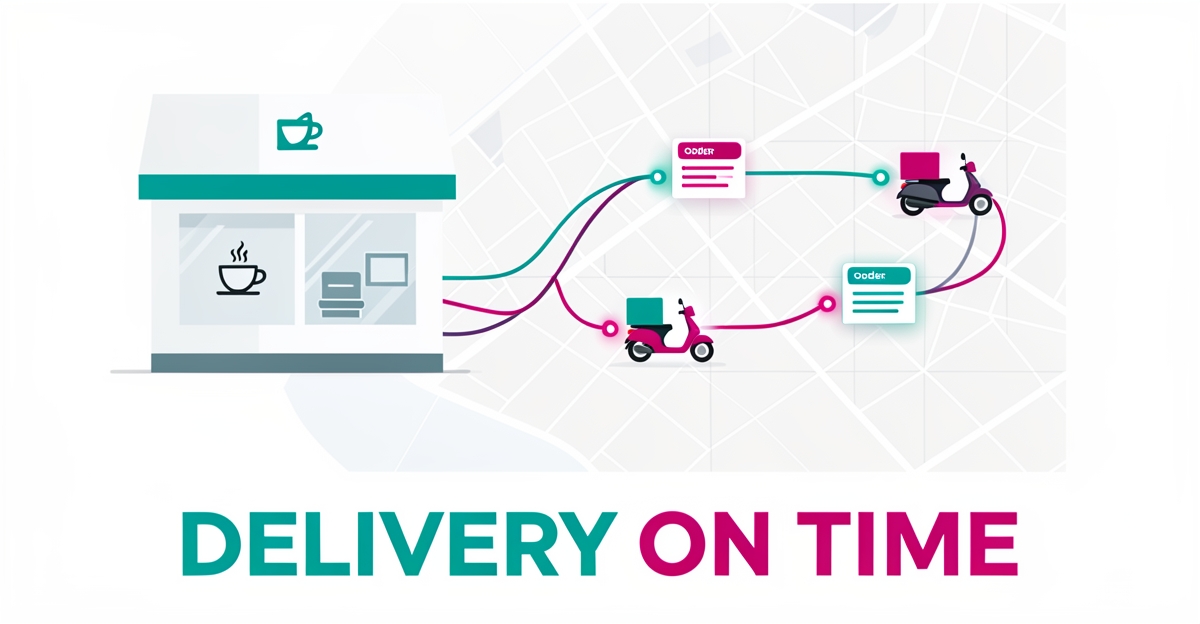
AI transforms delivery operations by replacing static, manual planning with dynamic, data-driven decision-making. Traditional dispatch relies on human intuition and static maps, but AI analyzes real-time traffic patterns, weather conditions, and historical delivery data to optimize routes continuously. Industry analysis of food delivery suggests early adopters of logistics automation typically see meaningful gains in service efficiency and cost reduction.
The financial impact of AI route optimization extends far beyond simple convenience. Companies using AI-powered route optimization are widely reported to achieve substantially faster delivery times than traditional methods. These systems continuously recalculate paths based on real-time conditions, ensuring drivers avoid delays before they happen.
Major players demonstrate the scalability of these gains. Zomato has reported meaningful reductions in delivery times across major Indian cities using AI route optimization, while UPS famously saved millions of gallons of fuel through its ORION platform. For cafes operating on thin margins, these efficiencies translate directly to improved profitability and reduced environmental impact through lower fuel consumption.
Beyond routing, AI excels at anticipating what customers will order and when. By analyzing historical sales data, weather patterns, local events, and time-based trends, AI systems forecast demand with useful accuracy. This allows cafe managers to optimize staffing levels, reduce food waste, and ensure popular items remain in stock during peak periods.
When cafes align inventory and staffing with predicted demand, they eliminate the costly guesswork that leads to over-prepared perishables or overwhelmed baristas. The technology essentially provides a crystal ball for daily operations, turning reactive scrambling into proactive management.
AI transforms the end-to-end customer journey through personalization and proactive communication. Key enhancements include:
- Personalized menu recommendations based on order history and preferences
- Accurate, real-time delivery time predictions and tracking
- Automated order status updates and delay notifications
- AI-powered chatbots resolving a large share of routine support inquiries instantly
These improvements drive measurable loyalty. Businesses implementing AI-powered route optimization have reported significant increases in positive customer ratings, while personalized recommendations tend to generate noticeably higher engagement than generic interfaces.
Implementing these capabilities requires integrating order management, inventory, and delivery systems into a cohesive workflow. AIQ Labs specializes in exactly this, building custom workflow systems that connect these operational dots, so cafes can deploy AI coordination that works seamlessly with existing teams and tools. The result is a delivery operation that runs with the precision of a large enterprise, regardless of your cafe's size.
Implementing AI Delivery Solutions: A Practical Guide
Cafes lose money every time a delivery runs late, a driver sits idle, or an order is misrouted. AI turns delivery coordination from reactive firefighting into a predictable, data-driven operation that protects margins and reputation.
Start by consolidating the data your team already generates. Integrate order history, customer preferences, live traffic, weather and road closures into a single view. AI route optimization works because it analyzes these signals in real time and adjusts routes dynamically instead of relying on static dispatcher experience.
Next, choose an approach that fits your scale and existing tools. Manual dispatch struggles to scale, while AI-powered route optimization delivers dynamic real-time adjustments and extensive data analysis. A practical first step is a focused workflow build rather than a full rip-and-replace: AIQ Labs rebuilds the one workflow that costs you the most, at a fixed price and in phases.
Deployment follows a clear sequence:
- Data integration: connect POS, order management, driver apps and mapping data for a single source of truth
- Route optimization implementation: deploy algorithms that plan and re-route in real time based on traffic and order clusters
- Demand forecasting setup: use predictive analytics to staff and prep for peak windows
- Automation deployment: automate dispatch assignment, ETA updates and support triage
Early adopters typically see measurable gains quickly. Industry analysis of food delivery suggests meaningful efficiency improvements and cost reductions for early adopters of logistics automation. Large-scale examples like Zomato's AI-powered routing show the same pattern at city-wide scale, while AI routing is widely reported to deliver substantially faster delivery times overall.
AIQ Labs builds these systems to operate seamlessly with existing delivery teams, assigning orders to staff, tracking time, and optimizing routes to reduce delivery time and cost. Systems are engineered for production use with deep two-way API integrations, so dispatch, routing and customer updates happen without manual re-entry. And when you're ready to go beyond one workflow, an AI Operating System connects everything into one operating layer you own outright.
Beyond speed, AI improves experience and sustainability. Research on route optimization links AI implementation to significant increases in positive customer ratings after rollout. Optimized routes also cut fuel use and emissions, aligning efficiency with sustainability goals.
Cafes that move from pilot to scaled automation typically start with one critical workflow, prove the ROI, then expand. That phased approach reduces risk while building an owned, adaptable delivery operation that improves as data grows.
Still paying for 10+ subscriptions that don’t talk to each other?
We build custom AI systems you own outright. No vendor lock-in. Full control.
Not sure where to start? Ask our AI planner
Frequently Asked Questions
How does AI actually improve delivery times for cafes?
Is AI delivery coordination worth it for a small cafe, or just for big chains?
What's the real difference between manual dispatch and AI-powered routing?
Can AI help predict how busy my cafe will be, or does it just handle routing?
How do I implement AI delivery coordination without disrupting my current operations?
Does AI delivery coordination actually improve customer satisfaction, or just speed?
The Future of Cafe Delivery is Here: Embrace AI for Seamless Operations
Manual delivery coordination is no longer sustainable for cafes aiming to thrive in today's competitive landscape. The hidden costs of inefficiency, delayed orders, wasted resources, and frustrated customers, directly impact profitability and reputation. AI-powered solutions offer a practical path forward, enabling cafes to optimize routes in real time, predict demand, and enhance customer experiences through personalized communication and faster deliveries. AIQ Labs builds the systems behind this: start with a single workflow build to fix your costliest bottleneck, or bring in an AI dispatcher to run coordination for a fraction of the cost of a human hire. The next step is simple: take the 2-minute Fit Check and book a free 30-minute strategy call to map out your biggest bottleneck and identify high-ROI automation opportunities.
Make AI your competitive advantage — not just another tool.
Strategy, implementation and ongoing optimization. One partner, end to end.
Not sure where to start? Ask our AI planner