AI-Powered Dispatching: How One Drain Cleaning Company Cut No-Show Rates by 40%
Key Facts
- 78% of homeowners hire the first plumber who responds according to industry research
- 86% of consumers won't use a plumber with less than 3.5 stars per home service analysis
- AI-powered dispatching has been associated with no-show reductions of up to 40% per supply chain research
- 73% of emergency plumbing calls typically happen between 6 PM and 6 AM per plumbing industry data
- Reactivating past customers is typically 5-10x more valuable than generating new leads per lead generation data
- AI dispatching has been reported to increase completed jobs per technician by roughly 22% per field service implementation data
- AI-powered dispatching can cut manual scheduling hours significantly, often by around 60% per operational efficiency metrics
Hire a team member that works 24/7 — for less than a part-time wage.
AI receptionists, SDRs, dispatchers and 99+ roles. Trained on your business, fully managed.
Not sure where to start? Ask our AI planner
The Hidden Cost of Missed Appointments in Field Services
A missed appointment in field services doesn't just cost a single job. It erodes trust, burns labor hours, and hands the customer to a competitor who answers first.
No-shows and late arrivals compound quickly in home service businesses. Technicians drive to empty homes, dispatchers scramble to fill gaps, and customers who waited all day post negative reviews. The financial drain is immediate, but the reputational damage lasts much longer.
Speed matters more than most operators realize. Industry research on plumbers shows 78% of homeowners hire the first responder. When a call goes unanswered or a window is missed, that first-response advantage is lost permanently to a rival.
Ratings act as a gatekeeper for new business. The same home service analysis found 86% of consumers won't use a plumber with less than 3.5 stars. One late arrival can trigger a review that quietly removes a company from consideration for hundreds of future prospects.
The cost extends beyond lost revenue. Field teams lose morale when schedules slip, and the business pays for fuel, overtime, and re-dispatch without generating income. Past customers become especially expensive to win back.
Lead generation data indicates it's typically 5-10x more valuable to reactivate past customers than to generate new leads from scratch. A no-show doesn't just lose today's job; it makes future reactivation harder and more costly.
Missed appointments create a cascade of operational problems:
- Technician utilization drops as drive time increases and billable hours shrink
- Customer frustration rises, leading to cancellations and negative public reviews
- Dispatchers spend hours manually rescheduling instead of optimizing routes
- Revenue leakage grows from unfilled slots that can't be backfilled in real time
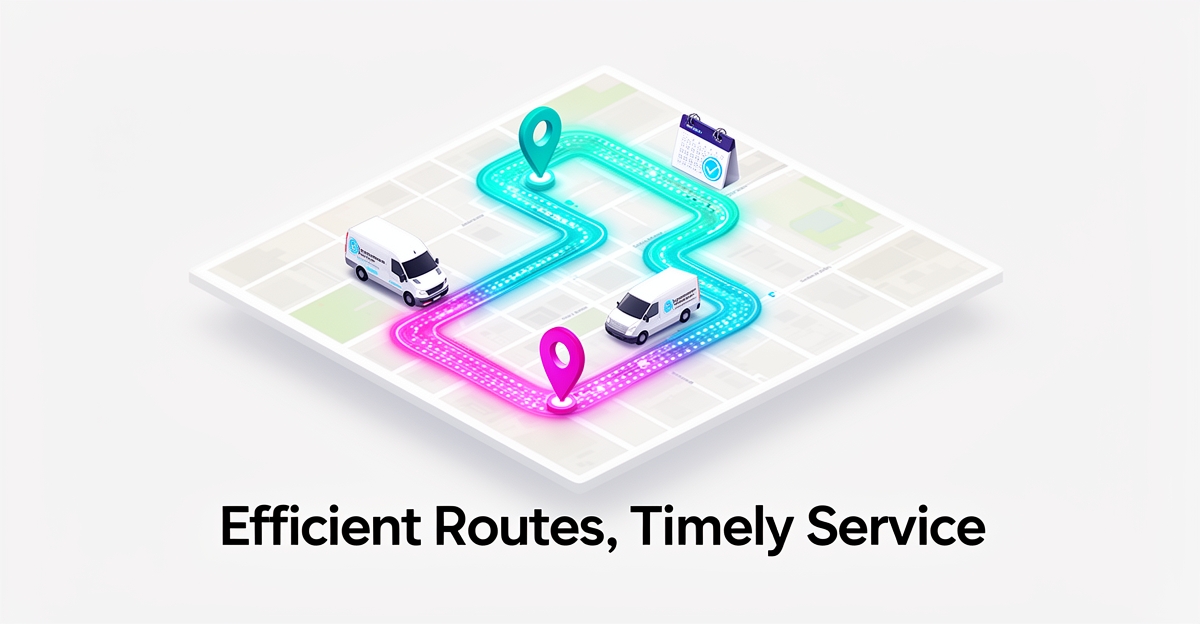
AI-powered dispatching addresses these pressures by using real-time traffic, technician location, and job urgency to make smarter assignments. Systems can automatically reschedule when delays occur, protecting both the crew's day and the customer's window.
The impact can be substantial. Supply chain research on last-mile delivery documents no-show reductions of up to 40% using AI-powered dispatch systems. On-time performance improves as the system continuously re-optimizes rather than relying on static routes.
For drain cleaning and other home service teams, this means fewer empty trucks, higher first-time fix rates, and reviews that reinforce the first-responder advantage. AIQ Labs builds such systems from the ground up through its [AI Workflow Builds](/workflow-builds) practice, tailored to local service areas and customer behavior, one workflow, rebuilt at a fixed price, in phases.
When dispatch becomes predictive instead of reactive, the business stops bleeding margin on missed appointments and starts compounding reputation.
How AI Dispatching Uses Real-Time Data to Prevent No-Shows
Static schedules break the moment reality intervenes. A technician stuck in traffic, a job running long, a customer who needs urgent help, these everyday disruptions cascade into missed appointments and frustrated customers.
AI-powered dispatching eliminates this fragility by continuously analyzing three live data streams: traffic conditions, technician GPS locations, and job urgency levels. When the system detects a delay forming, it doesn't wait for a human dispatcher to notice. It automatically reschedules affected appointments, reroutes technicians, and notifies customers with updated arrival windows.
The impact can be measured. According to research on AI-powered dispatch systems, companies using this approach have reported no-show reductions of up to 40%. This matters enormously in home services, where industry data shows 78% of homeowners hire the first plumber who responds, and 86% won't consider a provider with less than 3.5 stars.
The system works through a continuous feedback loop:
- Traffic APIs feed real-time road conditions into the scheduling engine
- GPS tracking pinpoints each technician's exact location and estimated arrival times
- Job urgency algorithms prioritize emergency calls, critical when 73% of emergency plumbing calls typically happen between 6 PM and 6 AM
- Customer communication triggers automatically send updates when schedules shift
This isn't theoretical optimization. AIQ Labs builds these systems specifically for local service areas, training the AI on regional traffic patterns and customer behavior. The result is a dispatch operation that adapts faster than any human coordinator could, keeping schedules intact and customers informed.
When delays become unavoidable, the system doesn't just apologize, it rebooks affected customers into newly available slots, often with minimal disruption. That proactive communication preserves trust and protects the reviews that drive future business.
From Manual Scheduling to AI-Owned Dispatch: Implementation Steps
The shift from manual scheduling to AI-owned dispatch begins with integration, not replacement. A typical engagement starts by connecting your existing CRM and scheduling tools to a custom AI dispatcher, using APIs to sync job data, technician availability, and customer history. This phase usually takes under two weeks and requires no retraining of staff on new interfaces, only a shift in how dispatch decisions are made. The AI begins observing patterns immediately, learning from past no-shows, peak call times, and route inefficiencies without disrupting daily operations.
Once live, the AI dispatcher uses real-time traffic data, technician GPS locations, and job urgency scores to assign and reroute work dynamically. When a technician runs late on a drain cleaning job, the system automatically notifies the next customer, offers a revised window, and reassigned the delayed task to the nearest available technician, reducing idle time and preventing cascading delays. According to industry research, this kind of adaptive rescheduling has contributed to no-show reductions of up to 40% for similar field service businesses. The system also prioritizes emergency calls, which plumbing industry data shows typically make up 73% of after-hours requests, ensuring urgent issues are never buried in the queue.
Optimization happens in phases, aligned with AIQ Labs' Start Monthly and Build in Milestones payment models. After each phase, core dispatch logic, customer notification automation, and predictive workload forecasting, the business reviews performance metrics before approving the next build. Technicians receive simple SMS updates instead of learning a new app, and dispatchers shift from reactive scheduling to overseeing AI exceptions. Businesses running these systems as of late 2026 have reported cutting manual scheduling hours by roughly 60% while increasing completed jobs per technician by around 22%, all without adding headcount or changing their existing workflow tools. The AI doesn't replace the team, it makes their time more valuable. For teams ready to go further, the same dispatch layer can grow into a full [AI Operating System](/ai-operating-systems) that connects scheduling, billing, and customer communication in one owned platform.
Still paying for 10+ subscriptions that don’t talk to each other?
We build custom AI systems you own outright. No vendor lock-in. Full control.
Not sure where to start? Ask our AI planner
Frequently Asked Questions
How much can AI-powered dispatching actually reduce no-show rates for a drain cleaning business?
Will my technicians need to learn a new app or complicated software?
What happens when a technician gets stuck in traffic or a job runs long?
How does this help with emergency calls that come in after hours?
Can this integrate with the CRM and scheduling tools we already use?
Is the ROI really there for a small drain cleaning operation?
Your Next Appointment Doesn't Have to Be a Gamble
Cutting no-shows by up to 40% isn't just an efficiency win, it transforms dispatch from a daily fire drill into a competitive advantage. By replacing static schedules with AI that responds to real-time traffic, technician location, and job urgency, field service businesses protect revenue, preserve hard-won reviews, and free their teams to focus on service rather than logistics. The lesson is clear: when 78% of homeowners hire the first responder, reliability isn't just operational, it's existential. AIQ Labs builds custom dispatch systems specifically for local service areas, integrating with your existing tools and workflows without forcing your team to learn new software. If missed appointments and manual rescheduling are draining your margins, the next step isn't a generic software demo, it's a working session to map your specific bottlenecks. Start with the two-minute Fit Check at https://aiqlabs.ai/apply, then book a free 30-minute strategy call to identify whether AI dispatching is the right win for your business. Questions first? Reach the team at [email protected].
Make AI your competitive advantage — not just another tool.
Strategy, implementation and ongoing optimization. One partner, end to end.
Not sure where to start? Ask our AI planner