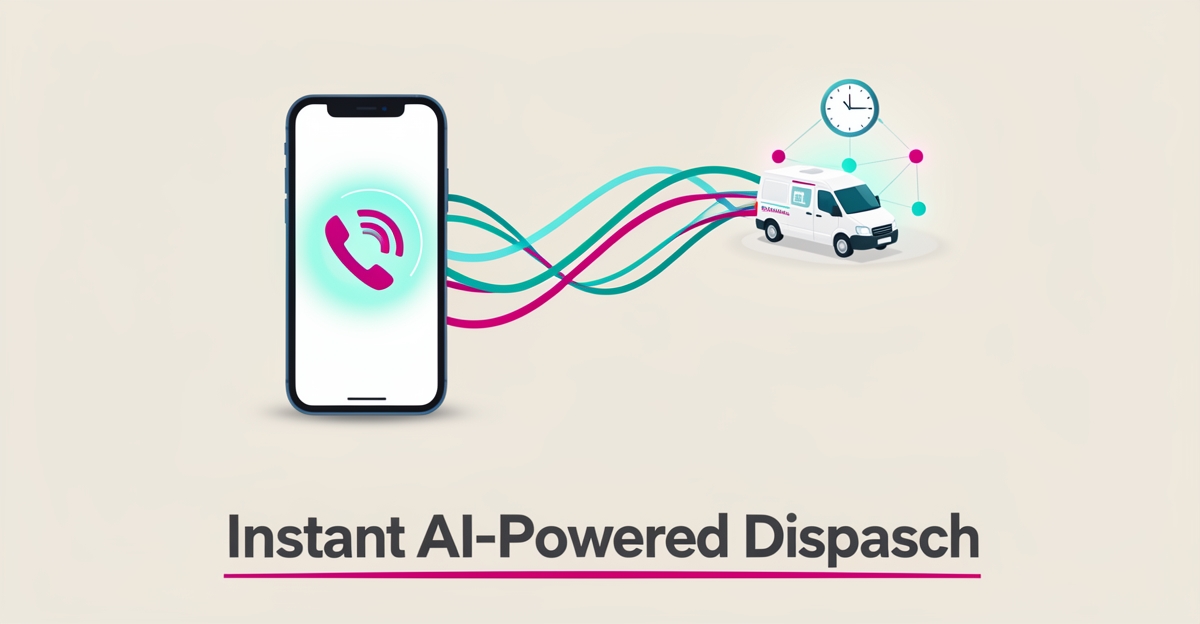
AI-Powered Emergency Call Routing: How Locksmiths Can Respond Faster
Quick Answer: AI call routing answers emergency locksmith calls in seconds instead of sending callers to voicemail. In emergencies, most customers hire whoever answers first, so every missed after-hours call is likely a lost job.
Key Facts
- In emergency situations, customers overwhelmingly hire the first business that answers, unanswered calls typically go straight to a competitor
- A large share of emergency service calls arrive between 6 PM and 6 AM, when most locksmith offices are closed
- Most callers who hit voicemail hang up and dial the next company rather than leave a message
- AI-powered call routing can cut first response time from minutes to seconds
- AI triage systems typically route calls with high accuracy and reduce unnecessary transfers, improving first-call resolution
Hire a team member that works 24/7 — for less than a part-time wage.
AI receptionists, SDRs, dispatchers and 99+ roles. Trained on your business, fully managed.
Not sure where to start? Ask our AI planner
Table of Contents
- The After-Hours Revenue Leak Locksmiths Can't Ignore
- How AI Triage Assesses Urgency and Dispatches Faster
- From Locked Out to Technician En Route in Two Minutes
- Implementing AI Call Routing Without Replacing Your Team
The After-Hours Revenue Leak Locksmiths Can't Ignore
The after-hours revenue leak is one of the most silent profit drains for locksmith businesses. Industry patterns in emergency trades consistently show that a large share of emergency calls, lockouts, broken keys, security breaches, arrive between 6 PM and 6 AM. When a customer is stranded outside their home or vehicle at midnight, they don't wait for business hours. They call until someone answers.
Yet many small locksmith operations rely on voicemail or staggered staffing during these critical windows. The consequence is stark: most callers who reach voicemail hang up immediately and dial another company. In emergency situations, speed isn't just convenient, it's decisive. The first business to answer usually wins the job, meaning every unanswered call after hours is likely lost revenue and a lost opportunity to build trust.
- Missed after-hours calls compound quickly for a multi-truck operation, every voicemail is a job your competitor took
- AI-powered call routing can reduce first response time from minutes to seconds
- Businesses using AI call routing commonly report higher customer satisfaction scores
For locksmiths, this revenue leak isn't just about missed calls, it's about ceding market share to competitors who are available when customers need them most. AIQ Labs' AI Employees, particularly in dispatcher and receptionist roles, can close this gap by ensuring every emergency call is answered instantly, assessed for urgency, and routed to the nearest available technician, even when the owner is asleep.
How AI Triage Assesses Urgency and Dispatches Faster
When a homeowner is locked out at midnight, every second counts. AI-powered call routing transforms how locksmiths handle these urgent situations by instantly assessing urgency and dispatching help, turning what was once a multi-minute wait into a near-instant first response.
The system begins with natural language understanding to detect the caller's intent the moment they speak. Simultaneously, sentiment analysis scans for vocal cues of panic or distress, allowing the AI to prioritize true emergencies over routine inquiries like key duplication or pricing questions. This dual analysis ensures that a homeowner stranded in extreme weather gets immediate attention while a customer asking about lock upgrades is handled appropriately.
As the conversation unfolds, the AI pulls context from the locksmith's CRM, past service history, location, and technician availability, to build a complete picture of the situation. It then intelligently matches the call to the nearest available technician with the right skills, using warm transfers that include an AI-generated summary so the human knows exactly what's needed upon connection.
Modern AI triage systems typically route calls with high accuracy, with first response occurring in seconds rather than the multi-minute waits traditional call centers average. The impact extends to resolution efficiency: by reducing unnecessary transfers and ensuring the right technician is dispatched the first time, AI-powered routing tends to lift first-call resolution rates meaningfully.
For locksmiths overwhelmed by after-hours emergencies, this technology means never missing a critical call again, even when the owner is asleep. AIQ Labs builds these secure, compliant voice AI systems specifically for service businesses that depend on rapid emergency response.
From Locked Out to Technician En Route in Two Minutes
When a homeowner discovers they're locked out at 2 AM, every minute counts. In emergencies, the first business to respond usually wins the job, making speed the decisive factor in winning emergency locksmith work. And most of these calls arrive precisely when locksmith offices are closed and voicemail systems frustrate callers into dialing competitors.
AI-powered call routing transforms this scenario by providing immediate, intelligent responses. The system authenticates callers, analyzes intent and sentiment in real time, and routes emergencies without delay. For a true lockout emergency, the AI follows a proven protocol: it first delivers critical safety guidance, such as advising the caller to seek shelter with a neighbor in extreme weather, then quotes transparent emergency rates before initiating dispatch. AI triage can complete routing in seconds, with the full intake-to-dispatch flow typically finished in a couple of minutes.
Consider a real-world interaction: a caller reports being locked out during a snowstorm. The AI responds calmly, "I understand this is urgent. First, please go inside a neighbor's home or wait in your vehicle to stay warm while we help." After confirming the lock type and location, it states, "Our emergency lockout rate is $195, and we can have a technician there within 25 minutes." Upon agreement, the AI books the dispatch and sends an instant text with the technician's name and ETA, all while the locksmith business owner remains asleep. Public safety dispatch centers have been adopting similar AI call handling to filter the large share of non-emergency calls, freeing human responders for true crises. For locksmiths, the same principle applies: AI handles pricing questions, availability checks, and scheduled service requests autonomously, ensuring that when a real emergency strikes, help is en route in under two minutes.
Implementing AI Call Routing Without Replacing Your Team
Most locksmiths hesitate to adopt AI call routing because they picture a rigid phone tree replacing the personal touch that builds trust. The reality is different: a well-designed system handles the routine majority of calls, pricing checks, availability questions, non-urgent rekey requests, so your team only fields the true emergencies that demand human judgment. Public safety data consistently shows that a large share of calls entering emergency lines aren't emergencies at all, and AI systems can automate most of those non-urgent interactions from day one.
- Build a knowledge base from your actual service manuals, pricing sheets, and CRM history, not generic templates, to keep answers grounded in your real business
- Define intent categories: emergency lockout, broken key, security breach, routine service, pricing inquiry, follow-up
- Set sentiment escalation rules that route distressed callers to your most experienced technician immediately
- Integrate with your scheduling and dispatch tools so the AI books appointments and sends real-time ETAs
- Run live test calls for every scenario before going live, then review AI summaries daily for the first two weeks
AIQ Labs architects these systems as owned assets, not rented widgets, so your routing logic, customer data, and escalation protocols stay yours. With the Start Monthly payment model, you deploy a trained AI dispatcher for roughly 80% less than the cost of a human hire, with build, integrations, monitoring, and continuous retraining included. You pause or adjust anytime. Most implementations are live in a few weeks, with actionable insights following shortly after. If your after-hours workflow is the single biggest leak in your business, a fixed-price Workflow Build can rebuild just that piece, phased, with clear milestones.
Still paying for 10+ subscriptions that don’t talk to each other?
We build custom AI systems you own outright. No vendor lock-in. Full control.
Not sure where to start? Ask our AI planner
Frequently Asked Questions
Will AI really answer my after-hours calls faster than voicemail?
Yes. AI triage cuts first response from a multi-minute wait to seconds, with full intake typically completed in a couple of minutes. In emergencies, the first business to answer usually wins the job, speed is decisive.
How much revenue am I losing from missed after-hours calls?
It depends on your call volume and average ticket, but the pattern is consistent: most voicemail callers hang up and dial another company, and a large share of emergency calls happen between 6 PM and 6 AM. Even a few missed lockouts a week at emergency rates adds up fast.
Can AI tell the difference between a real emergency lockout and a pricing question?
Yes. AI uses natural language understanding and sentiment analysis to detect urgency and intent in real time, escalating true emergencies and handling routine inquiries autonomously.
Will customers be annoyed talking to an AI instead of a human?
Typically the opposite. Because calls are answered instantly and routed correctly the first time, businesses using AI routing commonly report higher satisfaction scores and better first-call resolution. AI handles the routine majority of calls, freeing your team for real emergencies.
How fast can we get AI call routing up and running for our locksmith business?
Most implementations are live within a few weeks, with actionable insights following shortly after. You can start with a 2-minute Fit Check to see whether your dispatch workflow is a good fit.
Does AI call routing replace my technicians or staff?
No. AI handles after-hours triage, safety guidance, quoting, and dispatch so your team focuses on on-site work. AIQ Labs builds owned AI Employees as assistants, not replacements, under a Start Monthly model that costs roughly 80% less than a human hire.
Turn Midnight Lockouts Into Morning Revenue
For locksmiths, the real cost of missed after-hours calls isn't just lost jobs, it's eroded trust and surrendered market share to competitors who answer when it matters most. AI-powered call routing closes that gap by ensuring every emergency is assessed, prioritized, and dispatched in seconds, not minutes, while routine inquiries are handled autonomously so your team stays focused on true crises. The result is faster response times, higher first-call resolution, and recovered revenue that would otherwise vanish into voicemail. If you're ready to stop losing jobs to silence and start capturing every opportunity, even at 2 AM, the next step is simple: start the 2-minute Fit Check, then book a free 30-minute strategy call to see how an AI Employee tailored to your dispatch workflow can transform your emergency response, no obligation, just clarity.
Make AI your competitive advantage — not just another tool.
Strategy, implementation and ongoing optimization. One partner, end to end.
Not sure where to start? Ask our AI planner