AI-Powered Field Data Collection: How Seawall Builders Can Improve Project Accuracy
Key Facts
- Rework driven by inaccurate field data commonly consumes a significant share of contract value on marine construction projects — often cited in the range of 5–10%.
- AI is a set of technologies that enables computers to learn, reason, and perform tasks that used to require human intelligence, according to Google Cloud.
- AI-powered drones can process thousands of aerial images to identify structural issues and detect environmental changes faster than manual methods.
- Modern data pipelines automate repetitive tasks like data cleaning and labeling, and increasingly support natural-language analysis of project data.
- Computer vision tools like OpenCV, TensorFlow, and PyTorch enable automated crack detection and material classification without manual annotation.
- Coastal infrastructure demand continues to grow with maritime trade, raising the bar for precisely engineered seawalls.
Hire a team member that works 24/7 — for less than a part-time wage.
AI receptionists, SDRs, dispatchers and 99+ roles. Trained on your business, fully managed.
Not sure where to start? Ask our AI planner
The Hidden Costs of Manual Field Data Collection in Seawall Construction
Seawall builders know the stakes: a single miscalculation in toe depth or backfill compaction can cascade into structural failure, environmental penalties, and months of rework. Yet many firms still rely on clipboards, disconnected spreadsheets, and site photos that never make it into the project record until weeks later.
Manual inspections create blind spots. Crews measure elevation points by hand, record them in field notebooks, and transpose data into office systems days after the pour. Traditional methods struggle to capture the volume and velocity of data needed for accurate coastal modeling, and precise shoreline documentation is increasingly critical for regulatory compliance and long-term resilience planning.
Disconnected tools compound the problem. Drone footage sits on one drive, sensor logs on another, and daily reports in a third. No single source of truth exists. As IBM's overview of AI notes, these systems are built to simulate learning, comprehension, and decision-making — but only if the underlying data is unified and reliable. Without centralized data, project managers cannot validate as-built conditions against design intent in real time.
- Manual transcription errors propagate through quantity takeoffs and change orders
- Delayed data entry prevents timely corrective action on alignment or settlement
- Siloed records hinder handoffs between engineering, construction, and QA teams
- Incomplete documentation exposes builders to liability during post-storm assessments
These inefficiencies erode margins. Rework driven by inaccurate field data is commonly estimated to consume a meaningful share of contract value on marine projects. AIQ Labs works with construction firms to replace fragmented workflows with AI-powered data pipelines that ingest sensor feeds, drone imagery, and inspection logs into a unified system — turning field reality into actionable intelligence before the next tide cycle. If this describes your biggest bottleneck, our AI Workflow Builds rebuild that one costly workflow at a fixed price, in phases.
How AI-Powered Data Collection Transforms Marine Construction Accuracy
Seawall construction demands precision in data collection to ensure structural integrity and environmental compatibility. Traditional methods often struggle to capture the dynamic coastal conditions that influence project outcomes, leading to delays and costly rework. AI-powered field data collection offers a practical solution by automating the gathering and analysis of critical site information.
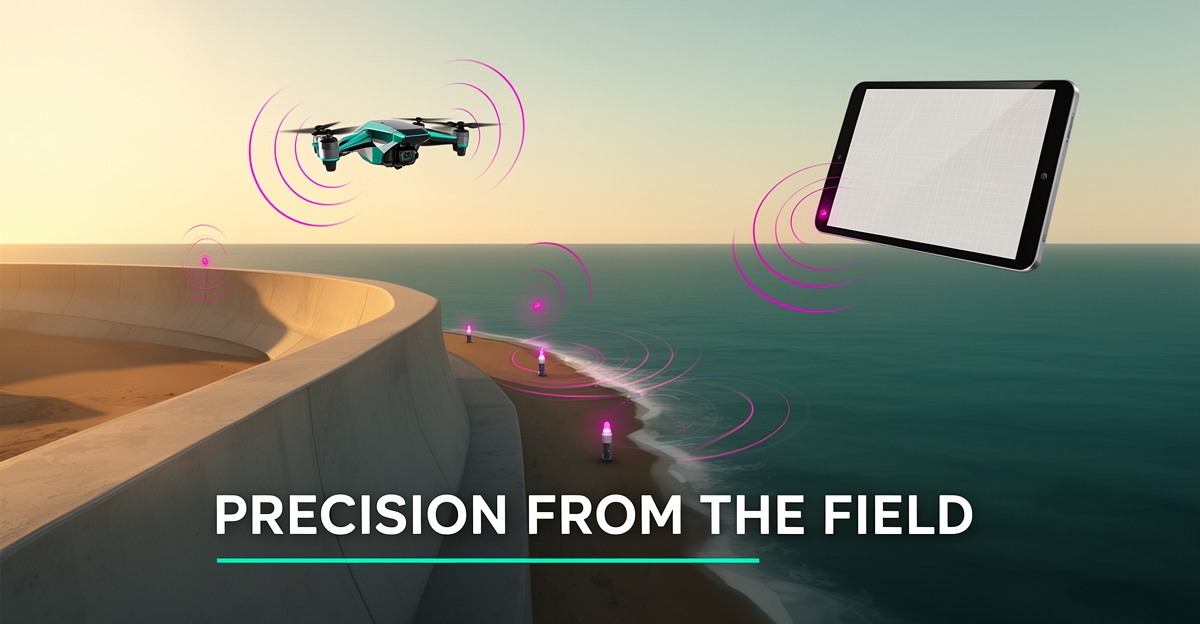
Drones equipped with advanced sensors and AI can process thousands of aerial images to identify structural issues, estimate material requirements, and detect environmental changes far faster than manual methods. This capability, proven in environmental monitoring applications, is now directly applicable to coastal construction projects where rapid, accurate data is essential. Aerial automation has demonstrated its potential for precise, large-scale operations in challenging environments — the same operating model seawall builders need for shoreline surveys and progress capture.
AI-powered data collection enables seawall builders to monitor structural integrity and track environmental conditions in real-time, creating a centralized system that connects field operations to project management. By leveraging computer vision tools like OpenCV, TensorFlow, and PyTorch, these systems can recognize patterns in visual data, track changes over time, and generate actionable insights with minimal manual intervention. Accurate marine ecosystem monitoring during construction is a growing regulatory expectation, which makes this capability more than a convenience.
AIQ Labs supports this transformation by connecting drone-collected data to centralized platforms where it can be processed, stored, and analyzed. This integration allows teams to move beyond reactive decision-making toward proactive project management, reducing uncertainty and improving outcomes. As maritime trade continues to grow, the ability to build resilient, precisely engineered seawalls becomes increasingly vital for coastal communities and infrastructure.
Building a Centralized Field Data Pipeline from Sensors to Decision-Making
Field data for seawall projects arrives in fragments — drone imagery, IoT sensor streams, and handwritten inspection reports. A centralized pipeline turns that fragmentation into a single source of truth that project teams can trust for decisions.
Drones equipped with advanced sensors and AI are increasingly used to gather data, monitor ecosystems, and map landscapes. For coastal infrastructure, the same automation delivers safer, quicker, and more detailed information from hard-to-reach areas — zones that are often dangerous or impractical for manual survey crews.
Ingestion starts at the edge and moves to a unified data layer. Drones upload orthomosaics and point clouds, IoT sensors stream tide, erosion, and structural strain metrics, and inspectors submit photos and forms from mobile apps. The pipeline normalizes formats, timestamps, and geospatial references so all sources align to the same project coordinate system.
Automation replaces manual cleaning and labeling. Modern data agents can automate data engineering, analytics, and administration workflows, handling repetitive tasks like data cleaning and labeling, and increasingly letting business users analyze data and predict outcomes using natural language.
Computer vision software tools like OpenCV, TensorFlow, and PyTorch can be used to recognize objects or text in images, track movements in videos, and generate or edit images using AI. In practice this means automated crack detection, material classification, and change detection across site visits without manual annotation.
A production pipeline for seawall builders typically includes:
- Ingestion connectors for drones, IoT sensors, and inspection apps with schema validation
- Automated cleaning, deduplication, and labeling agents for images and sensor time series
- Centralized storage with geospatial indexing and versioned datasets
- API layer feeding project management and reporting systems for real-time dashboards
The impact is measurable in context. Aerial automation is operating at scale in environmental and infrastructure programs worldwide, and the same pattern applies directly to seawall work: more frequent capture, faster processing, and fewer gaps in the project record. The firms that adopt this early set the documentation standard their competitors later have to match.
AIQ Labs designs AI data pipelines that connect field operations to project management and reporting systems, eliminating manual data entry and creating a single source of truth for teams — delivered in milestones, so you see working results before the next phase begins.
From Data Silos to Competitive Advantage: Implementation Roadmap for Seawall Contractors
Seawall contractors face growing pressure to deliver projects with precision while managing tight budgets and timelines. AI-powered field data collection offers a practical path forward by turning raw site information into actionable intelligence. Starting with high-impact applications like pre-construction surveys and progress monitoring allows firms to build confidence in the technology while addressing immediate pain points.
Drones equipped with AI can capture thousands of aerial images and process them to identify structural details, track changes over time, and detect potential issues before they become costly problems. This capability transforms how teams monitor erosion, material placement, and alignment against design specifications. Drone automation enables safer, quicker, and more detailed data collection from hard-to-reach areas — directly applicable to seawall inspections along coastal zones.
Integrating this data with existing project management systems creates a single source of truth that reduces miscommunication and rework. AI data pipelines can automate the flow of information from field sensors and drones into platforms used for scheduling, budgeting, and reporting. This eliminates manual data entry and ensures stakeholders access consistent, up-to-date information throughout the project lifecycle. Centralized data improves bid accuracy and creates defensible documentation that supports claims and change orders with verifiable evidence.
Successful implementation requires attention to data quality, change management, and phased rollout. Teams must establish clear protocols for data collection, validation, and storage to ensure AI models receive reliable inputs. Training programs should focus on how AI augments — not replaces — field expertise, helping crews interpret insights and act on them effectively. Starting with a pilot use case, such as monitoring concrete curing or seawall profile alignment, allows firms to refine workflows before scaling across multiple projects.
- Begin with pre-construction site surveys to establish baseline conditions
- Deploy drones for weekly progress tracking against design models
- Use AI to detect deviations in material placement or structural alignment
- Feed processed data into project management tools for real-time updates
- Establish audit trails that support compliance and dispute resolution
By treating AI-powered data collection as a strategic capability rather than a one-time tool, seawall builders can reduce rework, improve forecasting, and build a reputation for reliability. Over time, this foundation enables advanced applications like predictive maintenance and climate resilience planning — turning field data into a lasting competitive advantage.
Still paying for 10+ subscriptions that don’t talk to each other?
We build custom AI systems you own outright. No vendor lock-in. Full control.
Not sure where to start? Ask our AI planner
Frequently Asked Questions
How does AI-powered field data collection actually improve accuracy in seawall construction compared to manual methods?
What specific risks do seawall builders face when relying on manual data collection like clipboards and spreadsheets?
Can AI-powered data collection really reduce rework costs in marine construction projects?
How does centralized data from AI pipelines support better decision-making for seawall projects?
What role do computer vision tools like OpenCV and TensorFlow play in AI-powered seawall data collection?
Is implementing AI-powered data collection too complex for small or mid-sized seawall contractors?
From Field Notes to Competitive Edge
Manual clipboards and siloed spreadsheets are costing seawall builders in rework, delayed decisions, and liability exposure when toe depth, alignment, or settlement issues surface too late. AI-powered field data collection changes that equation by turning drone imagery, IoT sensor streams, and inspection logs into a unified, geospatially aligned pipeline that validates as-built conditions against design intent in real time. The result is faster corrective action, defensible documentation for claims and compliance, and a single source of truth that improves bid accuracy and handoffs across engineering, construction, and QA. As maritime trade keeps raising the bar for resilient coastal infrastructure, the firms that operationalize this capability first will set the standard for reliability. Start with a high-impact pilot — pre-construction baselines and weekly drone progress tracking — then scale to a centralized pipeline that feeds project management and reporting. If you want a clear view of where AI fits your workflow, take the two-minute Fit Check at aiqlabs.ai/apply, then book a free 30-minute strategy call to map your biggest bottleneck and the highest-ROI automation path.
Make AI your competitive advantage — not just another tool.
Strategy, implementation and ongoing optimization. One partner, end to end.
Not sure where to start? Ask our AI planner