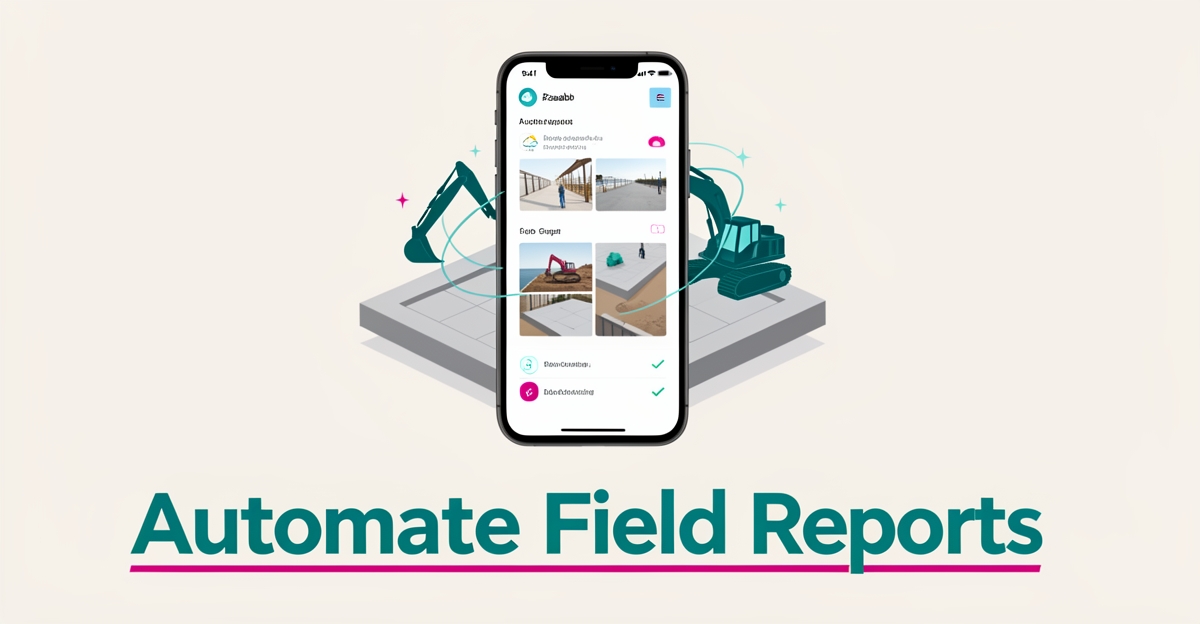
AI-Powered Field Reports: How Foundation Contractors Can Automate Post-Work Documentation
Key Facts
- Labor shortages remain a top concern across AEC firms as of late 2026, pushing administrative work onto already stretched crews
- A minority of AEC firms currently use AI for automation and decision-making, while a growing share are developing AI strategies, leaving a wide adoption gap
- Firms that automate progress reporting typically recover an hour or more per reporting cycle on report preparation alone
- AIQ Labs has deployed 200+ multi-agent systems and runs 4 live SaaS products daily, so this is proven infrastructure, not theory
- Field report automation connects photos, weather APIs, and technician notes into one continuous, verifiable record
Hire a team member that works 24/7 — for less than a part-time wage.
AI receptionists, SDRs, dispatchers and 99+ roles. Trained on your business, fully managed.
Not sure where to start? Ask our AI planner
The Hidden Cost of Manual Field Reporting in Foundation Work
Manual field reporting quietly drains foundation crews long after the concrete sets. The paperwork that proves the work was done often becomes the work itself.
Foundation contractors lose billable hours every day to handwritten notes, photo uploads, and end-of-day report compilation. Labor shortages remain a top concern across the AEC sector as of late 2026, forcing remaining crews to absorb administrative tasks that pull them off site. The result is delayed invoicing, missed compliance details, and field staff working overtime to catch up.
The manual process creates three compounding costs. First, time spent documenting is time not spent building. Firms that automate progress reporting typically recover an hour or more per reporting cycle on preparation alone, and grow headcount without a proportional jump in administrative overhead. Second, inconsistent reporting erodes client trust. Photos get mislabeled, weather conditions are omitted, and repair notes are vague, leading to disputes and rework requests.
Third, compliance risk rises when documentation is fragmented. Foundation work requires precise records for inspections, warranties, and safety audits. Paper forms and scattered digital files make it hard to prove adherence, especially under tight deadlines.
The sector is already feeling pressure to change. Only a minority of AEC firms currently use AI for automation and decision-making, while a much larger share of engineering firms are developing strategies to adopt it. That gap between intent and adoption leaves manual reporting costs unaddressed.
Manual reporting typically fails in predictable ways:
- Delayed closeouts because field notes wait until end of shift to be typed
- Missing photo evidence linked to specific repair steps or conditions
- Inconsistent weather and site condition logging that complicates compliance
- Repetitive re-entry of the same data across timesheets, invoices, and client reports
These inefficiencies matter more as labor gets tighter. When crews are short, administrative burden falls to project managers and foremen, increasing burnout and error rates. AI-powered field reports change the equation by auto-generating documentation with photos, weather data, and repair notes directly from the job site.
AIQ Labs builds these systems into daily workflows, whether as a single AI Workflow Build for your reporting bottleneck or as part of a broader AI Operating System, turning field data into draft-ready reports without adding headcount. The shift moves reporting from a nightly chore to a continuous, verifiable record that supports faster payment and stronger relationships.
How AI Automates Field Report Generation with Real-World Data Integration
Foundation contractors are turning to AI to eliminate the tedious task of compiling post-work documentation, transforming hours of manual reporting into automated, accurate field reports. By integrating photos, real-time weather data, and technician notes, AI systems generate comprehensive reports that align with project milestones and compliance requirements, without requiring additional administrative effort. This shift allows teams to focus on fieldwork while ensuring every job is thoroughly documented for clients and regulators.
AIQ Labs integrates these capabilities into daily workflows, enabling foundation contractors to maintain consistent, audit-ready reporting that builds client trust and reduces disputes over work completion. The automation doesn’t just save time, it standardizes quality across teams and projects, turning tribal knowledge into structured, accessible data. A growing share of engineering firms are developing AI strategies as of late 2026, recognizing its potential to streamline repetitive tasks like report generation that currently consume valuable technician time.
AI-powered field reports pull from multiple data sources to create a complete picture of each job site visit. Photos are analyzed for crack patterns, material application, and environmental conditions, while weather APIs provide precipitation, temperature, and humidity data at the exact time of work. Technician voice notes or typed observations are processed using natural language understanding to extract key actions, materials used, and any deviations from plan. This multi-source aggregation ensures reports reflect both visible outcomes and contextual factors that affect foundation performance.
- Computer vision identifies structural details in photos that might be missed in manual notes
- Weather data correlates environmental conditions with material curing times and work quality
- Natural language processing converts informal technician notes into standardized report sections
- Automated templates align output with client-specific formats and regulatory requirements
- Real-time sync ensures reports are available immediately after job completion
The impact is measurable: firms using AI for field documentation typically report meaningful reductions in administrative overhead, often recovering an hour or more per reporting cycle on preparation alone. More importantly, AI-powered reporting shifts documentation from a reactive, weekly chore to a proactive, continuous process that flags issues early and supports accurate revenue recognition. For foundation contractors operating in competitive markets with tight margins, this efficiency gain translates directly to improved project profitability and stronger client relationships, proving that automation isn’t just about saving time, but about delivering better, more transparent service.
Implementation Framework: From Pilot to Firm-Wide AI Documentation System
Starting with workflow mapping ensures AI field reporting aligns with actual contractor needs rather than forcing new processes onto existing teams. Successful AI implementation begins by mapping current project reporting workflows to identify the highest-impact automation opportunities. This foundational step helps foundation contractors pinpoint repetitive tasks, like compiling photos, weather logs, and repair notes, that consume valuable time better spent on-site or with clients.
Pilot projects provide low-risk validation before scaling, allowing firms to refine AI configurations based on real-world conditions. Selecting 2-3 pilot projects representing diverse site conditions, such as varying soil types, weather exposure, or repair complexity, ensures the system handles variability effectively. Firms using this approach typically see consistent time savings and improved administrative efficiency, directly addressing the labor shortage pressure most contractors feel.
Integration with existing tools like project management software and ERP systems ensures AI-generated reports flow seamlessly into current workflows without disruption. AIQ Labs supports this through fixed-price, milestone-based workflow builds that connect AI field reporting to platforms contractors already use, maintaining data consistency across systems. Once pilots demonstrate consistent time savings and compliance readiness, firm-wide rollout follows, supported by continuous improvement cycles that adapt the AI to evolving project types and reporting standards. This phased method turns AI documentation from a trial into a sustainable operational advantage.
Still paying for 10+ subscriptions that don’t talk to each other?
We build custom AI systems you own outright. No vendor lock-in. Full control.
Not sure where to start? Ask our AI planner
Frequently Asked Questions
How much time can AI-powered field reports save foundation contractors on documentation?
How do labor shortages affect field reporting, and how does AI help?
How does AI ensure field reports are accurate and compliant with regulatory requirements?
Are many engineering firms developing strategies to use AI for tasks like field reporting?
Can AI field reporting systems integrate with existing contractor tools like project management software?
From Field Notes to Competitive Advantage
Manual reporting is no longer a cost of doing business for foundation contractors, it’s a liability that steals billable hours, delays invoicing, and exposes compliance risk. AI-powered field reports change that by turning photos, weather data, and technician notes into draft-ready, audit-ready documentation automatically, standardizing quality and giving crews back time to build. The shift moves reporting from a nightly chore to a continuous, verifiable record that supports faster payment and stronger client trust. If you’re mapping workflows, start by identifying the repetitive documentation steps that consume the most crew and PM time, then pilot AI reporting on 2–3 diverse sites to validate accuracy and adoption. AIQ Labs builds these systems into daily workflows, whether as a single fixed-price AI Workflow Build or a full AI Operating System, without adding headcount. Ready to see where the highest-ROI automation is for your teams? Start the two-minute Fit Check at https://aiqlabs.ai/apply, then book a free 30-minute strategy call at https://aiqlabs.ai/book to map your bottleneck and build a plan.
Make AI your competitive advantage — not just another tool.
Strategy, implementation and ongoing optimization. One partner, end to end.
Not sure where to start? Ask our AI planner