AI-Powered Food Safety Audit Summaries: How to Deliver Faster, Clearer Reports to Clients
Key Facts
- Most food safety compliance data, typically cited as over 80%, exists in unstructured formats like PDFs, scans, and emails
- FSMA 204 requires traceability records to be produced quickly, commonly within 24 hours, of an FDA request
- Documentation failures are a leading driver of FDA Warning Letters in the food industry
- Modern document AI can extract data from handwritten logs, lab certificates, and supplier paperwork without rigid templates
- Real-time deviation detection with AI monitoring helps surface non-conformances before auditors find them
- Human-in-the-loop review keeps AI-generated summaries accountable and audit-ready
Hire a team member that works 24/7 — for less than a part-time wage.
AI receptionists, SDRs, dispatchers and 99+ roles. Trained on your business, fully managed.
Not sure where to start? Ask our AI planner
The Hidden Cost of Manual Food Safety Audit Reporting
Food safety teams face a quiet bottleneck in their daily workflow: the majority of compliance data, often cited as over 80%, lives in unstructured formats like PDFs, scans, and emails, forcing manual processing that routinely consumes hours each week on report preparation and data extraction. This hidden cost isn't just about time. It creates a compliance gap where slow documentation turns routine requests into urgent scrambles, especially when regulators expect records on short notice under FSMA 204 or arrive unannounced.
The manual burden extends beyond data entry to formatting reports for client consumption, a task that pulls skilled quality assurance staff away from higher-value work like trend analysis and corrective action planning. Teams spend significant portions of their day copying information from disparate sources into standardized templates, a process prone to transcription errors that can trigger non-conformances during audits. The core problem isn't effort, it's architecture. Traditional systems were built for periodic preparation, not continuous readiness.
For teams building custom AI systems, like the multi-agent workflows AIQ Labs deploys across AI Workflow Builds, this is a clear opportunity to change how food safety documentation gets created and delivered. By automating the extraction and structuring of unstructured compliance data, AI-powered solutions shift teams from reactive report generation to proactive compliance management, turning a daily time sink into a streamlined, auditable process that supports faster client reporting and stronger regulatory positioning.
How AI Delivers Faster, Clearer Audit Summaries Without Manual Editing
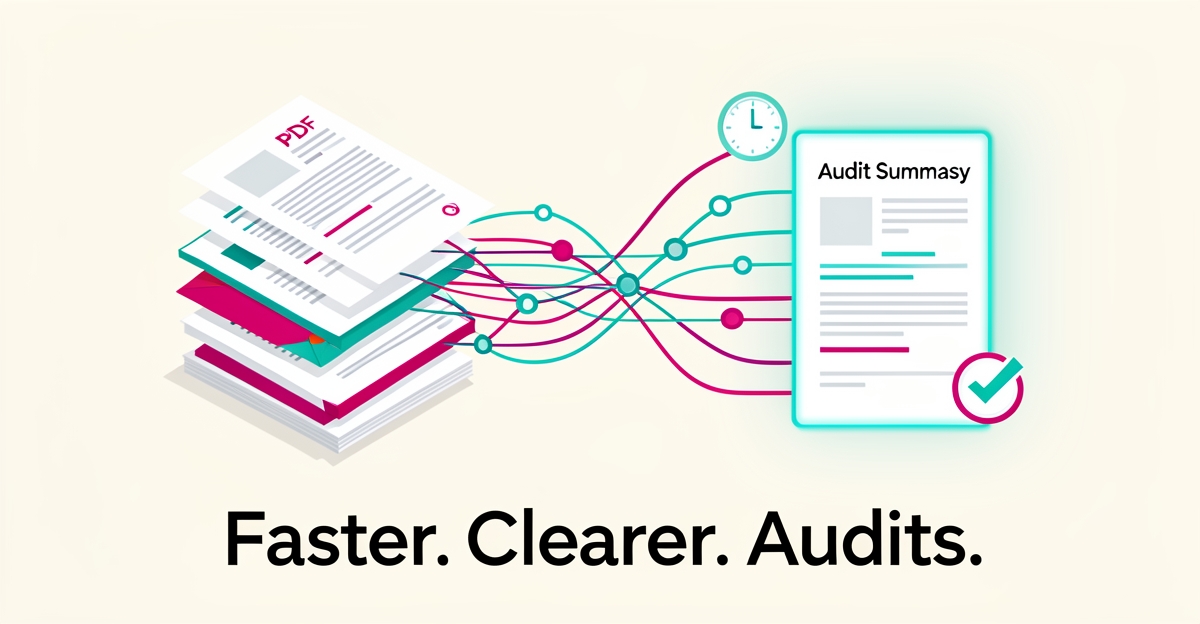
The bottleneck in food safety reporting has never been a lack of data, it's that most compliance records live in unstructured PDFs, scans, and emails that traditional tools can't read. That structural gap forces quality teams into hours of manual extraction before every audit. AI-powered platforms flip the model: they ingest large batches of documents at once and return structured, audit-ready summaries in minutes.
Modern document AI can extract critical control point data, timestamp deviations, link corrective actions, and format everything into presentation-ready charts and spreadsheets, often without a single line of custom code. Accuracy still matters, and it's why serious implementations pair strong extraction models with validation checkpoints rather than trusting raw model output. For firms like AIQ Labs that build custom, brand-aligned reporting systems, that combination of speed and verification is what makes low-touch audit workflows viable.
- Continuous audit readiness replaces periodic fire drills
- Timestamped, tamper-evident records support fast FSMA 204 responses
- Real-time deviation detection surfaces gaps before auditors find them
- Multi-standard outputs align with BRC, SQF, and HACCP simultaneously
Teams using these AI workflows typically reclaim several hours per week previously lost to manual reporting. That time shifts to investigative work, supplier engagement, and preventive controls, the work that actually improves food safety.
Implementing AI Audit Summaries: From Assessment to Client-Ready Reports
Implementation begins with a clear assessment of current workflows. Food safety teams commonly spend hours each week on manual compliance reporting, with most audit data trapped in unstructured formats like PDFs, emails, and scanned forms. This inefficiency delays report generation and increases error risk during high-pressure audit periods. AIQ Labs helps businesses map these pain points to identify where automation delivers the greatest impact without disrupting operations, typically starting with the single workflow that costs the most, rebuilt in phases at a fixed price.
Selecting the right AI approach is critical for audit-ready accuracy. Leading document AI systems reliably convert complex food safety records into structured insights, extracting critical compliance data from handwritten logs, lab certificates, and supplier documentation without requiring rigid templates. For food safety businesses, this means audit summaries can be generated quickly from raw input, eliminating days of manual compilation. Accuracy thresholds and exception handling should be defined up front so the system flags uncertain extractions instead of silently passing them through.
Integration with existing systems ensures seamless data flow into the AI workflow. Connecting the platform to temperature monitors, pH sensors, and sanitation logs allows real-time capture of Critical Control Point (CCP) data, triggering automatic audit record creation when deviations occur. This supports continuous compliance rather than periodic preparation, aligning with FSMA 204's rapid record production expectations. AIQ Labs designs these integrations to work with legacy equipment and modern IoT devices alike, minimizing disruption during deployment.
Configuration for regulatory standards ensures outputs meet FDA, BRC, and SQF requirements without manual reformatting. The AI system is trained to recognize framework-specific terminology, generate required documentation formats, and apply corrective action workflows tied to each standard. This multi-standard capability matters for businesses serving diverse markets or navigating overlapping regulatory demands. Embedding these rules into the AI's logic helps teams avoid costly rework and maintain audit readiness at all times.
Quality controls validate AI-generated summaries before client delivery. Senior oversight checkpoints, automated accuracy thresholds, and exception-handling protocols ensure reports meet both compliance standards and brand expectations. Teams review AI outputs for contextual accuracy, verifying, for example, that a temperature deviation was properly linked to a corrective action, before finalizing. This human-in-the-loop approach builds trust while preserving accountability, and feedback from these checks steadily refines performance. To see how this applies to your workflow, start the two-minute Fit Check at AIQ Labs and identify your highest-impact automation opportunity.
Still paying for 10+ subscriptions that don’t talk to each other?
We build custom AI systems you own outright. No vendor lock-in. Full control.
Not sure where to start? Ask our AI planner
Frequently Asked Questions
How much time does manual food safety audit reporting actually take?
Why are my audit records always in PDFs and emails?
Can AI really extract data accurately from handwritten logs and lab certificates?
Will AI-generated audit summaries meet FSMA 204 record requests?
How does AI reduce non-conformances during audits?
Can one AI workflow process all my audit files at once?
Turning Audit Anxiety into Operational Advantage
The food safety industry's hidden bottleneck, manual processing of unstructured data, costs teams hours every week and creates compliance gaps when regulators expect records on short notice under FSMA 204. AI-powered solutions eliminate this drag by extracting and structuring data from PDFs, scans, and emails, enabling continuous audit readiness and freeing skilled staff for higher-value work like trend analysis and supplier engagement. AIQ Labs has deployed 200+ multi-agent systems and runs four live SaaS products daily, so this is built and operated practice, not theory. Whether you need a single workflow rebuilt, managed AI staff for intake and follow-up, or a full AI Operating System connecting your compliance layer, start with a free two-minute Fit Check at https://aiqlabs.ai/apply, followed by a no-obligation 30-minute strategy call to map your biggest automation opportunity. Questions first? Reach us at [email protected].
Make AI your competitive advantage — not just another tool.
Strategy, implementation and ongoing optimization. One partner, end to end.
Not sure where to start? Ask our AI planner