AI-Powered Forecasting for Hardware Demand: How to Plan Better for Seasonal Peaks
Key Facts
- Industry studies report AI-driven forecasting can cut forecast errors by 20-50% in seasonal, fast-moving categories
- Better demand anticipation is consistently linked to fewer lost sales during peak windows
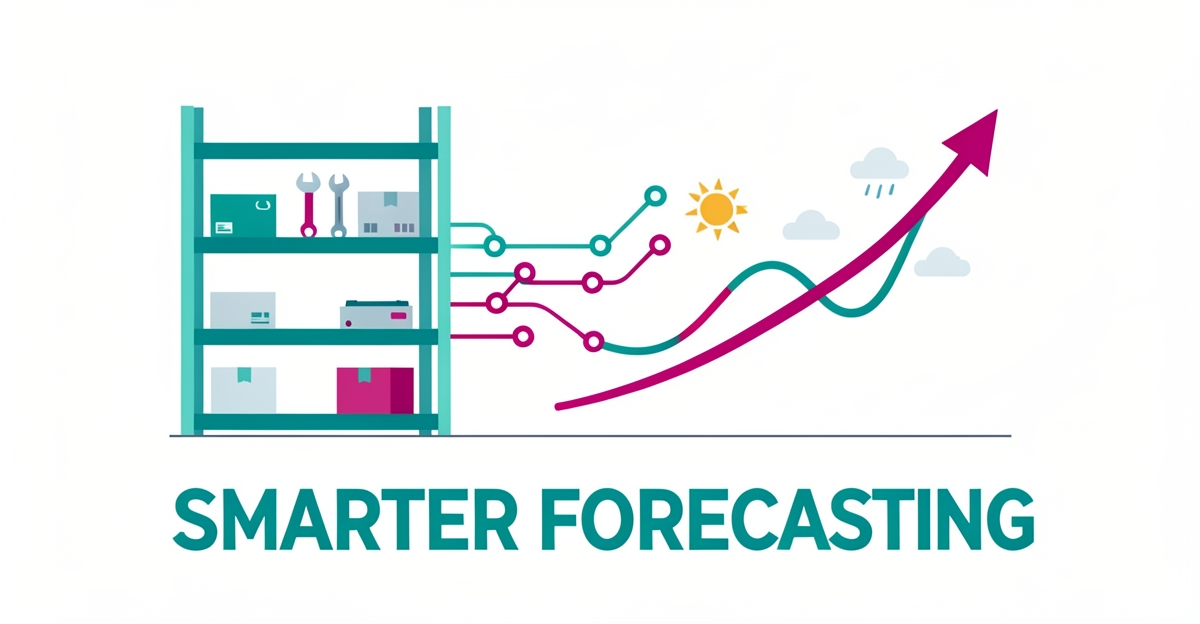
- AI forecasting models combine historical sales with weather, permitting, and regional activity signals
- Automated forecasting shortens planning cycles and handles far more SKUs than manual spreadsheets
- AIQ Labs has deployed 200+ multi-agent systems and runs 4 live SaaS products daily
Hire a team member that works 24/7 — for less than a part-time wage.
AI receptionists, SDRs, dispatchers and 99+ roles. Trained on your business, fully managed.
Not sure where to start? Ask our AI planner
The Seasonal Peak Problem for Hardware Distributors
Seasonal peaks don't arrive on a schedule you can print. A warm spring, a wet winter, or a sudden construction boom can spike demand for fasteners, lumber, and power tools overnight, leaving distributors either empty-handed or buried in excess stock.
Hardware demand fluctuates with construction seasons and weather, creating a volatile swing between stockouts and overstocking. Traditional planning relies on historical sales averages and manual adjustments, which lag behind real-world conditions. That lag shows up as lost sales, emergency freight, and capital tied up in slow-moving inventory.
The cost of inaccurate planning is measurable. Industry research on AI-driven forecasting in fast-moving seasonal categories has reported error reductions in the 20-50% range, and better demand anticipation is consistently tied to fewer lost sales during peak windows. Hardware distribution faces similar seasonality pressures, which is why these signals matter.
Traditional methods also struggle with scale and speed. Manual processes limit how many SKUs, regions, and external signals can be considered at once, and forecasting cycles stretch just when agility matters most. AI-powered demand forecasting software integrates and analyzes multiple data sources—historical sales, market trends, and external factors—to predict future demand more accurately.
Weather, project starts, and regional activity are external signals that break simple seasonality models. Distributors need forecasts that respond to rain delays, heat waves, and municipal permitting cycles, not just last year's quarter. Without that responsiveness, service levels drop at the exact moment customers are most willing to buy.
The seasonal peak problem creates a cascade of operational pain:
- Stockouts on high-velocity SKUs during spring build season
- Overstock of slow movers after the peak collapses
- Emergency replenishment and premium freight costs
- Lost margin from discounting excess inventory
AI changes the planning equation by treating forecasting as a continuous, data-driven process rather than a quarterly exercise. Models can ingest historical sales, weather trends, and regional activity to anticipate demand shifts before they hit the warehouse. That visibility supports improved forecast accuracy and enhanced service levels while reducing both stockouts and excess inventory.
For distributors navigating construction cycles, predictive analytics becomes a core operational lever. AIQ Labs builds forecasting systems through AI Workflow Builds—a fixed-price engagement that rebuilds the one workflow costing you the most, in phases—so distributors can optimize ordering, reduce waste, and meet peak demand without overstocking.
How AI Models Forecast Demand Beyond Historical Sales
Hardware demand rarely moves in a straight line. Construction seasons, weather swings, and regional projects create peaks that manual spreadsheets miss, leaving distributors short on stock or carrying excess inventory into slow months.
AI models forecast beyond historical sales by ingesting multiple live signals and learning relationships between them. Instead of extrapolating last year's numbers, the system correlates demand with external drivers and updates predictions as conditions change.
Traditional forecasting relies on manual processes and limited data analysis. AI-driven demand forecasting delivers higher accuracy through automated analysis of multiple data sources, reducing forecasting cycles. The shift is from intuition to relevance.
Industry research on AI-driven forecasting has reported error reductions in the 20-50% range in fast-moving seasonal categories, with fewer lost sales tied to better anticipation. Those gains come from multi-source analysis, not more complex math alone.
AI-powered demand forecasting software integrates and analyzes various data sources, including historical sales, market trends, and external factors, to predict future demand accurately. For hardware distributors, that means connecting warehouse movement with real-world triggers.
Models typically combine:
- Historical sales and inventory transactions cleansed for accuracy and consistency
- Weather trends and seasonality that drive roofing, landscaping, and outdoor construction demand
- Regional activity signals such as permitting data, construction starts, and local economic indicators
- Promotions, pricing changes, and competitor actions that shift buying timing
This multi-source approach improves forecast accuracy and enhances service levels while reducing stockouts and excess inventory. Speed and relevance matter more than complex math, because forecasts must reflect what is happening now.
AIQ Labs builds custom forecasting systems that help distributors optimize ordering, reduce waste, and meet peak demand without overstocking. Custom AI models analyze historical sales patterns, seasonality and trend detection, multi-channel demand forecasting, and automated reorder optimization—delivered through AI Workflow Builds for a single critical workflow, or as part of a full AI Operating System when forecasting needs to connect with procurement, warehousing, and fulfillment.
Deploying AI in controlled pilots allows teams to align forecasting goals with measurable outcomes such as error reduction or inventory savings, then expand once accuracy improves. Ongoing monitoring and adaptation keep models relevant as markets shift.
The result is a forecasting process that is highly scalable, handling large datasets and complex forecasting scenarios, and delivers cost reduction through better visibility across the supply chain.
From Forecast to Action: Optimizing Ordering and Inventory
With better forecasts in hand, distributors can turn insights into action by optimizing ordering and inventory decisions. AI-powered forecasting enables precise alignment of supply with anticipated demand, directly reducing stockouts and excess inventory. Industry research has reported that AI-driven forecasting can reduce stockouts substantially and cut excess inventory by 20-50%, freeing up working capital and shelf space.
For hardware distributors facing seasonal construction peaks, this means ordering the right materials at the right time—avoiding both missed sales during high-demand periods and costly overstock when activity slows. AI models continuously refine predictions using real-time inputs like weather patterns and regional building permits, ensuring orders reflect current market conditions. This dynamic approach supports smoother operations across procurement, warehousing, and fulfillment teams.
The financial impact extends beyond inventory savings. Optimized ordering improves cash flow by reducing capital tied up in slow-moving stock and minimizing rush-order fees during stockouts. Businesses using AI forecasting typically see measurable gains in inventory turnover and gross margin return on investment (GMROI). These improvements strengthen resilience against demand volatility while supporting sustainable growth.
AIQ Labs' custom forecasting systems integrate directly with distributor workflows, translating predictive insights into automated reorder triggers and safety stock adjustments. By grounding forecasts in local demand signals—such as regional construction schedules and seasonal weather shifts—these systems help distributors maintain service levels without over-investing in inventory. The result is a more agile, cost-efficient supply chain that responds proactively to market changes.
Building a Reliable AI Forecasting System in Practice
Seasonal peaks in hardware demand can wipe out margins if forecasts miss. AI shifts forecasting from guesswork to a measurable operational system that aligns supply with construction cycles, weather, and regional activity.
Start by aligning forecasting goals with measurable outcomes such as error reduction or inventory savings. Clear targets guide model design and make success auditable. Industry research shows AI-driven forecasting can deliver meaningful error reductions in seasonal, fast-moving categories when models are fed clean, multi-source data.
Cleanse and structure historical and transactional data before any modeling. Demand forecasting is a supply chain process that analyzes historical data, sales projections, inventory management, and market trends to help businesses optimize operations. Consistent data reduces bias and improves relevance.
Integrate external signals that drive hardware demand. Weather, promotions, competitor actions, and regional construction activity all influence pull-through. AI-powered software integrates and analyzes various data sources, including historical sales, market trends, and external factors, to predict future demand accurately.
Deploy AI in controlled pilots and expand once accuracy improves. Pilots limit risk while proving value on a single SKU family or region. Monitoring and adapting models ensures ongoing accuracy and relevance as seasons shift.
A practical build sequence for distributors looks like this:
- Align forecasting goals with measurable outcomes like error reduction or inventory savings
- Cleanse and structure historical and transactional data for consistency
- Integrate external signals like weather, promotions, and regional activity
- Deploy AI in controlled pilots and expand after accuracy gains
- Monitor and adapt models continuously to maintain relevance
AIQ Labs builds forecasting systems you own outright. With the Own It Outright payment model, SMB distributors keep the code, agents, and data—no vendor lock-in, no per-forecast fees. That ownership supports long-term optimization for ordering, waste reduction, and peak demand coverage. If you'd rather start lighter, Start Monthly or Build in Milestones let you prove value before committing further.
The market momentum is clear. Adoption of predictive and generative AI across supply chains has grown rapidly through 2025 and 2026, with distributors moving forecasting from spreadsheet exercises to always-on systems.
Traditional forecasting is time-consuming and labor-intensive with lower accuracy. AI-driven approaches are automated and efficient, reducing forecasting cycles while handling large datasets and complex scenarios.
Still paying for 10+ subscriptions that don’t talk to each other?
We build custom AI systems you own outright. No vendor lock-in. Full control.
Not sure where to start? Ask our AI planner
Frequently Asked Questions
How does AI forecasting actually improve accuracy for hardware distributors compared to traditional methods?
Can AI forecasting really help reduce stockouts during peak construction seasons?
What kind of data do AI forecasting models use beyond past sales to predict hardware demand?
Is implementing AI forecasting too complex or expensive for small hardware distributors?
How quickly can a hardware distributor see results from implementing AI forecasting?
Does AI forecasting actually reduce excess inventory and improve cash flow for hardware businesses?
Turn Seasonal Chaos into Predictable Performance
Hardware distributors know that seasonal peaks don't wait for perfect forecasts—construction booms, weather swings, and regional projects can spike demand overnight, leading to stockouts or costly overstock. AI-powered forecasting changes that dynamic by integrating historical sales with real-time signals like weather trends, permitting data, and local activity to anticipate shifts before they hit the warehouse. The result is measurable: reduced errors, fewer lost sales, and inventory that aligns with actual demand, freeing up working capital and improving service levels when it matters most. For distributors ready to move beyond guesswork, the next step is clear. Start the Fit Check—a free, no-obligation two-minute assessment—to see where AI-driven forecasting can unlock measurable gains in your operations. If there's a clear win, we'll map it out in a 30-minute strategy call. If not, we'll say so. Either way, you walk away with clarity on your biggest bottleneck and a path forward. Take the first step today at https://aiqlabs.ai/apply and turn seasonal volatility into a competitive advantage.
Make AI your competitive advantage — not just another tool.
Strategy, implementation and ongoing optimization. One partner, end to end.
Not sure where to start? Ask our AI planner