AI-Powered Garden Event Planning: How to Schedule Workshops, Workdays, and Harvests
Key Facts
- AI tools can meaningfully reduce event creation and social media campaign times, freeing organizer hours for garden work rather than admin
- Events scheduled without weather consideration typically face higher cancellation risks
- Volunteer time is wasted when events occur during low-availability periods
- Poor turnout diminishes the educational and social impact of garden activities
- Repeated cancellations erode long-term community trust and engagement
- Manual coordination limits the ability to scale successful garden programs
Hire a team member that works 24/7 — for less than a part-time wage.
AI receptionists, SDRs, dispatchers and 99+ roles. Trained on your business, fully managed.
Not sure where to start? Ask our AI planner
The Hidden Cost of Manual Garden Event Planning
Manual scheduling methods for garden workshops, workdays, and harvests often fail to account for the dynamic factors that influence participation and success. Organizers typically rely on spreadsheets, email chains, or paper calendars that cannot quickly adapt to changing weather patterns or volunteer availability, leading to last-minute cancellations and poor turnout. These inefficiencies result in wasted time and resources, as volunteers show up to events that are poorly attended or get called off due to avoidable conflicts. Traditional event planning processes can consume significant staff hours that could be better spent on actual garden activities or community outreach. Industry analyses of AI event tools, including Eventbrite's guidance for organisers, consistently point to automation as a way to reclaim planning hours. Without intelligent systems, garden coordinators miss opportunities to align events with peak interest, optimal growing conditions, and maximum volunteer readiness.
The hidden costs extend beyond scheduling inefficiencies to include diminished community engagement and reduced volunteer morale. When events are poorly timed or frequently canceled, participants lose trust in the garden's reliability and are less likely to return for future activities. This erosion of engagement undermines the core mission of community gardens to foster connection, education, and shared stewardship of green spaces. Volunteers who repeatedly encounter scheduling conflicts or show up to near-empty workdays may disengage entirely, taking their skills and enthusiasm elsewhere. AI-powered planning tools can analyze member availability, local interest trends, and hyperlocal weather forecasts to identify the most viable windows for workshops, workdays, and harvests. By doing so, they help ensure that events are scheduled when participation is most likely, increasing both attendance and satisfaction. Event-industry research such as Cvent's coverage of AI tools for events suggests that AI-driven scheduling can improve resource allocation and reduce no-show rates across community-based initiatives.
- Events scheduled without weather consideration face higher cancellation risks
- Volunteer time is wasted when events occur during low-availability periods
- Poor turnout diminishes the educational and social impact of garden activities
- Repeated cancellations damage long-term community trust and engagement
- Manual coordination limits the ability to scale successful programs
AIQ Labs supports community garden operations by building custom AI systems that analyze interest data, weather forecasts, and member availability to plan recurring events with greater precision. These solutions enable gardens to move beyond reactive scheduling toward proactive, data-informed planning that maximizes volunteer impact and community benefit. By automating the analysis of complex variables, AI reduces the administrative burden on organizers while increasing the likelihood of successful, well-attended events. This approach not only saves time but also strengthens the garden's role as a vibrant, reliable hub for learning, connection, and sustainable food production. Gardens that adopt AI-powered planning typically report higher consistency in event execution and deeper engagement from participants who can rely on well-timed, relevant activities. Ultimately, intelligent scheduling transforms garden event planning from a source of frustration into a catalyst for sustained community involvement and growth.
How AI Optimizes Garden Event Scheduling Using Real-World Data
Garden event planning stops being guesswork when AI continuously reads signals from the community, the forecast, and the calendar.
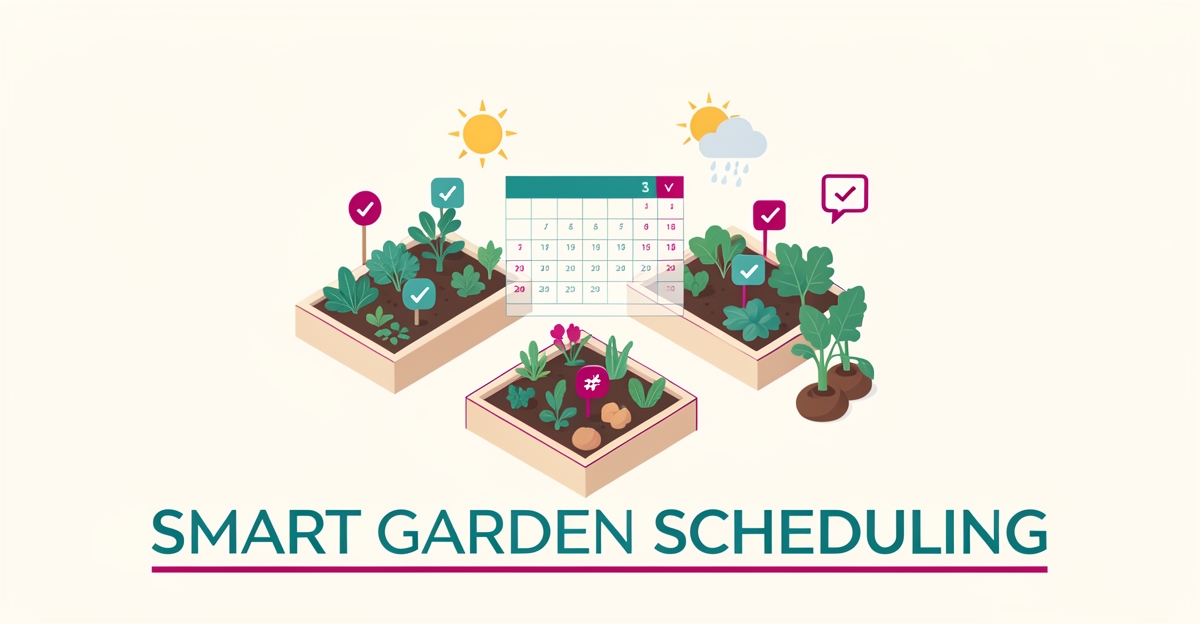
AI analyzes interest data, weather forecasts, and member availability to optimize garden event planning, which can help increase participation and engagement in garden events. This dynamic scheduling replaces static calendars with adaptive plans that respond to real conditions.
The approach mirrors proven event optimization. Event-industry guidance such as Eventbrite's AI tools for organisers points to meaningful reductions in event creation and social media campaign times when AI handles repetitive planning work, along with lower promotional costs on channels like Facebook and Instagram.
For community gardens, the system works as a closed loop of data and action. Interest signals from sign-ups, past attendance, and topic requests are weighted against short-term weather forecasts and long-term seasonal windows. Member availability is pulled from recurring schedules, volunteer rosters, and workday preferences.
AIQ Labs builds this capability through AI Workflow Builds, where AI analyzes interest data, weather forecasts, and member availability to plan recurring garden events. The result is higher participation and engagement with less manual coordination.
Dynamic scheduling delivers three practical shifts:
- Workshops are placed in weather-stable windows with peak member availability
- Workdays are clustered around harvest readiness and volunteer capacity
- Harvests are announced when crop data, forecast, and attendance probability align
The model also supports sustainability and community engagement goals. By avoiding rainouts and low-turnout dates, gardens reduce waste from prepared materials and travel. Timely scheduling strengthens partnerships with sponsors, venue owners, and volunteers.
Interest data informs topic selection and frequency. Weather forecasts trigger automatic date shifts for outdoor activities. Member availability ensures core volunteers are not overcommitted.
This is event-driven automation applied to community operations. AI monitors changing inputs and proposes reschedules before problems occur, keeping planning adaptive rather than reactive.
Implementing AI for Sustainable, High-Engagement Garden Operations
Garden event calendars often collapse under weather shifts, low turnout, and manual coordination. AI changes that by turning interest signals, forecasts, and member availability into recurring, high-participation plans.
Start with data capture and analysis. AI systems ingest sign-up history, workshop preferences, and volunteer skills to forecast demand for workshops, workdays, and harvests. Layering in weather forecasts lets planners shift outdoor activities before rain cancels turnout, a core capability highlighted in AI tools for events research.
Operational automation follows. Event-industry analyses such as Eventbrite's guidance on AI for event organisers point to meaningful reductions in event creation and social media campaign times, along with lower cost-per-click on AI-assisted Facebook and Instagram campaigns, freeing budget for soil, tools, and community outreach.
Sustainability goals embed directly into scheduling logic. AI can balance attendance peaks with low-impact timing, suggest reusable supply lists, and route volunteers to tasks that reduce waste and travel. Community engagement remains central, as event planning for community development emphasizes designing gatherings that build stronger, more connected communities.
Implementation for garden operations typically follows a practical sequence:
- Map recurring event types and sustainability KPIs, then connect member database, calendar, and weather feeds.
- Commission an AI Workflow Build to rebuild the scheduling workflow that costs the most time, at a fixed price and in phases.
- Use an AI Employee to run the planning loop around the clock, checking availability, sending invites, and adjusting for forecasts.
- Monitor participation and waste metrics, then adapt timing, format, and outreach automatically.
AIQ Labs builds these patterns for community gardens through AI Workflow Builds and managed AI Employees, with 200+ multi-agent systems deployed to date. The approach aligns with true ownership rather than subscription lock-in: with the Own It Outright model, the garden controls the data, logic, and future changes.
An AI Employee can act as a scheduler and engagement agent, booking workdays around member availability, confirming harvest windows after weather checks, and nudging volunteers with personalized reminders, at a fraction of the cost of a human hire. A custom workflow ties CRM, scheduling, and communications into one source of truth, eliminating manual data entry and last-minute cancellations. For gardens that want everything connected over time, an AI Operating System layers these pieces into a single operating layer built in phases and owned outright.
The result is dynamic, adaptive planning that increases participation while honoring sustainability commitments. Gardens move from reactive posting to proactive, data-informed programming that protects soil health, volunteer time, and community trust.
Still paying for 10+ subscriptions that don’t talk to each other?
We build custom AI systems you own outright. No vendor lock-in. Full control.
Not sure where to start? Ask our AI planner
Frequently Asked Questions
How does AI actually schedule garden events better than a shared spreadsheet?
Will AI scheduling really save my garden organizers time?
What specific data does the AI need to plan our workshops and harvests?
Can AI help reduce our marketing costs for promoting garden events?
What happens if the weather changes suddenly after the AI schedules an event?
How do we implement AI scheduling without getting locked into expensive software subscriptions?
From Spreadsheet Chaos to Community Growth
Garden coordinators no longer need to choose between fighting weather forecasts in spreadsheets and watching volunteers disengage after another rainout. AI-driven scheduling turns three messy inputs, interest signals, hyperlocal forecasts, and real member availability, into a single adaptive calendar that protects both volunteer time and community trust. The payoff is real: event-industry analyses such as Eventbrite's guidance point to meaningful time savings in event creation and promotion, while Cvent's research supports AI scheduling's role in reducing no-shows across community initiatives. AIQ Labs embeds this intelligence directly into garden operations through AI Workflow Builds and managed AI Employees, replacing reactive posting with proactive, data-informed programming that scales. The next step is simple: map your recurring event types, connect your member database and weather feed, and let an AI Employee run the planning loop. Start with a two-minute Fit Check at https://aiqlabs.ai/apply, then join a free 30-minute strategy call at https://aiqlabs.ai/book to see which workflow delivers the fastest win, no obligation, just clarity on your AI opportunity.
Make AI your competitive advantage — not just another tool.
Strategy, implementation and ongoing optimization. One partner, end to end.
Not sure where to start? Ask our AI planner