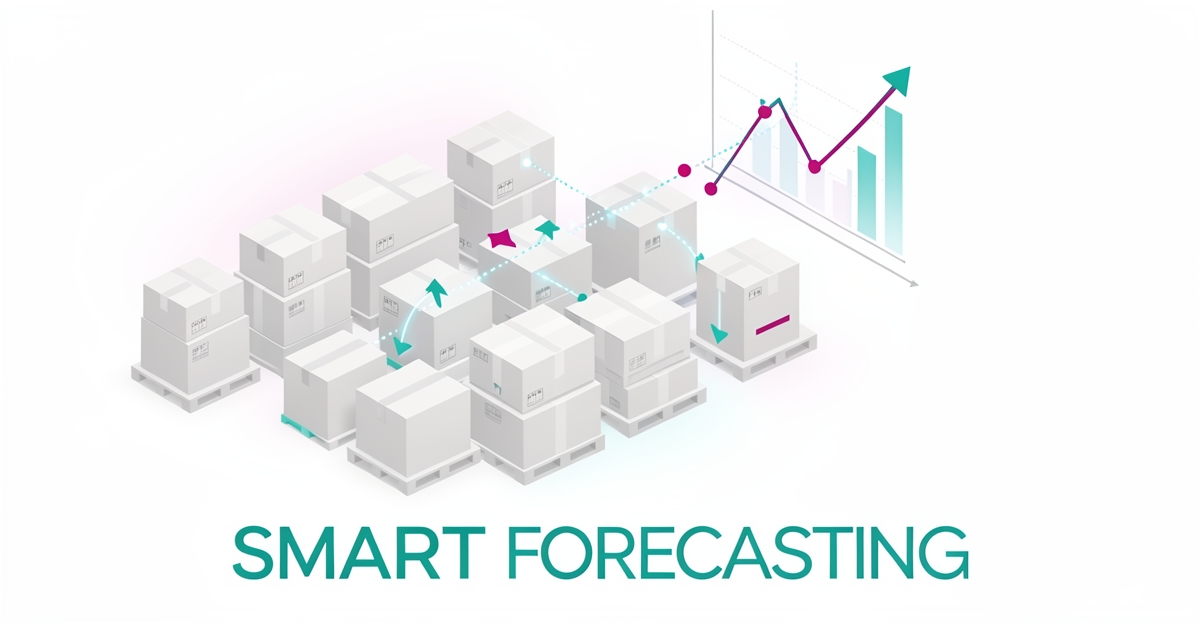
AI-Powered Inventory Forecasting: Reducing Stockouts and Overstocking in Packaging Supply
Key Facts
- AI-powered forecasting typically improves accuracy by 30-50% over traditional methods, per widely cited McKinsey research
- AI adopters commonly report 20-30% lower inventory levels and 20-50% fewer forecast errors
- Roughly 15% of customers will not return after a stockout, per frequently cited Forrester research
- Holding costs typically consume 20-25% of a product's value, per commonly referenced PwC analysis
- AI-driven demand sensing is associated with roughly 15% fewer stockouts and 5% more on-time deliveries
- Sharing AI forecasts with suppliers is associated with lead-time reductions of around 15%
- As of late 2026, roughly 45% of companies report using AI for demand forecasting, with a similar share planning to adopt
Hire a team member that works 24/7 — for less than a part-time wage.
AI receptionists, SDRs, dispatchers and 99+ roles. Trained on your business, fully managed.
Not sure where to start? Ask our AI planner
The Stockout-Overstock Trap in Packaging Supply
For packaging distributors, the margin for error has never been thinner. Demand swings with seasonal cycles, regional preferences shift without warning, and customers expect their orders fulfilled immediately—a combination that turns inventory management into a high-stakes balancing act.
The cost of getting it wrong runs in both directions. When shelves sit empty, the damage extends far beyond a single lost sale. Frequently cited research from Forrester suggests roughly 15% of customers will not return to a business after experiencing a stockout, turning a temporary supply gap into permanent revenue loss.
On the flip side, overcorrection carries its own penalty. Excess inventory ties up working capital and accumulates carrying costs that quietly erode margins. Commonly referenced PwC analysis puts holding costs at 20-25% of a product's value, meaning every pallet of unsold corrugated boxes or shrink wrap sitting in your warehouse actively drains profitability.
Packaging supply chains face unique pressures that amplify these risks:
- Seasonal demand spikes around holidays and promotional periods create unpredictable ordering patterns
- Regional variations in manufacturing activity cause sudden geographic shifts in packaging needs
- SKU proliferation across sizes, materials, and custom specifications multiplies forecasting complexity
- Perishable or degradable materials add time pressure to inventory turnover
Traditional forecasting methods—spreadsheets, historical averages, and gut instinct—struggle to process these variables simultaneously. The result is a costly oscillation between empty shelves and overflowing warehouses. Widely cited McKinsey research indicates that companies implementing AI-powered inventory management typically achieve 30-50% improvements in forecasting accuracy and reduce inventory levels by 20-30%.
This volatility explains why forward-thinking distributors are moving beyond reactive inventory management. AIQ Labs works with packaging supply operations through AI Workflow Builds that rebuild the one workflow costing the most—often inventory planning—by analyzing historical sales patterns, seasonal indicators, and regional demand signals simultaneously, transforming inventory from a guessing game into a strategic advantage.
The stockout-overstock trap isn't inevitable. It persists only when businesses lack the visibility to see demand shifts before they hit the warehouse floor.
How AI-Powered Demand Forecasting Changes Accuracy
For packaging distributors, a forecast that misses by even a small margin means either empty shelves or cash tied up in corrugate nobody ordered. Traditional forecasting methods — spreadsheets, gut feel, last year's numbers — simply weren't built for today's volatile demand patterns.
AI-powered demand forecasting changes the equation by using machine learning to analyze historical sales data, seasonality, and external factors that influence what customers will order next. Widely cited industry analysis suggests this approach can improve forecasting accuracy by 30-50% compared to conventional methods, while McKinsey research indicates companies using AI for demand forecasting commonly achieve a 20-30% reduction in inventory levels and a 20-50% cut in forecast errors.
For packaging supply chains, where regional demand swings and seasonal spikes are the norm, that accuracy gap translates directly into fewer stockouts and less overstock sitting in the warehouse. The stakes are high on both sides: commonly referenced PwC analysis notes that 20-25% of a product's value represents holding costs, making excess inventory one of the most expensive forms of waste in the supply chain.
The benefits compound across operations:
- Lower inventory levels — AI-driven optimization cuts carrying costs by matching stock to actual demand signals.
- Fewer stockouts — improved demand-sensing accuracy is associated with roughly 15% fewer stockouts and 5% more on-time deliveries.
- Dynamic safety stock — AI adjusts buffer levels based on supplier reliability and demand variability, rather than relying on static rules.
- Better supplier collaboration — businesses that share AI-generated demand forecasts with suppliers commonly report lead-time reductions of around 15%.
That last point deserves emphasis. Research on integrated demand planning suggests companies that align forecasting with their suppliers can see meaningful improvements in on-time deliveries — a real advantage when a packaging distributor's credibility depends on hitting customer production windows.
It's also worth noting the momentum behind this shift. As of late 2026, roughly 45% of companies report already using AI and machine learning for demand forecasting, with a similar share planning to follow. Distributors that wait risk competing against rivals whose reorder points are recalculated daily by algorithms rather than quarterly by hand.
The practical challenge for most packaging distributors isn't believing in AI forecasting — it's implementing it. These systems require high-quality, integrated data and skilled personnel to build and maintain, which is precisely where custom solutions matter. AIQ Labs builds forecasting systems tailored to packaging supply chains, analyzing historical sales patterns, seasonality, and regional demand to generate reorder recommendations that reflect how a specific business actually operates.
The result is a forecasting capability that treats inventory as a living system — one that learns from every order cycle and keeps getting sharper with each season it sees.
From Forecast to Action in Packaging Operations
Packaging distributors often face a critical gap between forecast accuracy and operational execution. Turning predictive insights into tangible inventory actions requires more than just accurate numbers—it demands a structured approach to inventory management that responds dynamically to real-world variability. AI-powered forecasting bridges this gap by translating data into clear, actionable steps for inventory optimization.
AIQ Labs' custom AI systems analyze historical sales, seasonal patterns, and regional demand fluctuations to generate precise inventory forecasts for packaging materials. These forecasts enable distributors to optimize stock levels, commonly reducing excess inventory by 20-30% while cutting forecast errors by 20-50%. By aligning inventory with predicted demand, companies avoid both the cost of overstocking and the revenue loss from stockouts, which can permanently drive away roughly 15% of affected customers.
Effective inventory action begins with adjusting safety stock based on two key variables: supplier reliability and demand variability. Suppliers with inconsistent lead times or quality issues require higher safety buffers, while stable demand patterns allow for lower safety stock levels. AI systems continuously recalibrate these adjustments using real-time performance data, ensuring inventory remains resilient without tying up excess capital. This dynamic approach is associated with roughly 15% fewer stockouts and a 5% lift in on-time deliveries when demand-sensing accuracy improves.
To sustain these gains, packaging operations must monitor inventory metrics continuously. Tracking forecast accuracy, turnover rates, and stockout frequency reveals trends that inform ongoing refinements to the AI model. Regular analysis helps identify shifting demand patterns, supplier performance changes, or seasonal anomalies before they impact service levels. This feedback loop ensures the forecasting system evolves with the business, maintaining optimal inventory performance over time.
AIQ Labs embeds this end-to-end process—from forecast generation to actionable inventory adjustments—into custom solutions built specifically for packaging supply chains. By integrating demand planning with inventory execution, distributors gain a responsive system that minimizes waste, protects service levels, and strengthens supplier collaboration through shared, accurate forecasts. The result is a leaner, more agile inventory operation that turns forecasting precision into measurable supply chain resilience.
Building an Owned AI Forecasting System with AIQ Labs
Packaging distributors live in a narrow margin between empty shelves and excess inventory. AI changes that trade-off by turning historical sales, seasonality, and regional demand into a live forecast that guides ordering, not guesswork.
AIQ Labs embeds this capability into custom, owned systems built specifically for packaging supply chains. The approach is not a subscription dashboard—it is production-grade forecasting built on a multi-agent architecture where specialized agents handle research, demand sensing, and reorder optimization. With 200+ multi-agent systems deployed and four live SaaS products AIQ Labs runs daily, this is architecture proven in production, not theory.
There are three ways in, depending on where inventory sits in your priorities. AI Employees add managed AI staff—replenishment analysts, demand planners, dispatchers—at roughly 80% less cost than a human hire. AI Workflow Builds rebuild the one workflow that costs the most, like demand forecasting, at a fixed price and in phases. AI Operating Systems connect forecasting, purchasing, and fulfillment into one operating layer, built in phases and owned outright.
Payment follows the same plain logic: Start Monthly, Build in Milestones, or Own It Outright. No fake prices, no invented case-study numbers—full details at aiqlabs.ai/pricing.
Packaging distributors see measurable impact when forecasting improves. Commonly cited inventory research associates improved demand-sensing accuracy with a 15% reduction in stockouts and a 5% increase in on-time deliveries, while McKinsey-backed analysis notes companies using AI for demand forecasting commonly achieve a 20-30% reduction in inventory levels and a 20-50% cut in forecast errors.
That accuracy matters for customer retention. Frequently cited industry analysis highlights that roughly 15% of customers would not return to a business after experiencing a stockout.
A production-proven forecasting system for packaging typically includes:
- Historical sales and seasonality modeling with machine learning for 30-50% forecasting accuracy gains
- Regional demand sensing and multi-channel signal integration
- Dynamic safety stock adjustments based on supplier reliability and demand variability
- Automated reorder optimization with exception alerts for buyers
Because the system is custom-built and owned, distributors control data, logic and future enhancements. No vendor lock-in, no subscription creep, and the forecasting model evolves with the business.
Start the two-minute Fit Check at aiqlabs.ai/apply, then book a free 30-minute strategy call to map your biggest inventory bottleneck and identify high-ROI automation opportunities. Questions first? Email [email protected].
Still paying for 10+ subscriptions that don’t talk to each other?
We build custom AI systems you own outright. No vendor lock-in. Full control.
Not sure where to start? Ask our AI planner
Frequently Asked Questions
How much can AI actually improve forecasting accuracy for packaging supply?
What happens to customer relationships when we run out of packaging stock?
How does AI determine the right safety stock levels for packaging materials?
Is AI forecasting worth the investment for a mid-sized packaging distributor?
What data do we need to implement AI inventory forecasting?
Can AI forecasting help us collaborate better with our packaging suppliers?
Key Takeaways
Stop Choosing Between Empty Shelves and Dead Capital
The stockout-overstock trap costs packaging distributors on both ends: roughly 15% of customers walk away after a stockout, while holding costs quietly consume 20-25% of a product's value. AI-powered forecasting changes the math—30-50% accuracy gains, 20-30% lower inventory levels, and reorder points that update daily instead of quarterly. Whether you start with an AI Employee, rebuild your forecasting workflow, or connect a full AI operating system, the first step is the same: a two-minute Fit Check at aiqlabs.ai/apply, followed by a free 30-minute strategy call to map your biggest inventory bottleneck.
Make AI your competitive advantage — not just another tool.
Strategy, implementation and ongoing optimization. One partner, end to end.
Not sure where to start? Ask our AI planner