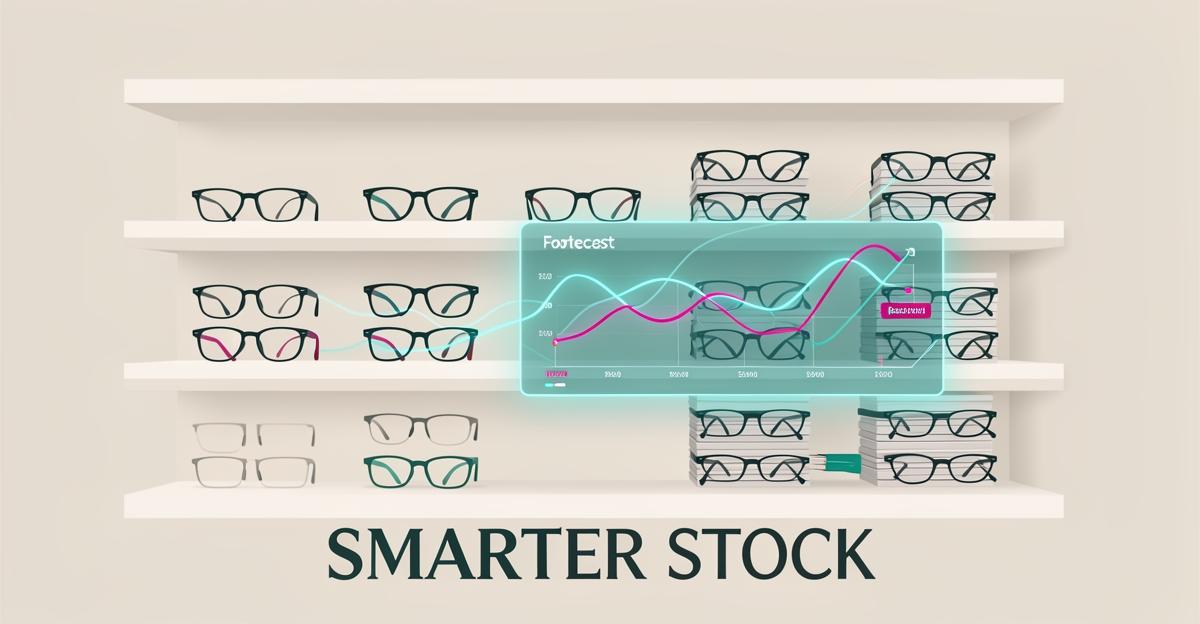
AI-Powered Inventory Management: How to Reduce Overstock and Stockouts in Eyewear
Key Facts
- The global AI in warehousing market is projected to reach roughly $45 billion by 2030 per industry research
- AI-powered demand forecasting can reduce stockouts by an average of 35% according to widely cited industry research
- Machine learning can cut excess inventory by 20-50% per industry findings
- 80% of organizations using AI inventory systems report improved accuracy according to supply-chain industry surveys
- AI is transforming inventory by automating processes and predicting demand says Microsoft's Alexis Goodrich
Hire a team member that works 24/7 — for less than a part-time wage.
AI receptionists, SDRs, dispatchers and 99+ roles. Trained on your business, fully managed.
Not sure where to start? Ask our AI planner
The Cost of Guesswork: Why Traditional Eyewear Inventory Fails
Every frame on your shelf represents cash that isn't working for you. When that cash sits in slow-moving inventory while your bestsellers sit empty, guesswork becomes one of the most expensive habits in eyewear retail.
Traditional inventory management relies on manual counts, spreadsheets, and intuition, methods that simply cannot keep pace with the demand swings of a fashion-driven category like frames. The result is a persistent double failure: overstock of styles nobody wants and stockouts of the frames customers actually come in to buy. Neither error is benign. Excess inventory ties up capital and drives up carrying costs, while stockouts send ready-to-buy customers straight to a competitor.
The scale of the problem explains why the market is responding. The global AI in warehousing market is projected to reach roughly $45 billion by 2030, per industry research, as retailers recognize that manual forecasting can no longer support modern inventory demands. The gap between what retailers think will sell and what actually sells is precisely where AI-driven forecasting delivers value.
Consider what industry research shows about the cost of imprecise forecasting:
- AI-powered demand forecasting can reduce stockouts by an average of 35%, according to widely cited research, meaning a third of lost sales from empty shelves are recoverable.
- Machine learning algorithms can optimize reorder points and safety stock levels, reducing excess inventory by 20-50%, per industry findings.
- 80% of organizations using AI-powered inventory management systems report improved inventory accuracy, according to supply-chain industry surveys.
For eyewear retailers, these numbers translate directly into margin. A frame collection involves hundreds of SKUs across brands, sizes, colors, and prescription compatibility, far too many variables for a human buyer to track accurately by hand. When a bestselling style stocks out mid-season, the retailer loses not just that sale but often the complete package sale of frames, lenses, and add-ons. When slow movers pile up, they occupy display space and capital that faster-turning inventory could use.
The operational toll compounds over time. Overstocked retailers face markdown pressure and higher carrying costs, while chronic stockouts erode customer trust and loyalty, two of the hardest assets to rebuild in a local market. As Alexis Goodrich of Microsoft notes, "AI is transforming inventory management by automating processes, predicting demand, and cutting costs."
This is why many eyewear retailers are moving toward systems that sync their retail POS and supplier databases in real time, using AI to analyze sales trends and seasonal demand patterns. AIQ Labs builds exactly this kind of capability, through AI Workflow Builds that rebuild the one workflow costing you the most, or a fuller AI Operating System that connects inventory to the rest of the business. Understanding the true cost of manual inventory is the first step toward fixing it.
How AI Predicts Demand and Optimizes Reordering in Real Time
Every eyewear retailer knows the sting of a customer walking out empty-handed because their frame is "on order", or worse, the cash tied up in 40 unsold pairs of last season's styles. The difference between those two failures comes down to prediction, and this is where AI fundamentally changes the math.
Traditional reordering relies on gut instinct and last year's spreadsheets. AI models work differently, analyzing historical sales patterns, seasonality, and trend detection alongside live point-of-sale data to forecast demand at the individual frame level. Instead of treating "acetate frames" as one category, these systems learn which specific styles, colors, and sizes move, and when.
The results are well-documented across the industry. Widely cited research suggests AI-powered demand forecasting can reduce stockouts by an average of 35% (MindInventory's industry overview). On the other side of the ledger, machine learning algorithms that optimize reorder points and safety stock levels can cut excess inventory by 20-50%, per industry findings. For a business where popular frames can sell out in days and slow movers occupy display space for months, those percentages translate directly into revenue recovered and capital freed.
What makes modern systems genuinely powerful is the real-time component. Rather than forecasting once a quarter, AI continuously ingests POS data and adjusts reorder triggers as conditions change. A sudden spike in a particular silhouette, driven by a local trend or a viral moment, can trigger a replenishment order before shelves go bare. This matters in an industry where the AI in warehousing market is projected to reach roughly $45 billion by 2030, signaling how quickly these capabilities are becoming standard practice.
For eyewear retailers specifically, an effective AI-driven reordering workflow typically includes:
- Frame-level demand forecasting that accounts for seasonality, such as back-to-school and summer sunglass peaks
- Automated reorder point calculations that factor in supplier lead times, not just sales velocity
- Real-time synchronization between POS sales data and inventory counts
- Safety stock adjustments that protect your best-selling frames without overbuying slow movers
This is precisely the kind of workflow AIQ Labs builds: custom inventory models that sync directly with a retailer's POS and supplier databases, automating reorder decisions while keeping the business in full control of its data and rules. As Alexis Goodrich of Microsoft notes, AI is transforming inventory management by automating processes, predicting demand, and cutting costs, and for eyewear businesses balancing limited shelf space against unpredictable demand, that transformation arrives not a moment too soon.
From Data to Action: Implementing AI Inventory Systems That Sync with Your Store
Many eyewear retailers struggle to turn inventory data into actionable insights, leading to costly overstock or missed sales from stockouts. AI-powered inventory systems bridge this gap by transforming raw sales, supplier, and point-of-sale data into automated reorder decisions that align with real-time demand.
The implementation begins with data cleanup and consolidation, resolving inconsistencies and filling missing values to ensure accuracy, a critical step highlighted in industry guides on AI integration. Emplicit emphasizes that clean, unified data is foundational for reliable AI forecasting. Next, internal data is enriched with external sources like seasonal trends, local events, and weather patterns to improve prediction context, as recommended by AI21's inventory management framework. AI21 notes that this enrichment significantly boosts forecasting precision, especially for trend-sensitive products like eyewear frames.
Once data is prepared, AI models analyze historical sales, seasonality, and emerging trends to generate dynamic demand forecasts. These insights feed into automated replenishment workflows that trigger reorders when stock levels dip below optimized thresholds, reducing the need for manual intervention. Industry benchmarks suggest AI-powered demand forecasting can reduce stockouts by an average of 35%, while machine learning algorithms optimizing reorder points and safety stock can cut excess inventory by 20-50%, tangible impact from well-tuned AI systems.
AIQ Labs structures this as a phased build: discovery and architecture to map data flows and integration points, followed by development where custom models connect to POS systems like Square or Shopify and supplier databases via API, then deployment with role-based training for staff. Each phase is delivered at a fixed price under the Build in Milestones model, so you know what you're paying for before the next phase starts. Throughout, continuous monitoring and model retraining maintain accuracy as sales patterns evolve, turning inventory from a reactive challenge into a proactive advantage. With 200+ multi-agent systems deployed, this is a process AIQ Labs has run many times over.
Still paying for 10+ subscriptions that don’t talk to each other?
We build custom AI systems you own outright. No vendor lock-in. Full control.
Not sure where to start? Ask our AI planner
Frequently Asked Questions
How much can AI actually reduce stockouts and overstock for my eyewear store?
Will an AI inventory system work with my current POS like Square or Shopify?
What kind of data do I need to get started with AI inventory forecasting?
How long does it take to implement an AI inventory system and see results?
Is AI inventory management only for big chains, or can a single-location optical shop benefit too?
What happens if the AI makes a bad reorder recommendation, am I locked into it?
From Guesswork to Growth: Your Next Move in Eyewear Inventory
The cost of guesswork in eyewear inventory is no longer just a missed sale, it's tied-up capital, frustrated customers, and eroded margins. AI-powered inventory systems transform reactive stocking into proactive precision, typically reducing stockouts by around a third and cutting excess inventory by 20-50% through real-time demand forecasting and automated reordering. For eyewear retailers juggling hundreds of SKUs and fast-moving trends, this isn't about keeping up, it's about getting ahead. The path forward starts with understanding your current bottlenecks and identifying where AI can deliver the highest ROI. Take the 2-minute Fit Check to see if an inventory workflow build is right for your store, then book a free 30-minute strategy call to map your biggest inventory challenge, no obligation, just clarity on your opportunity to turn inventory from a cost center into a competitive advantage.
Make AI your competitive advantage — not just another tool.
Strategy, implementation and ongoing optimization. One partner, end to end.
Not sure where to start? Ask our AI planner