AI-Powered Job Estimation: How Tree Service Companies Can Cut Quote Time by 60%
Key Facts
- AI adoption in construction and adjacent field-service sectors remains low as of late 2026, leaving tree services wide open for early adopters.
- Most AI use in the workplace is for augmentation, collaborating with workers, not replacing them.
- Lack of relevant expertise is the most commonly cited reason enterprises hold back from AI adoption.
- The 'AI job paradox': productivity gains vanish without capacity governance to redeploy saved time.
- Only a minority of organizations have a reskilling strategy aligned with their AI investments.
- Sales and marketing are among the most common functions where AI-using enterprises apply the technology.
Hire a team member that works 24/7 — for less than a part-time wage.
AI receptionists, SDRs, dispatchers and 99+ roles. Trained on your business, fully managed.
Not sure where to start? Ask our AI planner
The Hidden Cost of Manual Estimating in Tree Services
The manual process of creating job estimates in tree services often begins with an on-site visit, followed by handwritten notes, mental calculations, and a delayed follow-up with a quote. This approach consumes significant time, estimators may spend hours per job assessing tree height, proximity to structures, root spread, and accessibility challenges, then translating those observations into a formal proposal. Inconsistencies creep in when different team members apply varying judgment calls, leading to quotes that fluctuate widely for similar work. These delays and inaccuracies directly impact revenue: slow responses frustrate customers who may turn to competitors, while unclear scoping risks underbidding complex jobs or overpricing routine ones, eroding trust and margins.
These challenges are amplified by broader industry trends showing limited technological adoption in labor-intensive fields. Construction and adjacent field-service sectors, closely aligned with tree services in their reliance on fieldwork and physical assessments, report some of the lowest AI adoption rates as of late 2026, reflecting a broader reluctance to integrate digital tools into traditional workflows. Even among businesses that have considered AI, the primary barrier typically isn't cost or skepticism, it's capability. A lack of relevant expertise is the most commonly cited reason enterprises give for holding back, underscoring a critical skills gap that prevents many service-based companies from leveraging automation.
This expertise deficit creates a ripple effect: estimators remain bogged down in repetitive measurement and calculation tasks instead of focusing on client consultation or risk assessment. Without systems to standardize inputs like species-specific growth patterns or soil condition impacts, quotes become reactive rather than strategic. The result isn't just slower quoting, it's a missed opportunity to elevate the estimator's role from data processor to trusted advisor. For tree service businesses aiming to scale, the hidden cost of manual estimating isn't only in lost time but in the untapped potential of their teams to drive higher-value engagements when freed from administrative friction.
AI-powered estimation tools can reverse this dynamic by instantly analyzing site-specific variables, such as canopy spread, decay indicators, and utility line proximity, to generate accurate, data-driven quotes during the initial customer conversation. By removing the guesswork and manual math, these systems enable estimators to spend less time on calculations and more time understanding client priorities, explaining risks, and building rapport. This shift doesn't just accelerate the quote-to-close cycle; it transforms the estimator from a transactional function into a consultative one, aligning with the majority of AI use cases where technology acts as a collaborator to augment human judgment rather than replace it.
When estimators are no longer tethered to clipboards and spreadsheets, they can respond to inquiries faster, handle greater volume without sacrificing accuracy, and identify upsell opportunities, like recommending cabling for structurally weak trees or scheduling seasonal pruning, during the same interaction. The time saved per quote isn't merely absorbed back into existing inefficiencies; it becomes capacity that can be redirected toward activities that directly influence customer satisfaction and lifetime value. For tree service companies facing seasonal demand spikes or competitive pressure, this operational agility isn't optional, it's the difference between chasing jobs and choosing them.
To explore how AI can streamline your estimating process while empowering your team to focus on what matters most, Start the Fit Check, a two-minute assessment that leads to a free 30-minute strategy call with an AI engineer to pinpoint your highest-impact automation opportunities. If there isn't a clear win, we'll tell you that too. No obligation, just clarity on where AI can create real operational leverage in your tree service business.
How AI Estimation Works: Augmentation Over Automation
The real breakthrough in AI estimation isn't speed, it's what happens to the estimator. When AI handles the dimensional analysis of tree height, canopy spread, proximity to structures, and root system complexity, it doesn't just output a number faster. It shifts the human role from calculator to consultant, freeing your most experienced people to have the conversations that actually win jobs and protect margins.
Research on workplace AI consistently shows that the majority of AI use is for augmentation, workers collaborating with AI to refine and improve their work, rather than full automation. This distinction matters because the "AI job paradox" reveals a hard truth: organizations investing in AI to create capacity often lack the workforce flexibility to absorb and redeploy those gains. The missing link is capacity governance, actively managing the operational impact of productivity gains rather than assuming they naturally lead to better outcomes.
- AI analyzes site photos, GIS data, and historical job data to generate baseline estimates in seconds
- Estimators validate outputs, adjust for species-specific risks, and handle edge cases the model hasn't seen
- Client conversations shift from "here's the price" to "here's your risk profile and options"
- New capacity gets redeployed to proactive site assessments and strategic account management
Construction and adjacent field-service sectors, where tree services often sit, still show some of the lowest AI adoption rates as of late 2026. That gap represents both the challenge and the opportunity. Companies that treat estimation AI as a workforce transformation tool, not just a quoting accelerator, will be the ones who convert speed into margin. AIQ Labs builds these systems with the augmentation layer baked in, via AI Workflow Builds that integrate with your CRM and dispatch so the estimator's freed capacity flows directly into higher-value work, not administrative drift.
From Quote to Close: Integrating AI Estimation into Your Sales Workflow
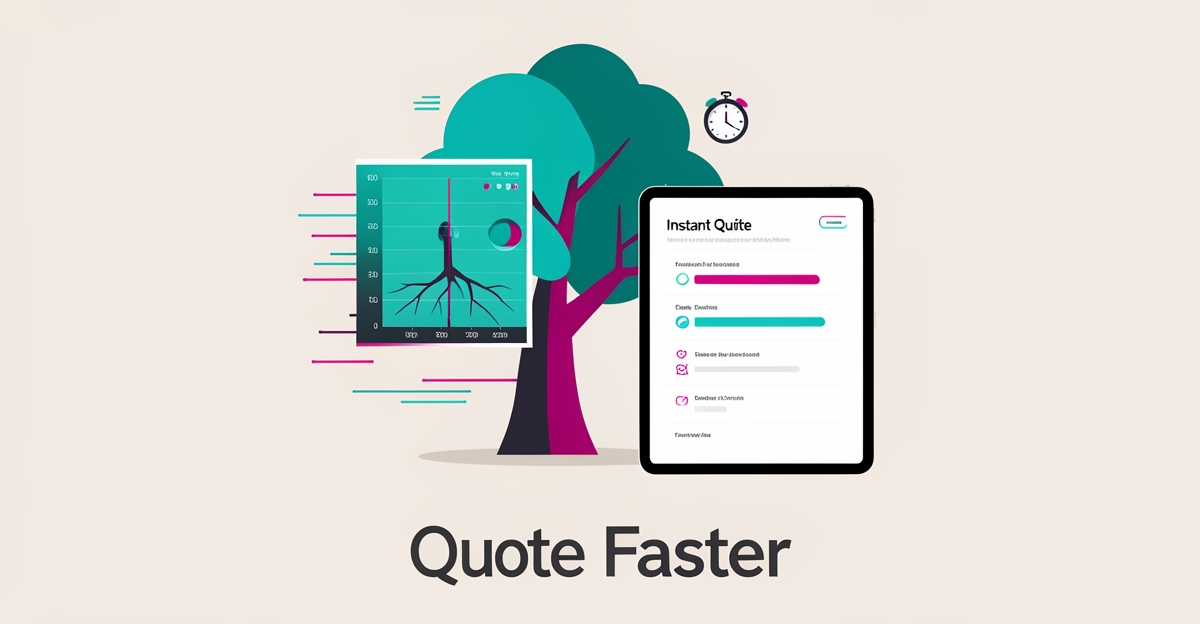
Manual quotes stall deals while estimators chase site photos and retype notes. AI estimation changes the moment a client calls, turning details like tree height, location and root system into an instant, reliable quote during the conversation.
Integration starts with connecting the estimator to the systems it already lives in. A custom AI workflow links the estimation engine to CRM and booking platforms so job details flow in one direction and quotes flow out the other. This eliminates manual re-entry and creates a single source of truth across sales and operations. AIQ Labs builds these owned integrations as part of its AI Workflow Builds, fixed-price, phased rebuilds of the one workflow that costs you the most, ensuring the system fits existing tools instead of forcing new software.
The AI Quote Specialist model fits the AI Employee approach, where a production-grade agent handles real job tasks end-to-end at a fraction of the cost of a human hire. The agent ingests site data, generates a real-time estimate, logs it in CRM, and books a follow-up. Because most current AI use is augmentation, the goal is not to remove estimators but to make them faster and more consultative.
Training estimators to trust and steer the AI is the difference between adoption and shelfware. Teams need clear playbooks for when to accept an AI output and when to override it. That skill building matters because lack of relevant expertise is the most commonly cited reason enterprises give for not adopting AI.
Effective rollout follows a practical sequence:
- Map the quote-to-close workflow and identify data inputs the AI needs
- Integrate estimation with CRM and booking so quotes create appointments automatically
- Train estimators to interpret outputs, handle exceptions, and focus on client questions
- Govern capacity by redeploying saved time into strategic engagement and follow-up
Capacity governance prevents the AI job paradox where speed gains disappear into old habits. With capacity governance, companies actively redeploy time saved from quoting into higher-value work such as site walk-throughs, risk conversations, and closing.
AI adoption among enterprises continues to rise as of late 2026, with sales and marketing among the most common functions where it's applied. For tree services, that means faster client engagement and fewer errors when estimates are generated in real time.
When estimators stop retyping and start advising, close rates improve. The system delivers instant reliability during the call, while people focus on the judgment, trust and relationship that win the job.
Still paying for 10+ subscriptions that don’t talk to each other?
We build custom AI systems you own outright. No vendor lock-in. Full control.
Not sure where to start? Ask our AI planner
Frequently Asked Questions
How does AI actually make tree service estimates faster?
Will AI replace my estimators or make them more effective?
Why do so many AI estimation projects fail to deliver ROI?
What's the biggest barrier to adopting AI for quoting?
Are other field service companies actually using AI for estimates?
What should I do with the time my team saves on quotes?
From Clipboard to Close: Make Estimation Work for Your Team
Manual estimating drains time, creates inconsistent quotes, and keeps your best estimators stuck doing math instead of building trust. AI-powered estimation changes that equation by analyzing site variables like canopy spread, proximity risks, and root complexity to deliver accurate, real-time quotes during the first conversation. The real win isn't just speed; it's augmentation. When AI handles dimensional analysis, estimators can shift from calculator to consultant, focusing on risk profiles, options, and client priorities that close jobs and protect margins. That shift only creates lasting value with capacity governance, actively redeploying the time saved into proactive assessments, follow-up, and strategic accounts instead of letting gains disappear into old habits. This is where custom integration matters. AIQ Labs builds owned AI systems that connect estimation to your CRM and booking platforms so quotes flow straight into appointments without re-entry. Ready to see where a 60% cut in quote time could go? Start the Fit Check at https://aiqlabs.ai/apply for a two-minute assessment and a free 30-minute strategy call with an AI engineer to map your highest-impact automation opportunities. If there isn't a clear win, we'll tell you that too.
Make AI your competitive advantage — not just another tool.
Strategy, implementation and ongoing optimization. One partner, end to end.
Not sure where to start? Ask our AI planner