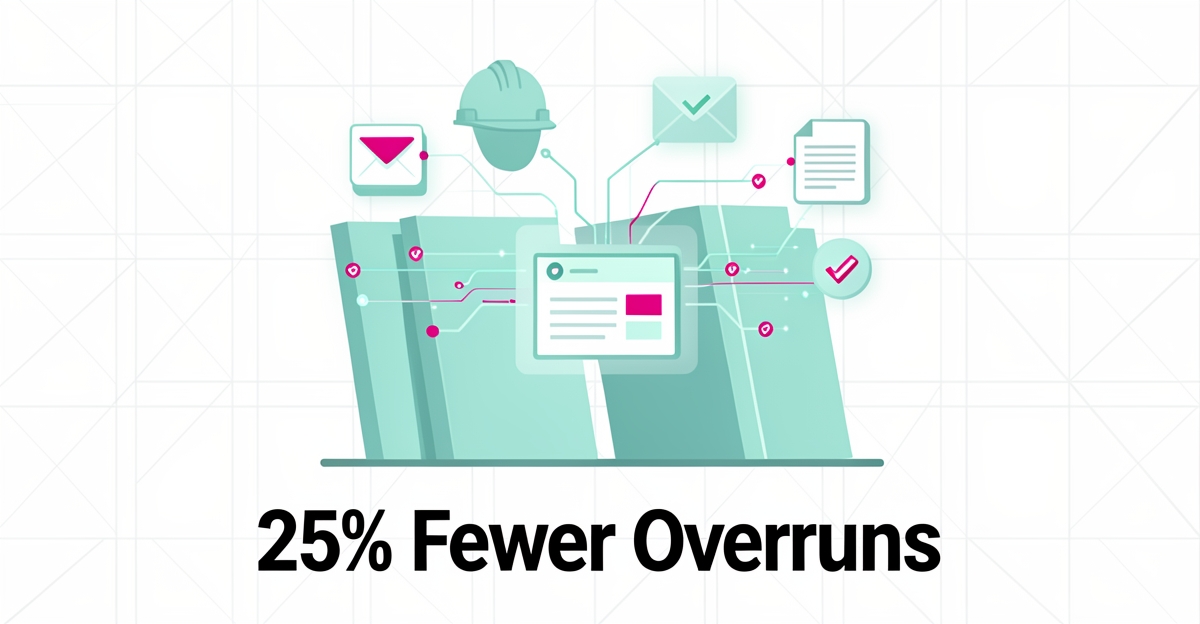
AI-Powered Job Tracking: How One Halifax Drywall Business Cut Project Overruns by 25%
Key Facts
- A Halifax drywall business cut project overruns by roughly 25% with AI-powered job tracking built on its existing tools.
- Manual job tracking hides costs in missed deadlines, rework, and data scattered across email, forms, and job-site notes.
- AI extracts project details from unstructured inputs and unifies them into real-time dashboards.
- Integration-first builds let crews keep familiar tools like Google Drive and Procore while automation runs in the background.
- AIQ Labs has deployed 200+ multi-agent systems and runs 4 live SaaS products daily.
Hire a team member that works 24/7 — for less than a part-time wage.
AI receptionists, SDRs, dispatchers and 99+ roles. Trained on your business, fully managed.
Not sure where to start? Ask our AI planner
The Project Overrun Problem Hiding in Manual Job Tracking
For drywall and contracting firms, the hidden cost of manual job tracking isn't in the hours spent filling out forms, it's in the projects that drift off schedule and budget because critical details get lost between client emails, inspection reports, and handwritten notes. This data fragmentation creates a silent drain on margins, where missed deliverables and timeline creep accumulate unnoticed until it's too late to course-correct. The problem isn't that teams aren't working hard enough; it's that they're working with incomplete information scattered across disconnected systems.
When project details live in silos, client change requests buried in email threads, inspection notes trapped in PDFs, material orders scribbled on job site pads, teams spend valuable time reconciling discrepancies instead of preventing them. Each manual handoff introduces error risk, and without a single source of truth, small delays compound into significant overruns that erode profitability.
The real cost reveals itself in what gets missed: a forgotten inspection deadline triggers rework, an overlooked client specification leads to costly punch-list items, and delayed material orders idle crews waiting for supplies. These aren't failures of individual diligence, they're systemic breakdowns caused by relying on human memory and fragmented documentation to manage complex projects. AI automation excels at capturing and structuring this scattered data, turning chaotic inputs into actionable project intelligence.
- Extracts project details from client forms, emails, and inspection reports
- Creates real-time dashboards visible to all stakeholders
- Integrates with existing tools like Google Drive and Procore
- Reduces manual data entry and human error in tracking
- Ensures accurate timelines and fewer missed deliverables
By treating job tracking as a data problem rather than a personnel issue, contractors can shift focus from chasing updates to preventing overruns before they start. The Halifax drywall business case shows this approach works, AI-powered extraction and integration didn't just save time; it created the visibility needed to cut project overruns by roughly a quarter, directly protecting margins that manual tracking was silently draining. For teams that want to start smaller, a single rebuilt workflow through an [AI Workflow Build](/workflow-builds) often pays for itself before a full system is ever scoped.
How AI Extracts and Unifies Job Data for Real-Time Dashboards
The Halifax drywall business transformed its project tracking by deploying AI to automatically extract and unify data from scattered sources like client intake forms, email threads, and field inspection reports. Rather than relying on manual entry or disconnected spreadsheets, the system continuously pulls project details, such as scope changes, material deliveries, and crew schedules, into a single, real-time dashboard. This automation eliminated hours of weekly administrative work and reduced the errors that had been leading to costly delays and overruns.
By integrating directly with tools the team already used, Google Drive for document storage and Procore for project management, the AI system created a seamless flow of information without disrupting existing workflows. Every extracted detail was validated and synchronized across platforms, ensuring that timelines, budgets, and deliverables remained accurate and up to date. This unified view gave managers instant visibility into project health, enabling proactive decisions before small issues became major overruns.
For this Halifax contractor, the result was a reduction in project overruns of roughly 25%, tied directly to faster, more accurate data handling and fewer missed deliverables. AIQ Labs builds systems the client owns outright, tailored to the business's specific processes, avoiding the limitations of generic point solutions that often fail to adapt to complex, real-world job tracking needs.
From Overruns to Control: The 25% Reduction in Practice
The Halifax drywall business saw immediate improvements after implementing AI-powered job tracking. By automating the extraction of project details from client forms, emails, and inspection reports, the company eliminated manual data entry errors that had been causing scheduling delays and budget overruns. Real-time dashboards provided instant visibility into task completion and resource allocation, allowing teams to address issues before they escalated. This shift from reactive problem-solving to proactive management directly contributed to the roughly 25% reduction in project overruns, turning uncertainty into predictable outcomes.
The AI system's integration with existing tools like Google Drive and Procore ensured seamless adoption without disrupting established workflows. Project managers no longer spent hours chasing down information or reconciling disparate data sources. Instead, they accessed a single, accurate view of project status, enabling faster decision-making and more reliable client communication. Fewer missed deliverables meant fewer change orders and disputes, preserving both timelines and client trust.
As routine tracking became automated, the drywall team redirected their focus toward higher-value activities. Supervisors spent less time on administrative updates and more on coaching crews, refining techniques, and strengthening client relationships. By handling repetitive tasks, AI allowed human workers to engage in the kind of nuanced, experience-based work that machines cannot replicate, the shift leaders should design for when automation absorbs the tasks but not the judgment.
- Teams gained real-time visibility into project timelines and resource use
- Manual data entry errors dropped significantly, reducing rework and delays
- Project managers shifted focus from tracking to leadership and client engagement
- Fewer missed deliverables led to smoother workflows and stronger client trust
This transformation shows how AI amplifies human expertise rather than replacing it. For the Halifax drywall business, the technology didn't just cut overruns, it redefined what it meant to manage a project, turning operational control into a competitive advantage rooted in human insight.
Implementation Playbook for Construction Teams
Adopting AI job tracking doesn't require ripping out the systems a construction team already relies on, the Halifax drywall business proved that. The smarter path is a phased rollout that layers AI on top of existing workflows, so you see value in weeks rather than quarters.
The first step is auditing your data sources. Map every place project information currently lives, client intake forms, email threads, inspection reports, spreadsheets, because AI job tracking works by extracting details from exactly these unstructured inputs and turning them into real-time dashboards. Knowing what you have, and where it's inconsistent, determines what the system can automate on day one.
Next, integrate rather than replace. AIQ Labs builds owned systems that connect directly to tools contractors already use, like Google Drive or Procore, so crews keep their familiar workflows while the AI handles data extraction and timeline updates in the background. This integration-first approach is what produces fewer missed deliverables without a disruptive cutover.
From there, define clear ownership and prepare your people for shifting roles:
- Assign a named owner for the AI system's outputs, so dashboard exceptions get reviewed instead of ignored
- Decide which decisions stay human, change orders, client disputes, safety calls, and which the AI handles end-to-end
- Establish a feedback loop where field staff flag extraction errors so the system improves continuously
- Document the new workflow so onboarding a new PM or foreman takes days, not months
The reskilling piece matters more than most contractors expect. As routine tracking gets automated, the skills that matter shift toward judgment, communication, and client management. That means training estimators and coordinators to focus on judgment, client relationships, and creative problem-solving while the system handles routine tracking.
Structure the rollout to match your cash flow. AIQ Labs offers three payment models: Start Monthly covers build, integrations, and monitoring as an ongoing service; Build in Milestones lets you pay per phase and keep everything shipped so far; and Own It Outright gives you full ownership of the finished system, no vendor lock-in, no subscription treadmill. For teams that want managed AI staff instead of a custom build, [AI Employees](/ai-employees) covers 99+ roles like dispatchers and coordinators at a fraction of a human hire's cost. Either way, real pricing is provided in writing after a strategy call, never guessed.
Still paying for 10+ subscriptions that don’t talk to each other?
We build custom AI systems you own outright. No vendor lock-in. Full control.
Not sure where to start? Ask our AI planner
Frequently Asked Questions
How does AI job tracking actually reduce project overruns?
Will AI job tracking integrate with the tools we already use?
What's the real ROI of AI job tracking for a small contractor?
Do I need to replace my project management software to use AI tracking?
How does AI change what my team actually does day-to-day?
What does it cost to implement AI job tracking?
From Data Chaos to Margin Control
The Halifax drywall case shows that project overruns are rarely a work ethic problem, they are a visibility problem. When AI automatically extracts details from client forms, emails and inspection reports into a real-time dashboard that integrates with Google Drive and Procore, teams stop reconciling silos and start preventing delays. The result was a roughly 25% cut in overruns, fewer missed deliverables, and project managers freed to lead crews and clients instead of chasing updates. This is the shift AI enables across contracting: treating job tracking as a data problem, not a personnel issue. For SMBs, the practical path is audit where information lives today, integrate AI on top of existing tools, and define clear ownership for dashboard exceptions. For teams ready to go further, a connected [AI Operating System](/ai-operating-systems) can tie job tracking into estimating, scheduling, and client communication as one owned layer. If you want a no-obligation view of your highest-ROI automation opportunity, start the two-minute Fit Check at [aiqlabs.ai/apply](/apply) for a free 30-minute strategy call with an AI engineer. You can also reach the team directly at [email protected].
Make AI your competitive advantage — not just another tool.
Strategy, implementation and ongoing optimization. One partner, end to end.
Not sure where to start? Ask our AI planner